Get in Touch with MACY-PAN Company

Factory-Direct · ISO 13485 Medical-Device Manufacturer · 17 Years
Home Hyperbaric Chambers
Home Hyperbaric Chambers, Built by a Medical-Device Factory — Not a Drop-Shipper
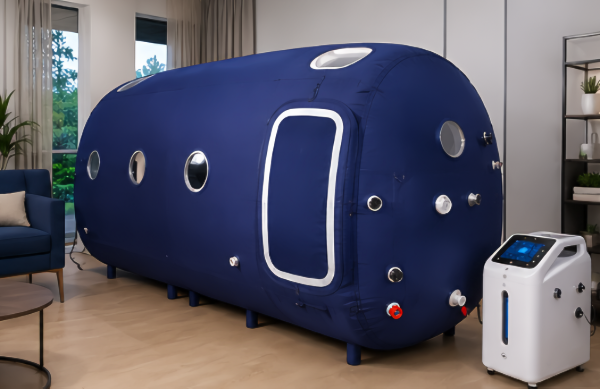
A home hyperbaric chamber is a personal enclosure that lets you run hyperbaric oxygen therapy (HBOT) on your own schedule instead of paying per clinic visit. MACY-PAN manufactures the soft 1.3–1.5 ATA and hard 2.0 ATA chambers that other brands re-sell — so you buy the same ISO 13485 medical-device hardware at the factory price, without the middleman markup.
In short
A home hyperbaric chamber is a personal HBOT enclosure that raises air pressure to roughly 1.3–2.0 ATA so you breathe oxygen-enriched air through a mask. Soft (mild) units run 1.3–1.5 ATA for general wellness; hard units reach 2.0 ATA. US market prices start near $8,000 for soft-shell and $20,000+ for hard-shell.
Clinic, distributor or reseller? Ask about OEM/ODM and wholesale pricing — MACY-PAN supplies private-label chambers to 120+ countries.
1.3–2.0
ATA range (soft to hard)
8
core models, 1–2 person
ISO 13485
+ CE + ISO 9001
17 yrs
120+ countries
5–7 days
DHL door-to-door
1 yr
warranty + lifetime support
Home Hyperbaric Oxygen Therapy — What It Is, Who It's For, and Is It Even Legal?
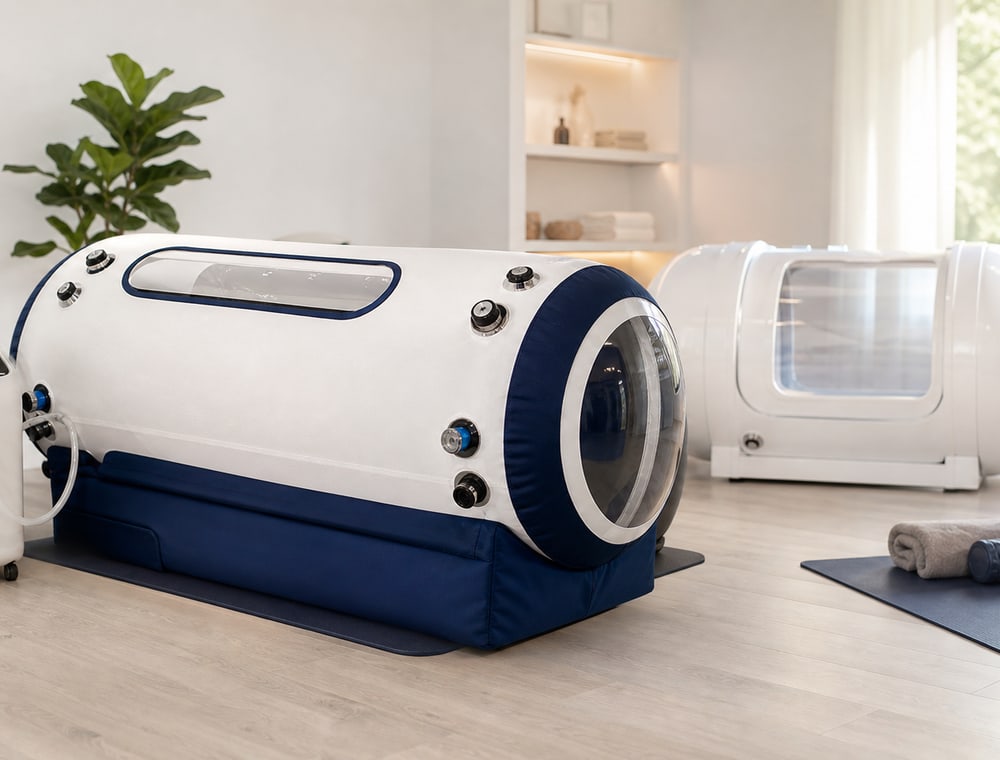
Most people experience HBOT at a hospital or clinic that charges $100 to $350 per session and suggests 20-40 visits of 60-90 minutes each. But for anyone using hyperbaric therapy as part of long-term athletic recovery, post-exertion soreness, or general wellness, that recurring fee and the drive to and from the clinic is where the real pain lies - which is precisely why home and portable hyperbaric chambers were created.
A hyperbaric oxygen chamber raises the pressure around you above normal sea level pressure (1 ATA = 14.7 psi). Under pressure, more oxygen dissolves directly into your blood plasma instead of just riding on hemoglobin, which increases the oxygen content of your tissues. "ATA" stands for atmospheres absolute: 1.3 ATA is mild, 2.0 ATA is roughly twice the level of sea-level pressure.
Athletic recovery
General wellness
Post-workout / DOMS
Recovery support
Wellness clinics & spas
A hyperbaric chamber for athletes is one of the most common home configurations, along with anti-aging and general-wellness applications - but these are not the conditions that the U.S. FDA has approved HBOT to treat, so we refer to them as general-wellness applications, not medical therapies.
"Is it even legal to own one?" — the honest answer
Owning a home hyperbaric chamber for personal use is generally legal in the U.S. and does not automatically need FDA approval - regulators concern themselves with how a device is labeled and marketed, not its ownership. Mild 1.3 ATA wellness chambers are readily available on the open market without a prescription. When a seller requests a prescription, that is more likely to be their personal liability policy than a legal requirement. Higher-pressure or medical application systems are where physician approval and strict FDA Class II oversight are necessary. Federal law allows private ownership without a prescription.
Therefore, the question isn't "Can I own a hyperbaric chamber at home" - you can - but "Which pressure and which chamber best aligns with my objectives." Selecting the appropriate home hyperbaric chamber is more dependent on the pressure level than the brand, and error could be costly - a high five-figure machine that physically cannot perform your protocol due to pressure limitations, since pressure cannot be added after purchase. As an ISO 13485 manufacturer, MACY-PAN covers the entire 1.3–2.0 ATA spectrum, which makes the right match ours to get right.
MACY-PAN Home Hyperbaric Chamber Models — Specs and How to Choose
MACY-PAN builds eight standard hyperbaric chambers for home use — personal soft-shell sitting, soft-shell lying, a wheelchair-accessible double, and hard-shell units. Whichever chamber for home use you choose, each soft chamber ships as a kit a single person can set up in under thirty minutes: chamber, oxygen concentrator, air compressor, and cooling fan. Because we manufacture these hyperbaric chambers for home in-house to an ISO 13485-certified process rather than private-labeling or re-badging another factory's units, the specs in the tables below are real production numbers. A vague spec list is usually where a buyer's first expensive mistake hides — whether the chamber is bound for a living room or a wellness clinic.
How the oxygen actually reaches you (read this before you compare brands)
A soft chamber is pressurized with compressed air, and you breathe up to 93% oxygen through a headset or facial mask fed by the included concentrator — the chamber air itself is not 93% pure oxygen. (per FDA guidance on how HBOT works) Any soft-shell page that claims the whole cabin fills with pure oxygen is overselling. We state the mechanism plainly because mismatched expectations are the #1 source of buyer regret.
MACY-PAN model lineup
real specifications from first-party product data. Oxygen % shown only where the model page states it; "per mask" = delivered through the headset/mask, not cabin concentration. Source: macypan.com product pages.
Model
Type
Pressure (ATA)
Size (cm)
Material
People
Chamber wt.
L1
Soft · sitting (S)
1.3 / 1.4 / 1.5
140×65×160
SGS TPU
1
15 kg
ST1700
Soft · sitting (M)
1.3 / 1.4 / 1.5
170×70×110
SGS TPU
1
17 kg
ST2200
Soft · sitting (L)
1.3 / 1.4 / 1.5
220×70×110
SGS TPU
2
20 kg
ST701 / 702
Soft · lying (S)
1.3 / 1.4 / 1.5
225×70×70
SGS TPU
1
13 kg
ST801
Soft · lying (M)
1.3 / 1.4 / 1.5
225×80×80
SGS TPU
1
15 kg
MC4000 U
Soft · wheelchair / double
1.3 / 1.4
140×130×175
SGS TPU
2
22 kg
HP1501-75
Hard · lying
1.0–1.6 adj.
220×75×75
Steel + polycarbonate
1
140 kg
HP2202-75
Hard · lying
2.0
220×75×75
Steel + polycarbonate
1
150 kg
The ST801 soft lying model (highlighted) is the same chamber a popular U.S. distributor re-sells at $7,740–$9,800 — more on that in the pricing section. Higher-pressure hard-shell and multiplace units (HP1501-85/-90/-100, HP2202-90, HE5000 for 1–5 people) are available on request.
Decision matrix: match the model to how you'll use it
MACY-PAN selection logic by use pattern, space and budget tier. Indicative only — request a quote for your configuration.
Your situation
Recommended type
MACY-PAN model
Why
One person, wellness/recovery, small room
Soft lying 1.5 ATA
ST801
Lie-flat comfort, 15 kg, single-operator
Prefers sitting / reading during sessions
Soft sitting 1.5 ATA
L1 or ST1700
Vertical footprint fits a home chair
Two users or caregiver access
Soft double / wheelchair
ST2200 / MC4000 U
2-person cabin; MC4000 takes a wheelchair
Want the highest home pressure
Hard shell 2.0 ATA
HP2202-75
Reaches the clinical 2.0 ATA threshold
Clinic / spa, multiple clients/day
Hard or multiplace
HP1501 / HE5000
Steel build for daily throughput
Focus on the pressure line in that table — it's the single most important variable, and the one place choosing the best hyperbaric chamber for home use most often goes wrong. A 1.3–1.5 ATA soft chamber and a 2.0 ATA hard chamber do different jobs, and you can't retrofit pressure later: it's fixed at purchase. That's the next section — why a bigger ATA number isn't automatically better.
Soft vs Hard Shell, and 1.3 / 1.5 / 2.0 ATA — What Pressure Do You
Higher pressure is not always better, and buying on the biggest ATA number is a common, costly mistake. The pressure you need tracks your goal: 1.3–1.5 ATA for wellness and recovery, 2.0 ATA for clinical-pressure protocols. A bigger number is not automatically more effective.
In a peer-reviewed trial, 1.5 ATA and 2.0 ATA showed no significant difference in diabetic-foot-ulcer healing, and the 1.5 ATA group had fewer side effects such as ear barotrauma. Because total oxygen dose is pressure × time — oxygen dissolves into plasma in proportion to pressure, per peer-reviewed NIH/PMC research — a longer session in a mild hyperbaric chamber at 1.5 ATA can deliver as much oxygen as a shorter one at 2.0 ATA. That's exactly why MACY-PAN builds the full 1.3–2.0 ATA range instead of pushing a single tier.
Factory-Direct vs Reseller-Sold Chambers — The Real Cost of the Middleman
Here's what the reseller market would rather you not connect: the price you see on other home hyperbaric chamber sites usually includes a domestic middleman's markup. Warrior Willpower lists the MACY-PAN ST801 soft lying chamber — our chamber — at a compare-at price of $9,800 and a sale price of $7,740. Buying factory-direct removes that layer, and for clinics and distributors the same gap becomes your wholesale margin.
The Middleman Markup Ledger
Hook C — U.S. market price context (verified third-party listings) vs MACY-PAN factory-direct model. We publish the comparison; we quote your exact configuration on request rather than fabricate a sticker price.
Chamber class
Soft lying 1.5 ATA (= ST801)
Soft lying 1.5 ATA (= ST801)
U.S. market price
(resellers) $7,740–$9,800
Source: Warrior Willpower listing
(resellers) $7,740–$9,800
Source: Warrior Willpower listing
MACY-PAN channel
Factory-direct quote
Chamber class
Soft-shell, entry to mid
Soft-shell, entry to mid
U.S. market price
(resellers) $8,000–$10,000
Source: Airpuria / industry guides
(resellers) $8,000–$10,000
Source: Airpuria / industry guides
MACY-PAN channel
Factory-direct quote
Chamber class
Hard-shell 2.0 ATA
Hard-shell 2.0 ATA
U.S. market price
(resellers) $20,000–$60,000+
Source: Industry pricing guides
(resellers) $20,000–$60,000+
Source: Industry pricing guides
MACY-PAN channel
Factory-direct quote
Because we manufacture the chamber, the same ISO 13485 hardware ships directly to you with no domestic reseller's margin stacked on top — and for clinics and distributors, that gap is your wholesale margin. The hardware class is identical either way: in the U.S. these are FDA Class II devices regardless of who sells them. When you request a configured quote, you'll see the factory-direct price set against current retail.
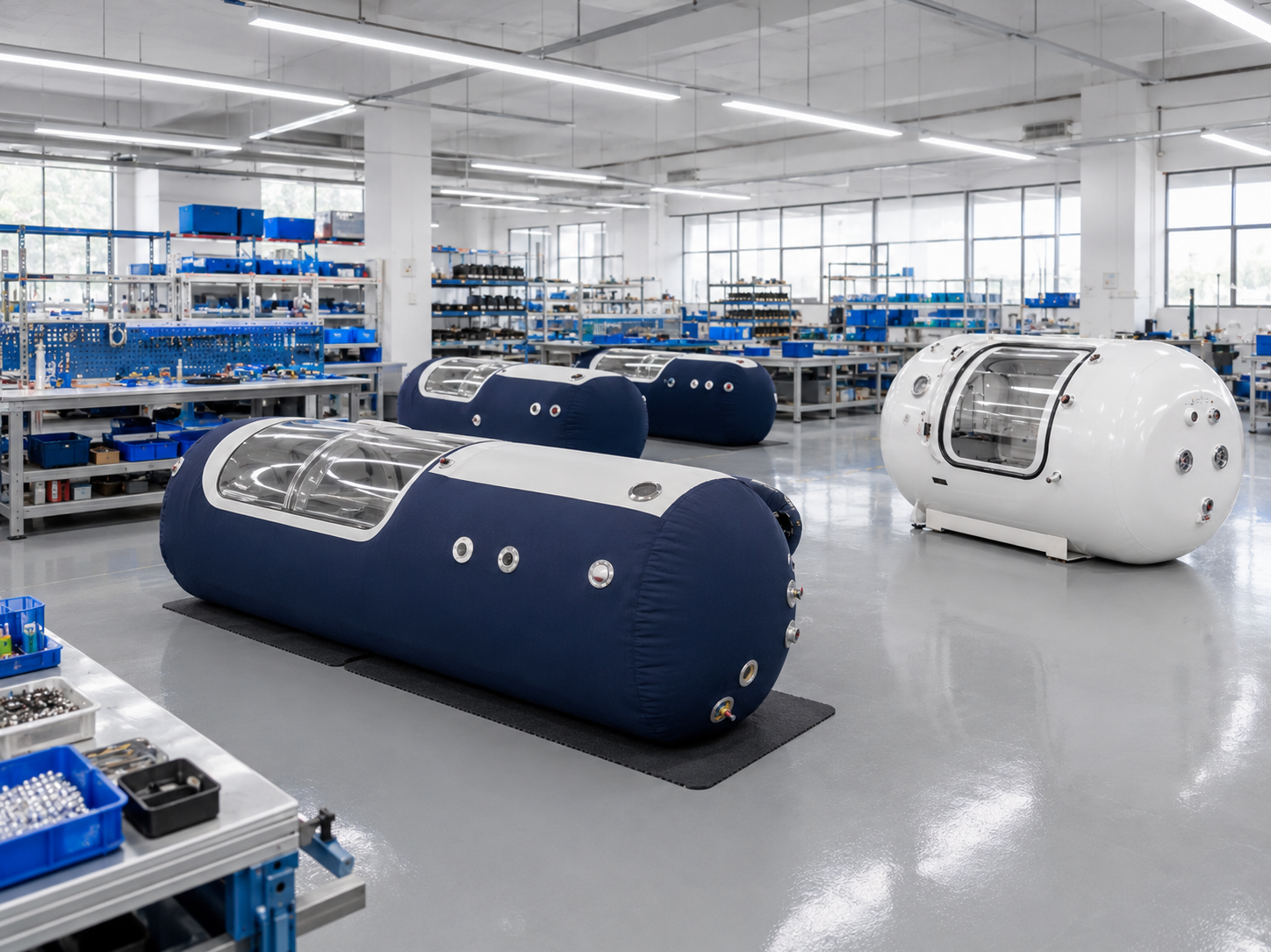
ISO 13485 Facility
Documented Compliance · Verify Every Certificate
Why Buy From a Medical-Device Manufacturer, Not a Drop-Shipper — Certifications, Safety & Support
Across the entire home chamber market the biggest, loudest, most obvious and most dangerous “gap” is in trust. Most other listings show zero documented compliance — “top safety rating” with no specific safety metric or certification named. The buyer’s genuine fear is not device failure — it’s the very expensive device sitting dead in the garage, with nobody to provide support; shipping it back to China is what they fear.
01 / 09Patent of Invention
02 / 09ISO 13485
03 / 09ISO 9001
04 / 09HP1501 Invention Patent
05 / 09CE — Air Compressor
06 / 09CE — Hyperbaric Chamber
07 / 09Compliance Certificate
08 / 09Compliance Certificate
09 / 09Compliance Certificate
The Proof — Select A Topic
Certifications you can actually verify
ISO 13485
Medical-device quality system
ISO 9001
Quality management
CE — Chamber
EU conformity (chamber)
CE — Compressor
EU conformity (air compressor)
Patents ×2
Invention patents incl. HP1501
SGS / TÜV
Non-toxic TPU material tests
Straight talk on FDA status (because over-claiming here is dangerous)
MACY-PAN has ISO 13485, ISO 9001 and CE certifications to document compliance — far more documented regulatory documentation than can be found on most all other home chamber listings in this market. In the U.S., chambers are FDA Class II devices; soft mild chambers are generally treated as general-wellness products unless 510(k) clearance is obtained for medical-use claims. We will not present a soft wellness chamber as “FDA approved to treat” any condition — verify the specific 510(k) status for any medical-grade use, and we will provide the compliance documents we hold.
Build quality and after-sales
Material
Features include SGS-certified TPU outer shells, YKK zippers, high frequency welded seams, and the multiple layer design that buyers are so often told they MUST have.
Safety devices
Emergency valves, internal pressure gauges, automatic and emergency pressure-relief valves. The factory states 8 safety devices, a 6-stage inspection and a 72-hour aging test on every unit.
After Sales
US-based technical support, one (1) year manufacturer warranty, lifetime maintenance. This is our way of directly addressing the “ship it back to China” worry for US customers.
Delivery
Door-to-door DHL in roughly 5–7 days, complete set (chamber + oxygen concentrator + compressor + cooling fan).
What “China-direct done right” actually looks like
Much of the “China-made = low quality” messaging online comes from U.S. competitors’ own comparison pages, while real China-direct customer reviews of comparable units are largely positive — units arrive on time and assemble cleanly. The variable that actually matters is the manufacturer: certifications you can check, a named warranty, and a support channel that answers. Those are the things to demand — from us or anyone.
“
We test every soft chamber to a 72-hour aging cycle and pressure-check the seams before it ships, because a zipper or seal that fails under daily home use is the one failure a remote buyer can’t fix alone. That’s also why we keep U.S.-side support and lifetime maintenance — the sale isn’t done when the box leaves the factory.
MACY-PAN Hyperbaric Application & QC Team
Want the paperwork first?
Download the full compliance, spec & warranty pack — every certificate and test report we hold, available to review before you buy.
ASME PVHO-1 2023↓
Assurance for Pressure Equipment 2024↓
CE — Inflatable Chamber↓
Hard-shell CE 2024↓
ISO 13485 Certificate (EN) 2026.1.6↓
ISO 13485 Certificate (CN) 2026.1.6↓
ISO 13485 QMS Certificate (EN) 2024.1.4↓
SGS — Chamber Cover↓
SGS — Chamber Interior↓
SGS — Chamber Material↓
SGS — Mattress↓
SGS — Window Material↓
Home Hyperbaric Chamber Planning Tools
Home Hyperbaric Chamber Selector
Answer 3 questions — get a MACY-PAN model match, factory-direct.
Access ToolClinic-vs-Home Breakeven Calculator
See how fast owning a chamber beats paying per clinic visit.
Calculate NowCandidacy & Safety Self-Check
Tick anything that applies before considering home HBOT. This is not medical advice.
Start CheckHow much does a home hyperbaric chamber cost?
On the U.S. market, home soft-shell chambers typically run $8,000–$10,000 and hard-shell units about $20,000–$60,000+, with multiplace medical units climbing past $150,000. U.S. resellers list the MACY-PAN soft lying model ST801 at $7,740–$9,800 — and because that's our own chamber re-badged with a domestic markup, buying factory-direct removes that layer entirely. The exact figure depends on shell type, pressure rating, size and order volume, so request a configured quote and you'll see the factory number against these verified market prices.
Are home hyperbaric chambers worth it?
For frequent users, the math says yes. Against clinic sessions priced at $100 to $350 each, a home chamber breaks even after roughly 33 to 200 sessions, then runs at only about $50 to $100 a year in electricity. The honest caveat is consistency: a typical protocol is 20 to 40 sessions of 60 to 90 minutes, so the value only materializes if you'll actually use it rather than let a five-figure machine sit idle.
Why do people say it's illegal to own a hyperbaric chamber?
Owning one for personal home use is legal in the U.S. and needs no FDA approval. Confusion comes from marketing rules — regulators police medical claims and labeling, not private ownership. Mild 1.3 ATA wellness chambers are usually sold without a prescription.
Do you need a prescription to buy one?
For a mild wellness chamber, federal law requires no prescription for personal ownership, so most home buyers need none. Some sellers still ask for one as their own liability policy. Higher-pressure or medical-claim systems are where physician authorization typically applies.
What's the difference between a soft and a hard chamber?
Soft (fabric) chambers run 1.3–1.5 ATA on compressed air with oxygen delivered by mask; they're portable and start at a lower price, the common pick for home wellness and athletic recovery. Hard (steel and polycarbonate) chambers reach 2.0 ATA — the clinical-pressure threshold — but cost more and need dedicated floor space, ceiling height and a power outlet. Neither type is universally "better"; the right choice depends on your goal, your budget, and how often you'll actually use it.
Is 1.5 ATA enough, or do I need 2.0 ATA?
For wellness and athletic recovery, many users do well at 1.5 ATA, and research shows it can match 2.0 ATA outcomes for some uses with fewer side effects. The 13 FDA-cleared medical conditions are treated at 2.0–3.0 ATA in clinics — for those, see a physician.
Do you really breathe 100% oxygen inside?
No — a home soft chamber does not fill with pure oxygen. Inside, compressed air is pressurized and you breathe up to about 93% oxygen through a mask fed by the concentrator. Only higher-pressure medical or hard chambers approach near-100% oxygen. Any page claiming a soft cabin fills with pure oxygen is overstating how the system works.
Is it safe to use at home, and who should not use one?
For most healthy adults, home HBOT is well tolerated, with mild, reversible effects like ear or sinus pressure, temporary nearsightedness, or post-session fatigue. Only one condition is an absolute contraindication — an untreated pneumothorax, or collapsed lung — because changing pressure can make it life-threatening. A handful of other conditions call for a physician's sign-off first.
Check with your doctor if you have COPD or asthma with air trapping, lung blebs or bullae, recent ear or sinus surgery, or take bleomycin, doxorubicin, cisplatin or disulfiram. Mild 1.3 ATA HBOT can also raise blood pressure, so anyone treated for hypertension should ask first. Because oxygen raises fire risk, follow grounding, ventilation and cotton-clothing rules.
Are MACY-PAN chambers FDA-approved?
MACY-PAN chambers are certified to ISO 13485, ISO 9001 and CE, but we do not claim FDA clearance for the wellness use of soft chambers, and we won't call a soft chamber "FDA-approved to treat" a condition. In the U.S., chambers are FDA Class II devices, and medical claims require 510(k) clearance. For any medical-grade use, verify the specific clearance for your intended application, and we'll provide the compliance documents we hold so you can confirm it.
What about buying a medical device direct from China — quality and support?
Fair questions are certifications, warranty and service network — not country of origin. MACY-PAN ships ISO 13485 / CE-certified hardware with a 1-year warranty, lifetime maintenance and U.S.-based technical support, and the same units are already trusted by U.S. resellers and across 120+ countries. Ask any supplier for documents you can verify; we'll send ours.
How many people fit, and how big a room do I need?
Single-person soft models like the ST801 and L1 suit one user and fit a normal room; the ST2200 and MC4000 U seat two, with the MC4000 U wheelchair-accessible. Hard-shell units are heavier and need dedicated space. Exact dimensions are in the spec table above.
What's the warranty and delivery like?
Every chamber ships as a complete set by DHL door-to-door in roughly 5 to 7 days, with a one-year manufacturer's warranty plus lifetime maintenance. MACY-PAN backs the shell and components directly, and we'll put exact warranty and delivery terms in writing on your quote.
Factory Selection Support
Need a hyperbaric chamber matched to your room, pressure target, and compliance documents?
MACY-PAN helps clinics, wellness centers, distributors, and home buyers compare soft-shell, hard-shell sitting, and medical-grade lying chambers before quotation. Send your intended use, available space, country, and preferred ATA range, and our team will recommend a practical model path.
2007HBOT manufacturing since
126+countries shipped to
1.3-2.0ATA chamber range