Get in Touch with MACY-PAN Company

Professional-Grade HBOT · Factory-Direct
Veterinary Chambers (for Sale)
Veterinary Hyperbaric Chambers for Sale — Professional-Grade HBOT Systems by MACY-PAN
A veterinary hyperbaric chamber for sale is only as safe as the manufacturer behind it. MACY-PAN builds veterinary hyperbaric oxygen (HBOT) chambers under an ISO 13485 quality system, with applicable CE files for small-animal clinics — hard-shell, air-pressurized to 1.4 ATA, shipped factory-direct from a 19-year specialized factory that exports to 126 countries.
1.4ATA
Air-pressurized working pressure
60–80cm Ø
HP600 / HP800 cabin
certified quality management system& CE
Model documentation available
126countries
19 years manufacturing
The MACY-PAN Advantage
Veterinary buyers tell us the first question they ask any supplier is the same: “How do I know your chamber is safe?” Here is how we answer it before you ask.
The honest version: a hyperbaric chamber is a multi-year capital risk, and the hidden cost is rarely the purchase price — it is the downtime an unsupported unit causes against a 1-year warranty gap. Unlike resellers, MACY-PAN engineers, certifies and services the chamber it sells, because uptime is the real specification.
Why Veterinary Clinics Add In-House Hyperbaric Oxygen Therapy
01 Mechanism
The Hypoxia Problem & Solution
Trauma drives up to 30% of primary-care emergency caseload, and the patients that heal slowest — crush injuries, degloving and bite wounds, compromised skin grafts, post-surgical infection — share one problem: the damaged tissue is hypoxic, and blood flow alone cannot carry enough oxygen to it. Hyperbaric oxygen therapy is the veterinary tool that solves that specific problem, and clinics that refer it out lose both the revenue and the continuity of care.
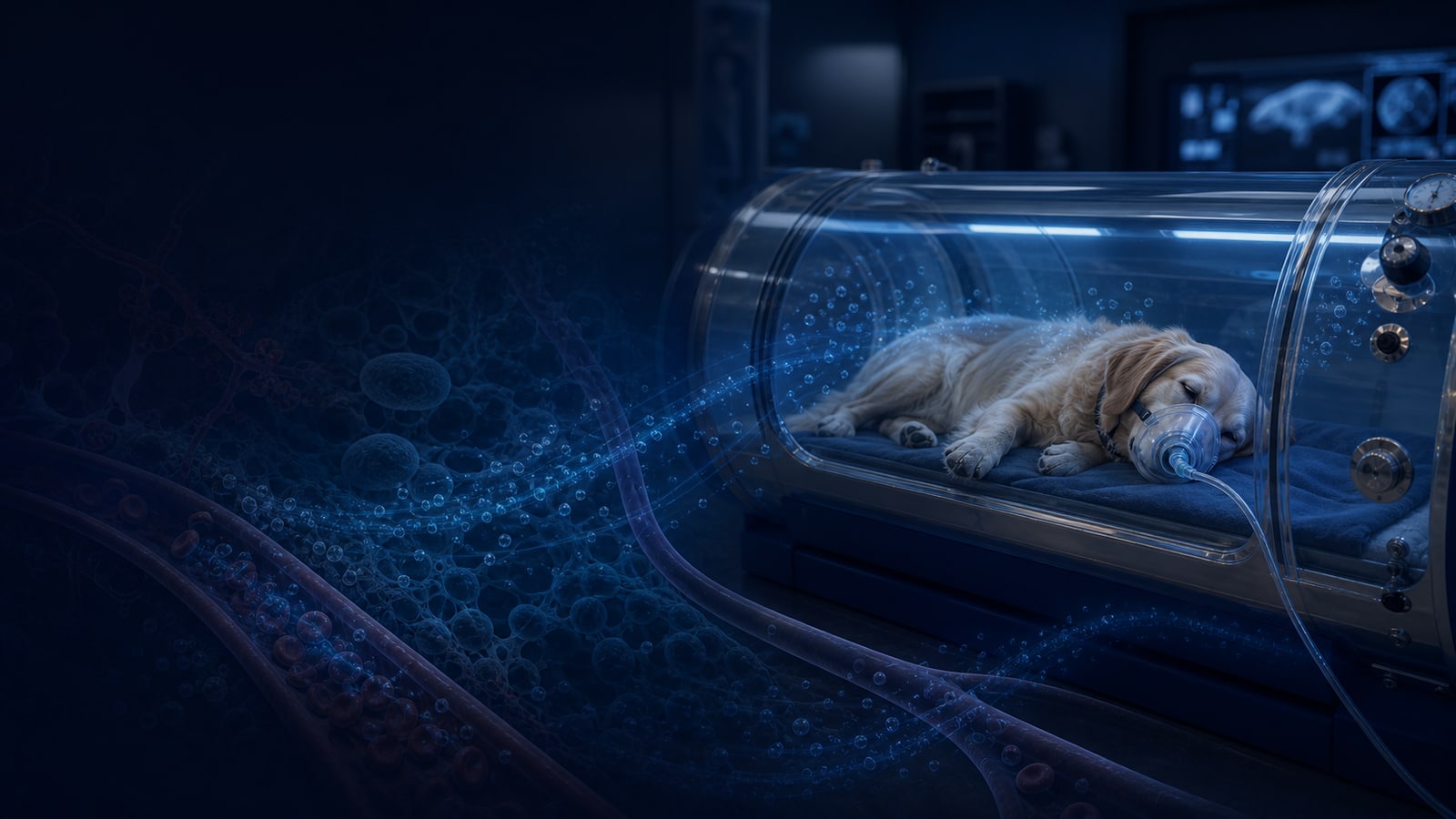
This mechanism is physical, not marketing. Under increased atmospheric pressure, Henry’s law forces far more oxygen into physical solution in the blood plasma — oxygen that travels independently of hemoglobin and the red blood cell, so it diffuses into edematous, poorly perfused tissue that normal circulation cannot reach. This hyperoxia triggers vasoconstriction that reduces edema, up-regulates VEGF, PDGF and FGF growth factors to drive angiogenesis, mobilizes CD34+ stem cells, and blunts the neutrophil-driven ischemia–reperfusion injury that follows a vascular insult. At sea level the partial pressure of oxygen carried in plasma is trivial; raising the pressure of oxygen the patient breathes is what changes the math. The same physics underpins hyperbaric therapy in human medicine — where the documented effects of hyperbaric oxygen therapy on carbon monoxide toxicity, decompression sickness and severe anemia are long established — and veterinary health applies the identical mechanism to veterinary patients. Because the oxygen is transported dissolved in plasma rather than bound to hemoglobin, it reaches low-oxygen tissue that red blood cells cannot — delivering oxygen to the tissues at a pressure inside the chamber set above normal atmospheric pressure. That elevated inspired oxygen is dosed deliberately: pushing the dose too high raises reactive oxygen species, which is exactly why the modest lift of 1.4 ATA is favorable.
02 1.4 ATA Data
Is 1.4 ATA “Real” HBOT?
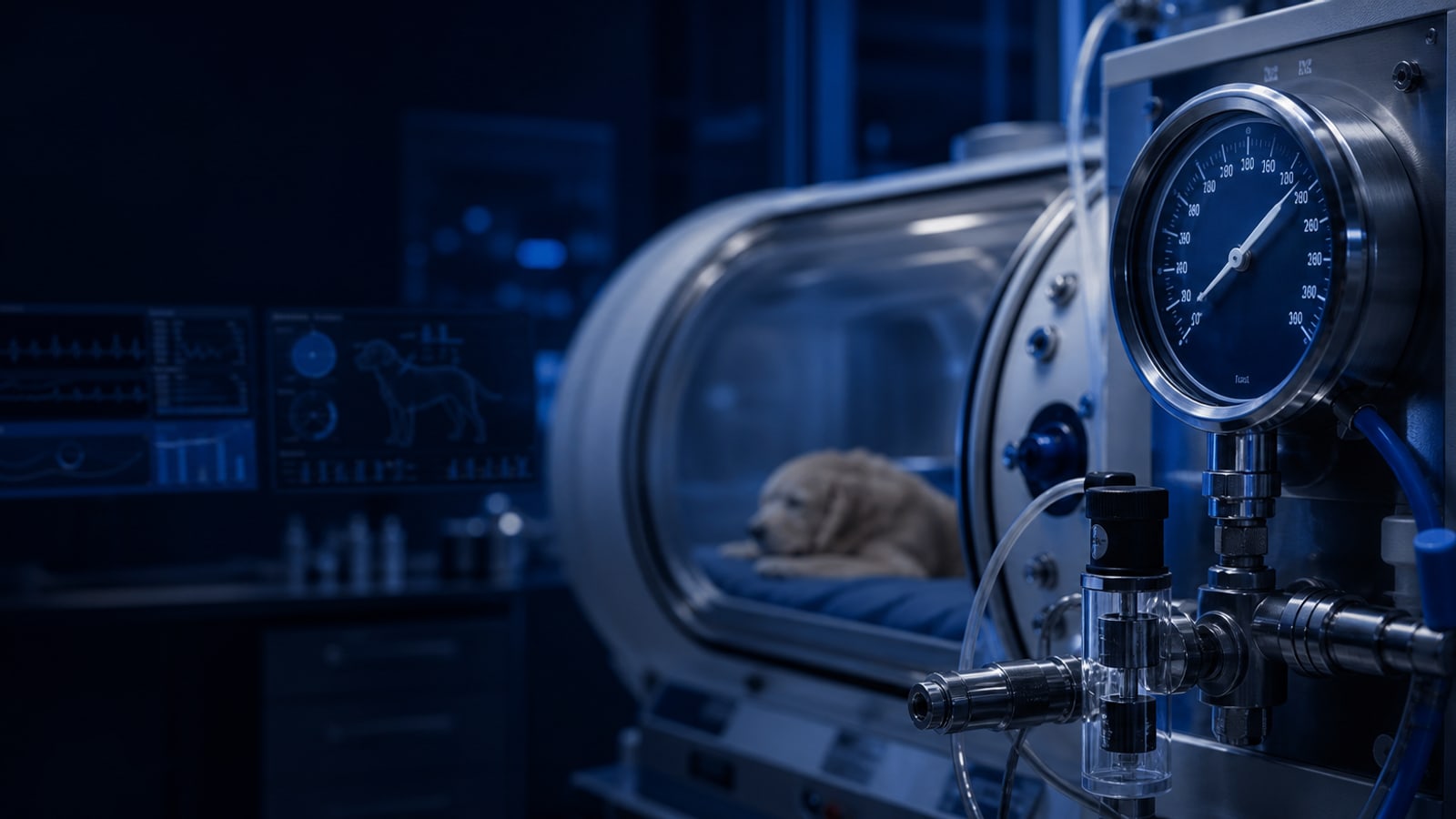
Yes — and this is the question every informed buyer raises. Peer-reviewed veterinary literature states plainly that “the minimum pressure required for therapeutic effects of HBOT is 1.4 ATA,” while “the maximum pressure recommended is 3 ATA, at which point HBOT may not be safe or tolerable.” The Undersea and Hyperbaric Medical Society (UHMS) 14th-edition indications likewise set 1.4 atm as the clinical floor. MACY-PAN chambers sit at that documented therapeutic threshold. We are candid about the trade-off: 1.4 ATA is the low end of the dosing range — many published protocols run at 2 ATA — so we position our chambers as a mild, safety-favorable therapeutic pressure, never as the equivalent of a 2–3 ATA high-pressure protocol.
That honesty matters because higher is not automatically better: dogs develop central-nervous-system oxygen toxicity at 2.2 ATA, and the dose–response curve flattens once past the ~1.4 ATA threshold, with the highest pressures contributing oxidative stress rather than proportional benefit. A 1.4 ATA air-pressurized chamber keeps the patient inside a more forgiving safety window while still crossing the line into genuine hyperbaric medicine.
03 Protocol
What an HBOT Treatment Session Involves
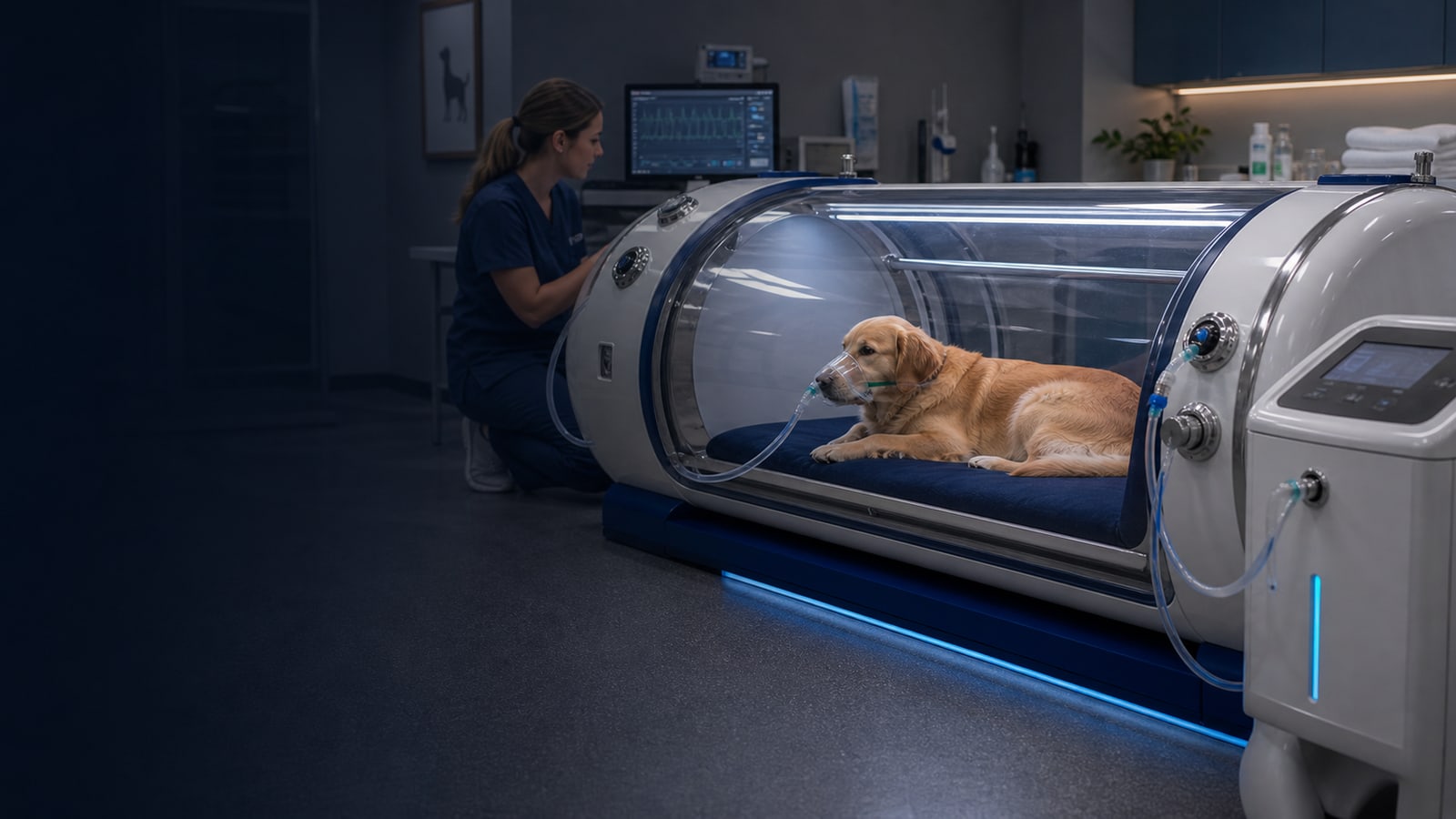
A typical HBOT treatment runs 45–90 minutes. The patient rests in the chamber and receives oxygen by inhalation while a trained veterinary technician monitors continuously through the clear cabin wall.
Many dogs settle within the first few minutes; the pet is acclimated prior to treatment, and patients undergoing HBOT are observed throughout the session, with sedation rarely required for a calm 1.4 ATA treatment session. Most protocols repeat the session daily or twice daily, with the total number of sessions matched to the indication for HBOT — from two for early snakebite necrosis to twenty for severe osteomyelitis.
MACY-PAN Veterinary Hyperbaric Chambers — Models & Selection
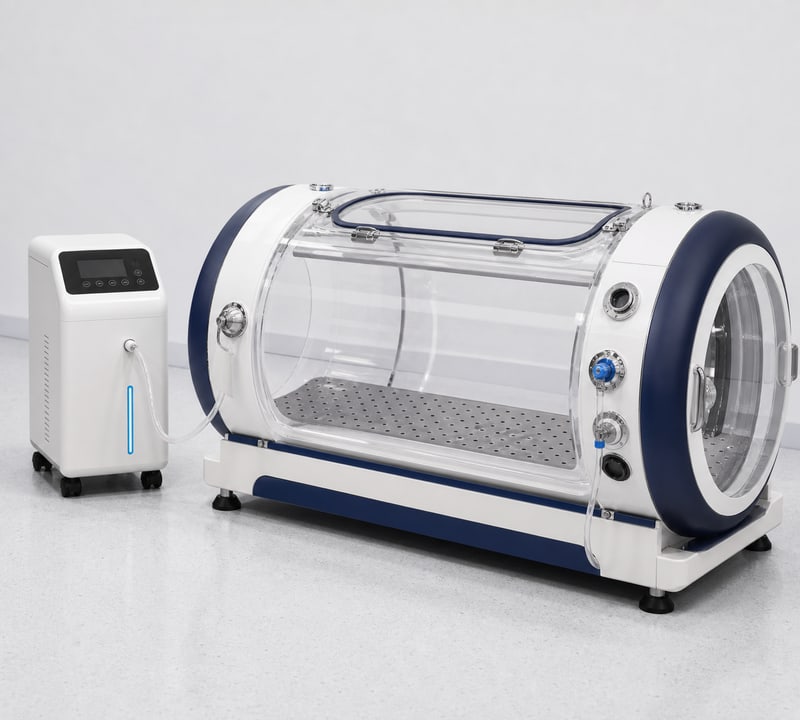
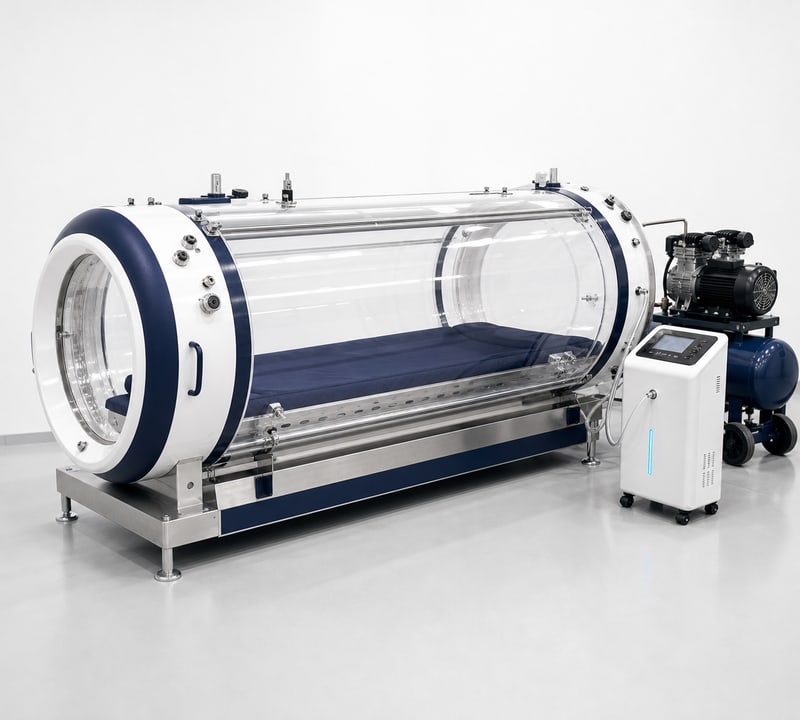
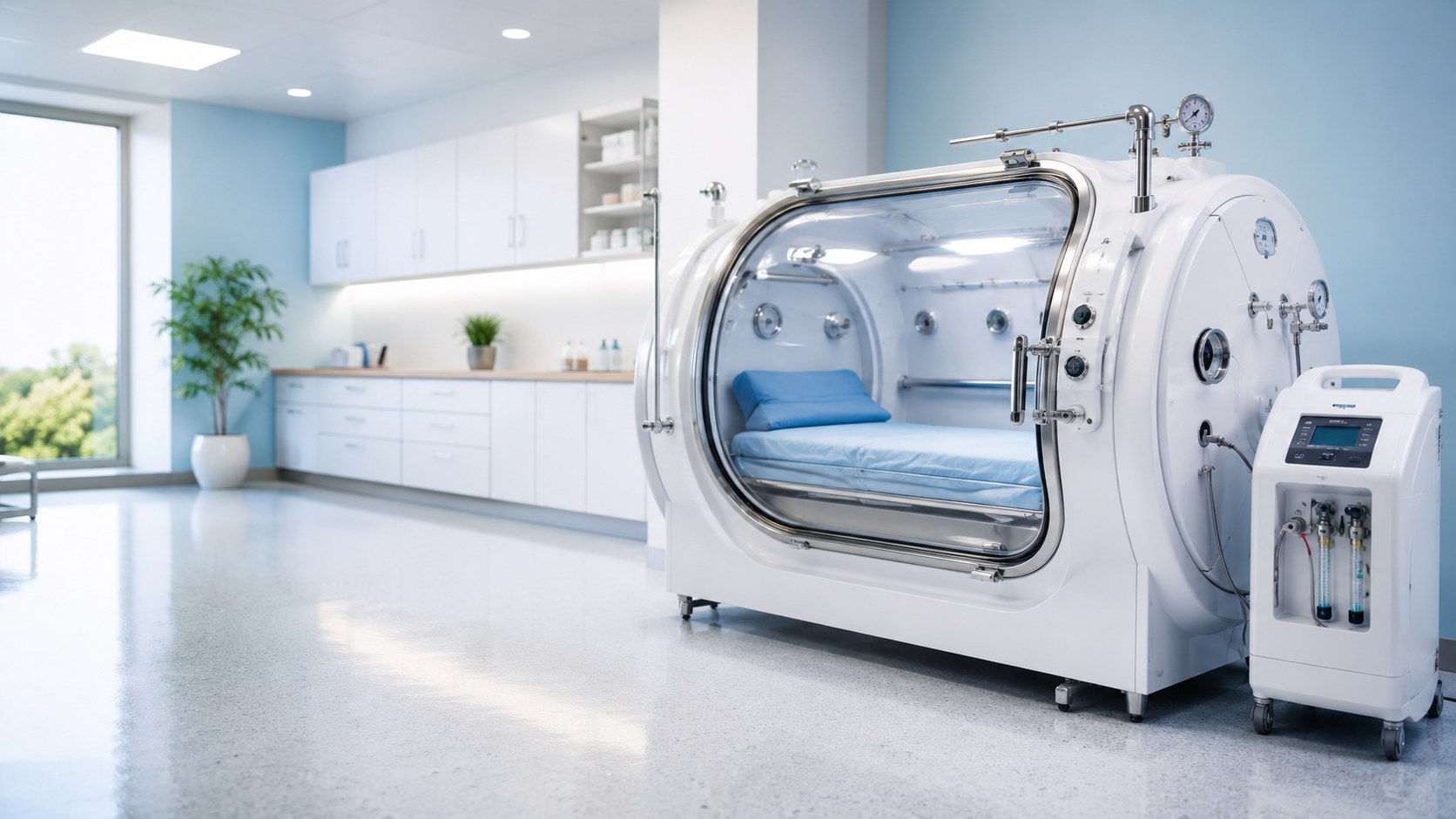
Two hard-shell, single-animal chambers cover the small-animal caseload. Both are transparent polycarbonate cabins on a perforated stainless-steel base, pressurized with filtered air while the patient breathes an elevated oxygen concentration — the build that keeps the cabin out of the oxygen-enriched fire-risk category.
Each is a single-animal monoplace chamber: a true hyperbaric oxygen chamber that pressurizes above atmospheric, not a normobaric oxygen chamber that merely enriches the air. Whether you call it an HBOT chamber or a hyperbaric oxygen therapy chamber, the working principle and the 1.4 ATA pressure rating are the same.
MACY-PAN engineers both cabins in a plant operating under a certified quality management system, and unlike a relabeled acrylic unit, the polycarbonate-and-stainless build is the structural reason a 1.4 ATA monoplace chamber holds pressure safely across 126 countries of deployment.
HP600 — M Size
MACY-PAN HP600 veterinary hyperbaric chamber, 60 cm transparent cabin for cats and small-breed dogs
Chamber diameter60 cm (24 in)
Cabin (L×W×H)90×60×60 cm
Working pressure1.4 ATA
Oxygen flow10 L/min
Air flow72 L/min
Cabin weight65 kg
Best fitCats, small & toy dogs
HP800 — L Size
MACY-PAN HP800 veterinary hyperbaric chamber, 80 cm transparent cabin for medium and large-breed dogs
Chamber diameter80 cm (28 in)
Cabin (L×W×H)90×80×80 cm
Working pressure1.4 ATA
Oxygen flow10 L/min
Air flow72 L/min
Cabin weight75 kg
Best fitMed & large-breed dogs
Decision Matrix — Which Chamber for Your Caseload
| Patient profile | Typical weight | Recommended model | Cabin diameter | Working pressure |
|---|---|---|---|---|
| Cats, exotics, toy & small-breed dogs | up to ~15 kg | HP600 | 60 cm | 1.4 ATA |
| Medium-breed dogs, mixed small practice | ~15–35 kg | HP800 | 80 cm | 1.4 ATA |
| Large-breed dogs / specialty volume | 35 kg+ | HP800 | 80 cm | 1.4 ATA |
| Horses & large animals | — | Custom / OEM (see below) | Engineered to spec | Engineered to spec |
Hard-Shell vs. Soft “Minimal” Chambers
Inflatable soft-sided bags marketed as “mild HBOT” cannot reliably hold therapeutic pressure or oxygen concentration, which is why veterinary safety educators distinguish them from true hyperbaric units. A rigid polycarbonate-and-stainless cabin holds 1.4 ATA precisely, gives the clinician a sealed viewing window onto the patient, and carries the multi-stage pressure-relief architecture a monoplace chamber needs.
Custom & Equine Hyperbaric Chambers — Built to Spec
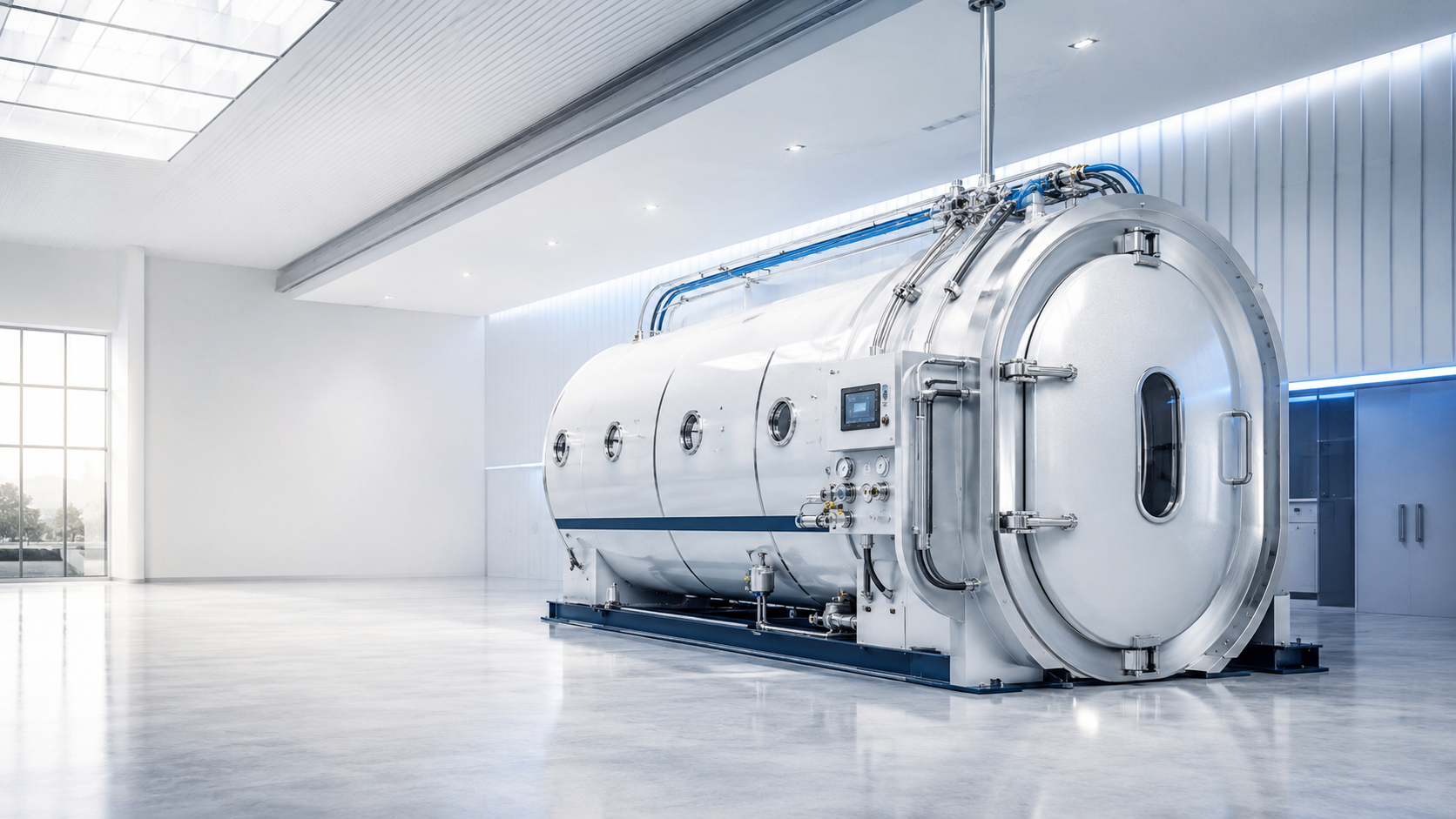
Our standard catalogue is engineered for small animals. Equine and large-animal hyperbaric chambers we build only as custom, made-to-order units — and we are deliberate about that. A walk-in equine chamber is not a scaled-up dog chamber: it is a different pressure-vessel class with its own animal-handling, door and ramp, and oxygen-management engineering. The industry record is unambiguous about why this cannot be a catalogue product — an equine hyperbaric chamber explosion documented by OSHA killed both a handler and the horse when a kick generated a spark inside the vessel.
So for equine sports-medicine, racehorse rehabilitation and large-animal facilities, we engineer to your specification rather than ship a stock unit: chamber dimensions and animal-weight rating, working pressure, door and loading design, and oxygen-delivery and fire-safety systems are all defined with our engineering team before a quote is issued. If you are evaluating a hyperbaric chamber for horses, talk to us about a custom build — we will not pretend a small-animal cabin fits a 500 kg patient.
Scaling a 60 cm or 80 cm small-animal cabin to a walk-in horse stall is the mistake that gets handlers killed — the OSHA record shows the risk is fatal, not theoretical.
Because a walk-in equine vessel is a different pressure class, MACY-PAN engineers each build to spec rather than relabel a stock unit; that is the honest trade-off between speed and safety. Across 126 countries and 19 years of certified quality management system manufacturing, our OEM line serves equine and large-animal applications in practice — ask us what the best equine hyperbaric chamber configuration looks like for your facility. There is no honest equine hyperbaric chamber for sale off the shelf — only a unit engineered to your animals and your building.
Request a custom / equine build engineering estimate ›MACY-PAN vs. Resellers and Generic Acrylic Chambers
The veterinary hyperbaric chamber market in the U.S. is dominated by resellers and relabeled units — many sold with no published product certifications. Here is the difference on the factors a clinic actually audits before signing a purchase order.
The Safety Record Resellers Don’t Show You
Request a detailed side-by-side spec comparison for your shortlist ›A 73-year analysis of hyperbaric chamber fires found that every fatal chamber fire occurred in an oxygen-enriched (>28% O₂) pressurized environment; air-pressurized chambers were the only survivors. Brand age is no shield: a chamber from a long-established maker is documented in the FDA MAUDE database as catching fire and killing a dog, and one manufacturer that marketed “the safest, most advanced and most reliable chambers in the world” later asked every customer to stop using its entire fleet after a fatal explosion. We compete on documented current certification and air-pressurized engineering, not on a logo.
We also keep our clinical claims honest, which is itself a differentiator. A 2026 American Journal of Veterinary Research study of 110 dogs found HBOT did not change recovery of deep pain perception after hemilaminectomy for intervertebral disc disease — so we will never sell you a chamber on a blanket promise of neurological recovery. We sell a tool with a defined, evidence-based role in wound, infection and ischemia management.
The hidden cost of the cheaper option surfaces later: an uncertified chamber that fails inspection can pull a program offline, and the risk is documented, not hypothetical — the 73-year fire record is unambiguous. Because every fatal incident traces to an oxygen-enriched build, MACY-PAN engineers an air-pressurized cabin and manufactures it under a certified quality management system; that is the structural reason we compete on documentation. Unlike resellers, MACY-PAN will not claim a human 510(k) it does not hold.
Clinical Applications and the Economics of an In-House Chamber
HBOT is an adjunct alongside debridement, antibiotics and standard care — not a replacement — and it earns its footprint across a broad indication list. Across veterinary hospitals offering small animal veterinary HBOT — from university programs such as the University of Tennessee to private referral centers — the veterinary indications are broad: in a teaching-hospital review of 2,792 treatments, neurological injury was the single largest indication at 50.4%, ahead of wound healing at 31.4%. Documented veterinary uses span a wide variety of conditions: non-healing and necrotizing wounds, necrotizing fasciitis, crush injuries, burns, snakebite envenomation, skin-graft and bone-graft survival, osteomyelitis, cellulitis, post-surgical infection, carbon monoxide poisoning, decompression sickness, severe anemia, pancreatitis and ischemia–reperfusion injury. Colleges of veterinary medicine and referral teaching hospitals now report the use of hyperbaric oxygen therapy across this range, and a growing body of hyperbaric veterinary medicine literature gives each indication for HBOT a peer-reviewed footing. Much of the early evidence for hyperbaric oxygen therapy in animals was extrapolated from HBOT in humans, where indications such as smoke inhalation and carbon monoxide poisoning are long established.
Safety in routine use is well characterized: across the 2,792-treatment series, major adverse events ran below 0.7% with no lasting sequelae — consistent with the favorable window of a 1.4 ATA air-pressurized protocol that sits well below the 2.2 ATA threshold for canine CNS oxygen toxicity. In a mixed small-animal application, a single 60 cm or 80 cm chamber runs 45–90 min sessions and turns over three to four patients a day; MACY-PAN quantifies that throughput honestly, because case volume drives payback — unlike vendors who promise blanket cures, the number is a planning input, not a guarantee.
The market context strengthens the case: hyperbaric oxygen therapy is offered by “only a few clinics, if any” in each state, so an in-house chamber is also a referral magnet that keeps complex wound and post-surgical cases — and their revenue — inside your practice. Most pet insurers reimburse HBOT when a licensed veterinarian prescribes it, lowering the barrier for clients.
$100–200
Typical fee a clinic charges per HBOT session, against an oxygen operating cost of roughly $4–20 per session — a per-session gross margin of about $105–195.Session fee: Today’s Veterinary Practice (peer-reviewed trade press). Margin and ~3–4 patients/chamber/day throughput are modeled estimates, not a guaranteed return; capital payback depends on your case volume and is quoted per project. [QUALIFIED — modeled]
“We build every veterinary cabin around the same principle our human chambers use — pressurize with air, deliver oxygen to the patient, and keep the cabin atmosphere out of the combustion-risk range. That decision is why our 1.4 ATA units stay inside the safe envelope, not because it is the cheapest way to build a chamber.”
Compliance Stack
Certifications, Compliance and Honest Regulatory Scope
This is the section every serious buyer should read first — especially when buying from an overseas manufacturer. U.S. veterinary authorities have publicly flagged that thousands of non-code-compliant hyperbaric chambers are in service, some imported. We meet that concern head-on with documentation rather than slogans.
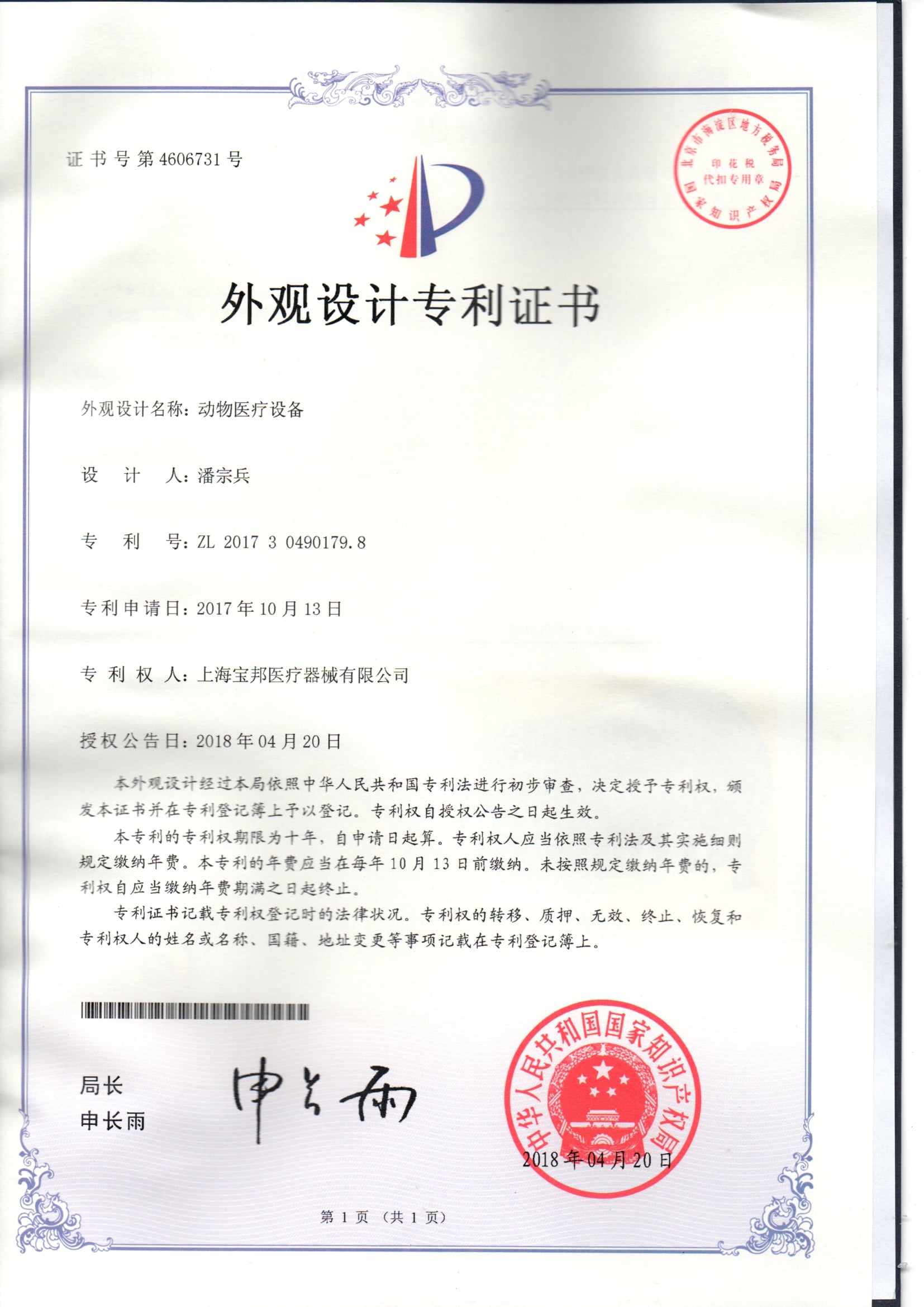
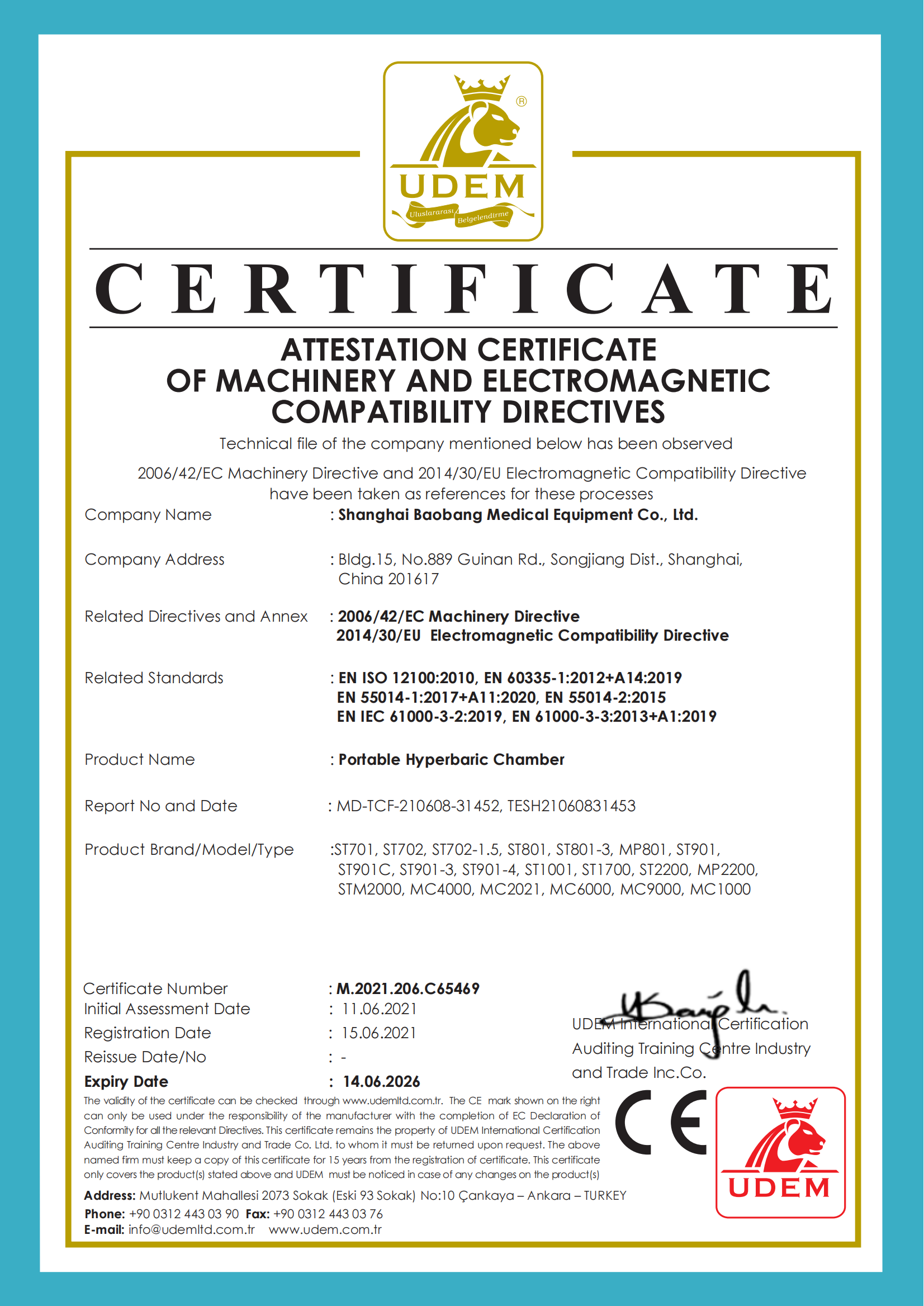
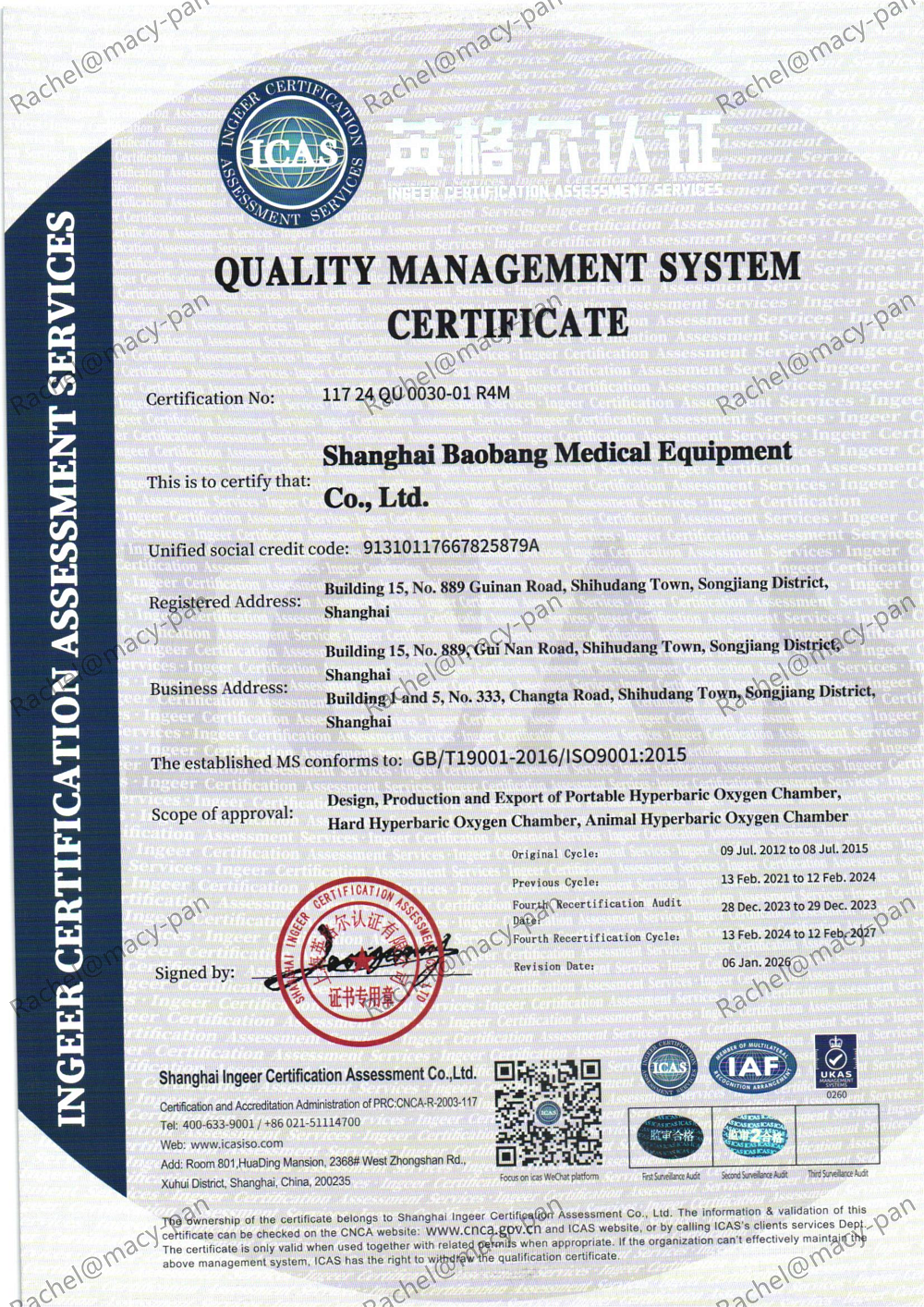
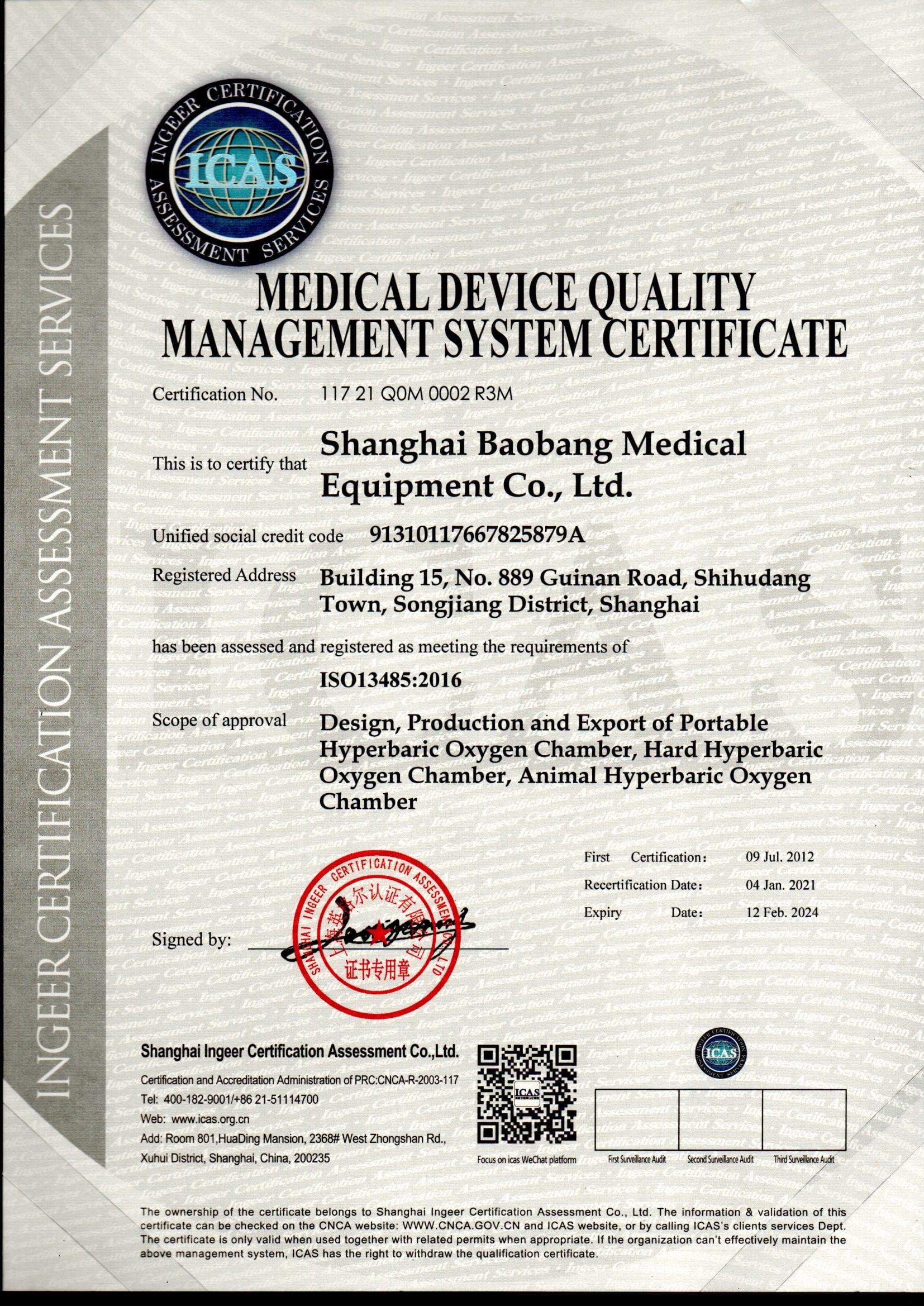
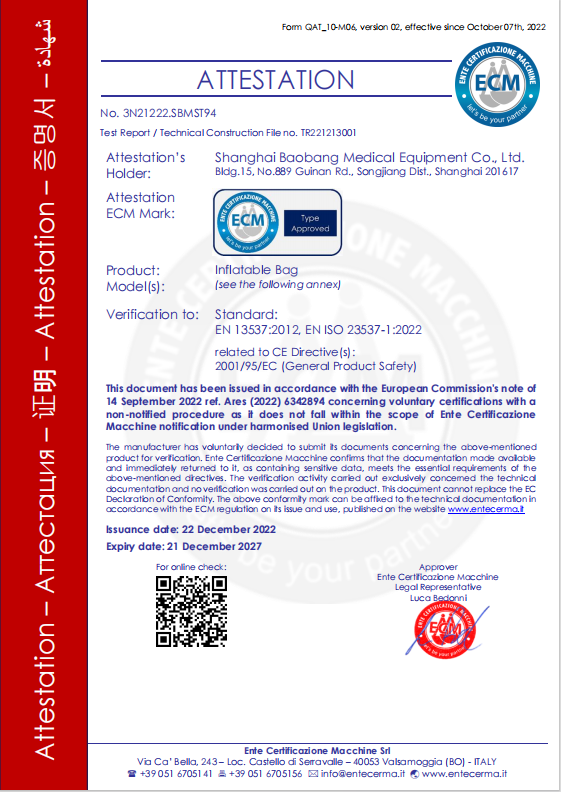
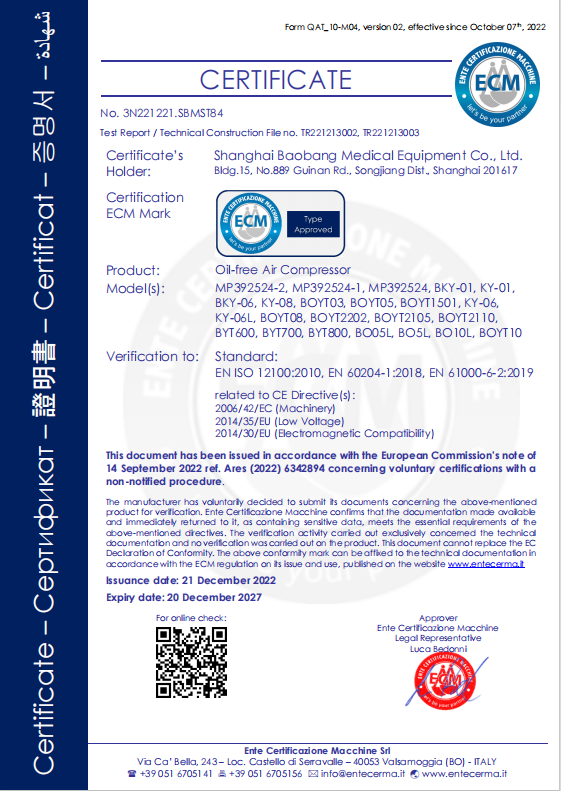
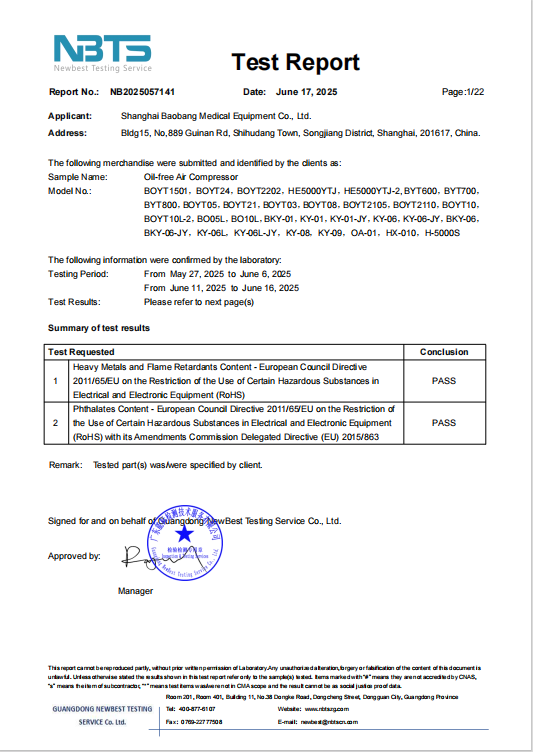
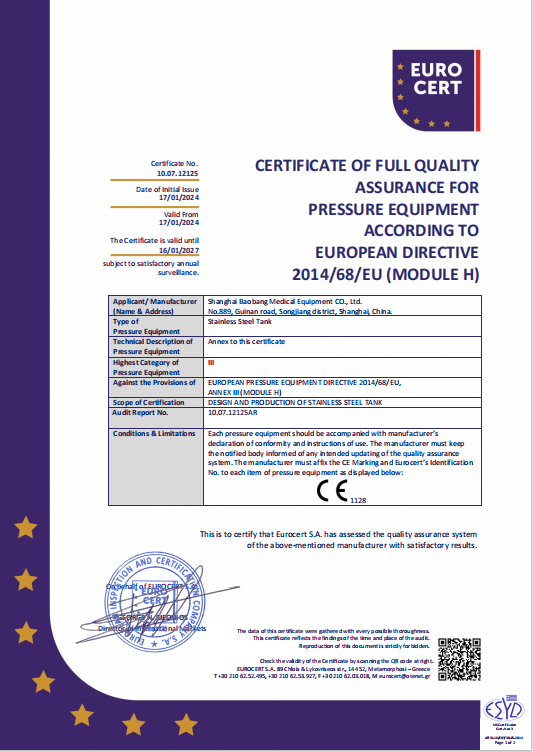
certified quality management system
Medical-device quality system
ISO 9001
Quality management
CE
EU conformity
SGS
Third-party inspection
ASME BPVC VIII
Pressure-vessel fabrication practice
What We Do — and Do Not — Claim
Our chambers are veterinary devices (animal occupancy). We hold certified quality management system, ISO 9001, CE and SGS, and fabricate the pressure vessel to ASME BPVC Section VIII practice. We do not claim ASME human-occupancy certification or an FDA 510(k) human-device clearance — those are the human-medical regulatory track and would be the wrong claim for a veterinary chamber. Stating that boundary plainly is part of how a compliant manufacturer earns trust.
How to Verify Any Hyperbaric Supplier — A 3-Step Buyer Checklist
Apply this to us and to every competitor on your shortlist: (1) ask for the current quality-management-system certificate with scope and audit date; (2) ask for the chamber’s technical specification and bill of safety relief; (3) confirm who provides parts and service for the life of the unit. A supplier that cannot produce all three on request is the risk — regardless of price or brand age.
Procurement: Lead Time, Warranty, Installation & OEM
We quote every chamber individually rather than post a list price, because the right configuration — model, oxygen system, customization and shipping terms — depends on your practice. Here is how the buying process and total cost of ownership actually break down.
Pricing-Factors Framework (We Quote to Spec)
Your quotation is driven by: chamber model (HP600 vs HP800 vs custom), oxygen-concentrator and compressor configuration, any color/branding/OEM customization, and shipping and incoterms to your country. Beyond the chamber itself, plan a total cost of ownership that the wider market puts at roughly $5,000–15,000 for installation, $5,000–20,000 for oxygen-system setup, and $2,000–3,000 a year for maintenance and staff HBOT training. [Contact for a detailed quotation based on your application parameters.]
About Cross-Border Logistics — Straight Answer
New capital equipment in this category typically runs a multi-week lead time wherever it is built, and waiting on a back-ordered part means lost revenue. Because we ship from China, we put our logistics commitments in the contract rather than leave them implied: a confirmed production and shipping timeline, a stated spare-parts availability window, and a service-response SLA. “A chamber is only as good as the manufacturer’s ability to keep it running safely” — so we make that ability contractual. [QUALIFIED — delivered as a written SLA per order.]
Comparing veterinary hyperbaric chamber price and cost across vendors is the wrong first move — the expensive mistake is treating support as an afterthought, because a back-ordered part can idle a program against a 1-year revenue plan. MACY-PAN engineers parts availability into the contract and manufactures the chamber under a certified quality management system; unlike resellers who disclaim used-unit warranties, we commit lead time across 126 countries in writing.
Veterinary Hyperbaric Program Resources & Tools
Veterinary HBOT Chamber Selector
Match a MACY-PAN hyperbaric chamber to your caseload. All standard models run at a 1.4 ATA air-pressurized working pressure.
Access Tool
Clinic HBOT ROI Estimator
Model the gross revenue an in-house hyperbaric program can generate. Per-session fees of $100–200 are reported in Today’s Veterinary Practice; oxygen operating cost runs roughly $4–20 per session.
Calculate ROI
Hyperbaric Supplier Verification Checklist
Run this on every chamber supplier on your shortlist — including us. A supplier that cannot produce all of these on request is the real risk, regardless of price or brand age.
View Checklist
Veterinary Hyperbaric Chamber — Buyer Questions
For a practice with steady wound, post-surgical, infection or ischemia caseload, the economics are defensible: clinics typically charge $100–200 per HBOT session against a few dollars of oxygen cost, and HBOT is offered by only a handful of clinics per state — so it doubles as a referral draw. Capital payback depends on your case volume, which is why we quote and model it per practice rather than promise a fixed return. Clinics searching for a “veterinary hyperbaric chamber near me” rarely find a domestic maker — most units ship from overseas, so factory-direct sourcing with documented certification matters more than proximity.
Fire risk is the right question to ask, and the data is clear: a 73-year review found every fatal hyperbaric fire occurred in an oxygen-enriched, high-pressure environment, while air-pressurized chambers were the survivors. MACY-PAN chambers pressurize the cabin with filtered air while the patient breathes oxygen, keeping the cabin atmosphere out of the combustion-risk range, and add multi-stage automatic and emergency pressure-relief plus an external gauge. In routine veterinary use, major adverse events run below 0.7% with no lasting sequelae.
On evidence, not reputation. We hold current certified quality management system, ISO 9001, CE and SGS certification and fabricate to ASME BPVC Section VIII practice — documentation we hand over on request. Brand age is not a safety guarantee: chambers from long-established makers appear in the FDA’s adverse-event database for fires, including one fatal incident. We ask you to verify our certificates, specifications and parts-and-service commitment — the same three checks you should run on any supplier.
1.4 ATA is the documented minimum therapeutic pressure for HBOT in the veterinary literature, so a 1.4 ATA chamber is genuinely hyperbaric, not a wellness gimmick. We are also straightforward that it is the low end of the dosing range — many clinical protocols use 2 ATA — so we position our chambers as a mild, safety-favorable therapeutic pressure rather than as a substitute for a high-pressure protocol. Higher pressure is not automatically better: canine CNS oxygen toxicity appears at 2.2 ATA.
By patient size. The HP600 (60 cm diameter, 90×60×60 cm cabin) suits cats, exotics and small or toy-breed dogs; the HP800 (80 cm diameter, 90×80×80 cm cabin) handles medium and large-breed dogs and a mixed small-animal caseload. Both run at 1.4 ATA with a 10 L/min oxygen supply and 72 L/min air flow. Our team will match the model to your typical patient mix.
Yes — but only as custom, engineered-to-spec builds, never as an off-the-shelf product. A walk-in equine chamber is a different and higher-risk pressure-vessel class (a documented equine-chamber explosion killed a handler and horse), so we design dimensions, animal-weight rating, working pressure, loading and oxygen-safety systems with our engineering team before quoting. Contact us for an equine or large-animal consultation.
Pet owners often search for a “hyperbaric chamber for dogs” or an “animal oxygen chamber,” and the two are not the same. A normobaric oxygen cage raises the oxygen concentration at ordinary atmospheric pressure — useful for respiratory support, but it does not increase dissolved plasma oxygen the way pressure does. A hyperbaric chamber pressurizes above 1 ATA, which by Henry’s law forces oxygen into the plasma and into hypoxic tissue. They are different tools for different problems; MACY-PAN builds the hyperbaric type.
Each unit carries a 1-year manufacturer warranty plus lifetime maintenance and remote video/photo diagnosis. Lead time is confirmed per order, with a committed spare-parts availability window and a service-response SLA written into the contract. We ship worldwide door-to-door and provide online and face-to-face operator training so your team can run the chamber safely from day one.
Request a Quote on a Veterinary Hyperbaric Chamber
Tell us your patient mix and we will recommend the HP600 or HP800 — or scope a custom equine build — with full certification documentation and a written service commitment.
Specifying the wrong chamber is an expensive 1-year mistake; MACY-PAN engineers the recommendation around your caseload, because the right fit is a clinical decision, not a sale. Unlike resellers, we manufacture what we ship under a certified quality management system.
Request a Quote ›
Factory Selection Support
Need a hyperbaric chamber matched to your room, pressure target, and compliance documents?
MACY-PAN helps clinics, wellness centers, distributors, and home buyers compare soft-shell, hard-shell sitting, and professional-grade lying chambers before quotation. Send your intended use, available space, country, and preferred ATA range, and our team will recommend a practical model path.
2007HBOT manufacturing since
126+countries shipped to
1.3-2.0ATA chamber range