Get in Touch with MACY-PAN Company
What Is an Oxygen Bar? Evidence, Safety and What to Expect

An oxygen bar is a recreational service where visitors breathe concentrated oxygen through a nasal cannula at normal room pressure, sometimes with an optional scent. It is a wellness service that offers a seated experience. The demonstrated benefits for otherwise healthy individuals are limited, and this service should not be confused with prescribed oxygen and hyperbaric oxygen therapy.
While a short visit may look similar to a spa appointment, choosing the service involves more than an aroma menu. The purity of the oxygen being delivered does not necessarily reflect the levels of oxygen you breathe in, and calling a service recreational does not answer if it is legal to offer in your jurisdiction.
Before you book or buy
- Treat promises of an energy boost or hangover relief separately from a pleasant break.
- Check scent options, guest equipment and the operator’s safety process.
- Compare a timed visitor session, a staffed event rental and an equipment purchase as different offers.
- For breathing symptoms or suspected low oxygen levels, seek medical assessment.
What Is an Oxygen Bar and How Does It Work?
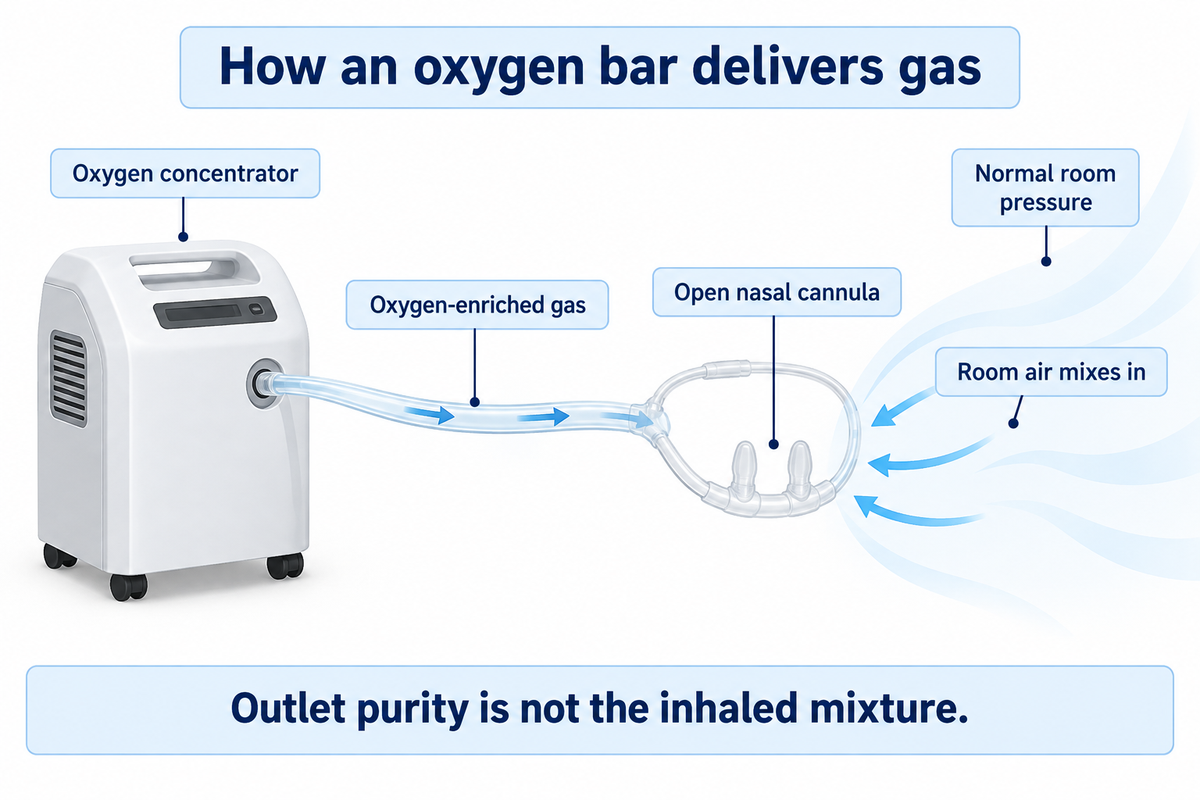
An oxygen bar delivers oxygen-enriched gas and routes it through small tubes resting at the nostrils while a visitor sits and breathes normally. Many oxygen bars use an oxygen concentrator, with equipment for scented oxygen. An open nasal cannula draws in room air, and a machine’s outlet purity is not the same as the mixture reaching the lungs.
The concentrator takes in normal air and separates part of its nitrogen to produce an increased concentration of oxygen. Sellers may call the output purified oxygen or pure oxygen. The air we breathe enters around an open cannula too; the amount of oxygen reaching a breath changes with the delivery setup and breathing pattern.
A 2021 nasal-cannula bench study measured how flow and simulated breathing conditions changed inspired oxygen. These lung models help explain the mixing problem. They were not a clinical test of oxygen-bar visitors, and they do not supply a universal flow setting for people who use an oxygen bar.
How do oxygen bars work?
A typical oxygen bar session starts with the operator explaining the equipment, the duration and any scent options, then fitting a cannula for the guest. Before you start breathing through the cannula, have the operator explain the controls. During the session, sit and breathe normally. The operator should follow the equipment instructions for setup, guest-use parts and the reset before the next person.
Before choosing a session, learn how oxygen bars handle guest-use parts. At the counter, see how a fresh guest interface is provided, and if there is a scent-free session available. The cannula rests near each nostril; it is not a sealed breathing circuit. Avoid breathing deeply to “get your money’s worth.” Ask before controlling the equipment, and stop the session if you feel unwell. A lounge that is visually appealing still needs a clear operating process behind the display.
Some venues use the name oxygen lounge or O2 bar. “Oxygen infused” describes a marketed experience, rather than a separate clinical treatment category. The relevant questions remain the same: what is being delivered, through which equipment, by whom, and for what purpose?
What Does an Oxygen Bar Do for You?
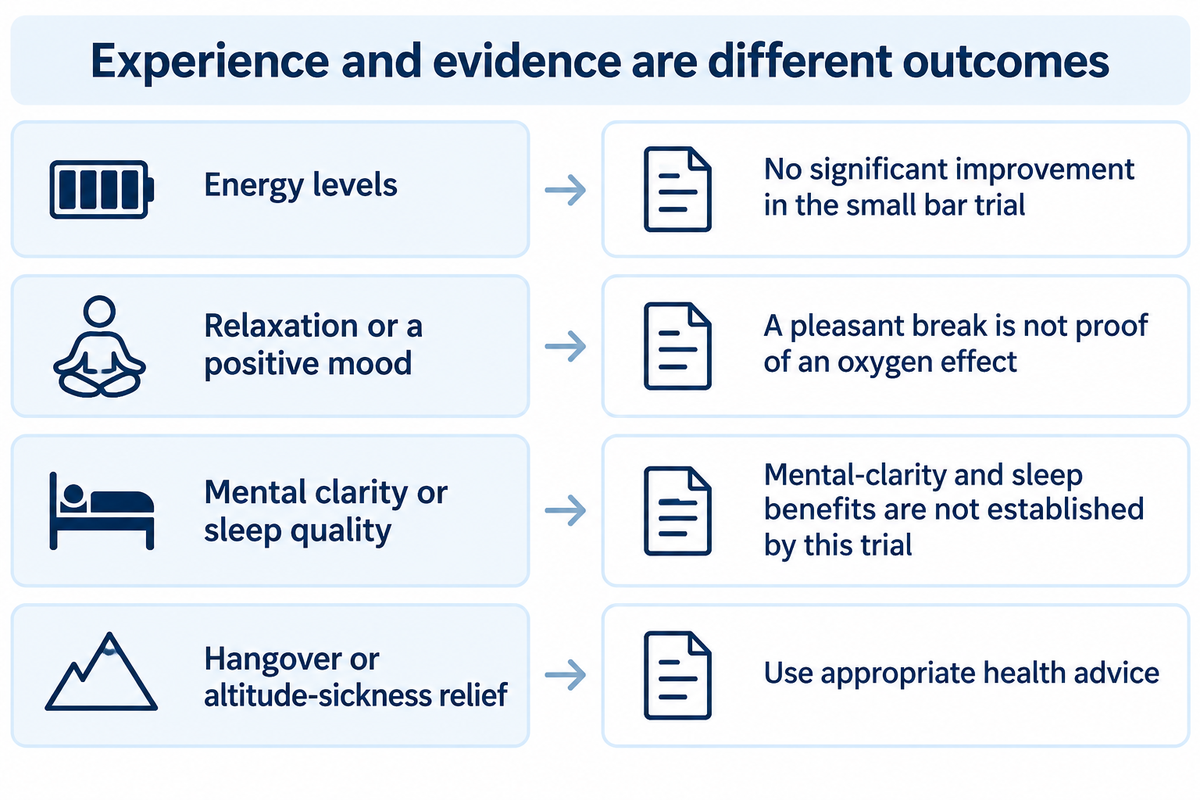
An oxygen bar offers a quiet, seated experience, but evidence for the benefits of an oxygen bar beyond a pleasant break is limited. A small randomized study directly testing oxygen-bar use found no significant improvement in its measured energy, relaxation or stress scores. Enjoying the setting and demonstrating an effect of extra oxygen are separate outcomes.
In Walsh and colleagues’ 2011 study, Oxygen bar effectiveness: a randomized quantitative study, two groups of 15 participants experienced oxygen and no-oxygen periods in reversed order. The researchers measured self-reported energy levels, relaxation and stress levels and found no significant differences across the comparisons. Again these were short-term self-reported outcomes.
| Claim or expectation | Useful distinction | Decision |
|---|---|---|
| Increased energy levels | The direct bar trial did not demonstrate the measured short-term improvement. | Do not buy a session as a proven fatigue treatment. |
| Relaxation or a positive mood | A comfortable break can be enjoyable; the oxygen-specific effect is a different question. | Judge the experience against other ways to take a break. |
| Enhanced mental clarity or improved sleep quality | These are different outcomes from the trial’s short-session scores. | Do not extend one study into evidence for these promises. |
| Hangover or altitude-sickness relief | Feeling refreshed is different from treating the cause of symptoms. | Use appropriate health advice rather than a recreational service. |
Advertisements may offer a range of benefits, such as helping visitors improve focus or maintain good health. Claims about mood swings and overall health require supporting evidence for those particular outcomes. The benefits of oxygen in ordinary physiology do not establish that increasing oxygen intake improves an already healthy person’s performance.
Illustrative visitor scenario: A traveler arrives at a city hotel feeling tired after a delayed flight. The spa offers a short oxygen session alongside a quiet waiting area. The traveler wants mental clarity before an evening meeting, rather than treatment for a diagnosed condition. They can compare the session price with the value of resting, eating and drinking normally. If they enjoy the setting, that is a personal experience; it does not show that concentrated oxygen caused a physiological improvement. If the tiredness comes with shortness of breath, chest discomfort or other concerning symptoms, the decision changes to seeking medical help. The service should not use an unexplained symptom to upsell its product.
High altitude needs its own distinction. The Wilderness Medical Society’s 2024 altitude guidance summary includes short oxygen-bar visits among interventions not shown beneficial for prevention. Clinical supplemental oxygen can help alleviate symptoms in altitude illness under appropriate care; a brief commercial session is a different proposition. Our altitude-sickness guide explains why symptoms and the travel plan matter more than an aroma choice.
Oxygen Bar Risks: Scents, Hygiene and Fire
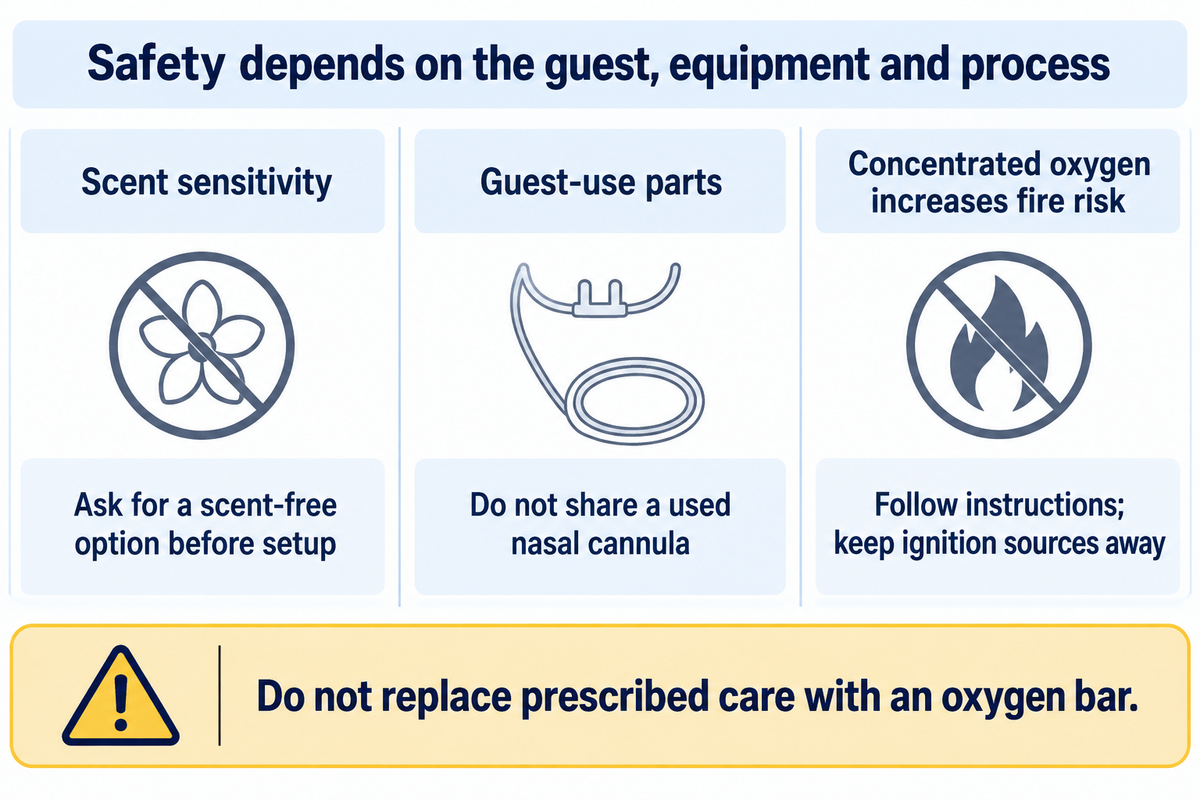
The risks for an oxygen bar are dependent on the guest, the equipment, and the process. Scented products may bother fragrance sensitive guests. Guest-use parts need proper handling, and concentrated oxygen increases fire risk. Claims that oxygen bars are safe for everyone overlook these differences. Employees should not use a recreational session to assess or treat unexplained breathing symptoms.
The FDA’s hyperbaric-device safety letter describes a general oxygen hazard that also matters when discussing concentrated oxygen: an oxygen-enriched environment changes fire behavior. Although the FDA letter is concerned with hyperbaric devices and does not specify a rate for oxygen bar incidents, a hazard exists with the use of enriched oxygen in a non-medical setting.
“Be aware that there is a heightened risk of fire with use of oxygen at a high concentration.”
Are oxygen bars safe?
An oxygen bar cannot be deemed safe for all guests. Medical conditions and equipment operation also affect suitability. Fragrance sensitivity may cause an adverse reaction to scented products. Guests with respiratory disease or prescribed oxygen should consult their health care practitioner before trying an oxygen bar. Anyone with new or worsening breathing symptoms needs medical assessment rather than a recreational session.
The Canadian Lung Association’s fragrance guidance supports offering a scent-free choice. It does not identify a universally safe essential-oil mixture or prove a particular oxygen-bar injury mechanism.
Do
- Ask for the scent-free option before setup.
- Check how fresh guest-use parts are provided.
- Follow equipment instructions and keep ignition sources away.
Don’t
- Do not add your own essential oils or fragrances to the oxygen delivery system.
- Do not share a used nasal cannula with another person.
- Do not use an oxygen bar to replace prescribed care.
If perfume triggers coughing, check whether an unscented session is available without residual fragrance in the delivery path. Choose another activity if staff cannot explain that setup. For example, a visitor with asthma wants an experience with friends but knows perfume sometimes triggers coughing. The menu has soothing scents, and staff suggests using different scents during the visit. LUNG warns that fragrance chemicals can cause serious health issues for some people, especially those with lung diseases, including asthma. A nice aromatic smell does not justify disregarding a known sensitivity. If coughing or breathing issues arise, stop the session and seek care appropriate for the condition.
People with emphysema or other lung conditions who receive oxygen treatment may already have an individualized care plan. Changing that plan because a lounge advertises aromatherapeutic benefits is a poor substitute for discussing it with the treating clinician or respiratory therapist. Oxygen and essential oils also need compatibility with the equipment; “natural” is not a safety specification.
Oxygen Bar vs Hyperbaric Oxygen Therapy
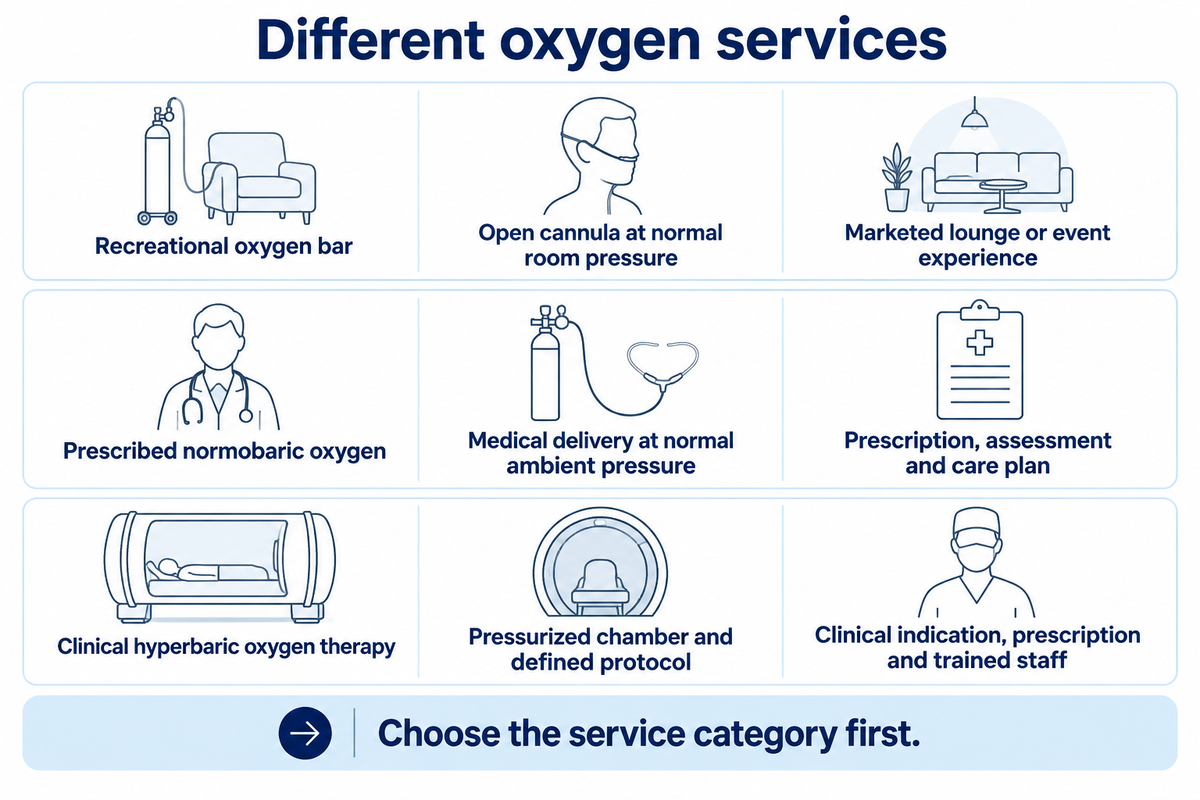
An oxygen bar operates at normal room pressure; hyperbaric oxygen therapy uses a pressurized chamber as part of a medical procedure. Prescribed normal room pressure oxygen is a separate service. The delivery environment, intended use and clinical responsibility differ, so evidence for one category should not be used to sell another.
The Undersea and Hyperbaric Medical Society describes hyperbaric oxygen as a medical procedure requiring a physician’s prescription and oversight. The FDA describes clinical hyperbaric treatment as breathing 100% oxygen in a special chamber.
Oxygen Service Boundary Matrix
| Category | Delivery environment | Purpose | What governs the decision |
|---|---|---|---|
| Recreational oxygen bar | Open cannula at normal room pressure | A marketed lounge or event experience | Local rules, guest suitability and the specific equipment instructions; limited demonstrated healthy-user benefits |
| Prescribed normobaric oxygen | Medical delivery at normal ambient pressure | A clinician-directed need for supplemental oxygen | The prescription, patient assessment and care plan |
| Clinical hyperbaric oxygen therapy | Pressurized chamber under a defined treatment protocol | A medical procedure for an assessed patient | Clinical indication, prescription, trained staff and the specific device’s instructions |
When beginning a project brief as a wellness center owner, choose the service category first. A concentrator supplier can explain the recreational delivery package. A hyperbaric chamber project raises concerns about intended use, permitted claims, staffing and the room. Breathing oxygen in an open lounge and undergoing a chamber procedure involve different operating conditions.
MACY-PAN provides equipment for hyperbaric chambers. For a separate chamber project, its wellness-center chamber solutions provide an equipment starting point. The explanation of how hyperbaric oxygen therapy works gives more context for that distinction.
What Does an Oxygen Bar Session Cost?
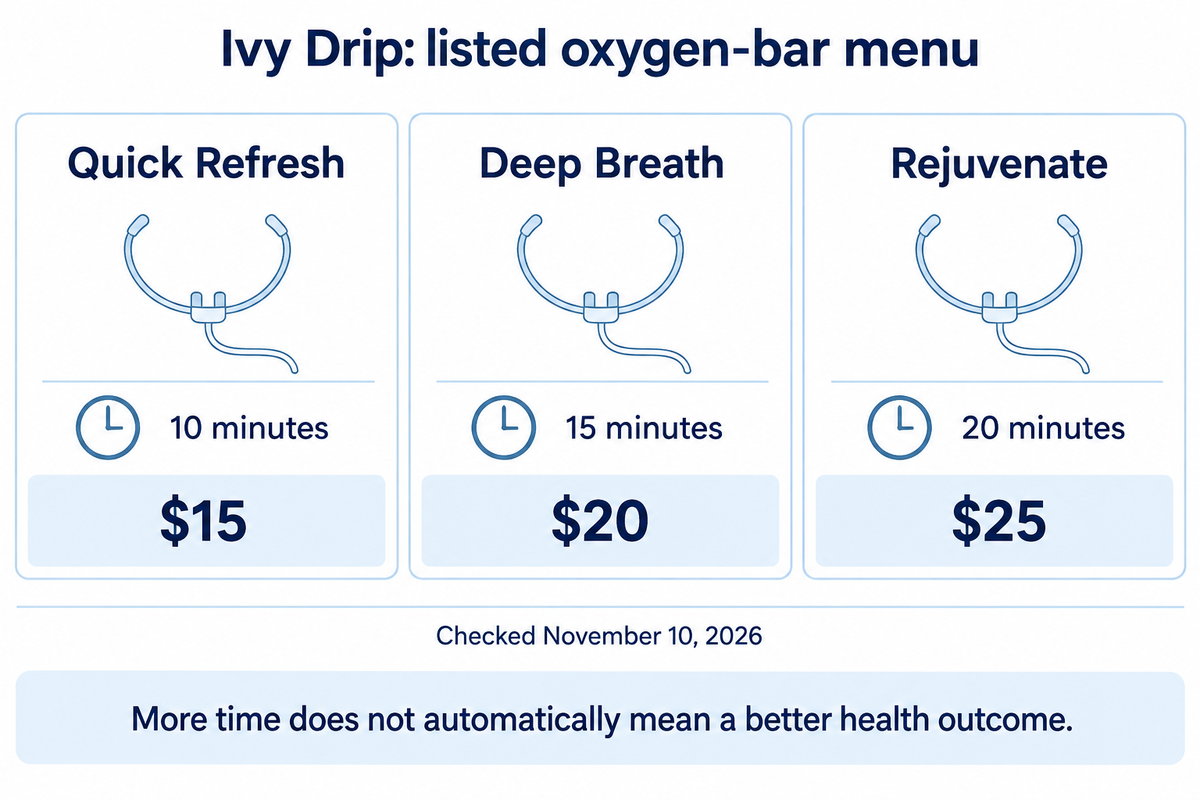
Ivy Drip’s menu displayed $15 for 10 minutes, $20 for 15 minutes and $25 for 20 minutes when checked on November 10, 2026. Other operators charge by the minute or bundle access with another service. The relevant price is the specific venue’s current offer, including duration, guest equipment and any extras.
How much does it cost to go to an oxygen bar?
Ivy Drip displayed a $15 entry session lasting 10 minutes, with longer options listed in its menu. This provides a starting point for comparison with that venue. Before visiting an oxygen bar, check whether the quoted amount covers the full session and whether any membership or companion treatment changes the charge.
| Listed session | Duration | Listed price |
|---|---|---|
| Quick Refresh | 10 minutes | $15 |
| Deep Breath | 15 minutes | $20 |
| Rejuvenate | 20 minutes | $25 |
These examples come from Ivy Drip’s own menu. In Raleigh, The Haven charges by the minute. This Raleigh venue lists $1 per minute for sessions of up to 30 minutes. Compare a booked duration and total with a fixed-session offer, including any additional charges.
When selecting menus, choose the duration you actually want and compare the final price for that visit. Ask if the service is standalone, an add-on, or part of a membership; if a new cannula is included; and if optional aromas cost extra. A longer session is a different purchase and doesn’t automatically mean a better health outcome. Food and water, ordinary rest and a pleasant environment also affect how you feel after taking a break.
Oxygen Bar Equipment: Buy, Rent or Add a Service?
Buying equipment suits an ongoing service only when the venue can support its operating work; a staffed event rental can suit a defined booking. Compare the included hardware, attendants, consumables, transport and setup. Compare complete quotes for the same operating period and responsibilities.
On November 10, 2026, the oxygenbars.com catalogue listed an Eternal 5 LPM, one-guest package at $1,495 and an O24U 8 LPM, two-guest package at $2,395. LPM means liters per minute. These are seller-listed configurations and prices, not per-guest oxygen prescriptions or the total expense of starting a service.
OxygenPlus sets a two-hour minimum on its rentals at $650+, with each additional hour at $150+. Its local service includes delivery, setup, operation and strike; nonlocal travel, lodging and per-diem expenses are extra. That staffing and logistics scope explains why an event quote is different from a machine price.
Equipment purchase
- Choose a supported guest configuration.
- Assign operation, consumables and maintenance.
- Budget installation and ongoing service work.
Staffed event rental
- Choose the booking duration and attendance plan.
- Confirm which staff and consumables are supplied.
- Separate local service from travel and add-ons.
A third contract is a long term equipment lease. The U.S. Small Business Administration suggests comparing the upfront benefit of leasing to the total cost of ownership and contract obligations, including possible early termination fees. Keep those obligations separate from an event rental.
Oxygen Bar Session Margin Model
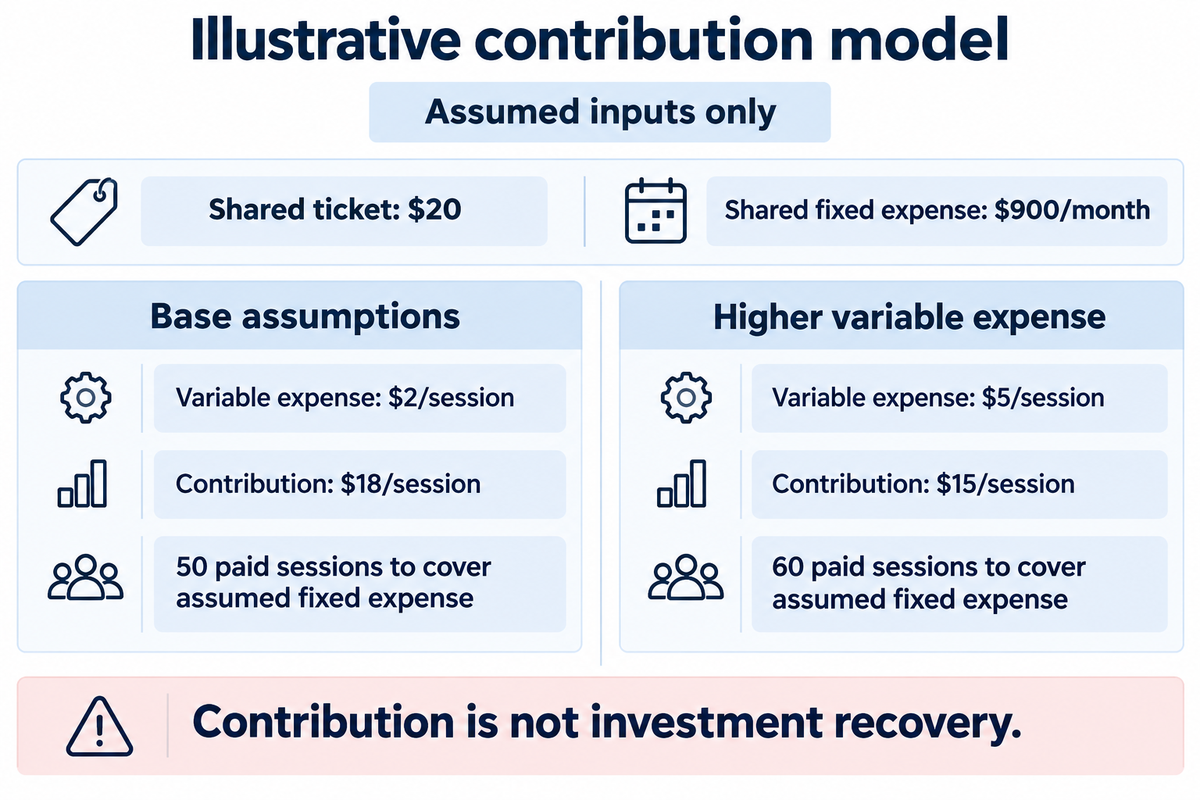
The following worked example uses assumed inputs only: a $20 ticket, $2 variable expense per paid session and $900 monthly fixed expense. The variable expense could include guest-use parts and transaction costs; the fixed allowance is simply a planning input. No customer sales, profit or payback is being reported.
| Calculation | Base assumptions | Higher variable expense |
|---|---|---|
| Ticket minus variable expense | $20 − $2 = $18 per session | $20 − $5 = $15 per session |
| Paid sessions to cover assumed fixed expense | $900 ÷ $18 = 50 sessions | $900 ÷ $15 = 60 sessions |
This model shows contribution toward the stated expense, not investment recovery. An owner must add the actual costs that apply, including owner pay, financing, tax and any required staffing. The clinic and wellness operating-cost guide helps organize the questions for a separate chamber project.
Consider a staffed rental for a defined event; ownership needs recurring demand and assigned operating responsibilities. For example, a wellness center manager weighs the costs and benefits of buying a lounge unit versus using an outside operator for an open day. The finance owner has a hardware quote, but operations must also budget staff time for delivery, setup, guest orientation and resets. Oxygenbarrentals lists Airheads Oxygen Bar event packages serving up to 12 people simultaneously, with event logistics potentially requiring equipment to be split across areas. Compare that defined event with an ongoing service, rather than dividing equipment cost by hoped-for daily revenue. Check the legal category and insurance coverage before either choice, and assess recurring demand separately from an event’s success.
Are Oxygen Bars Legal? Rules and Medical Claims
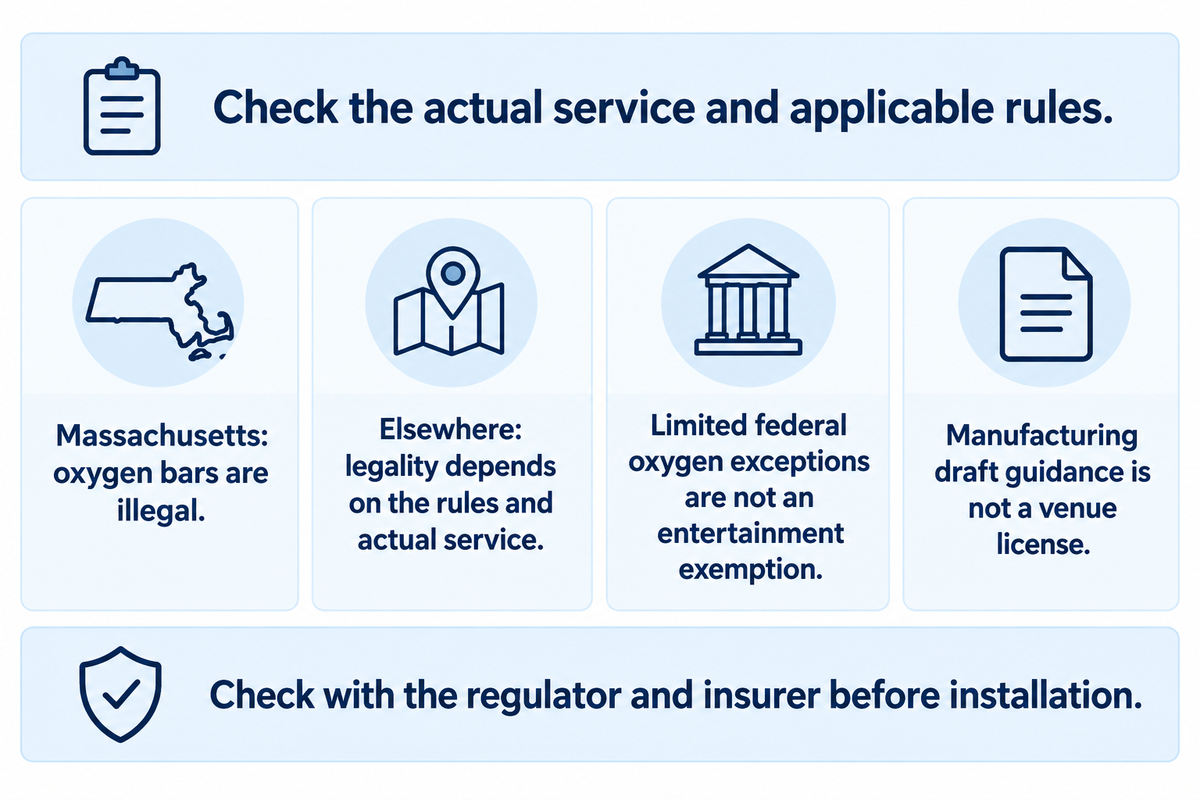
Oxygen bars are illegal in Massachusetts; elsewhere, legality depends on the applicable rules and the actual service. A recreational label is not a general legal exemption. Massachusetts explicitly prohibits establishments producing and providing oxygen to consumers as oxygen bars. Federal law also contains a prescription framework for certain medical gases, with limited exceptions for oxygen.
The Massachusetts Drug Control Program policy is a concrete example of a supplier’s will to sell equipment not settling venue legality. The Program describes oxygen bars as illegal in Massachusetts. It should not be interpreted to mean that an oxygen bar service would be legal in other states.
21 U.S.C. §360ddd–1(b) sets out the designated-medical-gas prescription requirement and specific oxygen exceptions, including environmental oxygen deficiency and certain uses by properly trained personnel. These provisions are not a blanket entertainment exemption. In the 2024 final rule, Comment 9 and Response 9, the FDA declined to expand the listed uses. Classification depends on the actual product, intended use and applicable rules.
The FDA’s Medical Gases: Current Good Manufacturing Practice document is draft guidance about manufacturing requirements. Its discussion of rules effective December 18, 2025, and combination-product amendments effective February 2, 2026, should not be confused with a venue license or a new recreational oxygen-bar authorization.
Those seeking to provide a new service should contact the regulator and insurer before installation with details of the gas source, equipment, staff roles and marketing claims, to determine whether the service is covered and whether claims of the service are permitted, including any representation of the service as intended to cure a disease. A disclaimer does not turn an unsupported treatment promise into an established benefit.
Space, Staff and Hygiene: Make the Operating Plan Work
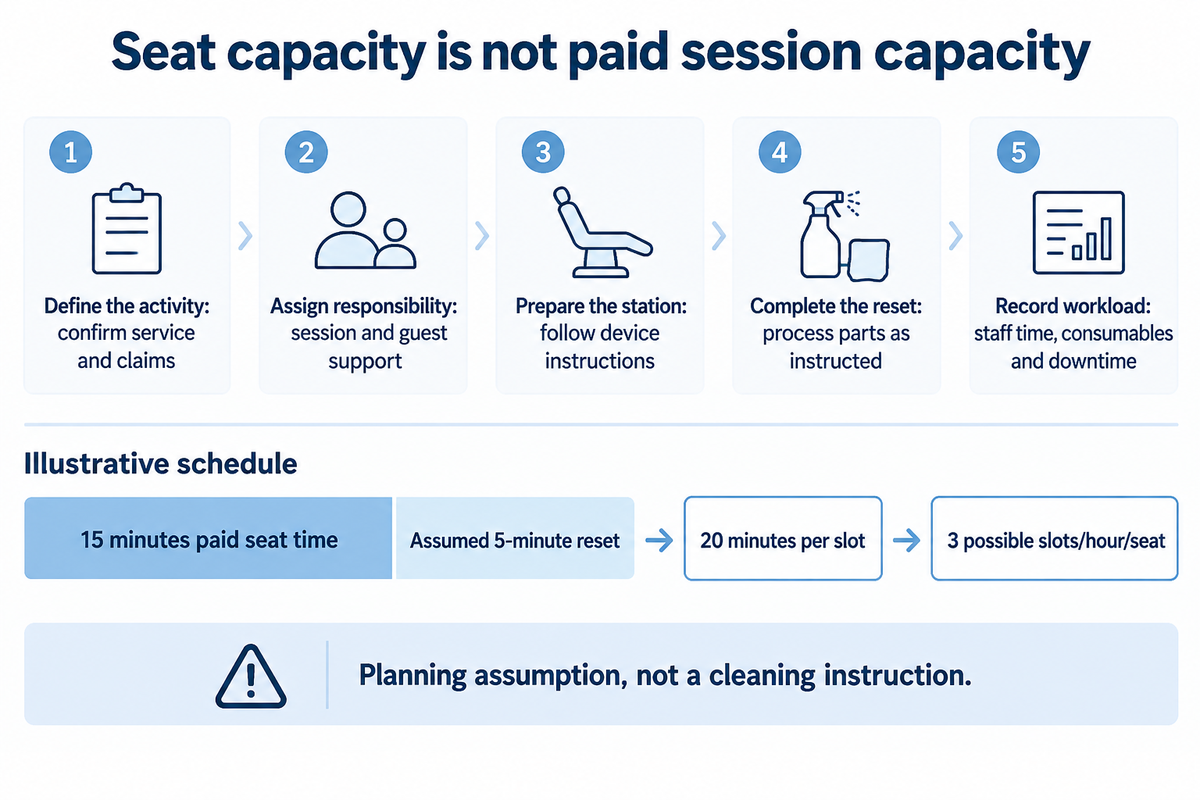
A workable oxygen-bar plan connects the room, equipment instructions, staff availability and guest turnover. Seating capacity alone is not paid session capacity. Allow for setup, guest orientation and the manufacturer-required reset, then determine whether the remaining slots fit the intended service. A venue’s actual layout and instructions govern the plan, rather than a generic spa schedule.
For its own rental setup, OxygenPlus specifies 110 V power and approximately 5 ft × 5 ft for the table and chairs, with 10 ft × 10 ft or larger preferred for a custom immersion experience. Those figures describe that supplier’s layout. Check the chosen system’s clearance, ventilation, access and electrical requirements when placing it in a room.
- Define the activity. Confirm the permitted service and claims before booking equipment.
- Assign responsibility. Name who explains the session, monitors the activity and handles a guest who feels unwell.
- Prepare the station. Follow the device instructions for guest-use parts, compatible products and the operating environment.
- Complete the reset. Replace or process parts as instructed before making the seat available again.
- Record the workload. Compare paid sessions with staff time, consumables and periods when the station is unavailable.
In this worked example, the schedule allows three possible slots per hour per seat, with each slot comprising 15 minutes of paid seat time plus an assumed 5-minute reset allowance. Each of these slots would take 20 minutes. The reset time is a planning assumption and not a cleaning instruction. If equipment instructions or staffing require more time, capacity falls. Booking a guest into time needed to perform required tasks creates a queue or pressures staff to rush.
Keep a chamber project on its own room plan. A recreational counter’s space and power figures cannot size a pressurized treatment installation; the hyperbaric chamber room and ventilation guide addresses that separately.
Key takeaway
Choose the service category first, then compare the guest experience, the legal requirements and the full operating workload.
Planning a separate hyperbaric chamber project?
Send MACY-PAN your intended use, location and room constraints through the project contact page. Ask for the specific equipment information and installation requirements for that project.
Frequently Asked Questions
Does breathing pure oxygen help a hangover?
A recreational oxygen-bar session is not an established hangover treatment. Claims that it will help alleviate a hangover should not be inferred from oxygen’s normal role in the body or from a visitor feeling refreshed after resting. The small oxygen-bar trial measured energy, relaxation and stress rather than hangover recovery.
If symptoms are severe, unusual or worsening, seek appropriate medical care rather than purchasing another session.
What are the signs that you need oxygen?
Seek medical assessment for shortness of breath, chest discomfort or other concerning changes; a clinician determines whether you need supplemental oxygen. The FDA’s pulse-oximeter guidance explains that readings have limitations and must be considered alongside how you feel. A reading estimates blood oxygen saturation; diagnosis and decisions about machine settings, session duration and treatment belong with the clinician. Tell the clinician about your symptoms as well as the reading, rather than using it to select a recreational oxygen session. If high pollution is the reason for your concern, explain the exposure too.
For severe breathing difficulty, chest pain or confusion, seek urgent medical help. A lounge cannot substitute for that assessment.
Is an oxygen bar worth it?
Yes, an oxygen bar can be worth the price as a recreational experience if you enjoy the setting, understand the limited demonstrated health benefits and are an appropriate guest for the service. Compare the booked duration and full charge with other ways to take a break. Do not price a promised medical result into a wellness purchase. A scent-free option, clear guest-equipment process and straightforward explanation of the session may matter more to your choice than an elaborate menu of aromas.
For an operator, use actual demand and costs in a contribution calculation rather than treating the example model as a forecast.
Are oxygen bars still a thing?
Yes. Current operator menus, equipment catalogues and staffed event-rental offers show that oxygen bars remain available in some locations.
Can I try multiple scents?
Some venues offer different scents or flavors. Ask about a scent-free option, compatibility and residual fragrance before trying multiple scents; the changeover process depends on the system.
Can an oxygen bar treat altitude sickness?
No. Do not rely on a short recreational oxygen-bar visit to treat symptoms of altitude sickness. The Wilderness Medical Society lists brief oxygen-bar visits among interventions not shown to be beneficial for preventing altitude illness; its treatment guidance addresses appropriate supplemental oxygen and warns against relying on brief canister use. Symptoms at altitude call for appropriate assessment and an altitude-illness plan, not an aroma selection.
References & Sources
- Walsh et al. Oxygen bar effectiveness: a randomized quantitative study. 2011.
- Nasal-cannula inspired-oxygen bench study. Healthcare, 2021.
- U.S. FDA. Pulse Oximeter Basics.
- Canadian Lung Association. Your healthy home.
- Wilderness Medical Society. 2024 Altitude Summary.
- UHMS. Hyperbaric oxygen indications and clinical definition.
- Massachusetts. Policy on oxygen bars.
- U.S. Code. 21 U.S.C. §360ddd–1, Regulation of medical gases.
Factory Selection Support
Need a hyperbaric chamber matched to your room, pressure target, and compliance documents?
MACY-PAN helps clinics, wellness centers, distributors, and home buyers compare soft-shell, hard-shell sitting, and professional-grade lying chambers before quotation. Send your intended use, available space, country, and preferred ATA range, and our team will recommend a practical model path.
2007HBOT manufacturing since
126+countries shipped to
1.3-2.0ATA chamber range