Get in Touch with MACY-PAN Company

Altitude sickness describes the spectrum of acute hypoxic syndromes that occur when an individual ascends to high altitude faster than their lungs, blood and brain can adjust to the falling barometric pressure. Chapters on high altitude travel and altitude illness in the CDC Yellow Book state that acute mountain sickness affects roughly 25% of unacclimatized visitors sleeping above 2,450 m (8,000 ft) in Colorado, while rapid ascends above 4,300 m (14,000 ft) can cause pulmonary or cerebral edema.
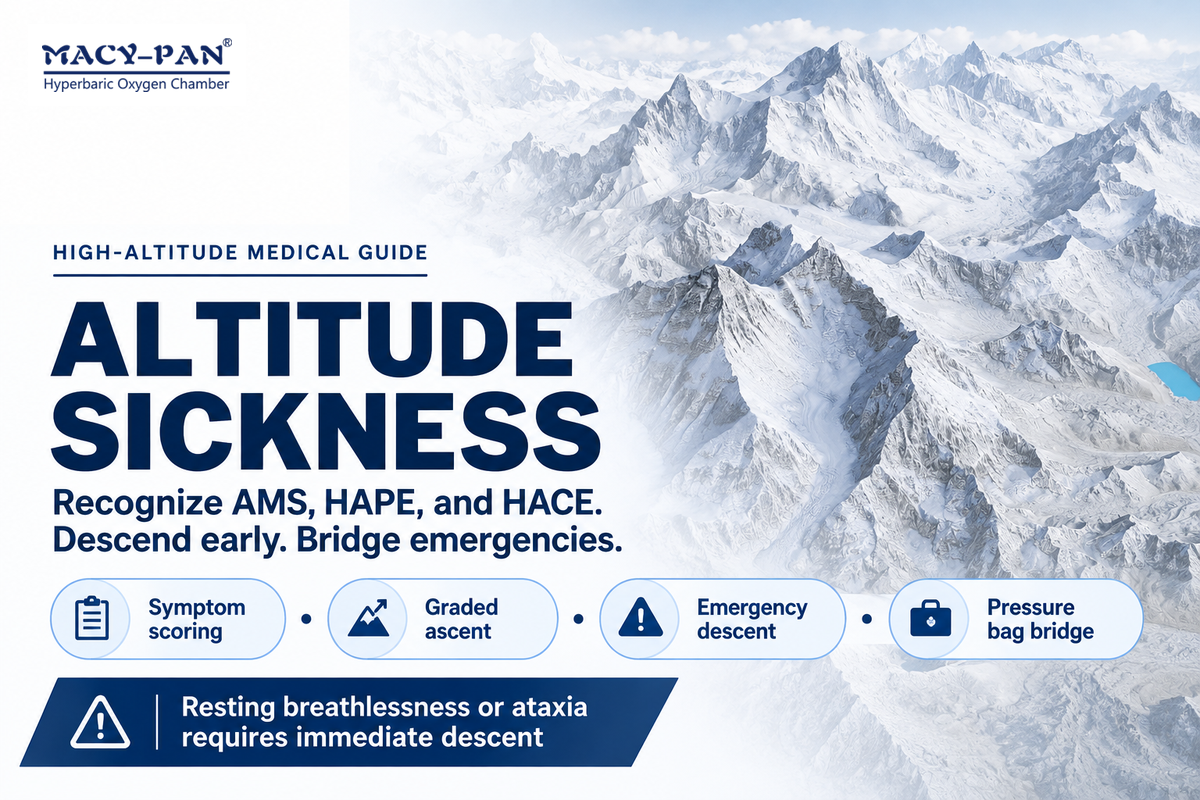
Field Triage Summary: Mild altitude sickness responds when you halt ascent, rest at your current elevation, and take evidence-based medication such as acetazolamide or ibuprofen. If a climber develops breathlessness at rest, a cough producing pink frothy sputum, or loss of balance on a heel-to-toe walk, initiate an immediate physical descent of at least 500 to 1,000 m (1,640 to 3,281 ft), deliver supplemental oxygen, and use a 2 psi portable hyperbaric pressure bag strictly as a temporary barometric bridge when weather or terrain blocks evacuation.
High altitude illness, unlike respiratory infections at sea level or simple dehydration, occurs due to lower ambient air pressure during travel to high altitude. The fraction of oxygen in the atmosphere is constant from sea level to the top of Mount Kilimanjaro or Everest Base Camp, but increasing altitude reduces the number of oxygen molecules per breath, resulting in hypoxia of high altitude, which causes every form of altitude illness. Rapid ascends to higher altitudes during an ascent to high altitude can cause a person to get altitude sickness if they can’t acclimatize fast enough. It is therefore essential for any expedition team to identify early exposure to symptoms of high altitude, and classic symptoms of altitude sickness.
What Altitude Sickness Is and How AMS, HAPE, and HACE Differ Above 2,500 Meters
Altitude sickness refers to the pathological condition caused by hypoxia that occurs above 2,500 m (8,200 ft) and is characterized by AMS, HAPE, and HACE. According to the Cleveland Clinic’s clinical overview on altitude sickness, AMS is uncommon at altitudes below 8,000 feet (2,438 meters), but death from untreated HAPE can occur within 12 hours, while untreated HACE can occur within 24 hours.
Barometric pressure drops from 760 mmHg at sea level to approximately 560 mmHg at 2,500 meters (8,200 ft) and 446 mmHg at 4,500 meters (14,750 ft) and above. Change in altitude reduces inspired oxygen partial pressure and results in compensatory hyperventilation, sympathetic activation and changes in capillary permeability. Individual susceptibility and resistance to altitude and overall risk of altitude sickness are more dependent on ascent speed, sleeping elevation and genetics as compared to training for mountaineering and marathon, which is why even elite mountaineers can develop severe altitude sickness when they rush an itinerary.
In order to prevent teams from confusing early signs of pulmonary edema with normal trekker exhaustion, expedition medics use our Three-Syndrome Escalation Ladder. Each syndrome is classified according to its degree of severity and the mechanisms that underlie it. Actions that can be taken in the field are provided.
What Is the Difference Between AMS, HAPE, and HACE?
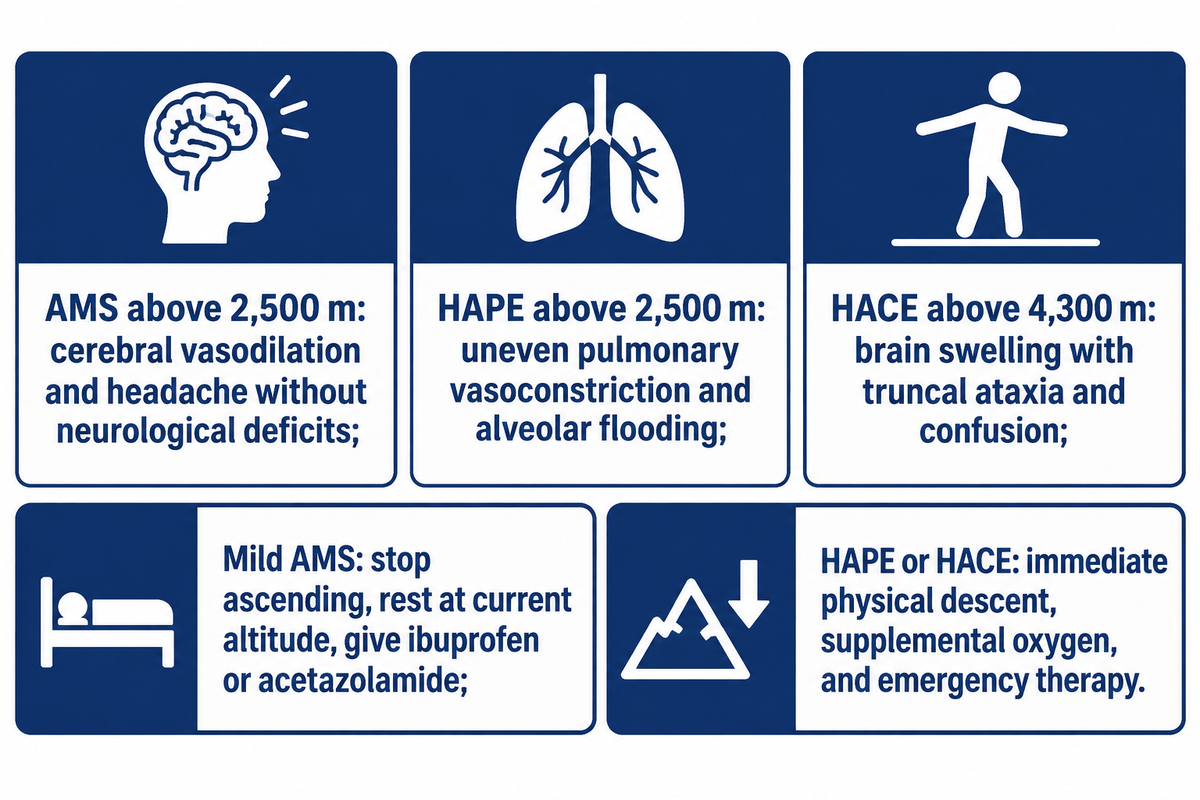
The differentiating factor among types of altitude sickness is the organ system that is affected and the fluid shift. In AMS, the cerebral vasculature dilates and mild meningeal stretching occurs, however, there are no neurological deficits. HAPE is characterized by the flooding of alveoli in the lungs due to uneven vasoconstriction of the pulmonary arteries, and HACE results from swelling of the brain and is characterized by ataxia and confusion.
Symptoms of acute mountain sickness occur within the first 6 to 12 hours after reaching a higher altitude, while high-altitude pulmonary edema occurs on the second to fourth nights above 2,500 m. High-altitude cerebral edema is end stage of decompensation and occurs above 4,300 m. It is typically associated with HAPE, but can also occur as a result of continuing to climb with AMS.
| Syndrome Category & Stage | Typical Elevation & Onset Window | Primary Pathophysiological Mechanism | Cardinal Field Signs | Mandatory First Action |
|---|---|---|---|---|
| 1. Normal Unacclimatized Response | Immediate upon arrival above 2,450 m (8,000 ft) | Carotid chemoreceptor hyperventilation and nocturnal periodic breathing | Exertional breathlessness that resolves at rest; zero headache | Maintain graded ascent schedule and oral hydration |
| 2. Mild Acute Mountain Sickness (AMS) | 6–12 hours after ascent above 2,500 m (8,200 ft) | Hypobaric hypoxia and mild cerebral vasodilation (Lake Louise 3–5) | Mild altitude headache plus poor appetite, fatigue, or mild dizziness | Stop ascending; rest at current altitude; give ibuprofen or acetazolamide |
| 3. Moderate-to-Severe AMS | 12–24 hours after rapid ascent above 3,000 m (9,850 ft) | Progressive meningeal trigeminal irritation and fluid retention (Lake Louise 6–12) | Severe throbbing headache, repeated vomiting, marked exhaustion, normal gait | Halt ascent; give acetazolamide 250 mg q12h or dexamethasone 4 mg q6h; descend if no relief |
| 4. Early Interstitial HAPE | 24–48 hours after ascent above 2,500–3,000 m | Uneven hypoxic pulmonary vasoconstriction and rising capillary pressure | Disproportionate exercise intolerance, dry nonproductive cough, delayed recovery | Stop climbing immediately; minimize exertion; prepare supplemental oxygen and descent |
| 5. Established Alveolar HAPE | 48–96 hours after ascent; risk rises above 4,300 m (14,000 ft) | Stress failure of pulmonary capillaries and protein-rich alveolar flooding | Dyspnea at rest, audible chest rales, tachycardia, orthopnea when lying flat | Descend 500–1,000 m immediately; give high-flow oxygen, nifedipine, or pressure bag bridge |
| 6. Fulminant Haemorrhagic HAPE | Can become fatal within 12 hours if untreated at high camp | Widespread alveolar hemorrhage and profound arterial hypoxemia | Coughing pink frothy sputum, central cyanosis, extreme respiratory distress | Urgent litter or helicopter evacuation; continuous oxygen + semi-upright pressure bag bridge |
| 7. Early Encephalopathic HACE | 24–72 hours after ascent; rare below 4,300 m (14,000 ft) | Blood-brain barrier disruption and early vasogenic white-matter edema | Truncal ataxia (swaying on heel-to-toe tandem walk), apathy, uncooperative behavior | Immediate assisted descent; dexamethasone 8 mg loading dose + supplemental oxygen |
| 8. Advanced Comatose HACE | Can become fatal within 24 hours of neurological onset | Severe intracranial hypertension and progressive brain herniation risk | Profound confusion, slurred speech, drowsiness progressing to stupor and coma | Emergency descent + dexamethasone 8 mg IM/IV then 4 mg q6h + 2 psi hyperbaric bag bridge |
| 9. Combined HAPE + HACE Crisis | Secondary cerebral edema triggered by severe HAPE hypoxemia | Simultaneous alveolar flooding and hypoxic-vasogenic cerebral swelling | Resting dyspnea and crackles combined with truncal ataxia and altered mental status | Combined HAPE + HACE protocol: immediate evacuation, oxygen, dexamethasone, and nifedipine |
Within UK and Commonwealth mountaineering literature, the two severe forms of altitude sickness are usually spelled high altitude pulmonary oedema and high altitude cerebral oedema. Regardless of the exact spelling, any transition from mild symptoms of altitude sickness to breathlessness at rest or unsteadiness of gait calls for immediate medical intervention.
How to Score Symptoms Using the Lake Louise Criteria and Pulse Oximetry
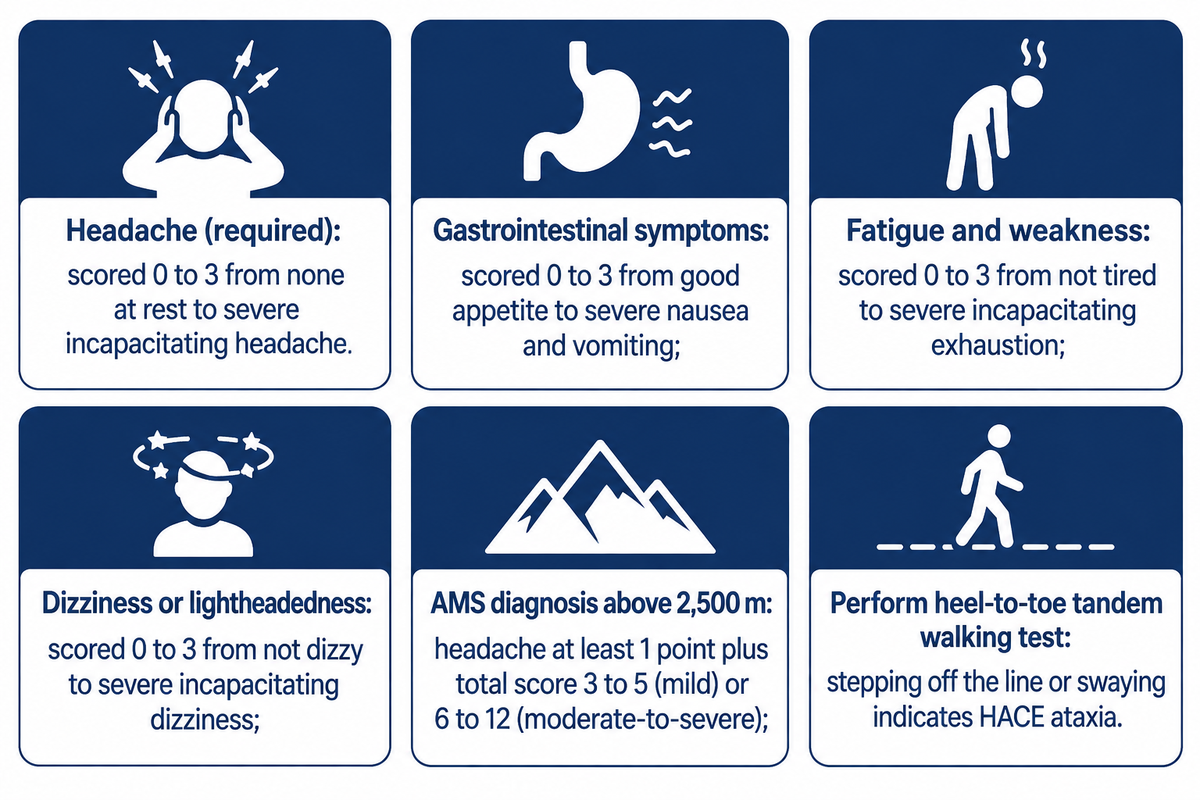
Expedition medics diagnose altitude sickness clinically evaluating the revised 2018 Lake Louise acute mountain sickness score, which assigns a score of 0 to 3 to four symptoms, for a maximum score of 12. A score of 1 or more for a headache plus a total score of 3 or more qualifies for a diagnosis above the elevation of 2,500 meters.
The NCBI StatPearls clinical reference on acute mountain sickness details that there are no laboratory blood tests or chest x-rays that help in the field diagnosis of symptoms of altitude illness. Instead, guides monitor whether mild symptoms resolve on a rest day or if they progress to serious symptoms of altitude sickness and severe altitude illness (e.g., fluid in the lungs or cerebral ataxia).
| Symptom Domain | 0 Points | 1 Point (Mild) | 2 Points (Moderate) | 3 Points (Severe) |
|---|---|---|---|---|
| 1. Headache (Required) | None at rest | Mild headache | Moderate headache | Severe, incapacitating headache |
| 2. Gastrointestinal Symptoms | Good appetite | Poor appetite or mild nausea | Moderate nausea or vomiting | Severe, incapacitating nausea and vomiting |
| 3. Fatigue and Weakness | Not tired | Mild fatigue or weakness | Moderate fatigue or weakness | Severe, incapacitating exhaustion |
| 4. Dizziness / Lightheadedness | Not dizzy | Mild dizziness | Moderate dizziness | Severe, incapacitating dizziness |
According to the questionnaire, a total score of 3-5 points indicates mild acute altitude sickness, and a total score of 6-12 points reflects a moderate-to-severe condition. Along with the questionnaire, all trekkers with early signs of altitude sickness should perform a heel-to-toe tandem walking test on level ground. If the person steps off the line or sways, ataxia of the trunk (HACE) is present.
A fingertip pulse oximeter often misleads lay travelers. Healthy climbers undergoing normal acclimatization at 3,500 to 4,500 m show wide variation in resting saturation and do not experience any symptoms of illness. Cold fingers may cause falsely low readings due to vasoconstriction. As described in the CDC Yellow Book high-altitude chapter , HAPE occurs about once in 10,000 skiers in Colorado and about once in 100 travelers who go above 4,300 m (14,000 ft) or at extreme altitude above 5,500 m (18,000 ft), where a pulse oximeter helps in assessment of disproportionate desaturation in symptoms of HAPE and in monitoring the response to supplemental oxygen.
How Graded Ascent and Preventive Medications Stop Acute Mountain Sickness
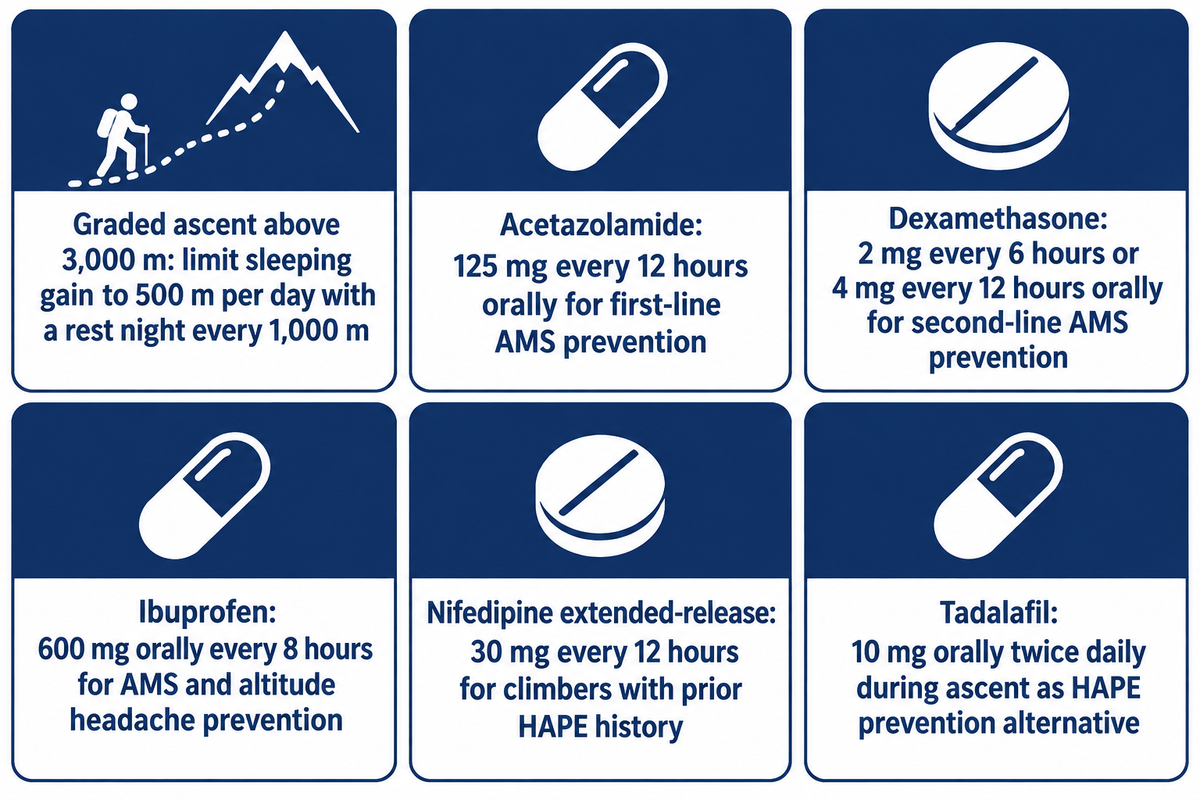
The most reliable method to prevent Altitude Mountain Sickness (AMS) is gradual ascent. Travelers need to limit their daily sleeping altitude to 500 m (1,600 ft) above 3,000 m (9,850 ft). A rest night is needed for every 1,000 m (3,300 ft) of ascent. Acetazolamide (125 mg every 12 hours) may prevent AMS if rapid ascent is unavoidable.
Per the CDC Yellow Book high-altitude travel guidelines, residents of low altitudes (< 1,200 m (4,000 ft)) should not directly ascend to a sleeping altitude of above 2,750 m (9,000 ft) in a single day. Two nights of staging in a lower altitude town (1,600 m before 2,925 m, or 2,800 m before 3,350 m) may help to prevent AMS if rapid ascent is unavoidable.
How Fast Can You Safely Ascend Above 3,000 Meters?
From 3,000 m (9,850 ft), climbers can gain up to 500 m (1,600 ft) of net sleeping altitude in 24 hours and not need additional acclimatization for 3 to 4 days or up to 1,000 m (3,300 ft) of elevation gain.
During the day, climbing teams can use the classic high altitude medicine rule of “climb high, sleep low” and return to a lower altitude before dark when mild symptoms of altitude appear. For the first 48 hours after arrival, the use of alcohol and sedative sleep aids is prohibited, which can exacerbate sleep at high altitude.
| Medication | Primary Target | Adult Preventive Dose | Physiological Mechanism & Key Precautions |
|---|---|---|---|
| Acetazolamide (Diamox) | AMS Prevention (1st Line) | 125 mg orally every 12 hours (start 1 day before ascent) | Carbonic anhydrase inhibitor; induces renal bicarbonate diuresis and metabolic acidosis to speed ventilatory acclimatization. Causes finger/toe paresthesia and flat taste with carbonated drinks; contraindicated in severe sulfa allergy. |
| Dexamethasone | AMS Prevention (2nd Line) | 2 mg every 6 hours or 4 mg every 12 hours orally | Corticosteroid that stabilizes capillary integrity and reduces brain swelling; does not speed physiological acclimatization. Reserve for acetazolamide intolerance or rapid military/search-and-rescue deployment. |
| Ibuprofen | AMS & Headache Prevention | 600 mg orally every 8 hours starting hours before ascent | Blocks prostaglandin synthesis and neurovascular inflammation; over-the-counter option when travelers cannot take acetazolamide or dexamethasone. |
| Nifedipine (Extended-Release) | HAPE Prevention (Prior HAPE History) | 30 mg extended-release every 12 hours (or 20 mg every 8 hours) | Calcium-channel blocker that reduces pulmonary artery pressure in climbers with a documented history of HAPE. |
| Tadalafil | HAPE Prevention (Alternative) | 10 mg orally twice daily during ascent | PDE-5 inhibitor that lowers pulmonary vascular resistance; never combine concurrently with nifedipine or nitrates. |
A prior history of altitude sickness is the most reliable clinical predictor and factor for developing altitude sickness in future expeditions. In a systematic review and trial sequential analysis in Annals of Thoracic Medicine (PMC8588948), acetazolamide for prevention at 125 mg twice daily had a number needed to treat (NNT) of 6 to help prevent altitude sickness, compared to placebo. As the 2024 Wilderness Medical Society (WMS) Clinical Practice Guidelines update states, prophylaxis and treatment of high-altitude illness require physician screening of drug allergies and renal function prior to departure.
Immediate Descent, Supplemental Oxygen, and Emergency Drug Protocols for HAPE and HACE
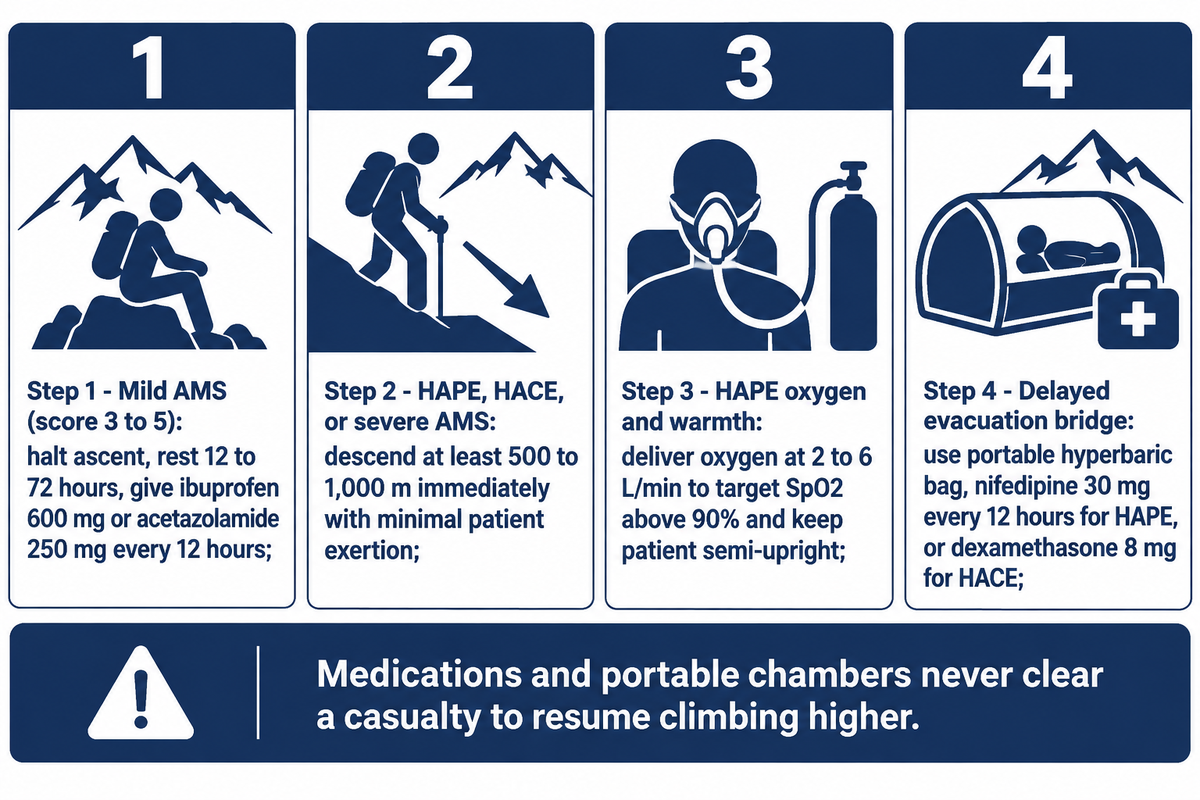
For climbers suffering from HACE, HAPE, or worsening symptoms, the main treatment is to descend 500 to 1,000 m (1640-3281 ft). While a climber is preparing to descend to a lower altitude, team members should deliver supplemental oxygen and rescue medications (i.e. nifedipine for HAPE and dexamethasone for HACE).
According to NCBI StatPearls EMS High-Altitude Field Prophylaxis and Treatment, stopping further ascent allows mild AMS to resolve within 12 to 72 hours. This can be sped up when combined with oral hydration and analgesics, and treatment with acetazolamide (250 mg every 12 hours for the treatment of acute mountain sickness). However, spending the night at high camp with a teammate showing signs of ataxia or resting dyspnea is a well-known cause of repeated mountaineering fatalities.
“When available, supplemental oxygen sufficient to achieve an SpO2 > 90% or relieve symptoms should be used while waiting to initiate descent, when descent is infeasible and during descent in severely ill patients.”
- Halt ascent and classify severity: if the patient shows only mild symptoms of AMS (LLS 3-5, normal heel to toe walk, clear lungs at rest), then the patient must remain at that altitude for 12 to 72 hours, and treat altitude sickness with ibuprofen 600 mg or acetaminophen, plus acetazolamide (250 mg) every 12 hours.
- Immediate descent required for HAPE, HACE, or severe AMS: all patients with ataxia, confusion, resting dyspnea, or other worsening symptoms or clinical signs and symptoms should descend at least 500 to 1000 m (1640-3280 ft) or to the last elevation they felt well on, minimizing the patients’ effort as it increases pulmonary artery pressure.
- For HAPE, provide high-flow supplemental oxygen and thermal protection. Administer oxygen at 2 to 6 L/min via nasal cannula or mask to restore arterial oxygenation and maintain the patient warm and semi-upright. Cold stress in HAPE casualties further constricts the pulmonary vessels and exacerbates alveolar flooding.
- For HAPE, if oxygen or immediate descent is not available, use a portable hyperbaric bag and give extended-release nifedipine 30 mg every 12 hours. For HACE or severe treatment of AMS, give dexamethasone 8 mg immediately (orally, intramuscularly, or intravenously) and repeat every 6 hours.
Medications and portable chambers provide very limited time to arrange helicopter or litter evacuation. They never clear a casualty to resume climbing toward a higher altitude.
When a Portable Pressure Bag Is Used and How 2 to 4 psi Simulates Descent
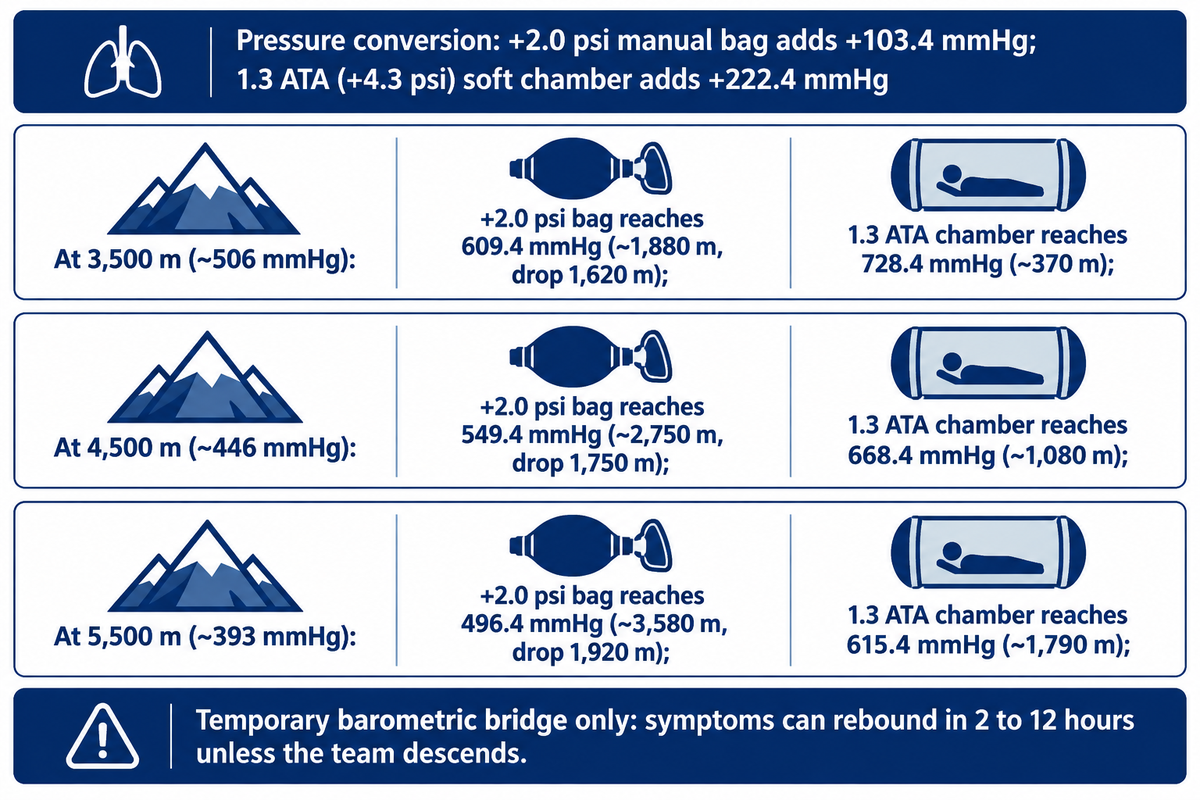
A hyperbaric pressure bag is used to treat climbers experiencing AMS, HAPE or HACE at high altitude, when storms, nightfall or terrain prevents immediate descent. It is inflated manually to +2 psi (103.4 mm Hg / 13.8 kPa) above current atmospheric pressure. This increases the internal pressure of the bag to 1,500 to 2,500 m (4,900 to 8,200 ft) and mimics a descent to this elevation.
According to the USPTO Patent US4974829A, a collapsible fabric bag, developed by Dr. Igor Gamow, is sealed around a patient and inflated to an airtight state by a foot pump. According to our Barometric Bridge Rule, raising the total air pressure in the bag allows more oxygen molecules to be packed in each liter of inspired air. This quickly raises the partial pressure of oxygen in the bloodstream, providing emergency treatment for patients suffering from HACE or HAPE and allowing them to descend under their own power, or with help of others.
Does a Portable Pressure Bag Replace Physical Descent?
A pressure bag should never be used to allow a sick climber to continue their ascent, and physical descent should always be the primary means of treatment, if evacuation to a lower altitude is possible.
According to the UIAA Medical Commission guide on portable hyperbaric chambers, oxygen, medication and hyperbaric bags just buy time for the necessary descent. Once the patient is unzipped from the chamber and back in the ambient mountain air, hypobaric hypoxia resumes and severe symptoms can rebound in 2 to 12 hours, unless the team makes use of that clinical window to lose elevation in the real world.
While atmospheric pressure drops exponentially, a fixed +2 psi (+103.4 mmHg) bag pressure simulates altitude drops better at extreme elevation than at moderate ski resort elevations. In addition, fixed base camp clinics and mountain lodges with 110-240V electricity can use portable soft-shell hyperbaric chambers (rated at 1.3 to 1.5 ATA (+4.3 to +7.3 psi / +222 to +377 mmHg)) to simulate a descent to lower foothills.
“Worked Barometric Calculation (2 Psi Rescue Bag vs. 1.3 ATA Soft Chamber at 4,500 m and 5,500 m):”
- Gauge pressure unit conversion: 1 psi equals 51.71 mmHg (6.895 kPa). Therefore, a +2.0 psi manual rescue bag adds 2.0 × 51.71 = +103.4 mmHg (13.8 kPa), while a 1.3 ATA (+4.3 psi) soft-shell chamber adds 4.3 × 51.71 = +222.4 mmHg (29.6 kPa).
- Case A — High Camp at 4,500 m (14,750 ft), ambient pressure ~446 mmHg: adding +103.4 mmHg in a 2 psi bag yields 446 + 103.4 = 549.4 mmHg interior pressure, which matches standard atmospheric pressure at roughly 2,750 m (9,020 ft)—a simulated altitude drop of 4,500 − 2,750 = 1,750 m (5,730 ft). In a 1.3 ATA (+222.4 mmHg) powered soft chamber, interior pressure reaches 446 + 222.4 = 668.4 mmHg, matching an altitude attained of 1,080 m (3,540 ft)—a simulated descent of 3,420 m (11,210 ft).
- Case B – Extreme Base Camp at 5,500 m (18,000 ft) ambient pressure ~393 mmHg: adding +103.4 mmHg to a 2 psi bag yields an internal pressure of 393 + 103.4 = 496.4 mmHg, which gives a simulated altitude of ~3,580 m (11,745 ft).
| Starting Elevation (CDC Benchmark) | Ambient Barometric Pressure | +2.0 psi Bag Total Pressure & Simulated Altitude | +2.0 psi Net Simulated Drop | 1.3 ATA (+4.3 psi) Soft Chamber Simulated Altitude |
|---|---|---|---|---|
| 3,500 m (11,500 ft) — Cusco / Leh | ~506 mmHg | 609.4 mmHg → ~1,880 m (6,170 ft) | 1,620 m (5,330 ft) | 728.4 mmHg → ~370 m (1,210 ft) |
| 4,500 m (14,750 ft) — High Alpine Camp | ~446 mmHg | 549.4 mmHg → ~2,750 m (9,020 ft) | 1,750 m (5,730 ft) | 668.4 mmHg → ~1,080 m (3,540 ft) |
| 5,500 m (18,000 ft) — Everest Base Camp / Kilimanjaro | ~393 mmHg | 496.4 mmHg → ~3,580 m (11,745 ft) | 1,920 m (6,255 ft) | 615.4 mmHg → ~1,790 m (5,870 ft) |
How Manual Foot-Pump Pressure Bags Compare With 1.3 to 1.5 ATA Soft Chambers and Bottled Oxygen
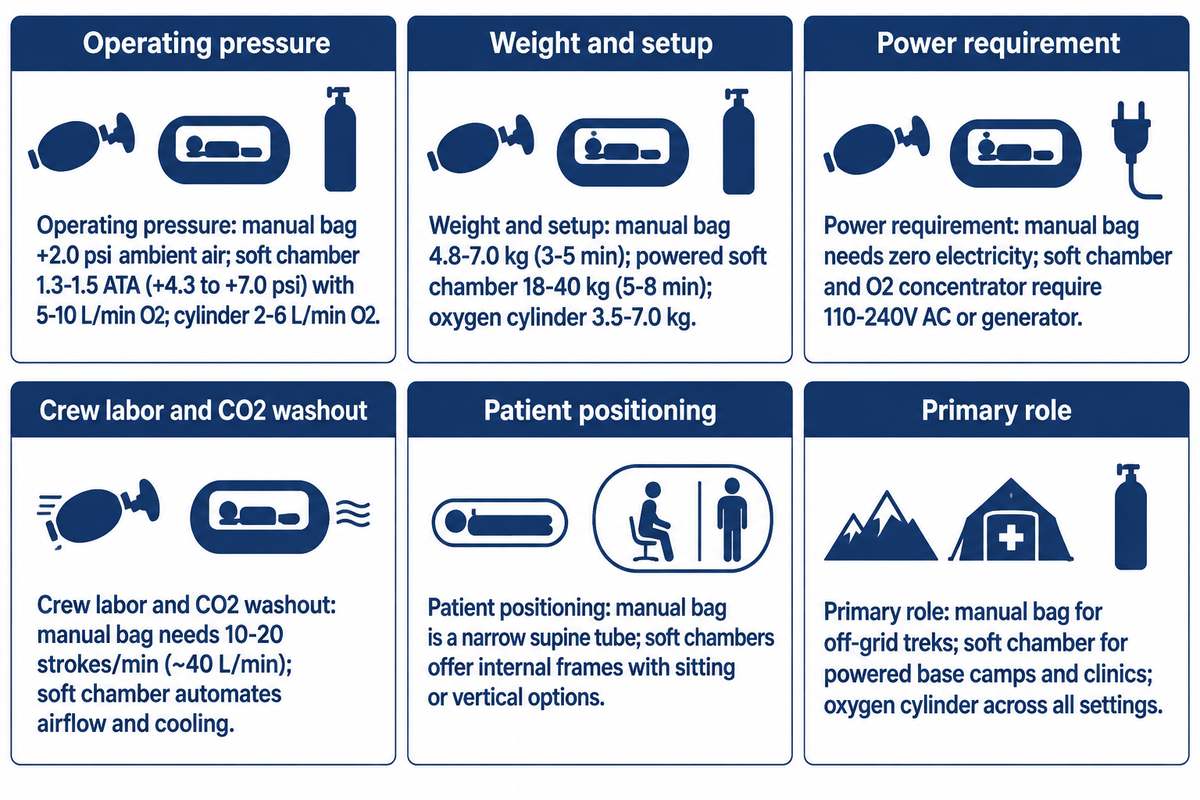
The choice between a manual 2 psi foot-pump pressure bag, powered 1.3-1.5 ATA soft-shell chamber and bottled oxygen depends on if your team is trekking off-grid or if you are operating a powered base camp or mountain clinic. Mobile climbing teams use a 5-7 kg (11-15 lbs.) manual bag, while powered lodges use an electric 1.3-1.5 ATA chamber.
Remote alpine regions require 0 electrical power, but 2 individuals must manually pump 10-20 strokes a minute (600-1200 strokes an hour) with a Gamow, Certec or Portable Altitude Chamber (PAC) bag. At a more established base-camp, ski-resort aid room, or high-altitude mining clinic with 110-240V AC or generator power, a powered MACY-PAN 1.3 to 1.5 ATA portable soft-shell chamber (like the 18 kg ST1700 transport bag) automates continuous air compression, cooling and O2 delivery without draining the rescue personnel.
| Evaluation Factor | Manual 2.0 psi Foot-Pump Rescue Bag | Powered 1.3–1.5 ATA (4.3–7.0 psi) Soft Chamber | Bottled Medical Oxygen Cylinder |
|---|---|---|---|
| Operating Pressure & Gas | +2.0 psi (+103.4 mmHg) ambient air | 1.3–1.5 ATA (+4.3 to +7.0 psi) + mask oxygen via 5–10 L/min concentrator | Ambient barometric pressure; medical oxygen at 2–6 L/min |
| System Weight & Setup | 4.8–7.0 kg (10.5–15.4 lb); 3–5 min manual inflation | 18–40 kg carry bag; 5–8 min unboxing and inflation | 3.5–7.0 kg per cylinder; finite gas supply (~2.8 h on 680 L tank at 4 L/min) |
| Power Requirement | None (manual foot or hand bellows pump) | 110–240V wall outlet or base-camp generator | None for cylinders (110–240V required for O2 concentrators) |
| Crew Labor & CO2 Washout | High: continuous 10–20 pump strokes/min (~40 L/min airflow) by rotating crew | Automated: continuous electric compressor airflow + built-in air cooler | Low: regulator flow check and pulse oximeter monitoring |
| Patient Positioning | Narrow supine tube; difficult for severe HAPE orthopnea | Internal metal frame, sitting or lying options (including vertical L1 walk-in) | Unrestricted; patient can sit upright or walk during assisted descent |
| Primary Deployment Role | Backcountry treks, high camps without electricity | High-altitude clinics, ski patrols, luxury lodges, vehicle-supported base camps | First-line stabilizer across all settings; can be combined with descent |
Knowing how to manage ambient pressure and supplemental oxygen is critical when setting up a high altitude medical room. See our clinical guide to medically supervised hyperbaric oxygen therapy for field stabilization and 1.3 to 1.5 ATA soft shell units and comparison to hospital hard shell units (2.0 to 3.0 ATA).
Field Operation, CO2 Washout Pumping Rates, and Safety Contraindications for Pressure Bags
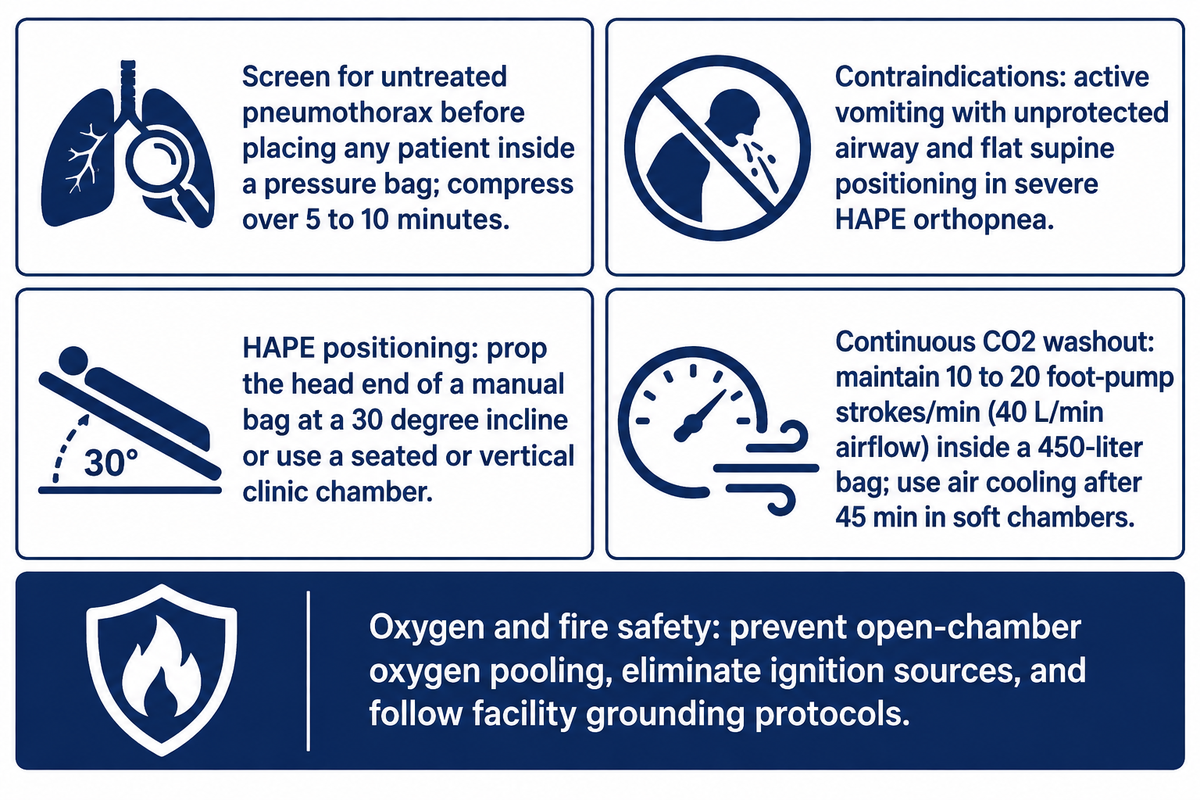
Portable hyperbaric pressure bags require a 40 L/min (10 to 20 strokes a minute with a foot pump) continuous fresh air flush to maintain the 2 psi relief valve. The bag must be compressed and decompressed gradually over 5 to 10 minutes for ear equalization. Untreated pneumothorax must be screened prior to placing the patient in the bag.
The most dangerous error with pressure-bag rescues in the backcountry happens when members of the team, who are usually exhausted, stop pumping as soon as they hear the hiss of the 2 psi overpressure valve. Inside a 450-liter (about 118-gallon) sealed bag, an adult person is exhaling CO2, and if bag air is not effectively exchanged, CO2 will build up and worsen cerebral vasodilation and increase ICP.
- In this case, sinus blockage or Eustachian tube blockage are relative contraindications. Active vomiting with an unprotected airway is also an absolute contraindication, and the same holds true with severe HAPE orthopnea. Orthopnea patients require either a semi-upright or upright position.
- Prop the head end of a hyperbaric bag at about a 30 degree incline if the patient has HAPE, and use packs, or a seated or standing/vertical chamber at a powered clinic.
- Maintain continuous CO2 washout and thermal control: maintain 10-20 full strokes per minute (pumper fatigue sets in after ~15 min) in a manually operated bag, or cycle air through a powered soft-shell chamber using a portable air cooler after ~45 min of continuous use (due to Charles’ Law).
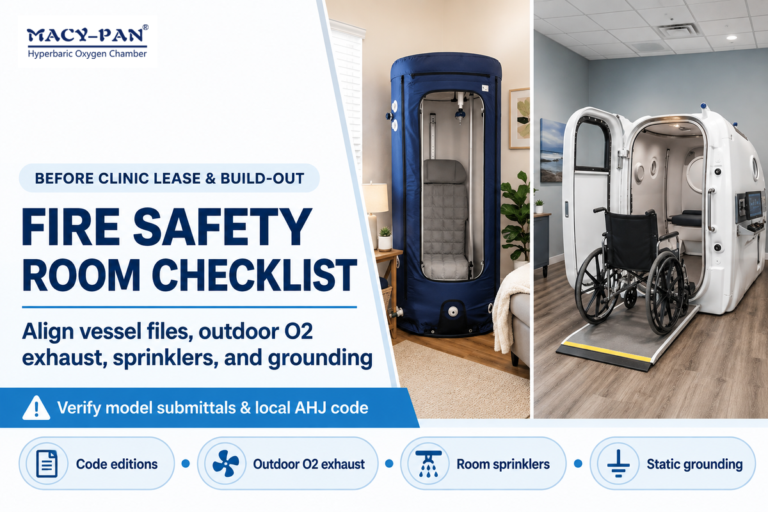
- Enforce strict oxygen and fire safety boundaries: During use of a chamber with supplemental oxygen (mask or cannula), operators must prevent open-chamber pooling of oxygen, eliminate ignition sources, and strictly adhere to facility grounding protocols as detailed in our hyperbaric chamber fire safety room checklist.
How Expedition Teams and High-Altitude Clinics Budget and Source Portable Hyperbaric Systems
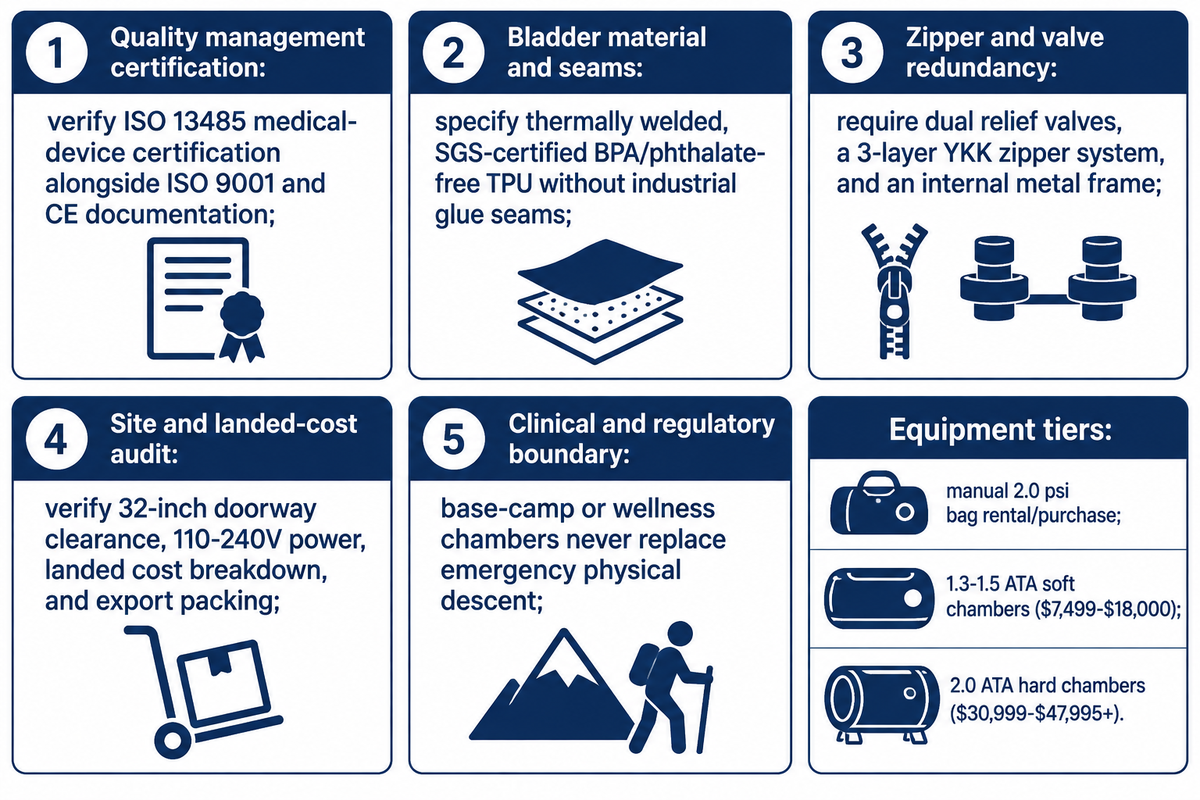
There are three categories of equipment with varying expenses based on mission frequency. The first category is per-trip rental of manual 2 psi rescue bags. The second category requires an outright purchase of manual backcountry bags. The third and final category involves a factory-direct purchase of MACY-PAN powered 1.3 to 1.5 ATA soft-shell chambers ($7,499 to $18,000 market average) and 2.0 ATA hard-shell systems ($30,999 to $47,995+).
For a commercial trekking outfitter that only runs a single high altitude expedition each year, the lowest capital outlay is for a manual Gamow or Certec bag rental in a gateway hub (e.g. Kathmandu, Moshi, or Cusco). However, for multi-departure guiding companies, high altitude ski resorts, mining camps, and clinics, the capital outlay is recouped if procurement officers evaluate build quality and certification prior to order.
| Procurement Category | Pricing Structure (MACY-PAN Benchmark) | Core Engineering & Material Specs | Best Fit Buyer Profile |
|---|---|---|---|
| Manual 2.0 psi Rescue Bag (Rental or Purchase) | Per-expedition rental or specialty distributor quote by bag model | 4.8–7.0 kg nylon/polyurethane shell, dual 2.0 psi relief valves, manual foot pump | Alpine climbing expeditions, mobile trekking guides without generator access |
| Powered 1.3–1.5 ATA Portable Soft Chamber (ST1700 / L1 / ST2200) | $7,499–$18,000 market average (factory-direct wholesale from MOQ 1) | 18–40 kg, SGS-tested BPA/phthalate-free TPU (no toxic glue seams), 3-layer YKK zipper, internal metal frame, 5–10 L/min O2 concentrator, air cooler | Base-camp medical tents, ski-resort clinics, high-altitude hotels, sports recovery teams |
| 2.0 ATA Hard-Shell Hyperbaric System (HP1501 / HE5000) | $30,999–$47,995+ prevailing market range | Rigid pressure vessel built to ASME standard for human occupancy above 2 psi differential | Permanent regional hospitals, hyperbaric clinics, and multi-patient medical centers |
Prior to placing a purchase order for any clinic or base-camp hyperbaric unit, evaluate the following five non-negotiable engineering checkpoints:
- Verify medical-device quality management certification: Confirm whether the manufacturer has ISO 13485 medical-device quality management certification in addition to general ISO 9001 and CE documentation. Otherwise, do not accept unverified reseller claims.
- Inspect bladder material and seam construction: Thermally welded, SGS-certified thermoplastic polyurethane (TPU) which is free of BPA and phthalates, should be specified. Sealed seams with industrial glue can off-gas VOCs in an enclosed space.
- Check zipper and relief-valve redundancy: It should have an automatic constant pressure relief valve and a three-layer YKK zipper system where each layer holds pressure independently, as well as an internal frame (stainless steel or aluminum) to help keep the chamber upright.
- Audit site installation and landed-cost variables: Review hyperbaric chamber room requirements (a 32-inch doorway clearance, and 110-240V outlet for portable units), hyperbaric chamber landed cost breakdowns, and export packing verification checklists, before shipping to remote mountain locations.
- Maintain strict regulatory and clinical boundaries: Labeling and regional regulatory clearances govern how a chamber may be marketed or used; always maintain that a wellness or base camp recovery chamber does not alleviate the need for an emergency descent and should never be represented as such.
Equipping a High-Altitude Clinic, Ski Patrol, or Expedition Base Camp? With factory-direct export from Shanghai Baobang Medical Equipment Co., Ltd. to 126 countries, MACY-PAN provides ISO 13485 (CE) and SGS documented 1.3-1.5 ATA portable soft-shell chambers (18 kg flight-checkable ST1700 to dual-user ST2200 and walk-in L1 systems), with tracked DHL Express air shipping. The minimum order quantity is 1 unit. Check out our full specifications on our MACY-PAN portable hyperbaric chambers page, for request of engineering drawings, certificate sets or factory direct quote.
Frequently Asked Questions
At what altitude does altitude sickness usually start, and can physically fit athletes still develop HAPE or HACE?
Acute mountain sickness normally starts at above 2,450 m to 2,500 m (8000-8200 feet), and high cardiovascular fitness does not protect against altitude-related conditions like AMS, HAPE or HACE.
According to the CDC Yellow Book, about 25% of unacclimatized visitors sleeping above 2450 meters in Colorado experience symptoms and the risks increase with rapid ascents above 4,300 m. Marathon and triathlon runners experience the same and possibly worse likelihood of altitude sickness.
How long does a patient stay inside a portable hyperbaric pressure bag during an altitude emergency, and can symptoms rebound afterward?
Field stabilization of severe AMS symptoms in a 2 psi portable pressure bag usually lasts 1-2 hours and symptoms of HAPE or HACE, if present, last longer, 2-6 hours, but symptoms return if the patient is left at high altitude.
As per the WMS and UIAA Medical Commission guidelines, partial pressurization of a bag simulates descent only when the chamber is inflated. Upon deflation to ambient mountain pressure, the arterial oxygen saturation drops, and teams must evacuate the patient to a lower elevation using the post-chamber improvement window.
Why did the 2018 Lake Louise consensus remove sleep disturbance from the acute mountain sickness diagnostic score?
During the 2018 Lake Louise consensus, it was decided that the impact of periodic breathing on sleep quality would no longer be considered part of the AMS diagnosis. The reason for this change was that healthy individuals who are acclimatizing to altitude and are not suffering from cerebral altitude illness often exhibit periodic breathing.
Above 2,500 to 3,000 m, mountaineers may still experience nocturnal periodic breathing even if they are well acclimatized. The elimination of the sleep question simplified the Lake Louise system to a four-symptom 12-point scale focused on the presence of headache, gastro-intestinal symptoms, fatigue and dizziness, thus reducing the number of false positive AMS diagnoses.
Can ibuprofen or acetaminophen replace acetazolamide for preventing or treating altitude headache?
Ibuprofen (600 mg every 8 hours) is also effective in preventing and alleviating high AMS (altitude headache) scores, and is safe to use for the duration of the ascent. However, it does not promote physiological ventilatory acclimatization like acetazolamide.
Ibuprofen blocks prostaglandin-mediated neurovascular pain, while acetazolamide promotes respiration and increases blood O2 saturation by inhibiting carbonic anhydrase in the kidney.
Can a person with a severe cold or blocked Eustachian tubes be pressurized inside a portable altitude chamber?
Pressurizing a patient with blocked Eustachian tubes or severe sinus congestion can lead to barotrauma of the middle ear, which can become severely painful, without management of nasal patency and slowing of pressure equalization.
When descent is not possible due to a life-threatening case of HAPE or HACE, medics weigh the risk of a tympanic injury against the patient’s chance of survival and slowly compress over 10 minutes.
Written by XCX for MACY-PAN (Shanghai Baobang Medical Equipment Co., Ltd.). This clinical and engineering guide synthesizes available literature on wilderness medicine and altitude from CDC, WMS and UIAA Medical Commission for educational and equipment planning purposes. It is not a substitute for an individual medical diagnosis or prescription. Always consult a qualified medical professional prior to taking prescription altitude medications and prioritize an immediate physical descent and emergency medical services in the case of a suspected high-altitude emergency.
References & Sources
- CDC Yellow Book: High-Altitude Travel and Altitude Illness, Peter H. Hackett and David R. Shlim, U.S. Centers for Disease Control and Prevention.
- Summary of Wilderness Medical Society Practice Guidelines for the Prevention, Diagnosis and Treatment of Acute Altitude Illness: 2024 Update, George Rodway and Andrew Luks, Wilderness Medical Society, July 8, 2024.
- Taylor S. Prince, Jeff Thurman, and Kurt Huebner. Acute Mountain Sickness. StatPearls Publishing / National Center for Biotechnology Information (NCBI).
- EMS High-Altitude Field Prophylaxis and Treatment. StatPearls Publishing / National Center for Biotechnology Information (NCBI).
- Daiquan Gao et al. Acetazolamide for the Prophylaxis of Acute Mountain Sickness: A Systematic Review and Meta-Analysis (PMC8588948). Annals of Thoracic Medicine. 2021.
- A Guide on When and How to Use Portable Hyperbaric Chambers (UIAA MedCom Recommendation). International Climbing and Mountaineering Federation (UIAA) Medical Commission.
- Altitude Sickness: What It Is, Symptoms, Treatment & Prevention, Cleveland Clinic Medical Reference.
- Rustem Igor Gamow and Geoffrey A. Geer. US Patent US4974829A: Hyperbaric Chamber. United States Patent and Trademark Office (USPTO).
- ISO 13485:2016 Medical Devices — Quality Management Systems — Requirements for Regulatory Purposes, International Organization for Standardization (ISO).