Get in Touch with MACY-PAN Company

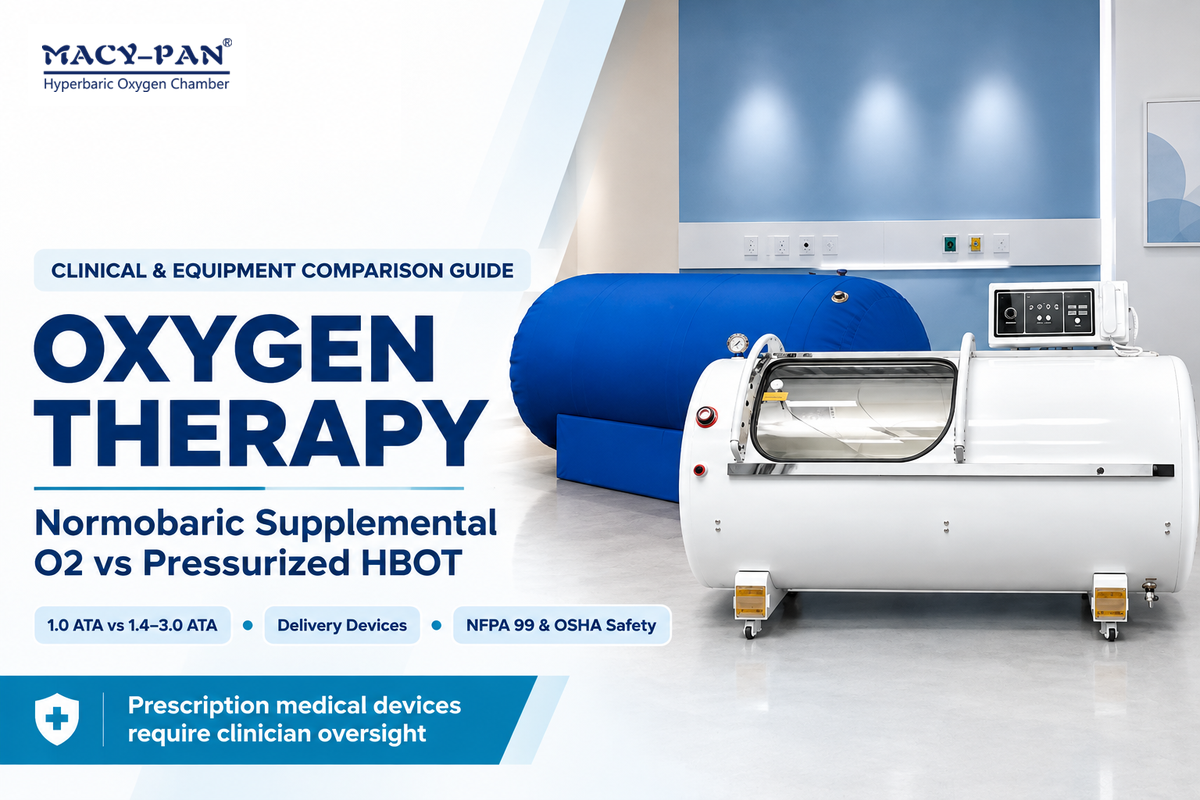
Oxygen therapy is a treatment that supplies extra oxygen to the lungs and tissues when blood oxygen levels fall too low. Standard supplemental oxygen therapy provides oxygen at local ambient pressure, approximately 1.0 ATA at sea level. Clinical hyperbaric oxygen therapy combines chamber pressure of at least 1.4 ATA (commonly 1.5 to 3.0 ATA) with breathing near 100% oxygen for 60 to 120 min. Mild hyperbaric chambers operate at 1.3 to 1.5 ATA.
Clinicians and medical buyers evaluate two distinct clinical pathways under the umbrella of oxygen therapy. Understanding the boundary between oxygen at normal air pressure and oxygen in a pressurized chamber prevents costly equipment mismatches. Market analysts at Precedence Research valued the global sector at $41.63 billion in 2025. The market is projected to reach $43.87 billion in 2026, approximately 5.38% above its 2025 value. Analysts forecast a compound annual growth rate of 5.34% through 2035. This guide compares gas physics, home oxygen delivery systems, multiplace chamber subsystems, fire regulations, and clinic sourcing standards.
What Is Oxygen Therapy and How Do Normobaric and Hyperbaric Modalities Differ?
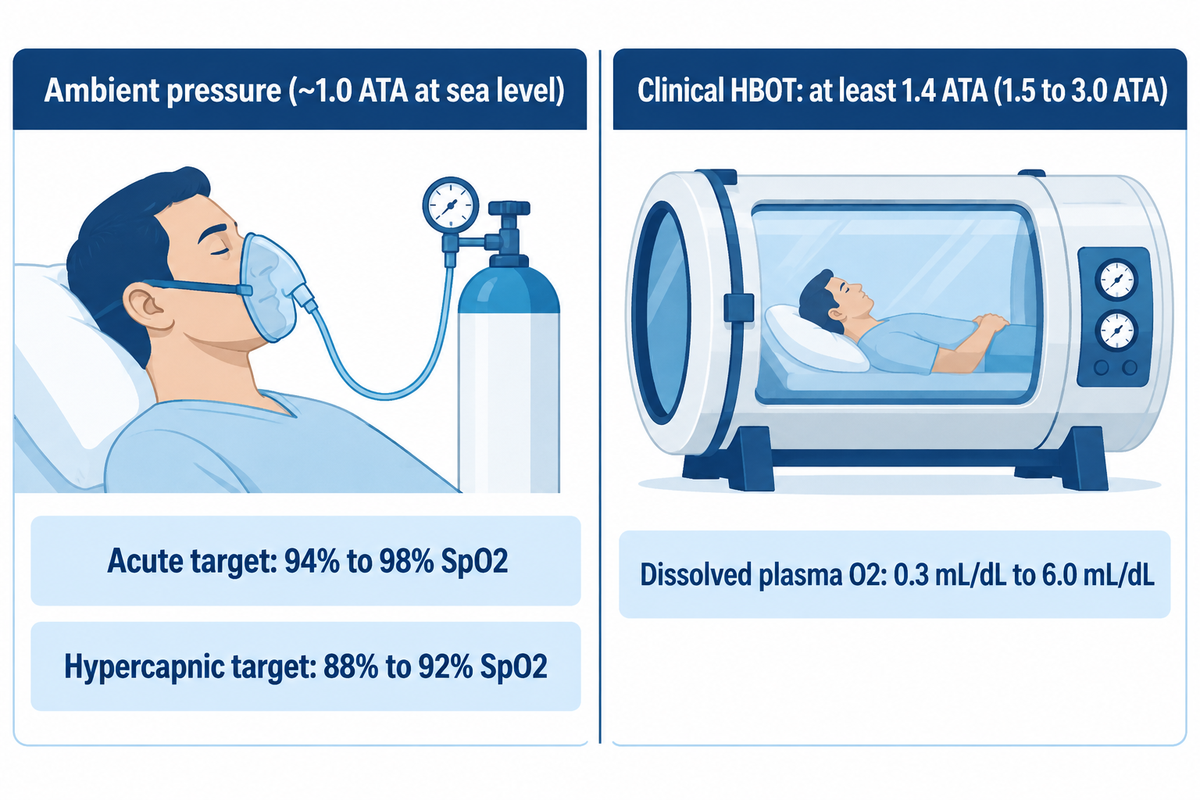
Oxygen therapy is a medical intervention that delivers concentrated oxygen gas to patients with low blood oxygen levels. Normobaric supplemental oxygen feeds a nasal cannula or mask at local ambient pressure (about 1.0 ATA at sea level). Clinical hyperbaric oxygen therapy uses chamber pressure of at least 1.4 ATA with near 100% oxygen breathing to dissolve additional oxygen in blood plasma. Mild hyperbaric chambers operate at 1.3 to 1.5 ATA.
Hemoglobin Saturation vs Plasma-Dissolved Oxygen Under Henry’s Law
Atmospheric pressure at sea level is about 1.0 ATA, and the volume fraction of oxygen in that air is about 21%, according to the Cleveland Clinic hyperbaric guidance and the NCBI Nursing Skills Chapter 11 (NBK593208). Healthy lungs extract oxygen from the air through the human nose and airways and bind it to hemoglobin while moderating the heart rate. When chronic lung condition erodes the integrity of alveolar membranes, the body stops getting enough oxygen from room air. Patients with hypoxemia may need oxygen therapy as a treatment that provides extra oxygen. According to the British Thoracic Society guideline (PMC5531304), clinicians aim for a oxygen saturation of 94% to 98% for most of the acutely ill adults. For patients at risk of hypercapnic respiratory failure, the BTS guideline sets a target of 88% to 92%.
Higher pressure increases oxygen dissolved in blood plasma beyond hemoglobin-bound transport. In healthy individuals at rest, hemoglobin saturation at 1.0 ATA is typically near 98% to 100%. Because of this ceiling, normobaric supplemental oxygen can’t replicate the high plasma oxygen tension achieved in a pressurized vessel. Beyond a certain point (roughly 99% or 100%), further saturation of the hemoglobin in red blood cells is impossible. Higher oxygen partial pressure increases the oxygen dissolved in blood plasma in addition to the oxygen transported bound to hemoglobin. The Two-Axis Oxygen Delivery Matrix (Pressure in ATA × Inspired FiO2) compares vessel pressure and inspired oxygen fraction.
Under Henry’s Law, at a constant temperature, the amount of oxygen dissolved in arterial plasma is proportional to arterial oxygen partial pressure. According to peer-reviewed data in PMC8465921 on hyperbaric physiology, if a person at sea level is breathing room air, the amount of dissolved oxygen in arterial plasma is approximately 0.3 mL/dL. One of the mechanisms of action of hyperbaric oxygen therapy (HBOT) is the dissolution of oxygen in the plasma. When patients breathe pure oxygen inside a chamber at 2.0 to 3.0 ATA, arterial tension reaches 1,400 to 2,000 mmHg. Dissolved oxygen in plasma can reach up to 6.0 mL/dL at the upper end of that pressure range. This oxygen reserve in the plasma helps ischemic organs and tissues get the oxygen needed for cellular repair. You can learn more about pressurized gases and the principles of HBOT in our article about how hyperbaric oxygen therapy works.
“Clinical hyperbaric oxygen therapy is an intervention in which an individual breathes near 100% oxygen intermittently while in a hyperbaric chamber pressurized to greater than sea level pressure, defined as 1.4 ATA or higher.”
Side-by-Side Comparison: Normobaric Supplemental Oxygen vs Mild HBOT vs Medical HBOT
Normobaric supplemental oxygen operates at approximately 1.0 ATA ambient pressure. Clinical hyperbaric oxygen therapy combines pressure of 1.4 ATA or higher with breathing near 100% oxygen intermittently. The comparison matrix below applies The Two-Axis Oxygen Delivery Matrix (Pressure in ATA × Inspired FiO2) across nine delivery tiers. Its values reflect the BTS emergency oxygen standards (PMC5531304) and the PMC8471110 FiO2 dilution benchmarks.
| Modality Tier | Operating Pressure (ATA) | Common Source Outlet Purity (%) | Effective Inspired FiO2 (%) | Dissolved Plasma O2 (mL/dL) | Clinical or Home Pattern | Primary Clinical or Wellness Target |
|---|---|---|---|---|---|---|
| Room Air Baseline | Local ambient (~1.0 ATA at sea level) | Approximately 21% ambient air | Approximately 21% | 0.3 mL/dL | Continuous ambient breathing | Healthy normoxic respiration |
| Low-Flow Nasal Cannula (1–6 L/min) | Local ambient (~1.0 ATA at sea level) | Commonly 90%–95% from concentrator or near-100% cylinder | Roughly 24%–44% (room air diluted) | 0.4–0.6 mL/dL | At least 15 hours/day for severe LTOT | Chronic COPD and home hypoxemia |
| Simple Face Mask (5–10 L/min) | Local ambient (~1.0 ATA at sea level) | Commonly 90%–95% concentrator or near-100% cylinder | Roughly 35%–55% | 0.6–0.8 mL/dL | Short-term acute care titration | Moderate acute hypoxemic episodes |
| Venturi Precision Mask (2–15 L/min valve-dependent) | Local ambient (~1.0 ATA at sea level) | Commonly 90%–95% or near-100% supply | Commonly 24%, 28%, 35%, 40%, or 60% | 0.4–0.9 mL/dL | Inpatient controlled titration | Hypercapnic COPD (target 88%–92% SpO2) |
| Non-Rebreather Reservoir Mask (10–15 L/min) | Local ambient (~1.0 ATA at sea level) | Near-100% compressed or liquid gas | Roughly 60%–90% | 1.0–1.5 mL/dL | Emergency trauma stabilization | Severe acute hypoxia and trauma care |
| High-Flow Nasal Cannula (HFNC up to 60 L/min) | Local ambient (~1.0 ATA at sea level) | Blended 21%–100% heated gas | Roughly 21%–95% | 0.5–1.8 mL/dL | Continuous ICU respiratory support | Acute hypoxemic respiratory failure |
| Soft-Shell Mild Hyperbaric Chamber | 1.3–1.5 ATA | Commonly 93%±3% external concentrator | Mask-delivered O2 (inspired FiO2 diluted by mask mixing; cabin kept below 23.5% O2) | Depends on pressure and inspired FiO2 (roughly 1.8–2.8 mL/dL) | 60–90 min per session | Home wellness and athletic recovery |
| Hard-Shell Chamber (Air-Pressurized or O2 Monoplace) | 1.5–2.0 ATA (up to 3.0 ATA clinical monoplace) | Commonly 93%±3% dual unit or >99.0% medical O2 | Separate mask in air-pressurized cabin or near-100% direct chamber O2 in monoplace | Depends on pressure and inspired FiO2 (roughly 3.2–6.0 mL/dL) | 60–120 min per session | Outpatient, mobility-accessible, or clinical care by vessel rating |
| Medical Multiplace Hyperbaric Chamber | 2.0–3.0 ATA | >99.0% to 100% medical O2 via BIBS hood | Near 100% via tight BIBS hood | 4.5–6.0 mL/dL | 60–120 min per session | UHMS acute and ischemic wound indications |
What Are the Different Types of Oxygen Machines for Home and Clinical Supplemental Oxygen Therapy?
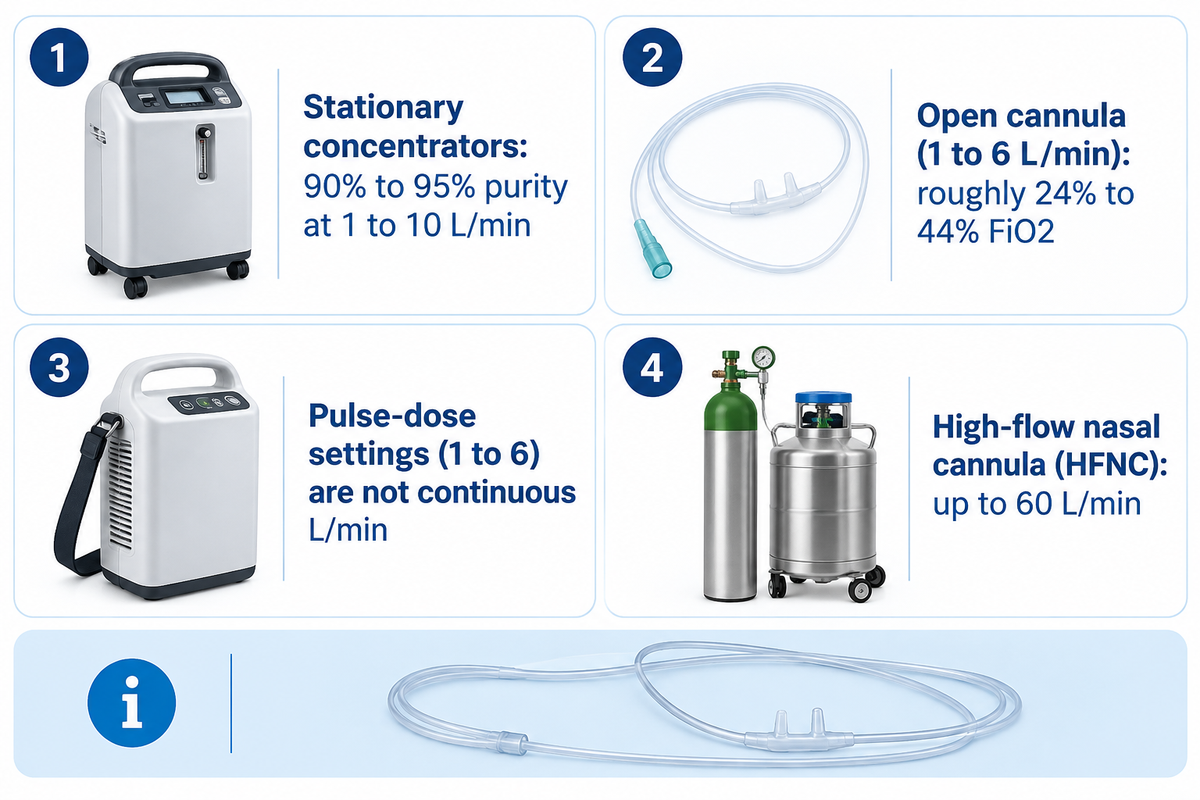
Home and clinical oxygen devices fall into three main source categories: molecular sieve oxygen concentrator units, compressed gas cylinders, and cryogenic liquid oxygen reservoirs. According to Cleveland Clinic, molecular sieve concentrators deliver 90% to 95% purity at 1 to 10 L/min. Because open cannulas mix room air during inhalation, a 1 to 6 L/min flow yields an effective FiO2 of roughly 24% to 44%.
Stationary Concentrators, Portable Concentrators, Compressed Cylinders, and Liquid Oxygen
Patients often ask what are the different types of oxygen machines for oxygen at home. The American Lung Association oxygen delivery device guide and Pulmonary Fibrosis Foundation FAQ classify home oxygen systems by gas storage method and liter flow. Clinicians match hardware to daily flow rate, battery runtime, and use outside the home. Patients also ask whether an oxygen concentrator is good for health. Yes, for people with documented hypoxemia, prescribed medical concentrators safely help the lungs get more oxygen and reduce cardiac strain. Healthy normoxic individuals do not benefit from extra concentrator gas.
- Bedside stationary molecular sieve concentrators run on household electricity and pull oxygen from room air using zeolite sieve beds. The Cleveland Clinic oxygen concentrator overview confirms that stationary units weigh about 22 lbs (10 kg) and filter out nitrogen to supply 90% to 95% concentrated oxygen. Patients use an oxygen concentrator at 1 to 5 L/min on normal-flow units or up to 10 L/min on high-flow units for overnight care.
- portable oxygen concentrators (POCs) are battery-powered and support travel and regular daily walking. Pulse-dose models generally weigh between 3.5 to 6.5 lbs, while dual-mode continuous or pulse models generally weigh between 10 to 18 lbs (Oxygen Concentrator Store).
- Compressed medical oxygen, containing ~99.0% pure oxygen stored, is stored in green-shouldered steel or aluminum tanks. At Home, electric concentrators are paired with a backup oxygen tank or oxygen cylinders for power outages.
- Cryogenic liquid oxygen systems cool liquid oxygen in an insulated reservoir and thermos. Although liquid oxygen systems can support continuous liter flows without wall power, the reservoir slowly vents gas.
Pulse-dose settings (1 to 6) on portable oxygen units are not equivalent to the same numerical continuous flow in L/min, according to the Pulmonary Fibrosis Foundation clinical FAQ and Oxygen Concentrator Store flow benchmarks . See the Pulmonary Fibrosis Foundation’s Clinical FAQ and Oxygen Concentrator Store’s flow benchmarks for details. Fixed bolus devices deliver a preset volume of gas for each breath. In devices that regulate minute delivery, the volume delivered per breath can decrease as the breathing rate increases. Because demand valves can fail to trigger during nocturnal mouth breathing, clinicians verify sleep oximetry before approving pulse-dose units for overnight use. Clinicians, however, usually evaluate pulse-dose portable oxygen for use during sleep by checking the patient’s oximetry to verify it is functioning properly.
Open Low-Flow Nasal Cannulas vs Venturi and Non-Rebreather Masks
In home care, oxygen is usually inhaled through a lightweight cannula or mask. However, equating a machine’s 90% to 95% outlet purity with inhaled tracheal FiO2 is a widespread clinical error. Bench measurements in PMC8471110 on open nasal cannula dilution explain why outlet purity differs from lung concentration. Across tidal volumes of 300 to 700 mL at 20 breaths/min, a 1 L/min flow delivers roughly 21.40% to 21.97% FiO2. At 3 L/min, effective FiO2 reaches roughly 22.87% to 27.13%.
When a patient breathes oxygen through a tube or open nasal cannula at low flow, roughly 85% to 90% of each breath comes from room air (approximately 21% O2). That room-air mixing dilutes the stream to an effective FiO2 of roughly 24% to 44% across 1 to 6 L/min. When low-flow prongs cannot deliver enough oxygen, oxygen can be delivered via enclosure masks. Clinicians deliver oxygen through a mask using a Venturi valve (commonly 24% or 28% FiO2, and up to 60%) or a non-rebreather reservoir mask (roughly 60% to 90% FiO2). In intensive care, heated high-flow oxygen cannulas run up to 60 L/min, as detailed in the British Thoracic Society adult oxygen guideline (PMC5531304) and PMC11377397 acute respiratory review.
| Equipment Cluster / Interface Type | Storage or Generation Method | Flow Delivery Mode | Flow Rate Range (L/min) | Common Outlet Purity (%) | Effective Inhaled FiO2 (%) | Operating Duty & Weight |
|---|---|---|---|---|---|---|
| Stationary Home Concentrator (5 LPM Class) | Zeolite PSA nitrogen sieve | Continuous flow | 1.0–5.0 L/min | Commonly 90%–95% | Roughly 24%–40% via cannula | 24 hr AC mains / about 22 lbs (10 kg) |
| High-Flow Stationary Concentrator (10 LPM Class) | Dual-bed PSA molecular sieve | Continuous flow | 2.0–10.0 L/min | Commonly 90%–95% | Roughly 28%–60% via mask/cannula | 24 hr AC mains / indoor stationary duty |
| Dual-Unit Hyperbaric Feed Concentrator Pair | Synchronized PSA sieve pair | Continuous manifold flow | 20–40 L/min combined | Commonly 93%±3% | Roughly 85%–95% via chamber mask | Continuous clinic duty for HE5000 cabin |
| Pulse-Dose Portable Concentrator (POC) | Micro-PSA sieve + demand valve | Inspiratory pulse settings (1–6) | Pulse bolus per triggered breath | Commonly 90%–95% | Inspiratory oxygen pulses during ambulation; missed breath triggers reduce delivery and room-air mixing dilutes inspired oxygen | Rechargeable battery / portable travel duty |
| Dual-Mode Portable Concentrator | PSA sieve (continuous + pulse) | 0.5–3 L/min continuous or pulse | 0.5–3.0 L/min | Commonly 90%–95% | Roughly 24%–32% continuous mode | Rechargeable battery / wheeled or carry duty |
| Compressed Gas Cylinder (Portable Tank) | High-pressure aluminum cylinder | Regulator continuous or conserving | 1.0–6.0 L/min | Near 99.0% USP medical | Roughly 24%–44% via cannula | Ambulation tank; runtime varies by conserver vs continuous flow |
| Compressed Gas Cylinder (Stationary Tank) | High-pressure steel/aluminum | Regulator continuous flow | 1.0–15.0 L/min | Near 99.0% USP medical | Roughly 24%–90% (cannula or NRB mask) | Power-outage backup supply (runtime varies by tank size and flow) |
| Cryogenic Liquid Oxygen Base + Portable Unit | Insulated cryogenic reservoir | Vaporizer continuous or pulse | 1.0–10.0 L/min | Near 99.0% USP medical | Roughly 24%–85% | No-electricity home base + refillable portable unit |
| Heated High-Flow Nasal Cannula (HFNC System) | Hospital wall blender + humidifier | Heated continuous high flow | 20.0–60.0 L/min | Blended 21%–100% | Roughly 21%–95% (matches inspiratory peak) | Continuous inpatient ICU operation |
How Does a Soft-Shell Hyperbaric Chamber Compare With a Hard-Shell Medical or Sitting Hyperbaric Chamber?
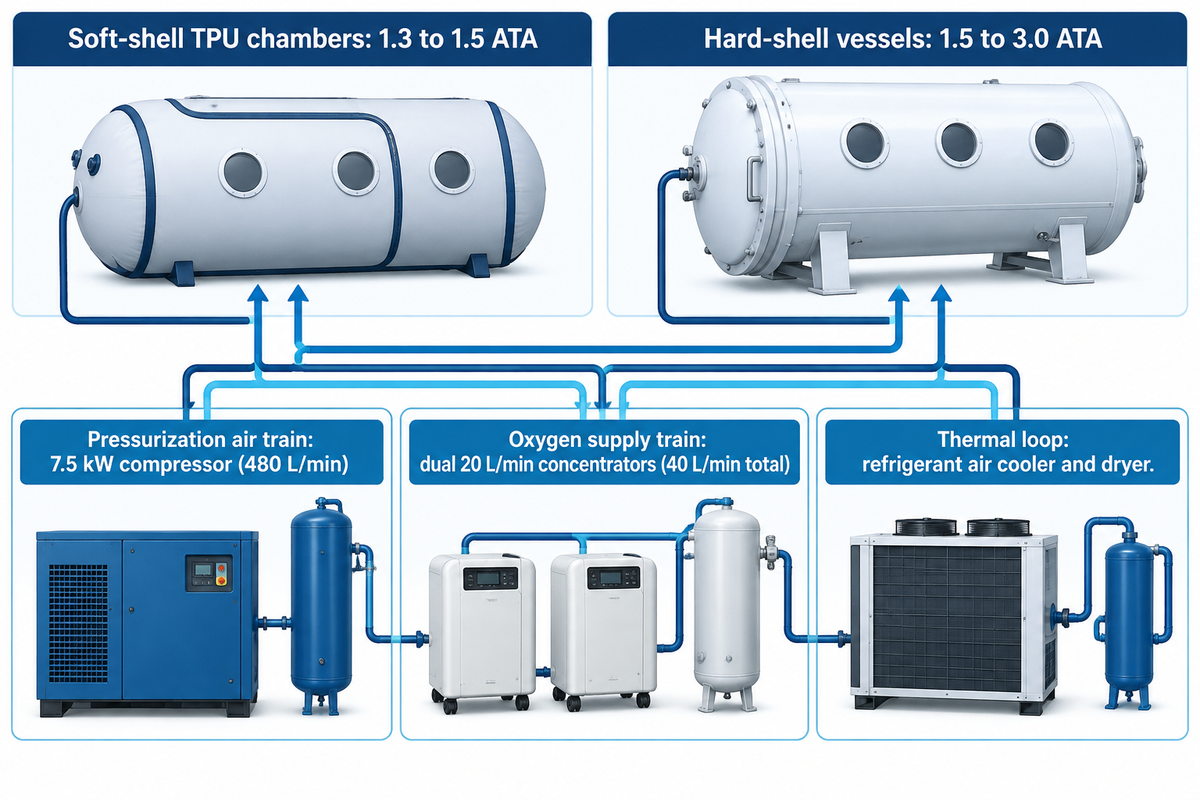
According to MACY-PAN engineering specifications, soft-shell ST801 and ST901 hyperbaric chamber models use flexible thermoplastic polyurethane (TPU) fabric at 1.3 to 1.5 ATA. Hard-shell monoplace, sitting, and multiplace chambers use rigid stainless steel, aluminum alloy, or acrylic shells rated from 1.5 to 3.0 ATA. Clinical HBOT requires medical oxygen exceeding 99.0% purity, whereas mild chambers use a commonly 93%±3% concentrator mask where room-air mixing affects actual inspired FiO2.
Soft-Shell Mild Chambers (1.3–1.5 ATA) vs Hard-Shell Monoplace and Sitting Chambers (1.5–2.0+ ATA)
Buyers comparing hyperbaric types of systems evaluate shell materials, working pressure, and door geometry. Soft shell mild chambers, such as the MACY-PAN ST801, ST901 and ST1700, use 44 oz double-sided TPU coated fabric with dual zipper seals and fold for home installation. These chambers can be folded for home installation. You can find photos of similar fabric envelopes in our soft shell hyperbaric chamber guide and a comparison of other mild systems in our mild hyperbaric chamber guide.
The UHMS guidelines define mild hyperbaric exposures as being less than 1.5 ATA. Soft-shell mild chambers (1.3 to 1.5 ATA) paired with external oxygen concentrator units are built for home wellness and athletic recovery rather than hospital-grade acute care protocols requiring 1.5 to 3.0 ATA. The U.S. military’s Hyperbaric Chamber Research and Development Program has identified a potential need for hyperbaric chambers at 1.5 ATA to 3.0 ATA. Home users on Reddit r/TBI home chamber threads report that cabin air pressurization alone raises alveolar oxygen modestly. Inside a mild chamber, oxygen is supplied by an external concentrator through an internal mask. The models listed below use 5 or 10 L/min units, and buyers must verify that the concentrator is rated for chamber backpressure.
For outpatient clinics and mobility-impaired patients, rigid hard-shell vessels reach 1.5 to 2.0 ATA (and up to 3.0 ATA in hospital diving chamber and wound centers). The Cleveland Clinic hyperbaric oxygen therapy clinical guide and Mayo Clinic summaries note that standard sessions last 60 to 120 min. Sitting chambers include the soft-shell MACY-PAN ST701 (rated at 1.3 to 1.5 ATA) and rigid walk-in hard-shell models (operating at 1.5 to 2.0 ATA with sliding doors). Seated accommodation does not imply a shared shell or door design. Recent engineering patents, including the 2025 multi-person chamber design in Google Patents CN309549367S, combine wide sliding doors with observation windows to reduce claustrophobia. View our complete hardware catalog on the MACY-PAN hyperbaric chamber solutions page.
Multiplace Chamber Subsystems: Compressor, Air Cooler, and Dual Concentrator Integration
From a single-occupant tube to a multi-occupant cabin, significant shifts occur in the balance of several system integrations. Within the chamber, “The Chamber Subsystem Triad (Pressurization Air Train + Oxygen Supply Train + Thermal Dehumidification Loop)” integrates to compensate for body heat and humidification. Control of cabin temperature and humidity is critical for occupant comfort and safety during sessions of 60 to 120 minutes. Without active cooling, gas compression and occupant body heat raise cabin temperature and humidity during a 60 to 120 min session.
A peer-reviewed study published by PMC11195672 used a MACY-PAN HE5000 multiplace chamber manufactured by Shanghai Baobang Medical Equipment Co. Ltd. (MACY-PAN). According to MACY-PAN engineering specifications , the HE5000 vessel measures 226 × 166 × 195 cm and seats 1 to 5 users at up to 2.0 ATA. MACY-PAN engineering specifications outline that the HE5000 is made up of three subsystems that illustrate how commercial multiplace hardware operates.
- In the pressurization air train , a 7.5 kW oil-free air compressor pumps 480 L/min of filtered air into the 226 × 166 × 195 cm cabin. Combined with exhaust ventilation, occupant monitoring, and mask scavenging, this airflow helps flush exhaled carbon dioxide and keep cabin ambient oxygen below 23.5%.
- In the oxygen supply train, dual 20 L/min molecular sieve concentrators provide 40 L/min total so roughly 93% ± 3% oxygen is delivered to five individual breathing masks.
- In the thermal dehumidification loop , a refrigerant air cooler and dryer chills the compressed air stream, stabilizing cabin humidity and temperature across 60 to 120 min sessions.
Prior to installation of multiplace vessels, clinic engineers should assess floor loading and room ventilation, and refer to our hyperbaric chamber room requirements checklist. Facility planners also verify the 10 to 12 feet door clearance noted in UHMS facility FAQs. Additionally, users can cross check working pressures in our hyperbaric chamber ATA pressure guide.
| Chamber Configuration / Model Example | Shell Material & Geometry | Operating Pressure (ATA) | Cabin Dimensions / Capacity | Air Compressor Subsystem | Oxygen Supply Feed | Target Deployment & Commercial Pricing |
|---|---|---|---|---|---|---|
| Soft-Shell Lying Chamber (MACY-PAN ST801) | 44 oz TPU fabric cylinder | 1.3–1.5 ATA | 225 × 80 cm (1 adult lying) | Oil-free silent compressor (72 L/min) | 5 L/min or 10 L/min @ commonly 93%±3% O2 | Home wellness & recovery / Request a quote |
| Soft-Shell Wide Chamber (MACY-PAN ST901) | 44 oz TPU fabric cylinder | 1.3–1.5 ATA | 225 × 90 cm (1–2 persons) | Oil-free dual compressor (110 L/min) | 10 L/min @ commonly 93%±3% O2 via mask | Home & athletic studio / Request a quote |
| Soft-Shell Sitting Chamber (MACY-PAN ST701) | TPU fabric upright cabin + frame | 1.3–1.5 ATA | 130 × 90 × 165 cm (1 seated user) | Oil-free air compressor + cooler | 10 L/min @ commonly 93%±3% O2 headset/mask | Chair-bound home users / Request a quote |
| Soft-Shell Family/Wheelchair Cabin (ST1700) | Heavy-duty TPU large cabin | 1.3–1.4 ATA | 180 × 115 × 175 cm (1–2 seated) | High-output oil-free air pump | 10 L/min @ commonly 93%±3% O2 | Rehab & wheelchair access / Request a quote |
| Hard-Shell Monoplace Tube (MACY-PAN HP1501) | Stainless steel / aluminum alloy | 1.5–2.0 ATA | 220 × 75–90 cm (1 supine user) | Oil-free air compressor + air cooler | 10 L/min @ commonly 93%±3% O2 + internal display | Chiropractic & wellness clinics / Request a quote |
| Hard-Shell Sitting Chamber (Walk-In Cabin) | Rigid steel / acrylic sliding door | 1.5–2.0 ATA | Upright cabin with reclining chair | Integrated compressor + dehumidifier | 10–20 L/min @ commonly 93%±3% O2 mask | Outpatient & senior clinics / Request a quote |
| Hard-Shell Multiplace Cabin (MACY-PAN HE5000 Mini) | Stainless steel rectangular vessel | 1.5–2.0 ATA | Compact 2–3 person cabin | Oil-free compressor + refrigerant dryer | 20 L/min @ commonly 93%±3% O2 dual-mask manifold | Sports recovery centers / Request a quote |
| Hard-Shell Multiplace Cabin (MACY-PAN HE5000) | Rigid stainless steel multiplace vessel | 1.5–2.0 ATA | 226 × 166 × 195 cm (1–5 persons) | 7.5 kW oil-free compressor (480 L/min) | Dual 20 L/min (40 L/min total @ commonly 93%±3%) | Multi-patient rehab clinics / Request a quote |
| Hospital Acrylic/Steel Clinical Chamber | ASME PVHO-1 / NFPA 99 Class A or B | 2.0–3.0 ATA | 1-person tube or multi-patient room | Medical air plant or vaporized O2 supply | Gaseous near-99.0% medical O2 via BIBS masks/hoods in multiplace or direct chamber O2 in monoplace | Hospital wound & dive centers / Request a quote |
Which Clinical Conditions Require Supplemental Oxygen vs Hyperbaric Oxygen Therapy?
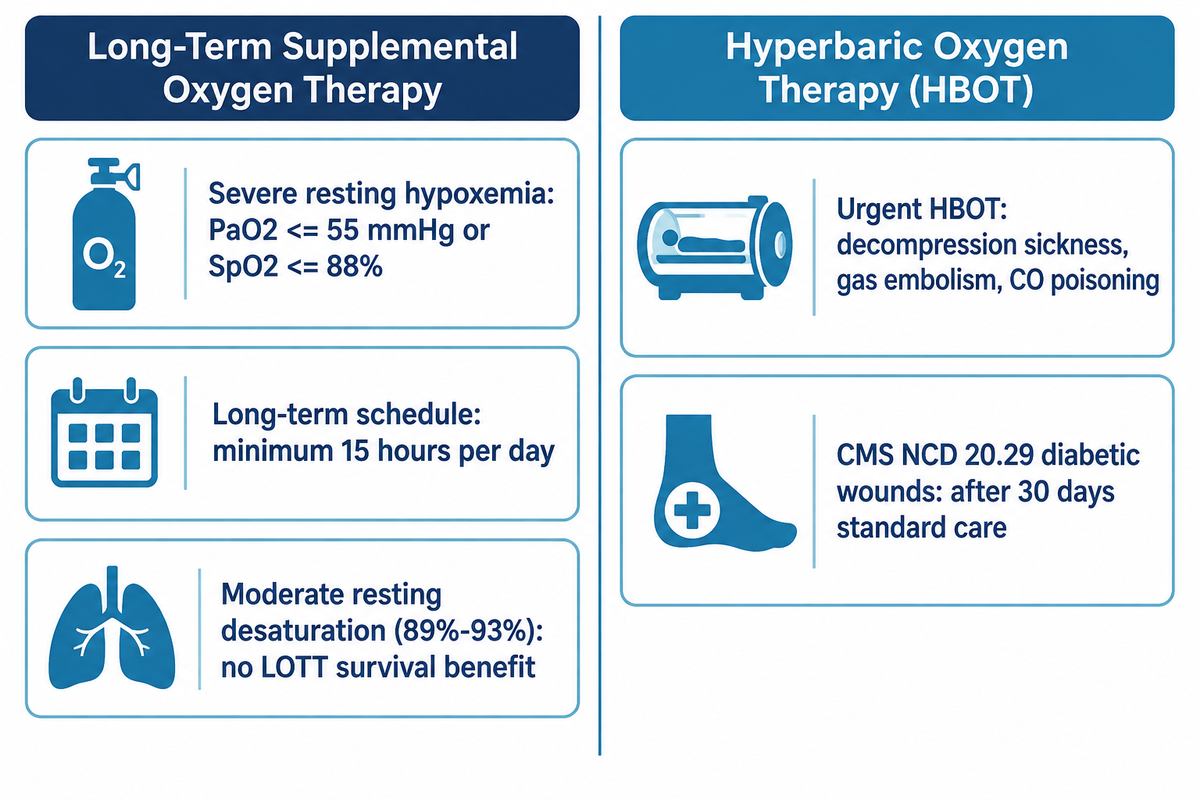
For patients in a chronic stable state, clinicians recommend normobaric long-term supplemental oxygen for a minimum of 15 hours per day to manage severe resting hypoxemia (Pulmonary Fibrosis Foundation). Qualifying independent room air criteria are SpO2 at or below 88% or a PaO2 at or below 55 mmHg (NBK532994). Conversely, clinical hyperbaric oxygen therapy treats UHMS-recognized ischemic, radiation, and acute poisoning diagnoses in 60 to 120 min sessions.
Standard Supplemental Oxygen Indications: COPD, Pulmonary Fibrosis, Heart Failure, and Sleep Apnea
Patients with chronic lung disease often ask when they need oxygen at home versus inpatient care. The American Thoracic Society patient clinical guide and the American Lung Association oxygen therapy overview describe the use of home oxygen. Normobaric home oxygen provides relief to patients with chronic hypoxemia by delivering supplemental oxygen in your blood to fill the oxygen diffusion gap, alleviating the persistent lack of oxygen and low oxygen in the body. In these cases, when oxygen levels are low, oxygen therapy can help reduce breathlessness and protect cardiac function.
The clinical standards described in NCBI StatPearls on chronic hypoxemia (NBK532994) and the Pulmonary Fibrosis Foundation clinical FAQ set prescribing pathways. The following findings guide oxygen assessment when patients need supplemental oxygen and need long-term oxygen therapy. Long-term schedules of at least 15 hours a day apply to qualifying severe resting hypoxemia, while exertional or nocturnal desaturation requires a separately prescribed schedule.
- Severe resting hypoxemia is indicated by arterial PaO2 at or less than 55 mmHg or pulse oximetry (SpO2) at or less than 88% on room air.
- Given resting PaO2 of 56 to 59 mmHg or SpO2 of 89% with cor pulmonale, right-heart edema, or erythrocytosis (hematocrit > 56%, per NBK532994), long-term oxygen therapy is supported.
- For exertional or nocturnal desaturation, patients need extra oxygen when oxygen level readings fall below 88% during a 6-minute walk test or sleep study in copd or pulmonary fibrosis.
However, in stable copd patients with moderate resting desaturation (SpO2 roughly 89%-93%, per NBK532994), no benefit of long-term oxygen treatment (LOTT) was found for supplemental oxygen. In that moderate group, routine use supplemental oxygen protocols did not prolong time to death or first hospitalization. Hence, clinicians reserve 15-hour daily schedules for severe resting hypoxemia.
UHMS and FDA-Cleared Hyperbaric Indications vs Commercial Wellness Protocols
When patients inhale oxygen in a pressurized vessel, high plasma gas tension supports angiogenesis and leukocyte bacterial killing. The UHMS Indications and Cleveland Clinic Guidance recognize clinical HBOT indications to include carbon monoxide poisoning, decompression sickness, diabetic foot ulcers and radiation injury.
- Acute decompression sickness, arterial gas embolism, acute carbon monoxide poisoning, and clostridial myonecrosis (gas gangrene) require urgent hospital chamber treatment.
- Delayed radiation tissue injury, compromised skin grafts and flaps, and chronic refractory osteomyelitis respond to multi-session HBOT. Non-healing diabetic lower-extremity wounds are covered under CMS NCD 20.29 after at least 30 consecutive days of standard wound therapy with no measurable healing signs.
- Other clinical indications include crush injuries, compartment syndrome, and thermal burns.
For athletes and wellness clients, oxygen therapy may also be delivered in 1.3 to 1.5 ATA mild chambers to support recovery. For comparative recovery outcomes, please refer to our article on hyperbaric oxygen therapy benefits.
What Are the Safety Precautions, Contraindications, and Fire Regulations for Oxygen Therapy?
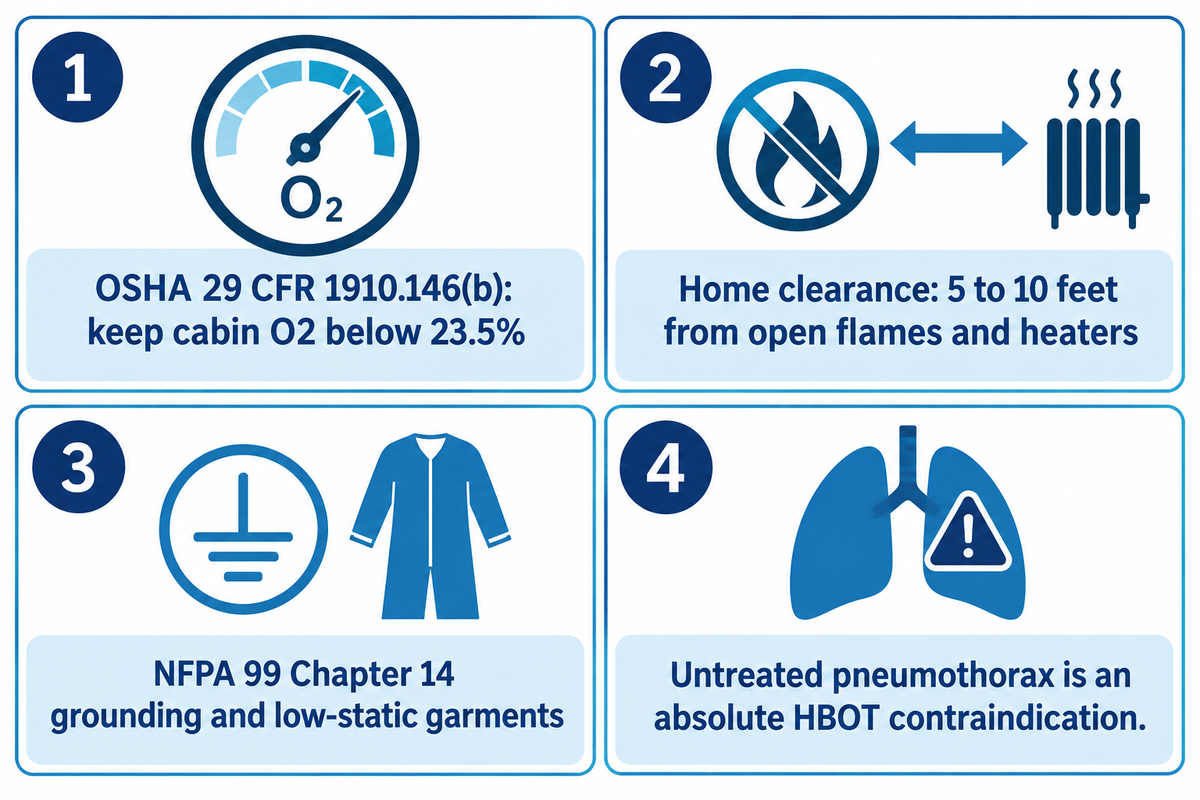
Under federal rule OSHA 29 CFR 1910.146(b), any atmosphere above 23.5% oxygen by volume creates an oxygen-enriched fire hazard. Operators must keep oxygen equipment 5 to 10 feet from flames (Pulmonary Fibrosis Foundation) and ban petroleum lotions, electronics, and lighters inside chambers. Facilities require continuous monitoring by trained personnel, titrate SpO2 to 88%–92% in hypercapnic COPD (BTS), and verify ASME PVHO-1 and NFPA 99 Chapter 14 safety rules.
Oxygen-Enriched Atmosphere Fire Prevention: OSHA 23.5% Threshold, Home Rules, and FDA HBOT Guidance
Although oxygen is a gas that is non-flammable by itself, it accelerates combustion and lowers ignition temperatures. Federal regulation OSHA 29 CFR 1910.146(b) defines any atmosphere exceeding 23.5% oxygen by volume as an oxygen-enriched atmosphere. The 23.5% oxygen threshold in 29 CFR 1910.146 describes oxygen enrichment in confined space regulation. Hyperbaric fire risk also reflects total pressure, oxygen partial pressure, materials, and ignition sources.
Family members often want to know what safety precautions can be taken when using oxygen concentrator at home during oxygen therapy. The American Lung Association home oxygen safety guide and Pulmonary Fibrosis Foundation describe the strict distance requirements for patients who use oxygen on a daily basis. Never smoke while using oxygen or allow open flames nearby. Keep compressed oxygen tanks 8 to 10 feet (and home concentrators at least 5 to 10 feet) away from open flames, gas stoves, candles and space heaters. Avoid using petroleum products on the face or cannula prongs.
In clinical hyperbaric rooms, United States safety frameworks reference NFPA 99 Chapter 14 and ASME PVHO-1 hyperbaric codes. European clinics consult the European Code of Good Practice for HBOT (PMC10911829). In August 2025, the FDA issued a formal FDA Letter to Health Care Providers on safe HBOT device use, echoed by the UHMS safety bulletin. Every clinic should enforce The 23.5% O2 Exhaust & Grounding Safety Checklist:
- In the air-pressurized chambers of supplemental oxygen, if exhaled gas is enriched with oxygen, it is exhausted outside of the cabin to keep the cabin level of oxygen below 23.5% (per OSHA 29 CFR 1910.146(b)).
- Facility operators verify conductive grounding straps per NFPA 99 Chapter 14 and require facility-approved cotton or low-static garments to be worn per the manufacturer’s instructions.
- Staff do not allow lighters, e-cigarettes, lithium-ion battery powered phones, chemical hand warmers, or oil-based cosmetics in the chamber.
- There is continuous visual and intercom contact by a trained attendant throughout the entire duration of the treatment.
Physiological Risks and Contraindications: Hypercapnic Respiratory Failure, Barotrauma, and Oxygen Toxicity
Giving much oxygen without proper titration creates distinct clinical risks. In patients with chronic carbon dioxide retention (such as severe copd), unmonitored high-concentration oxygen may worsen ventilation-perfusion mismatch and cause hypercapnic acidosis. The BTS emergency oxygen guideline (PMC5531304) directs clinicians to titrate SpO2 between 88% and 92% in hypercapnic patients, versus 94% to 98% in other acutely ill adults.
In hyperbaric medicine, an untreated pneumothorax is an absolute contraindication because gas expansion during decompression causes tension pneumothorax. Some relative side effects (see hyperbaric oxygen therapy side effects) include barotrauma of the middle ear, transient myopia and oxygen toxicity. The review A General Overview on Hyperbaric Oxygen Therapy (PMC8465921) describes clinical treatment pressures of 1.5 to 3.0 ATA for 60 to 120 min. Some HBOT protocols contain 5 min air breaks every 20 to 30 min (Science.gov HBOT literature) in order to limit the exposure time to oxygen and to lower the risk of oxygen toxicity seizures.
Do You Need a Prescription for Oxygen Therapy, When Does Medicare Cover It, and How Should Clinics Source Equipment?
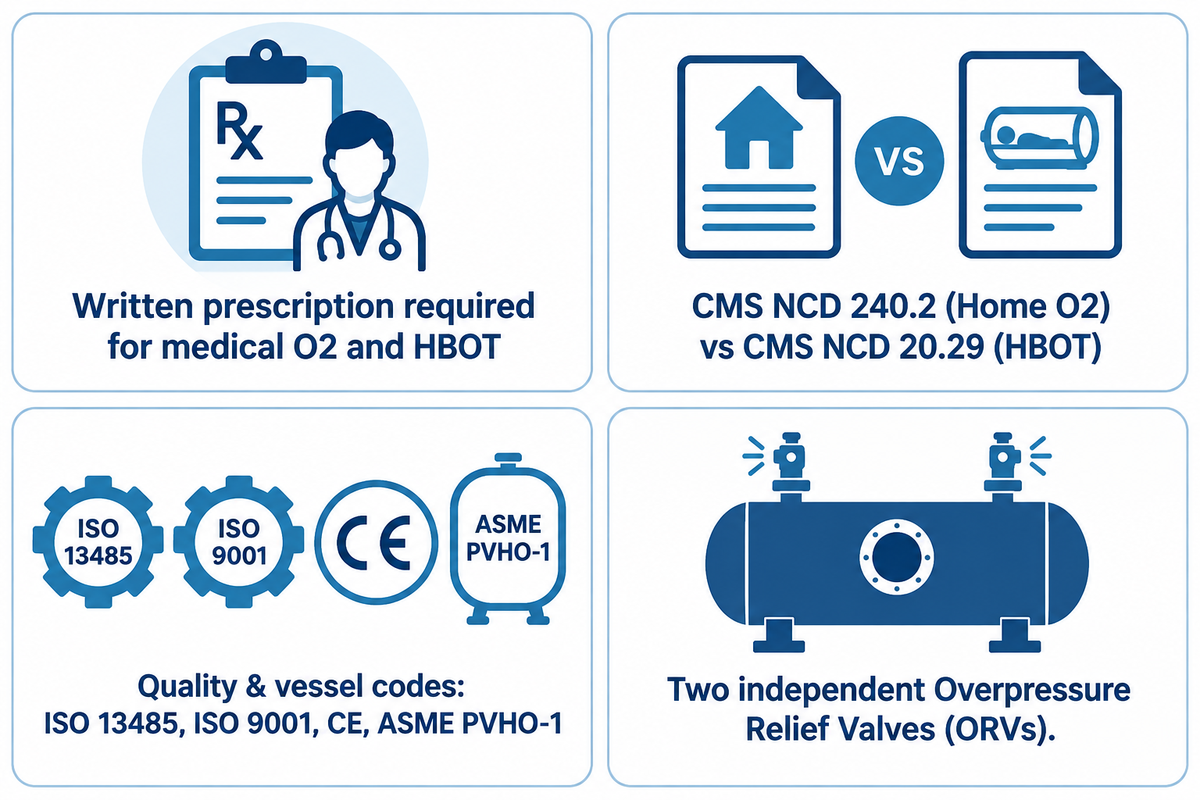
In the United States, both medical supplemental oxygen and hyperbaric oxygen therapy require a written prescription from a licensed healthcare provider (NIH MedlinePlus). Medicare Part B (CMS NCD 240.2) and private insurers cover home oxygen at room-air SpO2 ≤ 88% or PaO2 ≤ 55 mmHg, or at PaO2 56–59 mmHg (or SpO2 89%) with cor pulmonale, heart failure edema, or erythrocytosis (NBK532994). Medicare covers approved HBOT diagnoses under CMS NCD 20.29, requiring 30-day prior standard care and re-evaluation every 30 days for diabetic wounds.
Prescription Requirements, Canned Oxygen Limits, and Medicare vs Private Insurance Coverage
Medical oxygen concentrators, liquid tanks, and hyperbaric chambers are regulated by the U.S. Food and Drug Administration (FDA) as prescription devices. As confirmed by NIH MedlinePlus oxygen therapy guidelines, patients must hold a written order from a licensed healthcare provider for prescribed oxygen to get oxygen from a medical supplier. Consumers often ask whether Boost Oxygen is safe. Over-the-counter recreational canned oxygen (such as Boost Oxygen) is not cleared by the FDA to treat medical hypoxemia. Small recreational cans hold limited gas for brief inhalations and cannot substitute for prescribed medical oxygen therapy.
According to the Pulmonary Fibrosis Foundation for insurance reimbursement, CMS enforces two separate policies which govern the provisions of care for patients:
- Under CMS NCD 240.2 (Home Use of Oxygen) and most private insurance plans, home oxygen qualification pathways include resting room-air PaO2 ≤ 55 mmHg or SpO2 ≤ 88%. Qualification also covers PaO2 of 56 to 59 mmHg (or SpO2 of roughly 89%) with cor pulmonale or polycythemia, plus documented desaturation below 88% during sleep or exercise.
- Under CMS NCD 20.29 (Hyperbaric Oxygen Therapy), published in the CMS Medicare Coverage Database (NCD 20.29), Medicare covers hospital and clinic HBOT for approved conditions. Covered conditions include decompression illness, acute carbon monoxide poisoning, gas gangrene, delayed radiation injury, and refractory osteomyelitis. It also covers diabetic lower-extremity wounds that do not show measurable healing after at least 30 consecutive days of standard wound care, with re-evaluation every 30 days. Off-label HBOT wellness sessions are not covered by Medicare or private insurance.
During home oxygen qualification, clinicians must also consider the accuracy limitations of pulse oximetry. Pulse oximetry (SpO2) readings can overestimate true arterial oxygenation in patients with darker skin pigmentation or poor peripheral perfusion. When symptoms and SpO2 readings diverge, clinicians confirm arterial PaO2 via blood gas sampling.
How Clinics and Distributors Vet Hyperbaric Chamber Manufacturers: ISO 13485, CE, and ASME PVHO-1
When obtaining hyperbaric vessels for their clinics, medical distributors ensure patient safety by requiring a quality audit of the factory. Prior to placing an order, buyers should verify four engineering checkpoints.
- For quality management, ISO 13485 and ISO 9001 certificates document quality management system certification by accredited certification bodies. For market access, CE marking declares conformity with EU product requirements, with notified bodies assessing applicable device categories. Meanwhile, ASME PVHO-1 and NFPA 99 govern clinical pressure vessels.
- In terms of emergency depressurization safety, purchasers verify the availability of two mechanically independent Overpressure Relief Valves (ORVs) plus interior and exterior emergency bleed valves, in accordance with the clinical protocol and the design of the pressure vessel.
- For air filtration and oxygen delivery, buyers confirm oil-free compressors with multi-stage filtration paired with PSA concentrators that deliver oxygen at commonly 93% ± 3% purity.
- For manufacturing track record and OEM support, Shanghai Baobang Medical Equipment Co., Ltd. (MACY-PAN) brings 19+ years of manufacturing expertise across 126+ countries. MACY-PAN reports ISO 13485 certification for its quality management system and supplies soft-shell chambers (1.3–1.5 ATA), sitting chambers, and hard-shell monoplace or multiplace chambers (1.5–2.0 ATA). Clinics and distributors can contact our engineering team to request a quote or configure custom OEM chambers.
Frequently Asked Questions
1. What is the main difference between supplemental oxygen therapy and hyperbaric oxygen therapy?
Normobaric supplemental oxygen therapy delivers concentrated oxygen via a cannula or mask at ambient pressure (approximately 1.0 ATA at sea level) to treat low blood oxygen. Clinical hyperbaric oxygen therapy involves breathing near-100% oxygen inside a chamber at 1.4 ATA or higher (Cleveland Clinic describes 1.5 to 3.0 ATA sessions for 60 to 120 min). Mild chambers operate separately at 1.3 to 1.5 ATA. Elevated pressure follows Henry’s Law, dissolving up to 6.0 mL/dL of oxygen into arterial plasma at upper clinical pressures.
2. What are the different types of oxygen machines for home oxygen therapy?
Home supplemental oxygen uses three main source categories: oxygen concentrator units, compressed gas cylinders, and cryogenic liquid oxygen systems (Cleveland Clinic). Stationary molecular sieve concentrators weigh about 22 lbs (10 kg) and plug into wall outlets to supply 1 to 10 L/min continuous flow at 90% to 95% purity. Battery-powered portable oxygen concentrators provide pulse-dose or low continuous flow for travel. Compressed medical gas cylinders and cryogenic liquid reservoirs supply near 99.0% pure oxygen for high-flow prescriptions and power-outage backup (runtime varies by tank capacity and liter flow).
3. Do you need a prescription for home oxygen therapy or a hyperbaric oxygen chamber?
Yes, both medical home oxygen equipment and hyperbaric oxygen therapy require a prescription from a licensed healthcare provider in the US (NIH MedlinePlus). The FDA regulates medical oxygen concentrators, liquid reservoirs, and hyperbaric chambers as prescription devices. Medicare Part B (under CMS NCD 240.2) and most private insurers cover home oxygen when the patient’s resting SpO2 is 88% or less or PaO2 is 55 mmHg or less (Pulmonary Fibrosis Foundation). Medicare covers approved hospital HBOT diagnoses under CMS NCD 20.29.
4. What safety precautions must be followed when operating an oxygen concentrator or hyperbaric chamber?
Keep concentrators, tanks, and chambers at least 5 to 10 feet (8 to 10 feet for compressed cylinders) from open flames, gas stoves, or heaters. Under OSHA 29 CFR 1910.146(b), any atmosphere above 23.5% oxygen by volume creates an accelerated fire hazard. Never smoke or apply petroleum lotions near oxygen. In air-pressurized chambers approved for supplemental oxygen, combine mask exhaust scavenging, cabin ventilation, and oxygen monitoring to keep cabin air below 23.5% O2, and verify grounding per NFPA 99 Chapter 14 and ASME PVHO-1.
5. How does a soft-shell mild hyperbaric chamber compare with a hard-shell sitting or monoplace chamber?
Soft-shell TPU chambers run at 1.3 to 1.5 ATA for portable home wellness and recovery. Rigid stainless-steel, aluminum-alloy, or acrylic sitting, monoplace, and multiplace chambers run at 1.5 to 3.0 ATA for clinical and outpatient use.
References & Sources
- British Thoracic Society Emergency Oxygen Guideline Group – BTS Guideline for Oxygen Use in Adults in Healthcare and Emergency Settings (PMC5531304).
- Undersea and Hyperbaric Medical Society (UHMS) — Hyperbaric Oxygen Therapy Indications (15th Edition)
- Undersea and Hyperbaric Medical Society (UHMS) — Hyperbaric Facility Safety Standards and Codes (NFPA 99 & ASME PVHO-1)
- Ortega M.A. et al., National Library of Medicine — A General Overview on Hyperbaric Oxygen Therapy: Applications, Mechanisms and Translational Opportunities (PMC8465921)
- National Center for Biotechnology Information (NCBI) — Nursing Skills Chapter 11: Oxygen Therapy Administration and FiO2 Dilution (NBK593208)
- National Center for Biotechnology Information (NCBI) — Open Low-Flow Nasal Cannula Effective FiO2 and Room-Air Entrainment Analysis (PMC8471110)
- National Center for Biotechnology Information (NCBI) — Clinical Evaluation Utilizing the MACY-PAN HE5000 Multiplace Hyperbaric Oxygen Chamber (PMC11195672)
- National Center for Biotechnology Information (NCBI) — StatPearls: Chronic Hypoxemia and Long-Term Oxygen Therapy Criteria (NBK532994)
- National Center for Biotechnology Information (NCBI) — Oxygen Therapy in Acute Hypoxemic Respiratory Failure (PMC11377397)
- National Center for Biotechnology Information (NCBI) — European Code of Good Practice for Hyperbaric Oxygen Therapy (PMC10911829)
- U.S. Occupational Safety and Health Administration (OSHA) — 29 CFR 1910.146(b): Oxygen-Enriched Atmosphere Definition (>23.5% O2)
- U.S. Food and Drug Administration (FDA) — Follow Instructions for Safe Use of Hyperbaric Oxygen Therapy Devices: Letter to Health Care Providers (August 2025)
- Centers for Medicare & Medicaid Services (CMS) – National Coverage Determination (NCD) 20.29: Hyperbaric Oxygen Therapy
- NIH MedlinePlus – Oxygen Therapy Medical Summary
- U.S. Federal Science Portal (Science.gov) – Hyperbaric Oxygen Therapy Pressure Ceiling and Tolerance Benchmarks
- American Lung Association – Oxygen Therapy Clinical Overview
- American Lung Association – Oxygen Delivery Devices and Accessories
- American Lung Association – Using Oxygen Safely at Home
- American Thoracic Society (ATS) — Patient & Clinical Resource: Oxygen Therapy
- Pulmonary Fibrosis Foundation – Oxygen Therapy Frequently Asked Questions
- Cleveland Clinic — Oxygen Therapy: Supplemental & Hyperbaric Overview
- Cleveland Clinic – Hyperbaric Oxygen Therapy (HBOT) Clinical Guide
- Cleveland Clinic — Oxygen Concentrators: How They Work & Types