Get in Touch with MACY-PAN Company

Updated September 2026
Hyperbaric oxygen therapy side effects most often involve pressure-sensitive areas such as the ears and sinuses. Fatigue, lightheadedness, temporary vision change, and claustrophobia can also occur. Serious complications, including oxygen-toxicity seizures, lung injury, pneumothorax, and chamber fire, are uncommon but require screening, trained supervision, and a clear emergency plan.
The word side effect can hide an important distinction. Mild ear fullness during compression is not managed the same way as increasing ear pain, new shortness of breath, a seizure, or a device problem. Risk also changes with the indication, chamber pressure, oxygen delivery, session length, cumulative exposure, health history, and facility controls. That is why a chamber label or one incidence percentage cannot predict an individual patient’s experience.
Medical scope: This guide explains recognized risks and questions to raise with a qualified hyperbaric team. It does not diagnose symptoms, determine eligibility, recommend a pressure or oxygen protocol, or replace emergency care.
Clinical HBOT usually means breathing pure oxygen while the air pressure inside a hyperbaric treatment chamber is above normal air pressure. Patients may lie in a monoplace chamber or receive oxygen in a multiplace chamber with medical staff nearby. Hyperbaric oxygen therapies are used for more than one medical condition, including recognized uses such as decompression sickness and carbon monoxide poisoning. Those hyperbaric oxygen therapies do not share one risk profile. The exact treatment pressure, oxygen system, and patient factors can create an increased risk of a particular complication.
Different sources use HBOT, HBO therapy, and hyperbaric oxygenation as related terms. Our guide to how hyperbaric oxygen therapy works explains the mechanism; here, the clinically relevant question is the complete exposure: pressure inside the chamber, oxygen concentration and delivery, length of the therapy session, number of sessions, and individual susceptibility. A qualified healthcare provider trained in hyperbaric medicine should match those variables to recognized condition-specific HBOT uses and benefits. Patients undergoing HBOT should not infer that one side-effect pattern applies to every medical use or every device.
What Are the Most Common Hyperbaric Oxygen Therapy Side Effects?
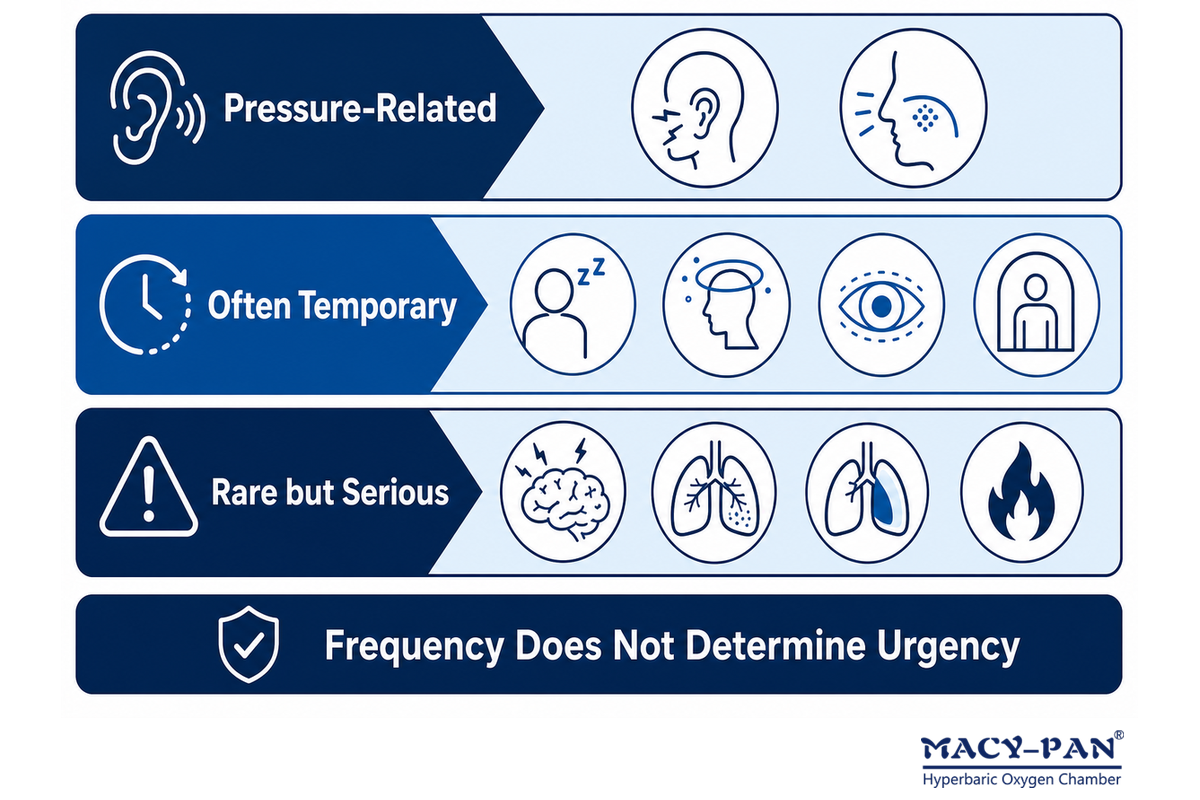
Pressure-related ear discomfort and middle ear barotrauma are the most consistently reported adverse effects of HBOT. In a 2023 systematic review and meta-analysis of 24 randomized trials involving 1,497 participants, ear discomfort was the most frequently reported specific event. The authors also found that adverse-event reporting varied with pressure and course length. Their pooled percentages are group-level findings, not a personal forecast, because the trials differed by condition, protocol, comparator, and reporting method. The review also excluded mild-HBOT studies.
Evidence snapshot, not a dosing guide: The review defined HBOT as approximately 100% oxygen, with at least 95% medical-grade oxygen, and pooled adverse-event reporting of 30.11% in HBOT groups versus 10.43% in controls. Its analyses used 95% confidence intervals and a 25% heterogeneity threshold across roughly 10 years of published trials; some included treatment arms used 100% oxygen while room-air controls used 21% oxygen, and several trials reported 90 min sessions. Participants ranged from 5 years to 70 years old. For engineering context only, 1.03 ATA is about 15.1 psi absolute, 1.2 ATA about 17.6 psi absolute, 1.3 ATA about 19.1 psi absolute, 1.5 ATA about 22.0 psi absolute, 2.0 ATA about 29.4 psi absolute, 2.2 ATA about 32.3 psi absolute, 2.4 ATA about 35.3 psi absolute, 2.5 ATA about 36.8 psi absolute, and 3.0 ATA about 44.1 psi absolute. A 90 min trial protocol, pooled percentage, or pressure conversion is not a personal prescription or a safe cutoff.
The table below is a practical reading aid, not a diagnostic chart. “Common” and “rare” describe the broad pattern reported by the cited clinical sources. Your treating team must interpret any symptom in the context of your health and protocol.
Terminology matters when comparing potential side effects. The Undersea and Hyperbaric Medical Society and clinical programs describe hyperbaric medicine in protocol-specific terms. Hyperbaric oxygen therapy treats recognized conditions under defined exposure and supervision; that does not mean every patient shares the same benefits of treatment. A person treated with hyperbaric oxygen therapy in a wound care center may have different wound healing goals from someone treated with hyperbaric oxygen for decompression sickness.
Patients receiving hyperbaric oxygen therapy should confirm that the center follows recognized hyperbaric oxygen therapy indications and that a clinician trained in diving and hyperbaric medicine reviews the planned exposure. This matters for patients receiving hyperbaric oxygen in either routine or urgent settings.
The course of hyperbaric oxygen is only one part of the exposure. The effects of pressure, oxygen breathing method, increased oxygen exposure, chamber design, and patient susceptibility can increase the risk or reduce the risk of a particular event. Ocular side effects may appear as changes in vision. The phrase “relatively safe” is meaningful only when the population, hyperbaric oxygen therapy chamber, oxygen levels, oxygen at pressures, monitoring, and outcome definitions are stated; different levels of oxygen or protocols should not be treated as interchangeable.
| Side effect category | Typical timing | Risk pattern | Safe next step |
|---|---|---|---|
| Ear fullness, popping, pain | Often during compression | Common; can progress to barotrauma | Signal staff immediately; do not push through increasing pain |
| Sinus pressure or facial pain | Compression or decompression | More likely with congestion or blocked drainage | Report it; staff should decide whether to pause or reassess |
| Fatigue or lightheadedness | During or after a session | Usually mild but nonspecific | Tell the team if persistent, worsening, or paired with other symptoms |
| Anxiety or claustrophobia | Before or during enclosure | Variable; may prevent safe completion | Tell staff before treatment and at the first sign of distress |
| Blurred distance vision | Usually after repeated exposures | Often reversible myopic shift; prolonged exposure can have other ocular effects | Report functional or persistent change and obtain eye review when advised |
| Low-glucose symptoms | During or after treatment | Higher-priority concern in diabetes, especially with insulin | Alert staff promptly and follow the facility’s clinical glucose protocol |
| Twitching, confusion, seizure | During oxygen exposure | Rare but serious CNS oxygen toxicity | Immediate chamber-team and emergency response |
| Chest pain, severe breathlessness, smoke or heat | During or after treatment | Potential lung, cardiac, or device emergency | Emergency response; do not wait for routine follow-up |
The 2023 systematic review, the detailed clinical review, and patient guidance from Mayo Clinic provide the evidence base for these categories.
Why Do Ears and Sinuses React First?
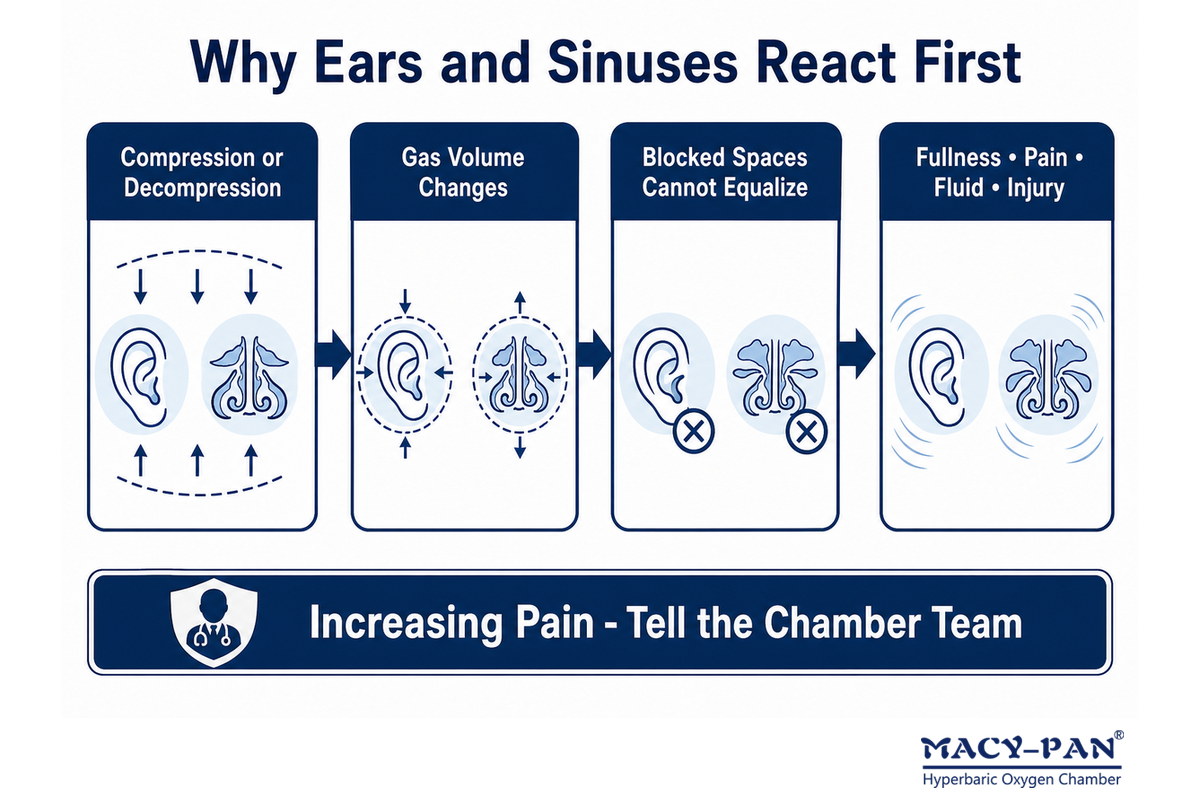
Compression and decompression change the volume of gas in enclosed spaces. The middle ear connects to the throat through the Eustachian tube, while the sinuses drain through small openings. The injury risk rises because blocked spaces cannot equalize, allowing the pressure difference to stretch tissue and cause fullness, pain, fluid, bleeding, or injury.
In practice, symptoms often begin during compression, particularly in early treatments, when a patient is learning how the process feels. Congestion, a cold, fever, allergies, inflammation, previous ear injury, recent ear surgery, or anatomy that makes equalization difficult can raise concern. Sinus pain can also appear during decompression if trapped gas cannot vent.
The safe rule is simple: increasing pain is information for the chamber team, not a test of endurance. Tell staff promptly. They control compression, decompression, oxygen exposure, and the clinical decision about whether treatment should continue. Online instructions to force pressure equalization or self-start medication are not a substitute for that assessment. Johns Hopkins lists ear pain and popping among common effects and warns that more severe pressure injury can include middle-ear fluid or eardrum rupture.
Can HBOT Temporarily Change Your Vision?
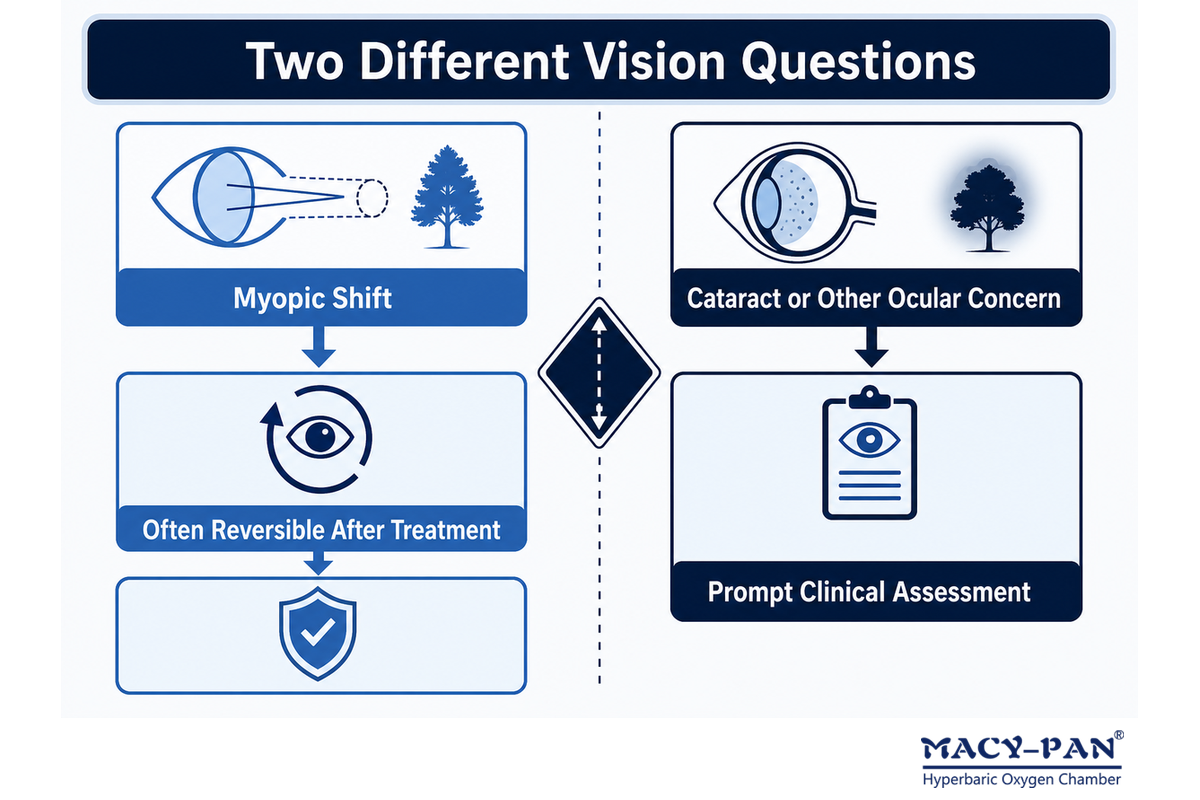
Yes. Repeated hyperbaric oxygen exposure can change how the eye’s lens bends light, producing a myopic shift. People may notice that distance vision is blurrier while near vision seems less affected. This change is often reversible after treatment ends, but recovery time varies. It should not be described as universally temporary.
Long courses raise a different concern: cataract formation or progression and other potentially irreversible lens effects. These are not the same as a short-lived myopic shift. Mayo Clinic separates short-term sight change from cataract formation, and a peer-reviewed ophthalmology review notes that most ocular effects are reversible while some effects associated with prolonged therapy may not be.
Report any meaningful visual change to the treatment team. Sudden loss of vision, eye pain, new neurologic symptoms, or a change that persists needs prompt evaluation. If a prolonged course is planned, the clinical team may document baseline vision and decide when formal eye assessment is appropriate. Do not use a general blog to decide whether to change a prescription or continue a session.
How Serious Are Oxygen Toxicity and Lung Risks?
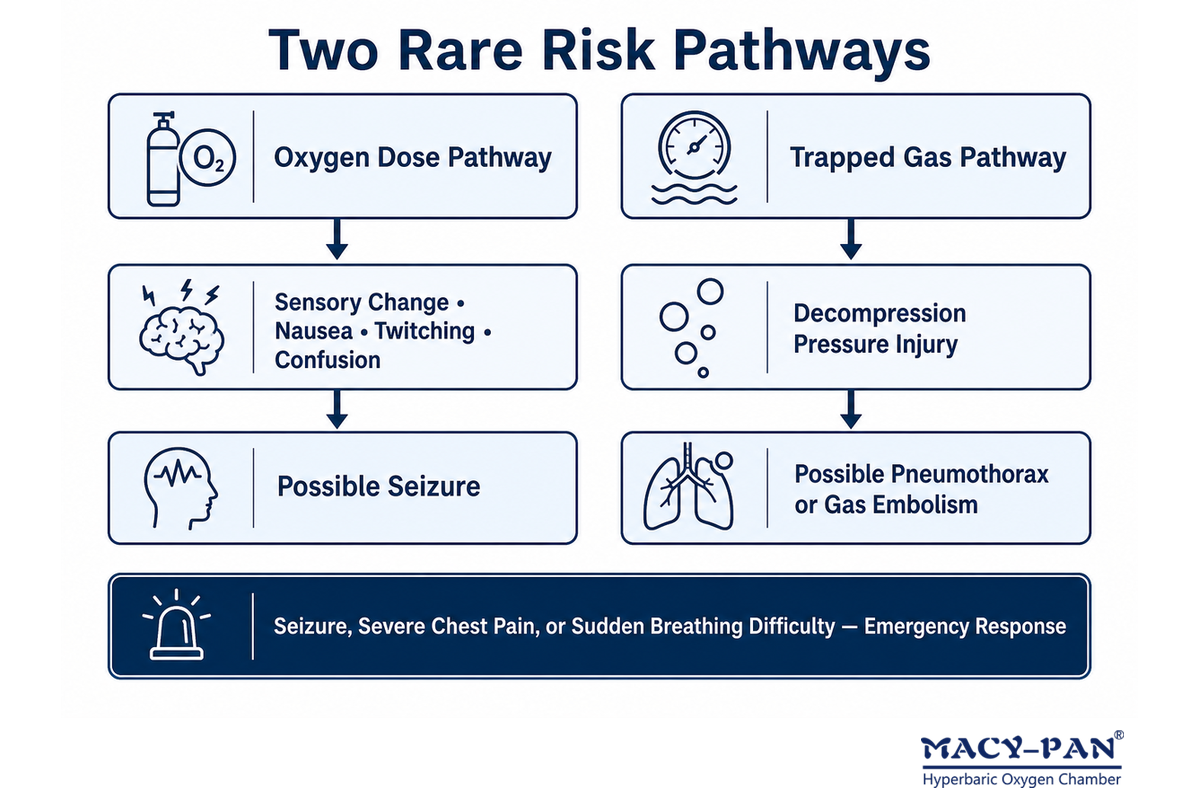
Oxygen is the treatment agent in clinical HBOT, but exposure matters. The clinical adverse-effects review explains that central nervous system oxygen toxicity can cause warning symptoms such as twitching, nausea, unusual sensory changes, anxiety, or confusion and can progress to a seizure. These events are rare, but they require an immediate trained response. Chamber teams may use pressure selection, exposure limits, and air breaks as part of a protocol; those controls are not a do-it-yourself schedule.
The manifestations of oxygen toxicity depend on the amount of oxygen, oxygen pressure, duration, and individual factors. Seizures from oxygen poisoning are one acute manifestation; cough and chest discomfort can reflect pulmonary effects of oxygen. This is why high concentrations of oxygen require a controlled protocol even when a person is receiving hyperbaric oxygen for an accepted indication.
Published seizure figures also show why the denominator matters. A detailed review placed historical session-level incidence near one event per 2,000–3,000 treatments. A separate 20-year single-center analysis of more than 180,000 sessions reported 0.023% per treatment session and 0.45% per patient, while another review describes a 0.01%–0.06% range for routine treatments. These study estimates are not a personal forecast, and differences in patient selection, pressure, oxygen exposure, air breaks, and reporting method limit direct comparison.
Pulmonary oxygen toxicity is different. It concerns the lungs after a sufficiently large oxygen dose and may present with cough, chest tightness, pain with breathing, shortness of breath, or a decline in lung function. Routine elective sessions are designed to limit this exposure, but patient factors and cumulative dose still matter.
Pulmonary barotrauma is a pressure injury rather than oxygen poisoning. If gas becomes trapped in the lungs, decompression can contribute to pneumothorax, tension pneumothorax, pneumomediastinum, or arterial gas embolism. Sudden chest pain, severe shortness of breath, collapse, altered consciousness, or a new focal neurologic deficit is an emergency. The fact that several serious events are uncommon does not make them suitable for self-triage.
Key distinction: oxygen-toxicity seizure, pulmonary oxygen toxicity, and pulmonary barotrauma have different mechanisms. Safe guidance should not combine them into one percentage or one response.
Which Uses of Hyperbaric Oxygen Therapy Need Extra Screening?
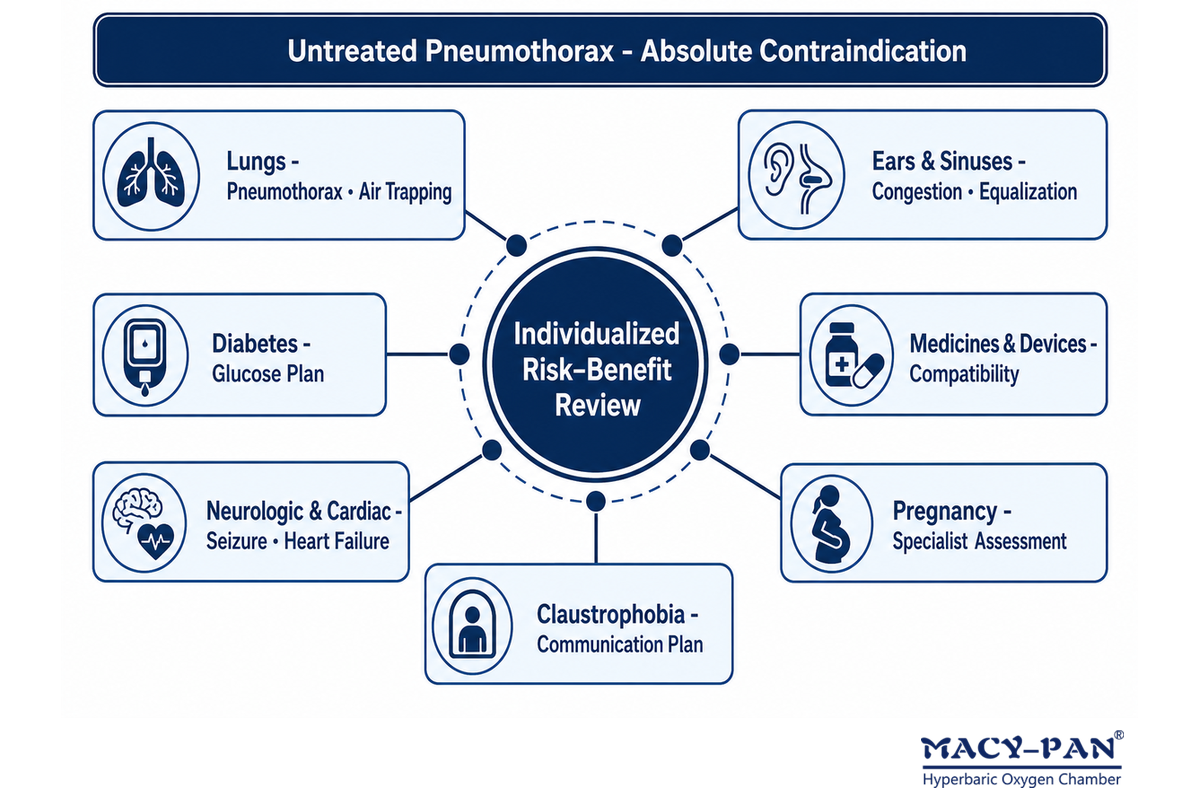
Untreated pneumothorax is the established absolute contraindication. Pressure changes can turn trapped pleural gas into a life-threatening tension pneumothorax. A peer-reviewed recent review also classifies intraocular gas as an absolute contraindication for nonemergent HBOT. Because the timing, gas type, and clinical urgency matter, an eye surgeon and hyperbaric physician should make that decision.
Most other concerns are relative, not automatic lifetime bans. They change the risk-benefit assessment or the protocol. Complete pre-session history-taking should include:
- Lung factors: previous pneumothorax, bullous disease, obstructive disease, air trapping, recent chest surgery, active bronchospasm, or unexplained breathlessness.
- Ear and sinus factors: current cold, fever, congestion, recent ear surgery or injury, recurrent sinus problems, or difficulty equalizing pressure.
- Diabetes and glucose: insulin or other glucose-lowering treatment, recent low readings, meal timing, and the facility’s monitoring plan. Published protocols use different thresholds, so one internet cutoff is not reliable.
- Medicines and devices: the entire medication list, implanted electronics, pumps, patches, and any item that must enter the chamber. Compatibility cannot be assumed.
- Neurologic and cardiac history: seizure risk, heart failure, reduced cardiac reserve, severe valve disease, or symptoms that could worsen under pressure or high oxygen.
- Specific cardiac history: congestive heart failure and reduced ejection fraction require clinician review because pressure and hyperoxia can alter cardiovascular load.
- Pregnancy and treatment urgency: the indication and maternal-fetal risk require individualized specialist assessment.
- Claustrophobia and communication: the patient must be able to tolerate the enclosure, understand instructions, and alert staff early.
NCBI’s contraindications chapter is useful because it separates the absolute pneumothorax rule from relative factors that call for individualized medical judgment.
4-Level HBOT Response Ladder: Which Symptoms Mean Pause, Stop, or Get Urgent Help?
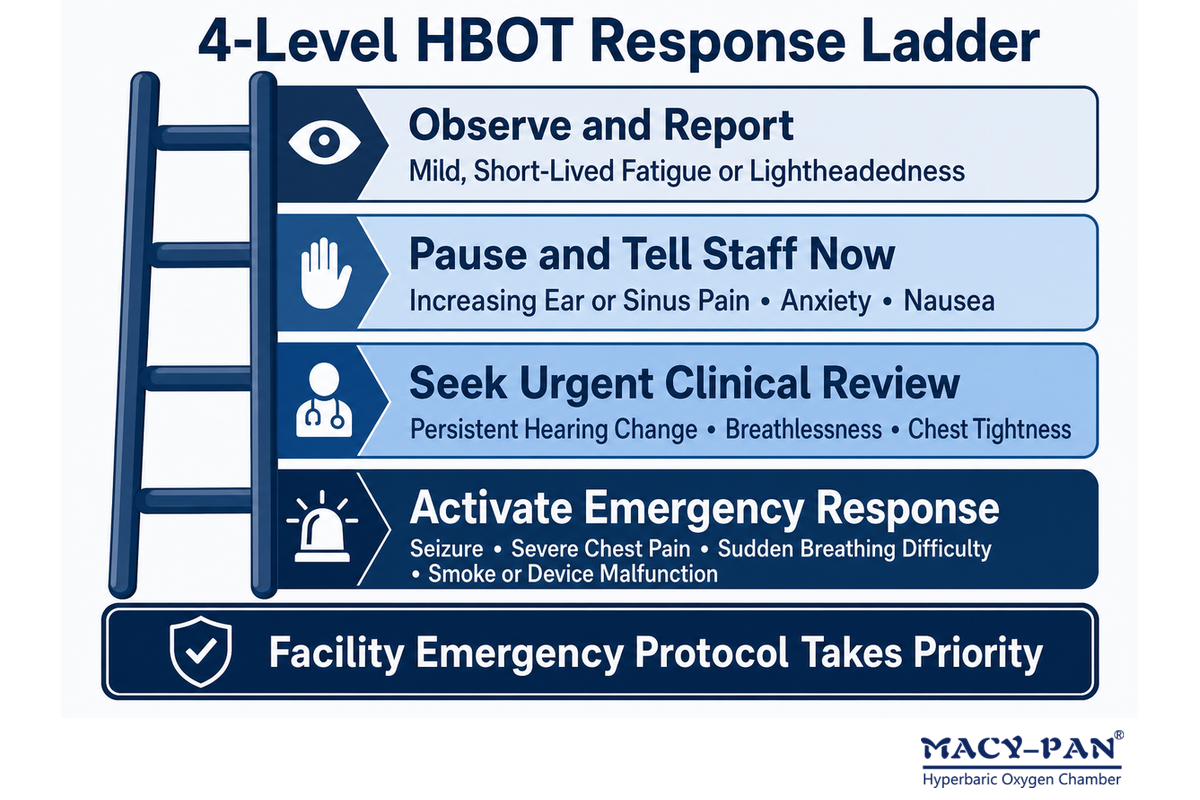
The 4-Level HBOT Response Ladder is a communication aid. It is not a diagnosis, and the treatment facility’s emergency protocol takes priority. Mayo Clinic’s patient guidance also separates common pressure effects from rare serious complications, supporting a graded response rather than one universal rule.
- Observe and report. Mild, short-lived fatigue or lightheadedness may settle, but mention it before the next exposure. Patterns across sessions can change the clinical interpretation.
- Pause and tell staff now. Increasing ear or sinus pain, inability to equalize, escalating anxiety, nausea, new visual change, or low-glucose symptoms should be reported during the session. Do not wait for the planned endpoint.
- Seek urgent clinical review. Persistent hearing change, severe headache, repeated low-glucose symptoms, worsening breathlessness, chest tightness, or vision changes that persist after treatment need timely assessment.
- Activate emergency response. A seizure, severe chest pain, sudden breathing difficulty, loss of consciousness, focal neurologic deficit, smoke, heat, ignition, or major device malfunction is an emergency.
Severity, persistence, associated symptoms, and the patient’s baseline matter more than the symptom label alone. “Dizzy” can describe a brief nonspecific sensation, hypoglycemia, ear-related vertigo, or a neurologic problem. That uncertainty is precisely why staff need to hear about it.
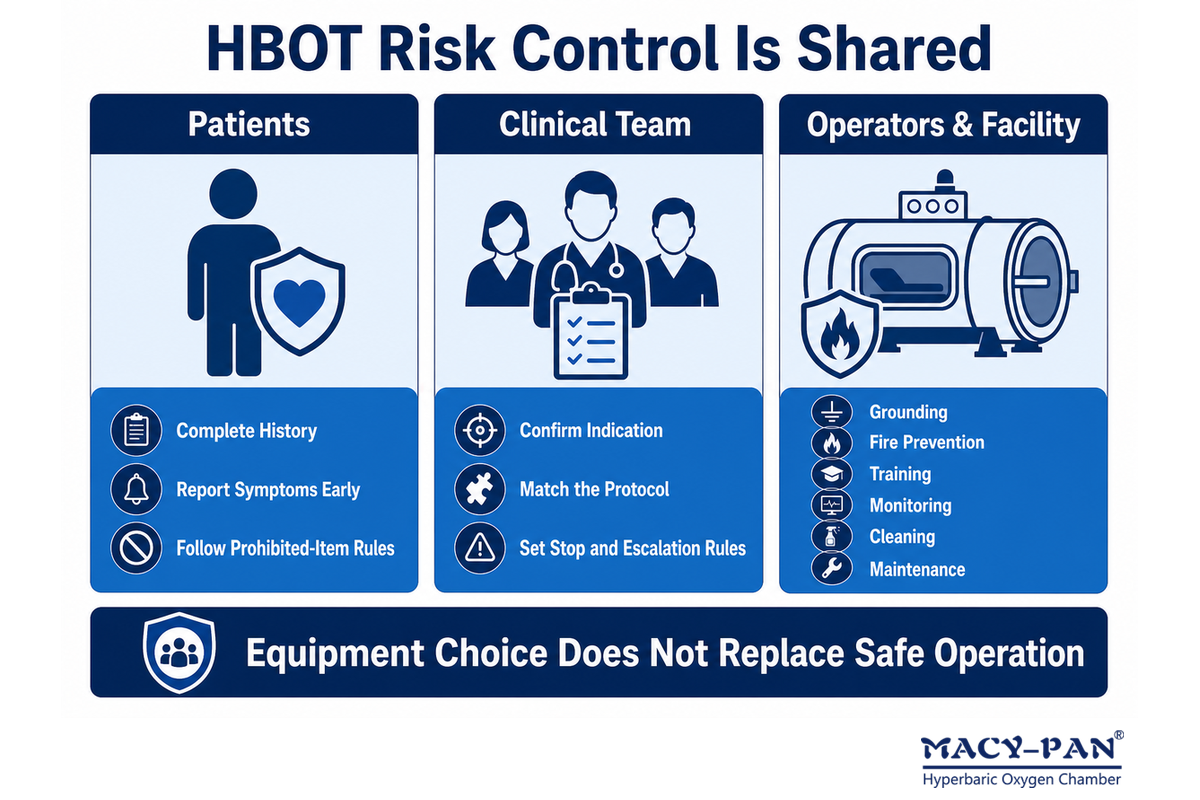
How Can Patients, Clinicians, and Chamber Operators Reduce Risk?
For patients
- Provide a complete history, medication list, implanted-device list, and current symptoms.
- Do not hide a cold, fever, congestion, ear pain, low-glucose episode, chest symptom, or new visual change to keep an appointment.
- Follow the facility’s clothing and prohibited-item rules. Do not bring personal electronics, cosmetics, oils, heating items, or unapproved materials into the chamber.
- Know how to alert staff and report symptoms early.
For the clinical team
- Confirm the indication and document the patient-specific risk-benefit decision.
- Review pressure, oxygen delivery, exposure time, cumulative course, air breaks, and relevant monitoring as one protocol rather than separate marketing numbers.
- Use condition-specific screening and a documented stop/escalation plan. Glucose, ear, lung, cardiac, eye, seizure, and device issues require individualized handling.
For operators and facility managers
- Follow the exact device manufacturer’s instructions for use, including compatible components, clothing, cleaning, service, and maintenance.
- Maintain grounding, ignition-source control, staff training, continuous supervision, communication, and emergency procedures.
- Keep inspection and maintenance records current. Product clearance does not replace facility controls or safe operation.
On August 25, 2025, the FDA said it was aware of serious injuries and deaths involving HBOT devices, including fires. The agency advised facilities to follow manufacturer instructions, fire-prevention measures, proper grounding, staff training, monitoring, cleaning, maintenance, and prohibited-item controls. Read the FDA safety letter for the complete recommendations.
“Be aware that there is a heightened risk of fire with use of oxygen at a high concentration.”
U.S. Food and Drug Administration, 2025 safety communication
Does a Mild Chamber Have the Same Side-Effect Profile?
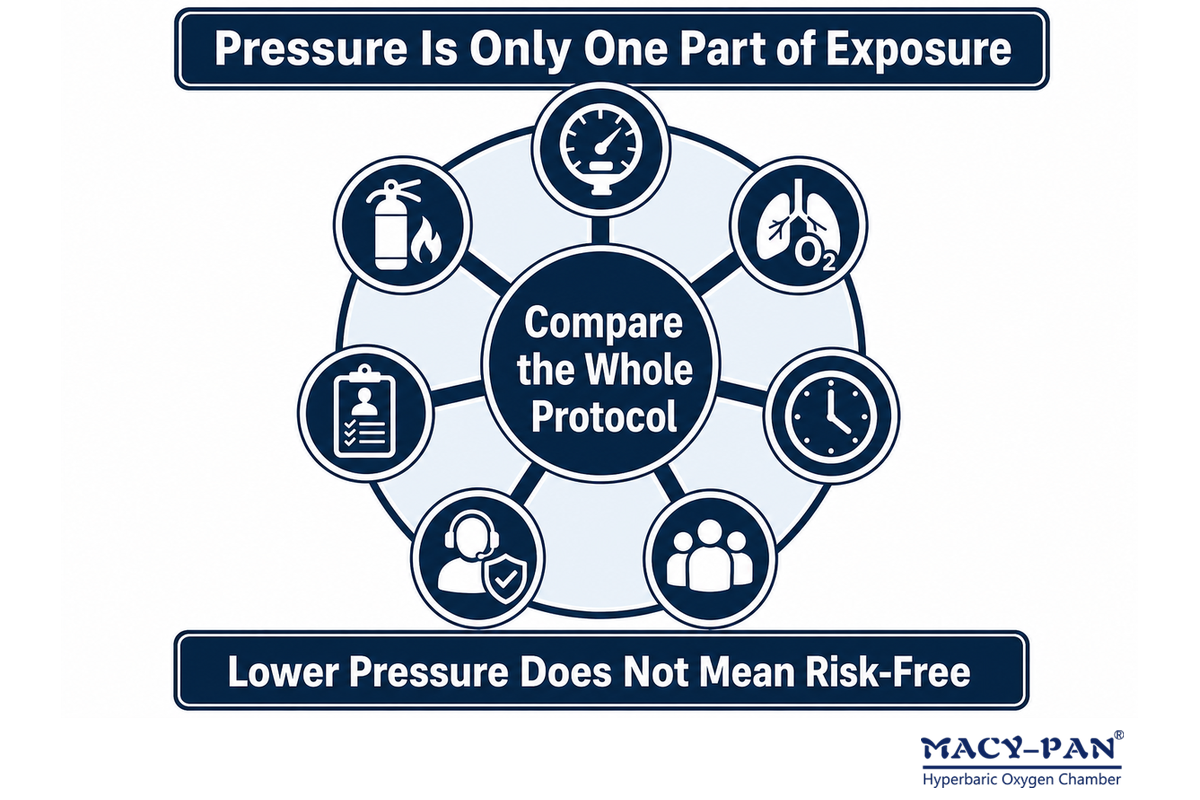
Not necessarily, and the evidence does not justify a simple yes or no. When comparing hyperbaric chamber solutions, remember that “mild” generally refers to lower pressure, but pressure is only one exposure dimension. Oxygen concentration and delivery, chamber construction, session duration, cumulative sessions, patient selection, supervision, maintenance, and fire controls also matter.
The 2023 adverse-event meta-analysis excluded mild-HBOT studies. Its finding that reported adverse effects were higher in selected above-2.0-ATA trial groups therefore cannot be converted into “below 2.0 ATA is risk-free.” Lower pressure may change some pressure- and oxygen-related risks, but it does not erase contraindications, patient susceptibility, equipment hazards, or the need to follow device instructions.
This boundary matters for wellness and anti-aging discussions. MACY-PAN’s beauty and anti-aging hyperbaric chamber solutions page is a commercial route for comparing product formats and application positioning. It is not independent clinical evidence that a promoted anti-aging outcome works, nor does it replace medical screening. Evaluate any study by its population, exact pressure, oxygen delivery, session schedule, comparator, outcome, and adverse-event reporting.
Decision rule: Do not transfer a safety or efficacy conclusion from one protocol to another just because both use the word “hyperbaric.”
What Should You Ask a Facility Before a Session?
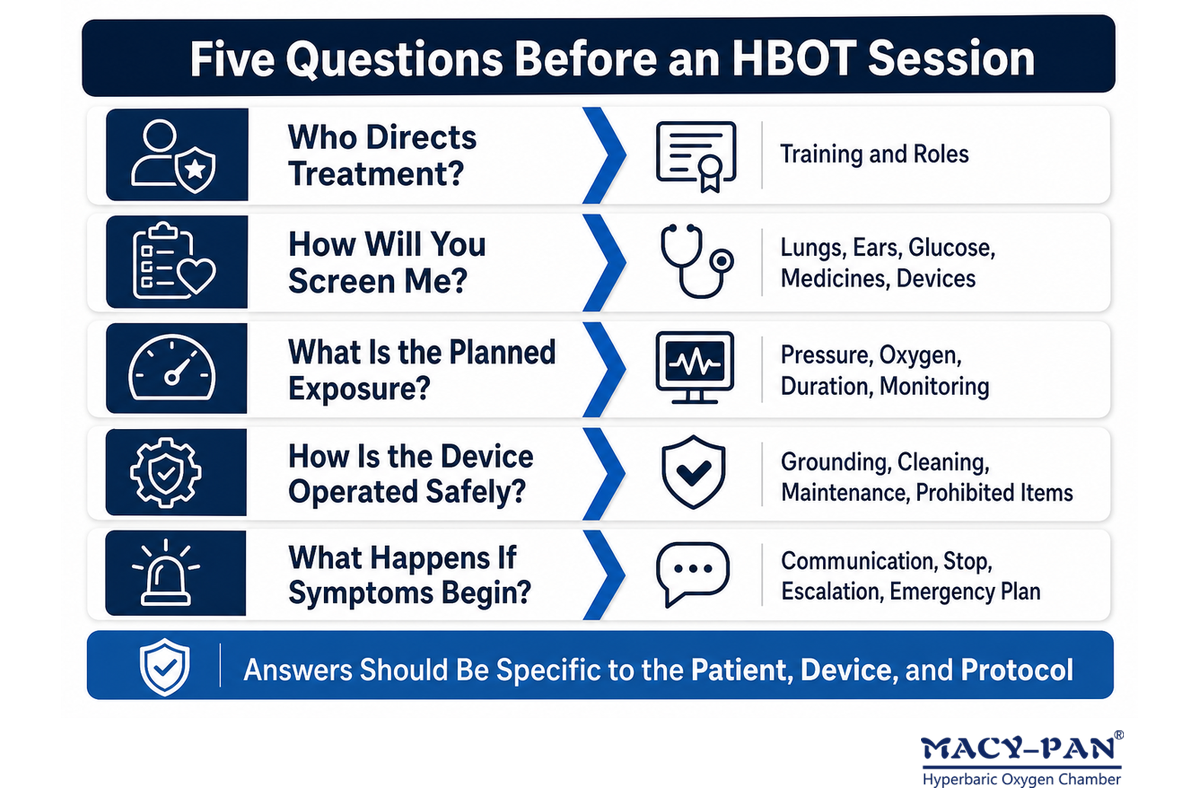
- Who directs the treatment, and what hyperbaric training do the clinical and operating staff hold?
- How will the team screen my lungs, ears, sinuses, medicines, glucose risk, implanted devices, vision concerns, and current symptoms?
- What pressure, oxygen delivery method, duration, and monitoring are planned, and why do they fit the indication?
- How does the facility follow the manufacturer’s instructions, grounding, cleaning, maintenance, clothing, and prohibited-item controls?
- How can I communicate during treatment, and what happens if I report pain, anxiety, breathing trouble, a neurologic symptom, or a device problem?
Credible answers should be specific to the patient, device, and protocol. The FDA safety communication gives facilities a concrete benchmark for device, grounding, fire-control, monitoring, and maintenance answers. For hardware context, see what a hyperbaric chamber does. “Our chamber is mild,” “HBOT is generally safe,” or “we have never had a problem” does not answer those questions.
Discuss Chamber Requirements →
Frequently Asked Questions
Why am I tired after hyperbaric treatment?
Fatigue or lightheadedness can occur after a session, but those symptoms are nonspecific and should not automatically be blamed on HBOT. Rest and follow the facility’s discharge instructions, then tell the treatment team if the feeling persists, worsens, recurs after every session, or appears with severe headache, confusion, breathing trouble, chest pain, marked weakness, low-glucose symptoms, or any new neurologic change. Note when the symptom began, how long it lasted, and whether it changed after food, fluids, medicine, activity, or sleep; that timeline can help the team distinguish a pressure-related or oxygen-related problem from another cause. Do not drive or operate equipment if you feel faint, confused, visually impaired, or otherwise unsafe. The team should decide whether the next session or protocol needs review.
Can oxygen therapy cause sinus problems?
Pressure change can cause sinus pressure or sinus barotrauma, especially when a cold, congestion, inflammation, or anatomy blocks normal drainage. Increasing facial pain, severe headache, nosebleed, or symptoms that continue after the session should be reported promptly. Do not push through the pain or self-start a decongestant simply to keep an appointment. The clinician should decide whether treatment can continue, compression needs adjustment, or the session should be postponed.
Is hyperbaric oxygen therapy safe for everyone?
No. Untreated pneumothorax is the established absolute contraindication, and recent literature also flags intraocular gas as an absolute concern for nonemergent HBOT. Ear or sinus disease, some lung conditions, fever, diabetes treatment, pregnancy, claustrophobia, implanted devices, cardiac disease, seizure risk, and certain medicines may require an individualized decision. Safe use depends on a justified indication, complete history, appropriate protocol, trained supervision, equipment maintenance, and fire controls.
Can HBOT cause permanent vision changes?
Myopic shift after repeated exposure is often reversible, but prolonged courses can contribute to cataract formation or progression and other potentially irreversible ocular effects. Sudden, painful, severe, or persistent changes need prompt assessment. Tell the clinical team about previous eye surgery, intraocular gas, cataracts, or current visual symptoms before treatment.
Are HBOT seizures likely to cause permanent brain damage?
Oxygen-toxicity seizures are rare and are treated as serious events. Clinical reviews report that they often resolve when oxygen exposure is reduced and have not generally been associated with lasting neurologic injury, but that does not make them harmless or suitable for observation without medical response. A seizure requires immediate chamber-team management and reassessment of any future exposure.
Why MACY-PAN Published This Safety Guide
Chamber buyers and patients often receive a pressure number and a broad reassurance without the screening, oxygen-delivery, supervision, and facility details needed to understand risk. This guide separates symptom timing, severity, protocol limits, and operator controls so readers can ask better questions. It does not replace medical evaluation. Learn more about MACY-PAN. Reviewed by the Shanghai Baobang Medical Equipment Co., Ltd technical team.
References & Sources
- Follow Instructions for Safe Use of Hyperbaric Oxygen Therapy Devices, U.S. Food and Drug Administration, 2025.
- Hyperbaric Oxygen Therapy: Side Effects Defined and Quantified, PubMed Central.
- Adverse Effects of Hyperbaric Oxygen Therapy: A Systematic Review and Meta-analysis, Frontiers in Medicine, 2023.
- Complications of Hyperbaric Oxygen Treatment, Johns Hopkins Medicine.
- Hyperbaric Oxygen Therapy, Mayo Clinic.
- Hyperbaric Oxygen Therapy Contraindications, NCBI Bookshelf.
- Hyperbaric Oxygen Therapy Contraindications and Complications Review, PubMed Central.
- Ocular Effects of Hyperbaric Oxygen Therapy, PubMed.