Get in Touch with MACY-PAN Company

A soft vs hard hyperbaric chamber decision is an operational choice, not a label contest. This guide translates the distinction into procurement-ready checks so buyers can choose by treatment consistency, safety architecture, and long-run cost instead of marketing wording.
Brand note: This guide is written as a comparison framework and a pre-selection aid. It keeps product page messaging separate and uses a decision bridge to Macypan Solutions afterward. [USER-DATA]
1. Soft vs. Hard Hyperbaric Chambers: Define the Terms Without Trading by Labels
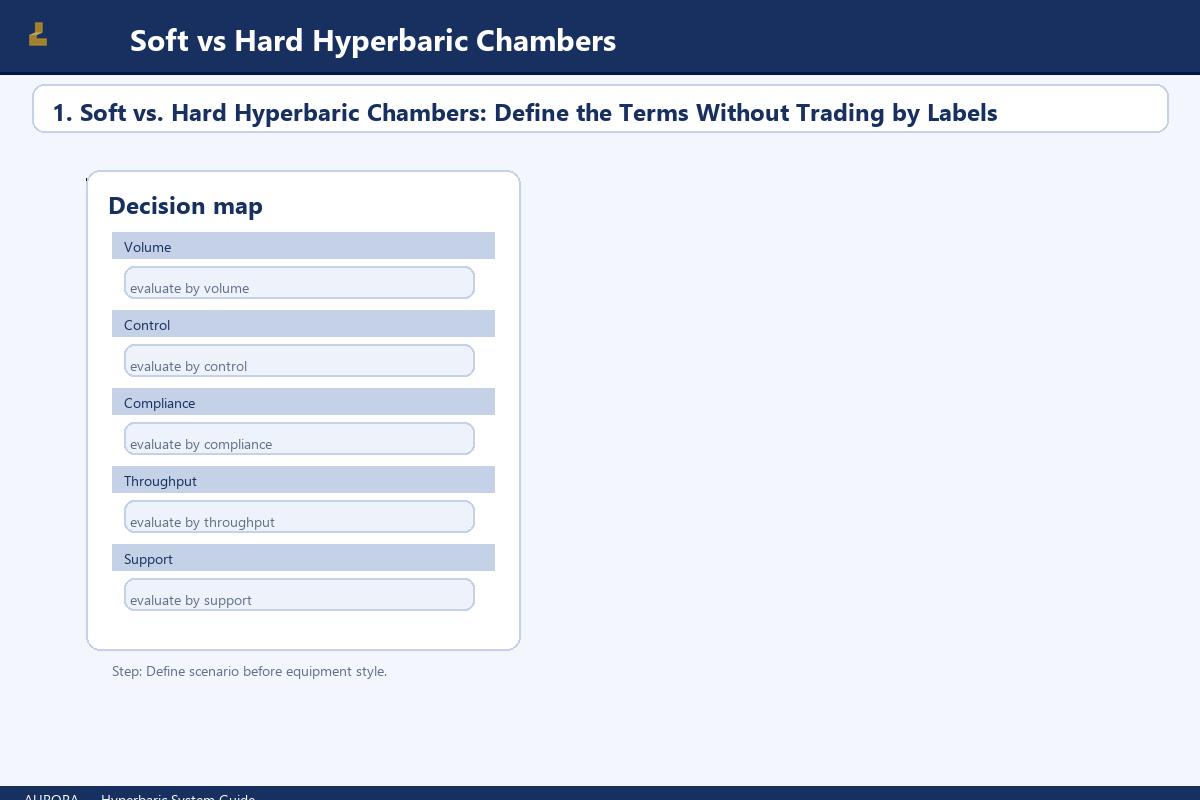
Soft and hard indicate structural form and control profile, not a universal quality ranking.
- Soft systems usually use flexible shells with pressure retention systems designed for deployment flexibility.
- Hard systems use rigid enclosures, typically giving more stable geometry under repeated sessions.
- The practical threshold is protocol predictability: can the system hold and release pressure exactly as planned, every session?
Many purchase delays happen when teams evaluate only one factor, usually price and portability, while control consistency and safety documentation are reviewed afterward.
2. Soft Chamber Anatomy and Real Strengths
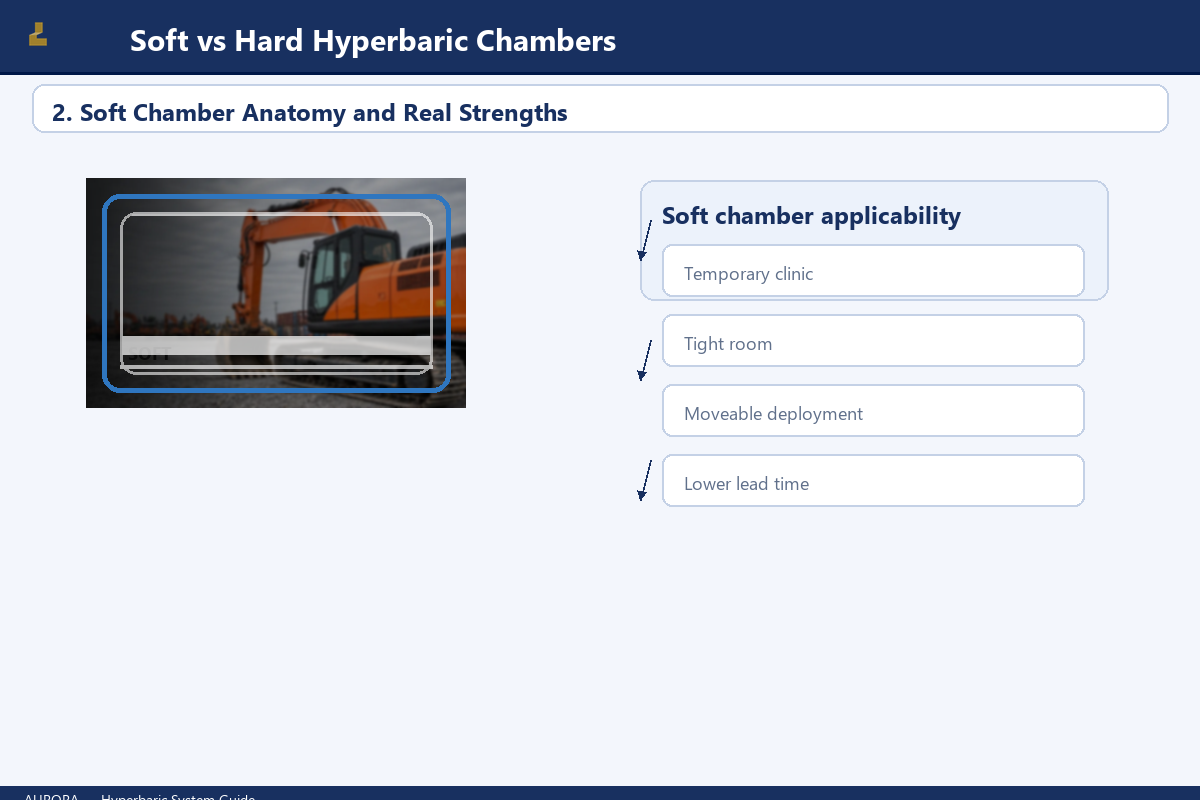
Soft systems are often useful when mobility and quick site adaptation are priorities.
| Strength area | Practical benefit | What buyers should verify |
|---|---|---|
| Room adaptability | Can fit into tighter space planning models | Assembly workflow and pressure-check routine |
| Initial mobilization | Lower displacement in some deployment scenarios | Operator training on setup consistency |
| Early budget profile | Often lower early procurement barrier | Operational quality and service cost model |
Weaknesses appear in long repetitive schedules if control monitoring is weak or staff turnover is high.
3. Hard Chamber Anatomy and Real Limits
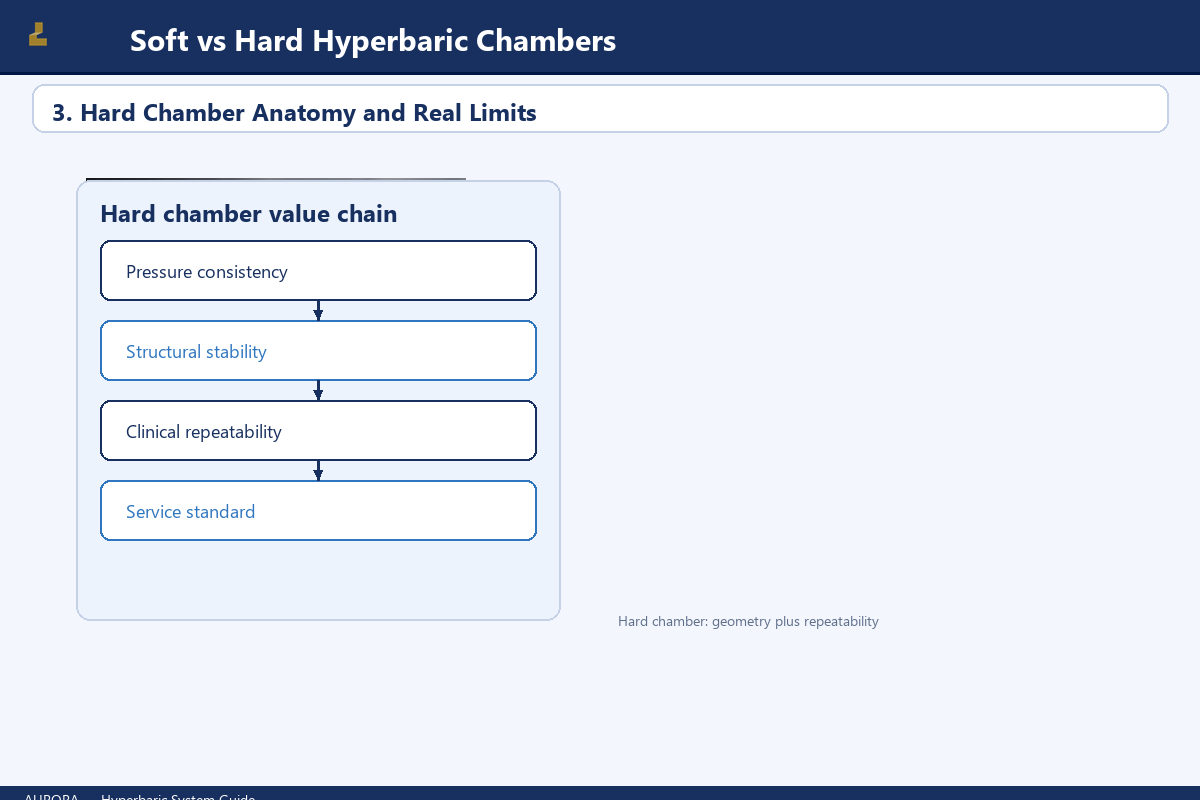
Hard systems usually provide stronger geometric stability during pressure cycles. This matters when session schedules are dense and safety audits are strict.
| Benefit | Why it matters | Tradeoff |
|---|---|---|
| Stronger pressure consistency | Supports repeatability in multi-week programs | Facility and installation complexity increases |
| Clearer control references | Stronger logging discipline is easier to standardize | Commissioning intensity is higher |
| Broader treatment integration | Compatible with strict supervision workflows | Higher maintenance governance requirement |
4. Pressure Behavior and Treatment Consistency
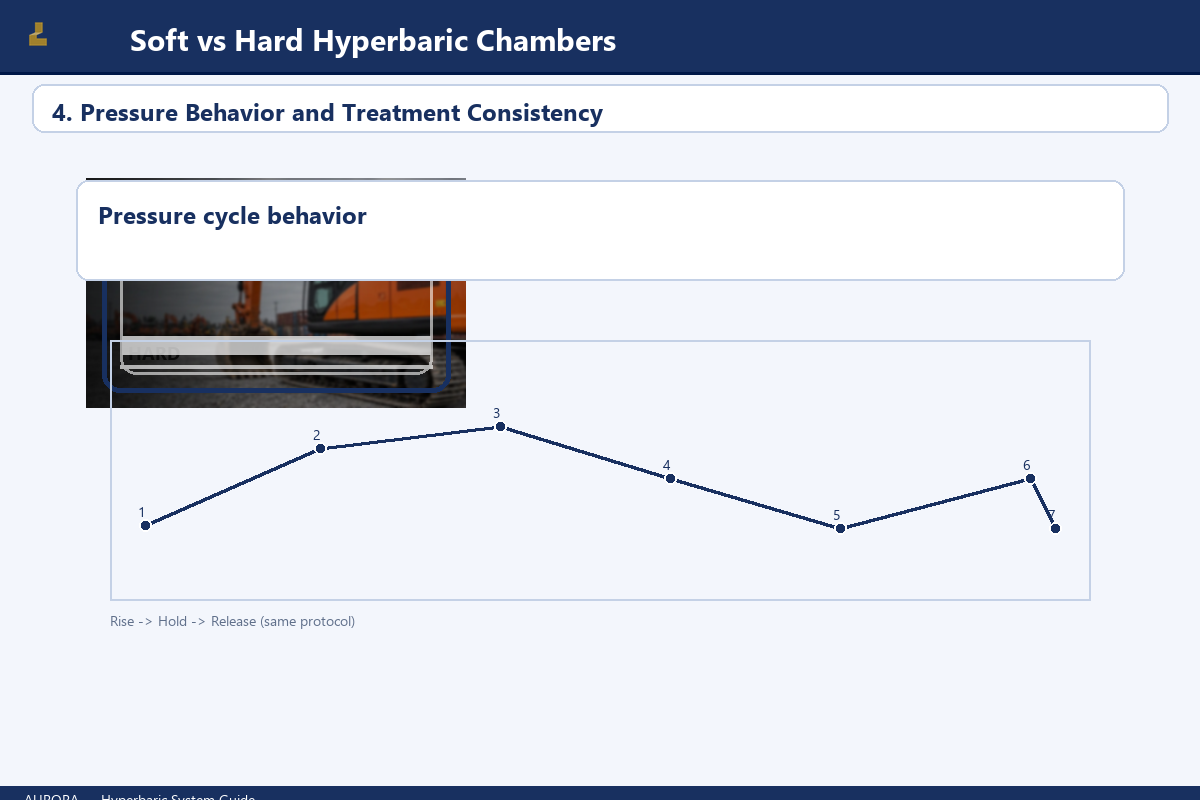
Pressure is not only a number in a datasheet. The repeatability of rise, hold, and decompression shapes clinical quality.
Buyers should compare not only max pressure but transition smoothness and control response under their exact session cadence.
| Process stage | Common control risk | Verification action |
|---|---|---|
| Ramp-up | Variable rise behavior between starts | Run a standardized pilot log for 10-20 sessions |
| Hold | Minor drift in pressure envelope | Check session variance and trend variance |
| Release | Inconsistent decompression pacing | Confirm alarm and override behavior in drills |
5. Safety and Control Architecture
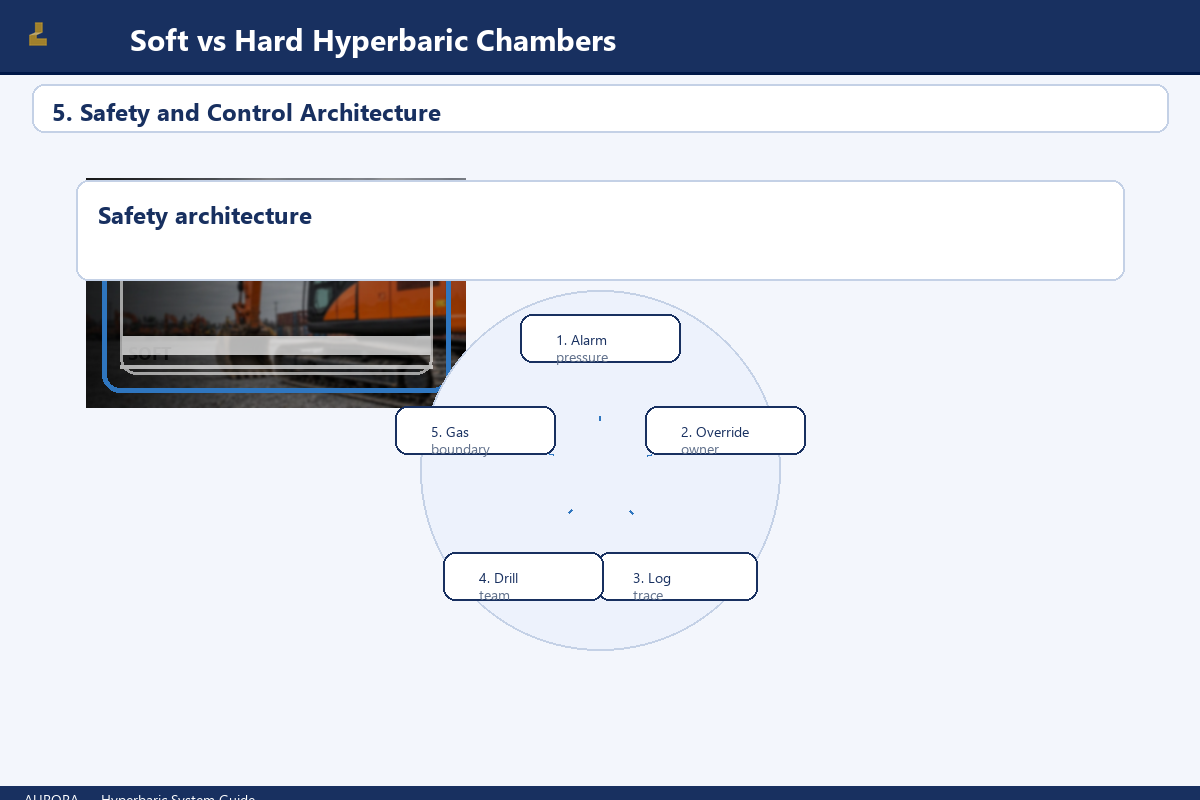
Many failures are not machine defects; they are control architecture misunderstandings.
- Alarm system coverage (pressure, oxygen flow, communication, failure states)
- Emergency override logic and responsible operator role
- Session log integrity and treatment continuity
- Oxygen safety design and fire-control behavior
6. Clinical Fit by Patient Flow and Treatment Intensity
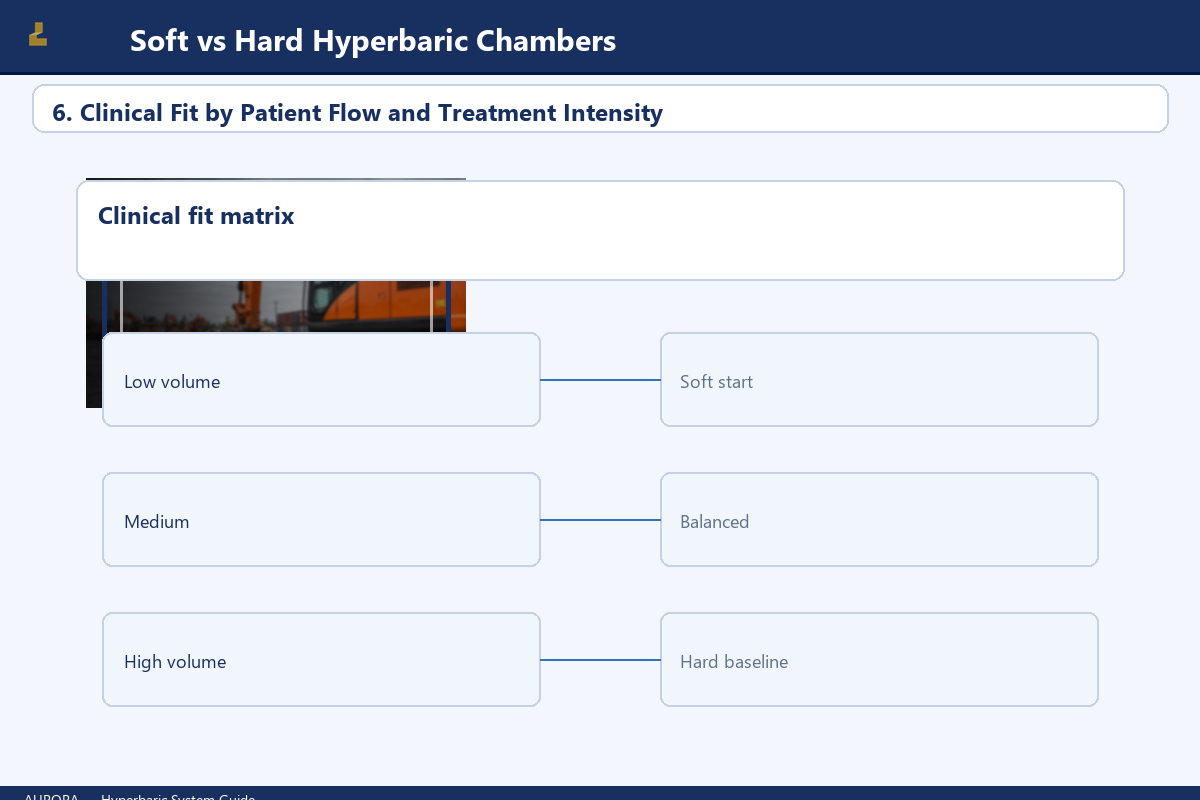
| Use profile | Recommended starting bias | Typical reason |
|---|---|---|
| Low-volume, short-cycle pilot | Soft may start | Speed of deployment and simpler footprint |
| Medium-frequency recurring program | Mixed decision | Depends on staff and monitoring maturity |
| High-frequency strict protocol | Hard usually better baseline | Repeatability and workflow control |
7. Comfort, Workflow, and Operations
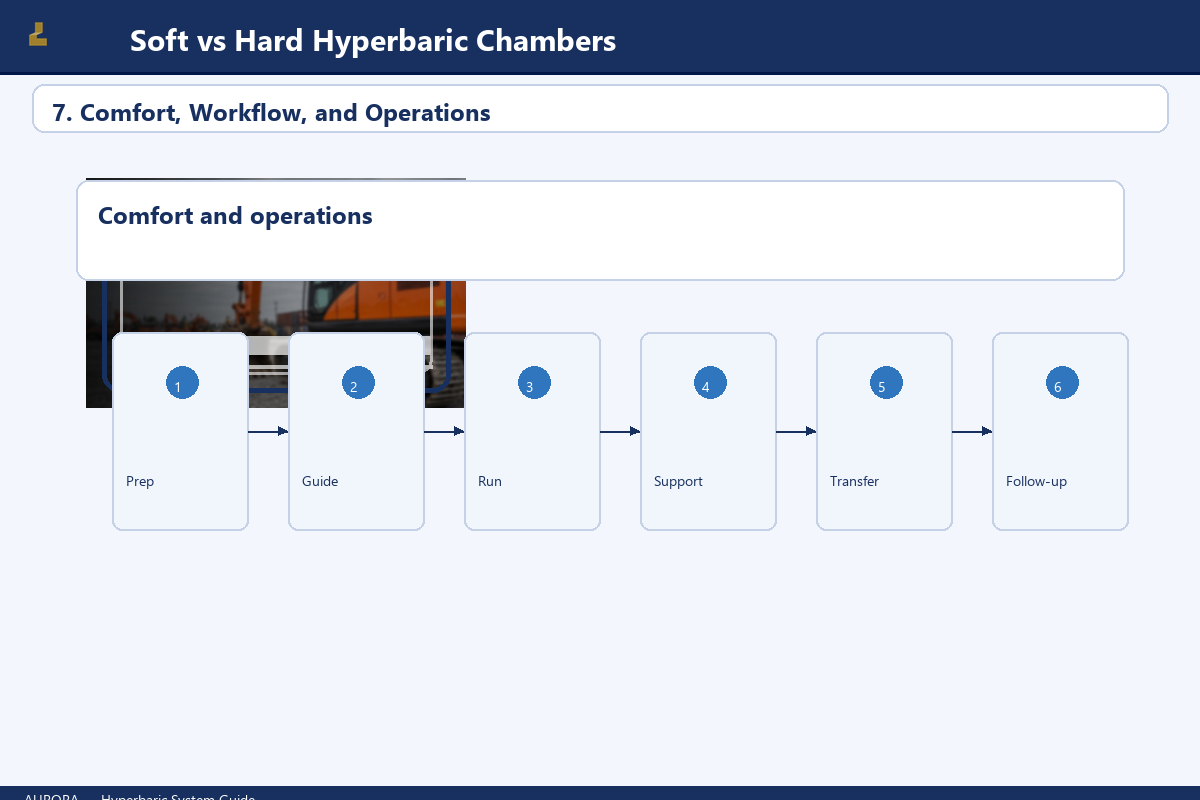
Comfort is operationally measured through completion rate, readiness consistency, and staff confidence over repeated sessions, not a generic comfort claim.
- Session communication and guidance quality affect anxiety control.
- Noise and enclosure behavior affect repeated-use acceptance.
- Turnaround speed depends on room layout and role definition, not hardware alone.
8. Compliance, Documentation, and Audit Boundaries
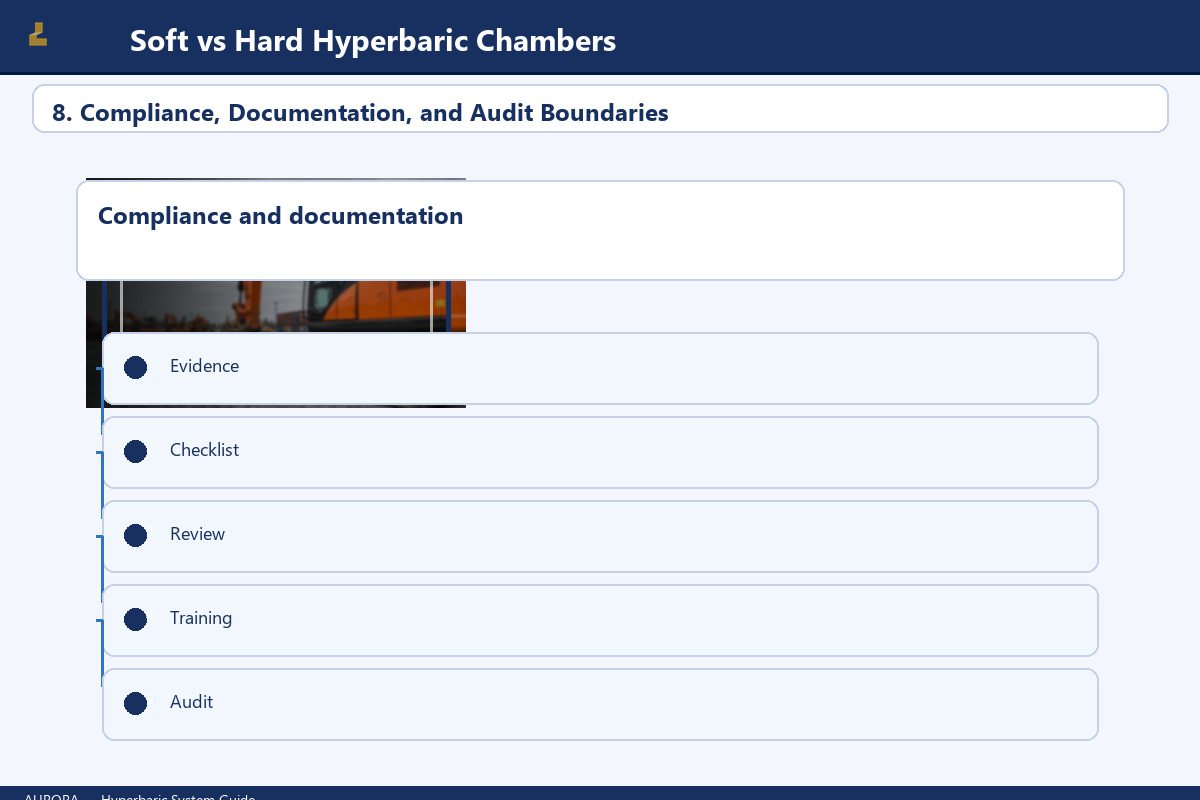
Procurement should include a documentation section before final purchase approval.
| File type | Required before go-live | Review rhythm |
|---|---|---|
| Equipment compliance file | Latest certifications and installation acceptance | Before deployment |
| Safety procedures | Emergency and alarm drill records | After initial sessions and monthly |
| Maintenance logs | Calibration and preventive schedule | Quarterly minimum |
9. Total Cost and Ownership
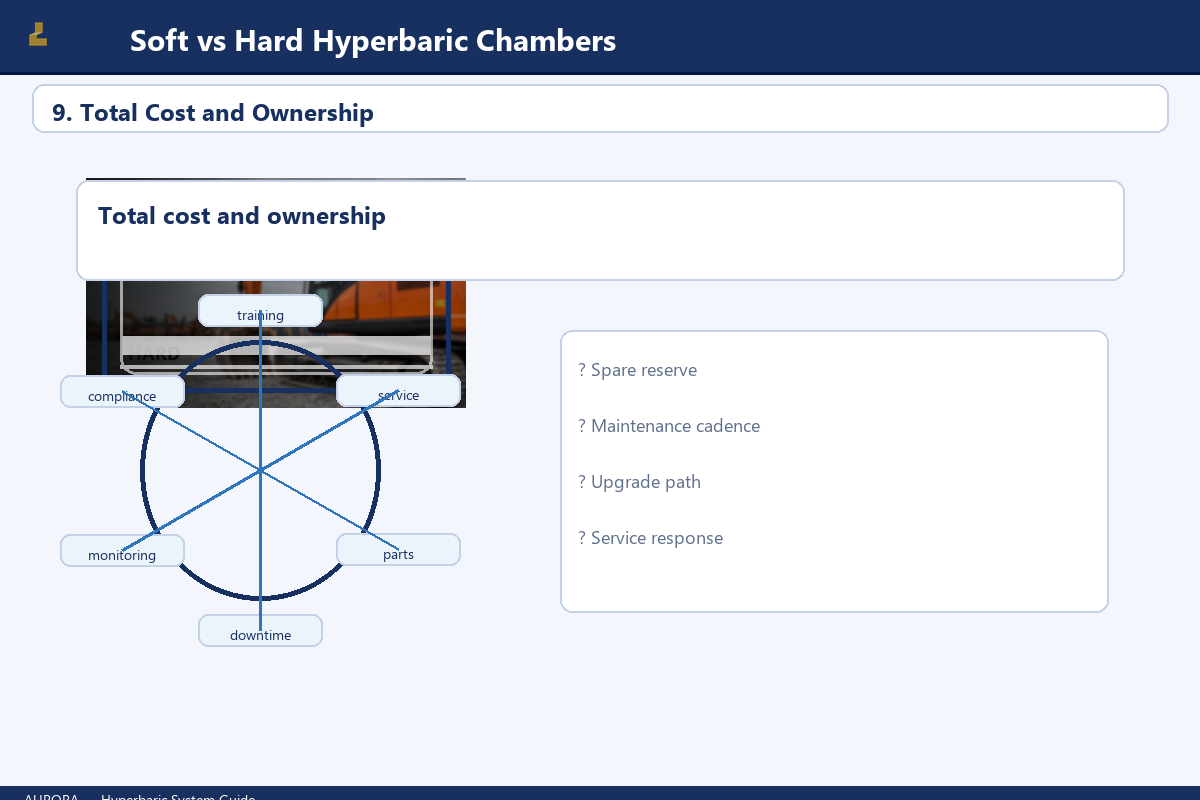
Total ownership includes hidden components that are often omitted from initial comparisons.
- Commissioning and training time
- Preventive maintenance and consumable planning
- Monitoring tools, replacements, and compliance reporting support
- Service response and part lead-time risk
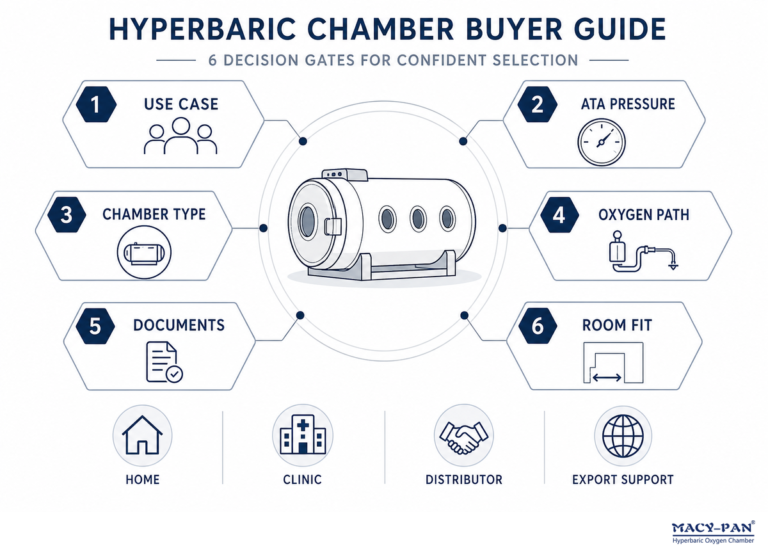
10. 6-Step Chamber Type Selection Framework
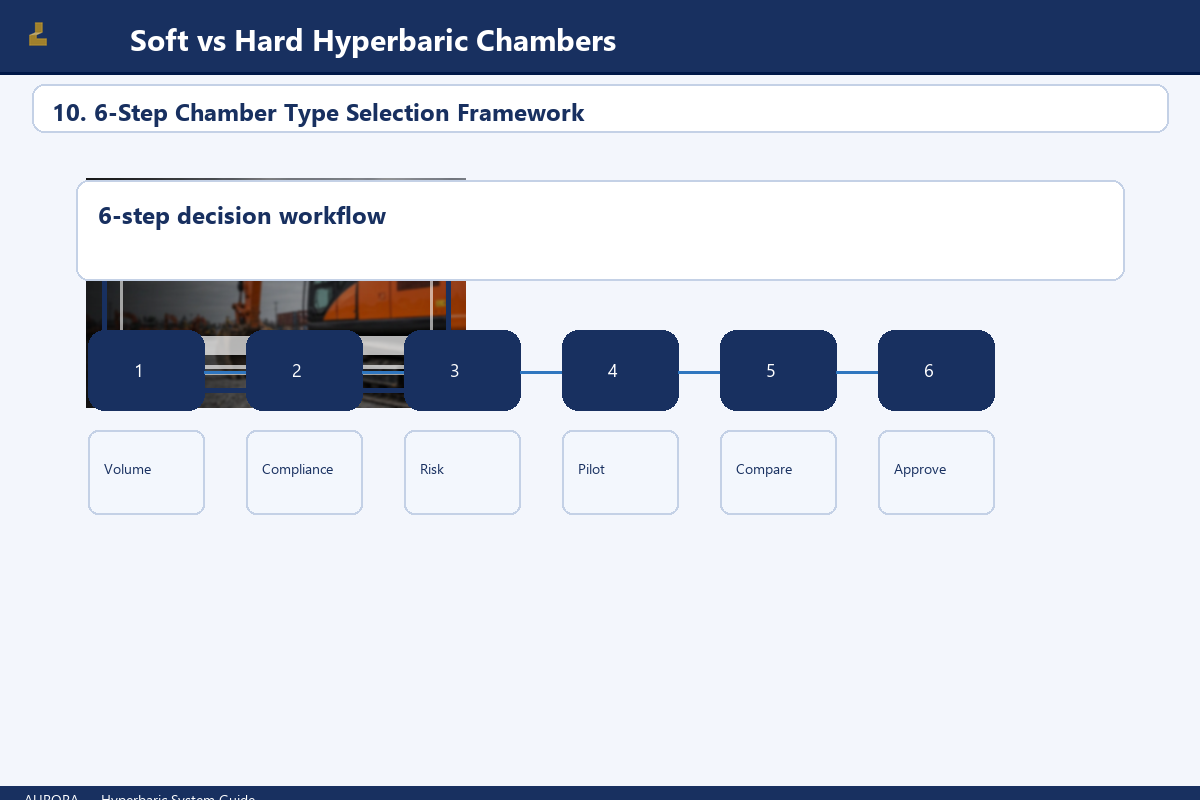
- Define therapy volume and treatment sequence.
- Set compliance obligations and monitoring depth.
- Score pressure profile risk for soft and hard options.
- Run a short pilot scenario with identical treatment scripts.
- Compare cost over a full operating cycle, not invoice price only.
- Finalize with one clear conversion path and acceptance criteria.
This framework helps avoid category-level competition overlap while preserving a unique buyer path and better search separation from standard product pages.
Next step: complete your scorecard above, then request a focused review through Macypan Solutions with expected treatment volume, staff model, and compliance requirements.
FAQs
Can a soft chamber be used for repeated therapies?
Yes if monitoring discipline and operational controls are mature, especially around staffing and session logging.
Is a hard chamber always safer?
Safety comes from control design, operation discipline, and documentation. A hard structure supports consistency, but governance is what maintains safety day to day.
How important is compliance documentation compared with hardware specs?
In daily use, documentation quality is usually more operationally important than a one-time spec value.
Which choice supports larger patient throughput?
Teams usually evaluate this from facility layout and staffing capacity first, then map to chamber type.
Can this framework support a pilot-to-scale path?
Yes. It is designed to start with a pilot and only scale after consistency and documentation criteria are met.
References