Get in Touch with MACY-PAN Company

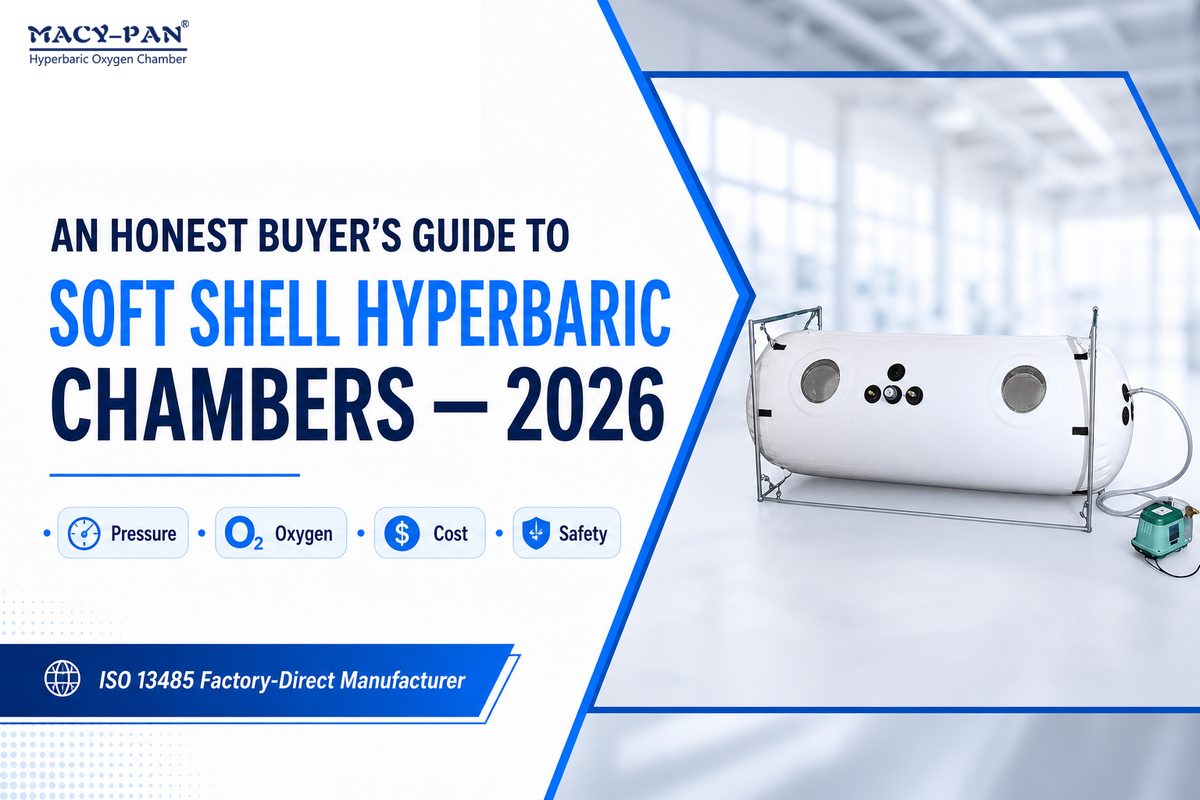
A factory-direct manufacturer’s honest guide — (Updated July 2026).
A soft shell hyperbaric chamber is an inflatable, zippered fabric enclosure that pressurizes ambient air to roughly 1.3–1.5 ATA. It is the same equipment sold as a soft-sided, inflatable, or mild HBOT chamber. This guide comes from a factory that builds both soft and hard chambers, so it gives the straight story on what a mild chamber really does, what gets overstated, what it costs, and how to buy one without disappointment.
In one paragraph: A soft shell hyperbaric chamber pressurizes ambient air to about 1.3-1.5 ATA (4-7 psi) and, when used with an oxygen concentrator, increases your inhaled oxygen level from about 21% to up to 93% for health and recovery. It isn’t clinical hyperbaric oxygen therapy, which uses pressures of 2.0+ ATA with near-100% oxygen under medical supervision. Used as intended, a certified soft chamber is a valuable home wellness and recovery device, not a medical treatment.
Quick Specs — Soft Shell / Mild Hyperbaric Chambers
- Pressure: 1.3–1.5 ATA (4–7 psi)
- Oxygen: 24-27% on air alone; up to 93% via supplied concentrator
- Shell: TPU fabric, high-frequency welded, YKK-sealed zippers
- Footprint: 8 x 4 feet per chamber; 15-22 kg (chamber only)
- US regulatory status: market and intended-use review required
- Typical US price band: $4,495–$20,000
💡 Key takeaways
- The single piece of equipment that both the clinics and the sales pages conveniently leave out is the oxygen concentrator: if you’re using the chamber with just air, your oxygen level will only be about 24-27%, but the included concentrator will push this up to around 93%.
- Mild isn’t clinical: The 2.0+ ATA and near-100% oxygen levels required to achieve the deep wound healing and stem cell stimulation seen in research studies are well beyond the capability of a soft shell chamber.
- “No studies on mild pressure” is old news: Recent peer-reviewed research has shown that measurable improvements in circulation and fatigue are possible at even the 1.3 ATA level.
- Buy certified and never leave it unattended: Any 4-7 psi soft-shell chamber should be reviewed against the applicable pressure-vessel and local safety requirements. If it does, then with proper usage it’s a safe home device. Don’t operate yours unattended.
What Is a Soft Shell Hyperbaric Chamber?
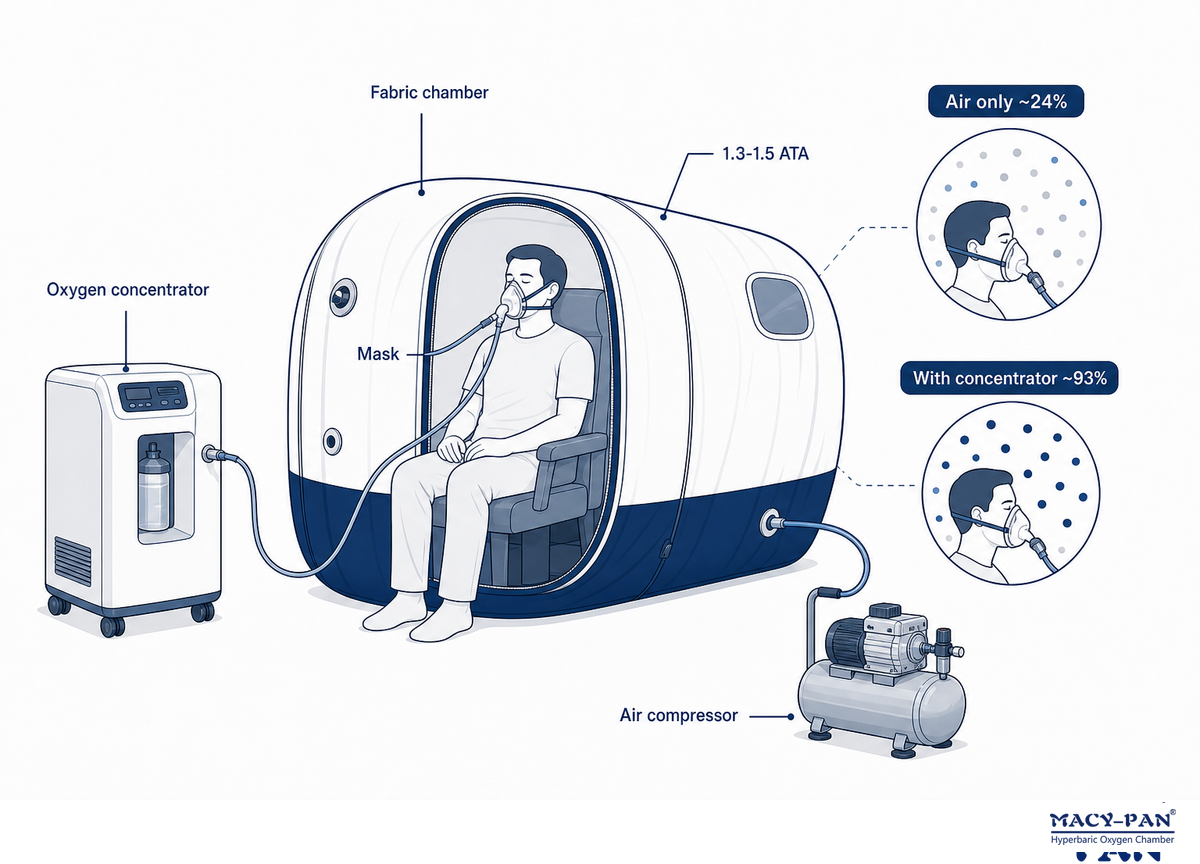
A soft shell hyperbaric chamber is an inflatable fabric enclosure that raises ambient air pressure to roughly 1.3-1.5 ATA, delivering enriched oxygen through a mask via an attached oxygen concentrator. Under alternative names such as “soft-sided chamber,” “inflatable hyperbaric chamber,” or “mild HBOT” (mHBOT), this is the same 1.3-1.5 ATA fabric equipment. Terminology here is often blurred on purpose, bridging the gap between home wellness devices and clinical treatments.
Mechanically it is simple: when the air in the chamber is pressurized to 1.3 ATA and you’re breathing it without any enrichment, your oxygen intake goes up from about 21% to only around 24-27% — “similar to sitting in your living room,” according to one pragmatic wound care doctor. Pressure alone doesn’t have much of a therapeutic effect; the magic happens when the oxygen concentrator is activated, feeding close to 93% oxygen through a mask at that same mild pressure. This is the real working principle of a mild chamber, yet the top ranking clinic-based articles on the topic skip mentioning the concentrator, making claims of “no better than room air.”
📐 Terminology decoder
Soft shell = soft-sided = inflatable hyperbaric chamber = mild HBOT = mHBOT = 1.3 ATA hyperbaric chamber.
They all refer to a 1.3-1.5 ATA fabric chamber. “Hard shell,” “hard-sided,” “monoplace,” and “clinical” all refer to a different category: a rigid 2.0+ ATA pressure vessel covered in our hard-shell medical hyperbaric chambers guide.
What’s the difference between mild HBOT and clinical HBOT?
Mild HBOT uses 1.3–1.5 ATA with enriched (not pure) oxygen for everyday health and recovery, while clinical HBOT uses 2.0–3.0 ATA with close-to-100% oxygen in a medical setting under a physician’s care for recognized indications. The gap is physical, not semantic: the oxygen actually reaching your tissues is nearly four times greater in clinical HBOT than in a mild chamber.
In fact, according to the Mayo Clinic summary on hyperbaric oxygen therapy, clinical HBOT works precisely because those higher pressures saturate the blood with far more oxygen than mild pressure ever can.
Soft Shell vs Hard Shell Hyperbaric Chambers: The Honest Comparison

Soft and hard chambers differ on one axis that decides everything else: the pressure they reach and the oxygen that pressure lets you absorb. Higher is not automatically better; it is a trade-off you match to a goal. For general wellness, exercise recovery, or daily oxygen enrichment at home at 1.3–1.5 ATA, a soft chamber is the right tool. To treat a diagnosed medical condition, you need a 2.0+ ATA hard shell chamber on medical-grade oxygen — and selling the first as the second is exactly the line regulators act on.
The Pressure–Oxygen Reality Matrix
The one table that puts the concentrator back into the comparison — the variable almost every soft-vs-hard article quietly skips.
| Setting | Pressure | Inspired oxygen | What it is for |
|---|---|---|---|
| Room air, sea level | 1.0 ATA | ~21% | Baseline |
| Mild chamber, air only | 1.3 ATA (4 psi) | ~24–27% | Insufficient on its own |
| Mild chamber + concentrator | 1.3–1.5 ATA | up to ~93% via mask | Wellness & recovery |
| Clinical hard chamber | 2.0–3.0 ATA | ~100% | Physician-supervised HBOT |
Read the third row against the second: the concentrator, not the mild pressure, is what makes a soft chamber worth owning. One widely cited clinic comparison walks arterial oxygen from ~157 mmHg at room air to ~230 mmHg in a soft chamber on 24% air, then to ~1,824 mmHg in a 2.4 ATA hard chamber on 100% oxygen, but that soft-chamber figure assumes air only. Add the 93% concentrator most soft chambers ship with and the gap narrows well before you reach clinical territory. Those arterial figures come from clinic-published material and vary by source, so treat them as directional, not gospel.
Beyond the matrix, the specification comparison is where most real buyers make the call. See our full soft vs hard hyperbaric chamber comparison for the build and regulatory detail behind this table.
| Factor | Soft / mild 1.3–1.5 ATA | Hard-shell 2.0 ATA (clinical) |
|---|---|---|
| Oxygen delivered | ~24–27% from air; up to ~93% via concentrator | Near-100% medical-grade oxygen |
| Shell / build | TPU fabric, inflatable, YKK-sealed | Rigid steel or acrylic pressure vessel |
| US FDA status | Cleared for acute mountain sickness only | Used for FDA-recognized HBOT indications |
| Licensing | Usually none (cash-pay wellness) | Physician oversight; insurance-billable |
| Footprint | ~8 × 4 ft per unit | Dedicated room, 32–38″ doorway |
| Typical price band | $4,495–$20,000 | $20,000–$130,000+ |
Key takeaway: match pressure to purpose. Wellness and recovery live at 1.3–1.5 ATA; recognized medical treatment lives at 2.0+ ATA. A chamber sold as doing both at soft-shell pressure is overselling.
Do Soft Shell Hyperbaric Chambers Actually Work?
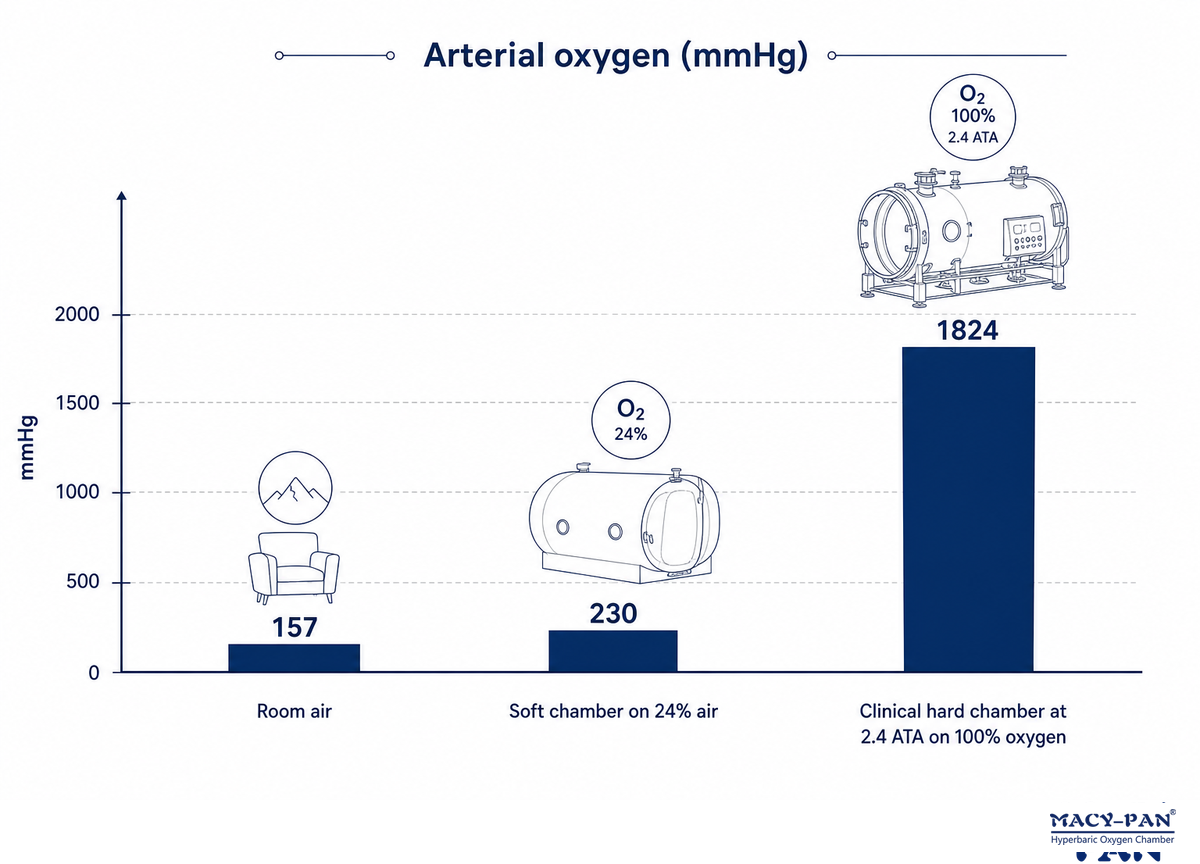
Whether a soft shell chamber “works” depends entirely on what you ask of it. For wellness and recovery, paired with its oxygen concentrator, a mild chamber measurably raises the oxygen in your blood above room-air levels. For treating a diagnosed medical condition, no, the stem-cell mobilization, neurological recovery, and deep tissue effects tied to hyperbaric medicine require 2.0+ ATA on pure oxygen, which a mild chamber doesn’t deliver.
Both extremes get this wrong, and the truth is in between. Soft-shell pages equate mild pressure with clinical therapy; according to a 2024 Medical Sciences review, the providers will “often mention peer reviewed papers about HBOT treatment at 2.0 ATA, but provide treatments at about 1.3 ATA.” They sell the concept while administering less. Hard-shell clinics have swung the pendulum too far the other way, asserting there aren’t studies of mild pressure at all.
That’s also old. A 2023 study published on PMC (Nisa et al.) concluded mild HBOT is beneficial for improving peripheral blood flow and alleviating fatigue, without causing significant oxidative stress.
“We build chambers at both ends of that pressure range, so we have no reason to overstate what a mild unit does. At 1.3–1.5 ATA with a concentrator you are enriching oxygen for recovery and wellness — real, measurable, and worth owning. What you are not doing is clinical hyperbaric oxygen therapy. Anyone who blurs that line is selling you the wrong expectation.”
Are soft shell hyperbaric chambers effective?
For their intended purpose — daily oxygen boosting, sport recovery, and general wellness — an approved soft chamber paired with its concentrator does raise blood oxygen above resting levels. On r/Biohackers and similar forums, users report higher morning energy and quicker recovery from hard training blocks.
For treating diabetic wounds, radiation damage, or the other conditions clinical hyperbaric therapy is approved for, a soft chamber does not work and should not be promoted as if it did. Let your purpose be the guide: wellness and recovery, yes; treatment of a disease or illness, no.
What a Soft Shell Chamber Costs (and Why Prices Vary So Much)
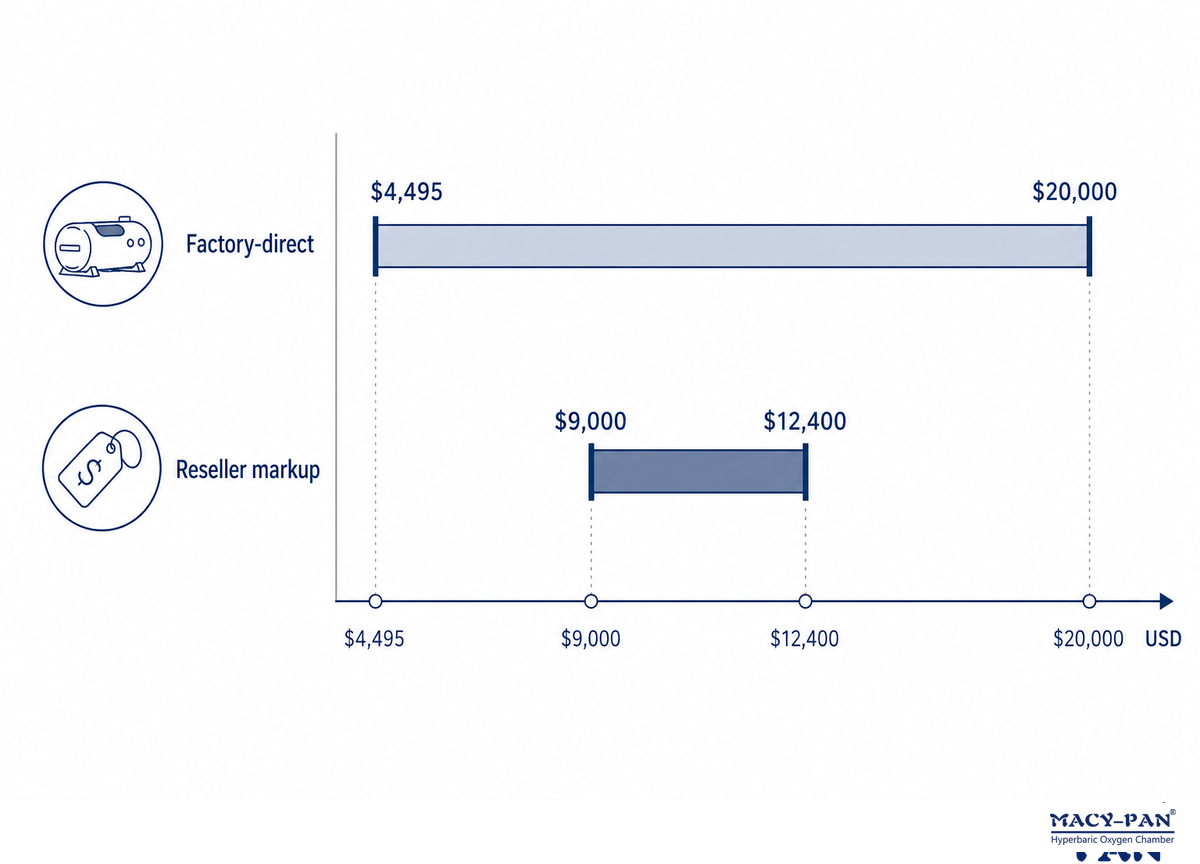
Soft shell hyperbaric chambers cost about $4,495 to $20,000 in the United States, and most home units fall in the range of $5,000 to $10,000; the heavier rigid clinical chambers start around $20,000 and rise from there, up to $130,000. This huge spread in soft chamber price range reflects substantial, concrete factors – internal space, posture, whether a concentrator and compressor are provided, air-flow rate, and safety valve setup – rather than merely brand marketing.
One structural cost factor is the supply chain. Those same soft models are listed by resellers at roughly $9,000–$12,400, and buying factory-direct removes that markup. One helpful comparison check when you receive quotes: double-check the quoted price, make sure you’re not comparing a quote for the chamber alone (which can seem cheaper, but doesn’t include the oxygen concentrator and oil-free compressor that make it work) with a total unit quote.
To weigh buying against paying per session at a clinic, use our own-vs-clinic cost calculator.
How much does a soft shell hyperbaric chamber cost?
Soft shell hyperbaric chambers usually run from about $4,495 to $20,000, with most home packages landing between $5,000 and $10,000. Resellers commonly list those same soft models around $9,000 to $12,400, so buying factory-direct removes that added markup — the price mostly tracks size, oxygen flow, and whether a compressor and concentrator are included.
Some manufacturers sell factory-direct, which often places prices below the standard “reseller” list. Always compare a complete package price, not just the chamber — the oil-free compressor, oxygen concentrator, and all-in-one valve set make up most of the working system.
Who Soft Shell Chambers Are Right For, Home, Athletes & Wellness Centers
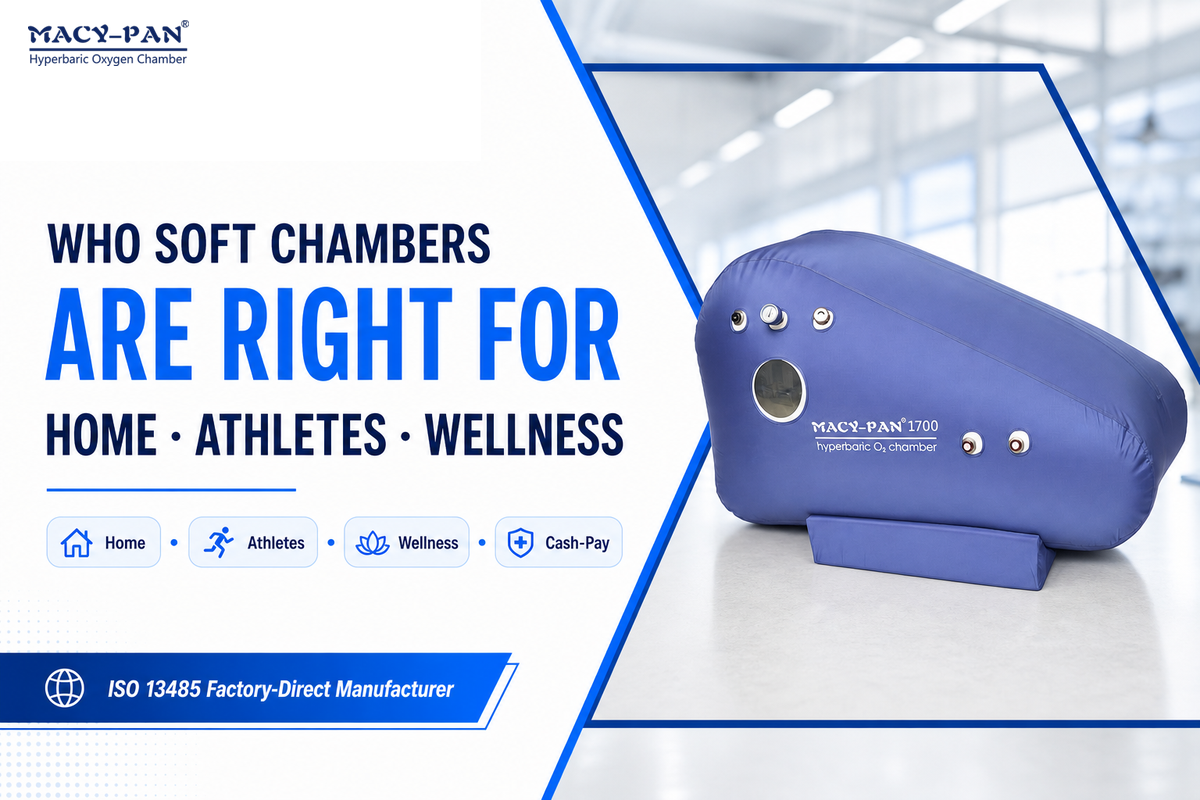
Soft shell chambers fit three buyer types: home users who want a simple, non-invasive daily recovery session; sports-recovery clinics rotating athletes through training cycles; and spas or wellness centers adding oxygen-enriched therapy as a cash-pay, non-insurance service. In most states, a 1.3–1.5 ATA chamber used for wellness needs no prescription or medical license, though rules vary by state.
Regulations do vary, so verify your state’s rules before purchasing for any type of facility. Buyers searching for a portable hyperbaric oxygen chamber, a hyperbaric chamber for home use, or mild hyperbaric oxygen therapy at home are usually looking at exactly this soft-shell tier.
Athletes are a big part of this market: a judo world champion and an Olympic karate gold medalist both use a lying-style soft chamber in their recovery routine, and the appeal is practical — a light, portable unit for home use that runs in a spare room. If you are outfitting a facility rather than a spare bedroom, our pages on home hyperbaric chambers, hyperbaric chambers for athletes, and wellness-center hyperbaric chambers cover the layout and revenue side.
⚠️ When a soft chamber is the wrong tool
If you are considering a soft shell for the treatment of chronic, non-healing wounds, diabetic ulcers, radiation injuries, or other conditions addressed through clinical hyperbaric medicine, then know that it cannot serve as a substitute for the expert care and treatment by a physician in a hard shell hyperbaric chamber. Purchase for wellness and for recovery, but rely on a physician’s referral if seeking any kind of diagnostic treatment.
Is a Soft Shell Hyperbaric Chamber Safe? Standards, Devices & Red Flags
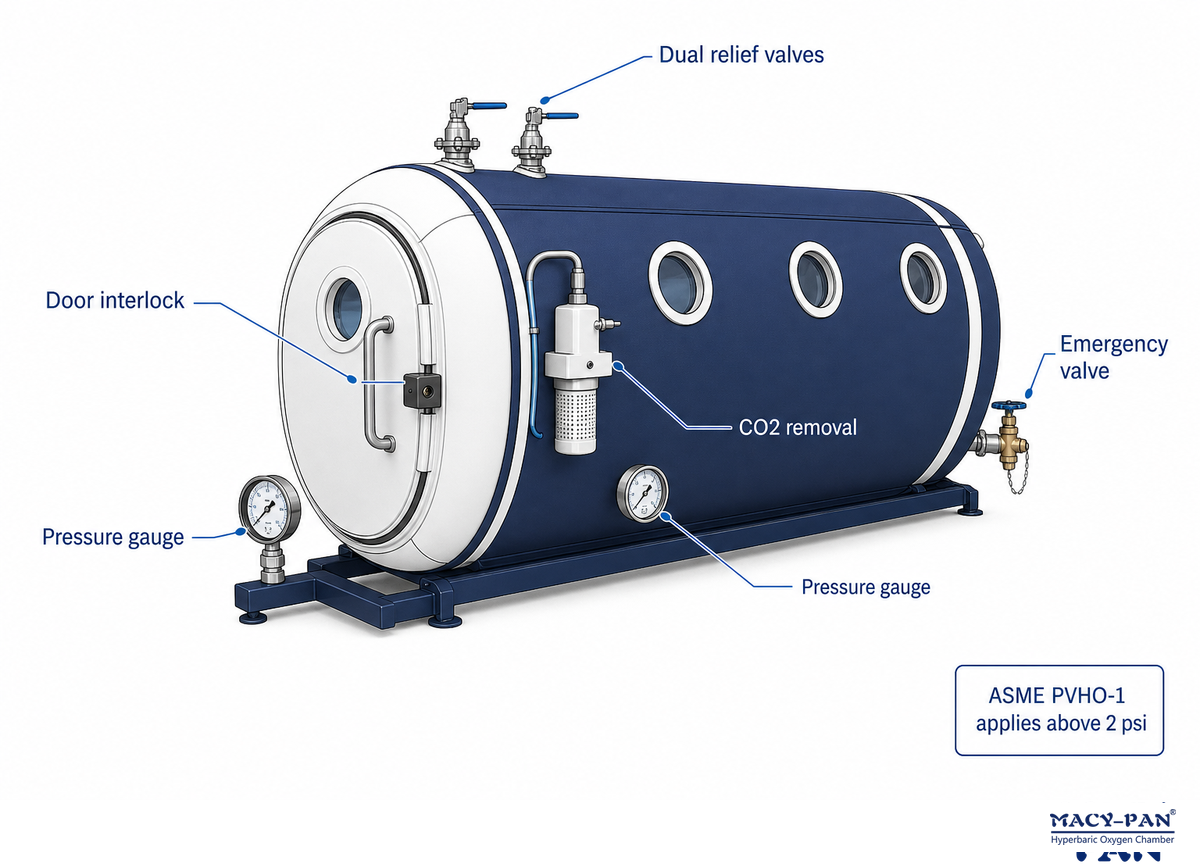
A soft shell chamber can be operated safely if it’s properly engineered as a pressure vessel, and if used as it was intended. There’s absolutely no leeway in engineering, even for low-pressure vessels; all vessels with over approximately 2 PSI differential pressure are regulated under ASME (Pressure Vessels for Human Occupancy) safety standard; this clearly includes a 4-7 PSI soft shell chamber. There’s absolutely no room for skipping any safety measure just because the shell is soft.
Redundancy, and not just a single relief valve, builds in safety. Well-engineered soft chambers come equipped with dual, independent relief valves; a door lock safety feature that only permits closing when the chamber is fully sealed; a CO2 removal system; emergency and manual relief valves; internal and external chamber controls; and must pass rigorous staged testing, including an aging test, prior to shipment. Your ability to read pressure via a gauge from inside the chamber, and to personally initiate session closure, should be standard.
When NOT to buy — soft-chamber red flags
- A supplier who merely says they “will” design to ASME — ask them to provide the standard number and the model it applies to.
- Absence of SGS (Standard Testing and Certification Laboratory) material certification for the shell material and a lack of specific written documentation for valve specifications.
- A “chamber only” option without an oxygen concentrator and any components/valves not rated for use with pure oxygen.
- Broad claims of “FDA-approved” use for wellness – the US FDA has approved only some soft shell models specifically for treatment of acute mountain sickness.
- Encouragement to operate without supervision, or above specified pressure limits – these were factors in some reported fatality cases.
What I have found through research into reported serious injuries in these units tends to fall into the same four categories: the unit was not certified, the chamber was run above its rated pressure, the unit was operated by a user not certified to operate hyperbaric equipment, or it was run unattended. Guidance is consistent here: the UHMS Position Statement on Low-Pressure Fabric Chambers and the US FDA agree that these units are approved for altitude sickness, not general medicine. Our soft shell chamber safety checklist will run you through the questions that will help you identify if a unit (ours or others) is for you.
How to Choose and Vet a Soft Shell Chamber
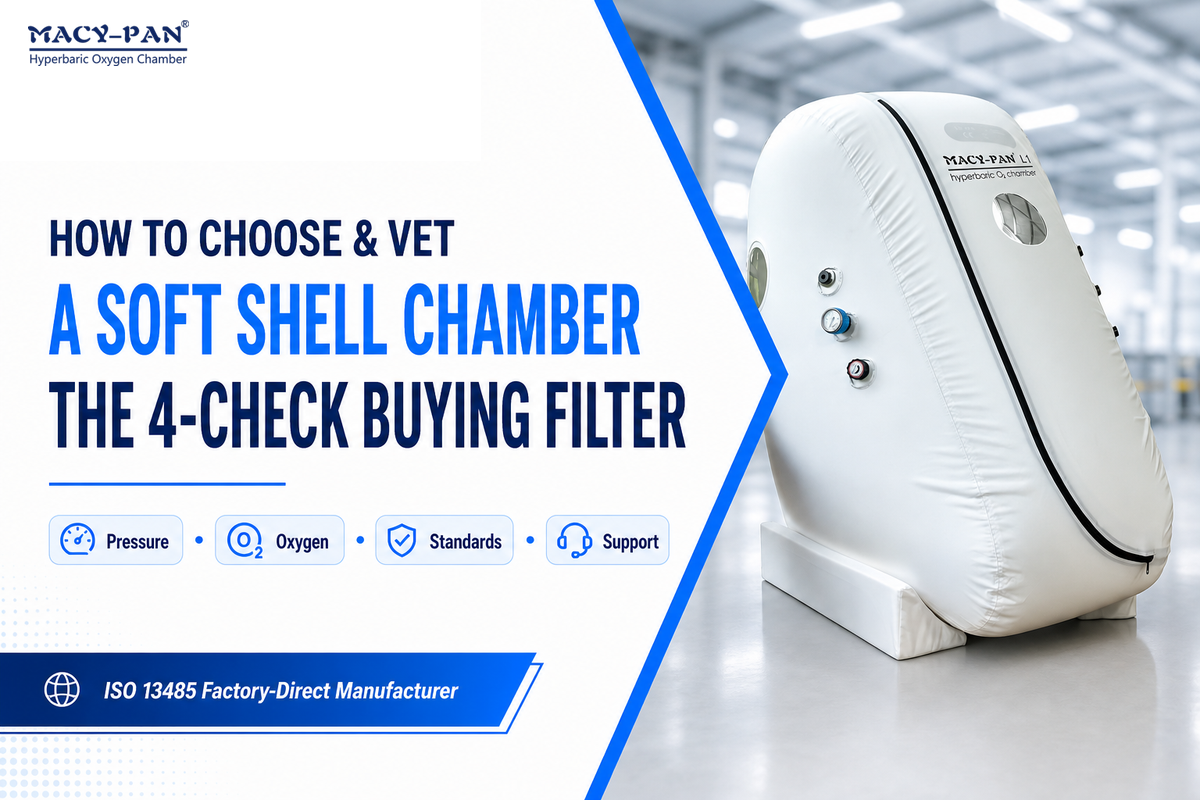
Choosing the right soft shell chamber involves four key checks, then matching a model to the user’s specific needs. Getting the four checks right makes the model choice obvious; skip them and the decision boils down to price, which is how buyers end up with a rebadged bag chamber.
The 4-Check Soft-Chamber Buying Filter
Use our four-check system for distinguishing engineered chambers from zipper bag types-regardless of supplier (including ours).
- Pressure ceiling. Does the chamber model achieve the advertised pressure rating (e.g., 1.5ATA vs 1.4ATA)? Is the rating clearly documented for the model?
- Oxygen delivery. Does the package include a concentrator, at what flow rate, and is the oxygen path compatible?
- Engineering standards. Has the unit been built and tested to meet ASME? Is there an SGS material report for the shell on file?
- Supervision and support. Can the chamber be operated by one person? What warranty and parts support is available? Is the seller clear about avoiding unattended use?
Finally, align the user’s posture and the device model. Below, a real five-model soft shell lineup illustrates how to choose the right unit based on desired pressure, posture, and space.
| If the user needs… | Best-fit posture | Example model & size | Not suitable when… |
|---|---|---|---|
| Smallest home footprint | Vertical sitting | L1 — 140×65×160 cm, 15 kg, 1.5 ATA | You want to lie fully flat |
| One-person sit/semi-lie | Sitting (M) | ST1700 — 170×70×110 cm, 17 kg, 1.5 ATA | Two occupants needed |
| Adult + child together | Sitting (L) | ST2200 — 220×70×110 cm, 20 kg, 1.5 ATA max | Space is tight |
| Full-length lying + higher O₂ | Lying | ST801 — 225×80×80 cm, 15 kg, 10 L/min @1.5 ATA | Floor space is limited |
| Wheelchair access / 2 people | Wheelchair | MC4000 — 140×130×175 cm, 22 kg, 1.4 ATA | You need the 1.5 ATA ceiling |
Soft-Chamber Selection Matrix by Use-Case Type
| Use-case type | What to prioritize | Best-fit model | Pressure / O₂ flow |
|---|---|---|---|
| Smallest home footprint | Vertical space, folds flat | L1 | 1.5 ATA / 5 L/min |
| Daily home wellness (sitting) | Comfort, 3-zipper seal | ST1700 | 1.5 ATA / 5 L/min |
| Adult + child together | Internal length | ST2200 | 1.5 ATA / 5 L/min |
| Full-length lying recovery | 80 cm bore, higher O₂ | ST801 | 1.5 ATA / up to 10 L/min |
| Wheelchair / limited mobility | Sealed door access | MC4000 | 1.4 ATA / 5 L/min |
| Two occupants at once | Cabin volume | MC4000 | 1.4 ATA / 5 L/min |
| Athletic-recovery studio | Throughput, lying session | ST801 | 1.5 ATA / up to 10 L/min |
| Spa / wellness cash-pay service | Footprint, easy operation | ST1700 | 1.5 ATA / 5 L/min |
| Highest inspired-oxygen sessions | O₂ flow ceiling | ST801 | 1.5 ATA / up to 10 L/min |
| Travel / lowest weight | 15 kg class | L1 or ST801 | 1.5 ATA / 5 L/min |
In most cases, the deciding factors will be pressure ceiling, oxygen flow rate, and the method of entry. Choose the user’s pressure and posture first, then accommodate the space. Our interactive soft chamber model selector filters this same five-model lineup by your constraints.
The 2026 Soft-Chamber Market: Why Buying Got Harder
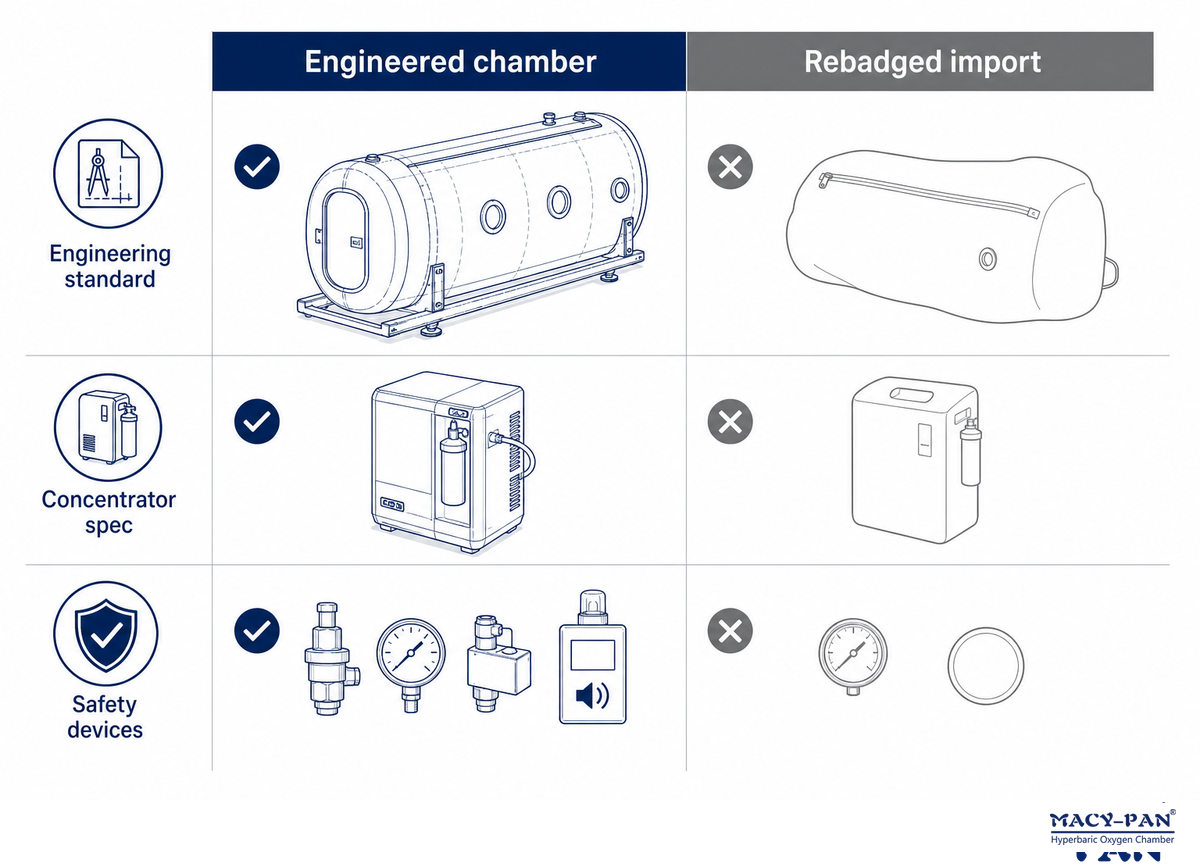
In 2026, selecting the best soft shell chamber isn’t so much about finding one as it’s about differentiating an engineered system from an off-the-shelf bag. Due to surging US demand, over 300% increase in the last three years alone, numerous undifferentiated “bag chamber” vendors have flooded the market. This shift in buyer demand, from mere availability to savvy selection, means our four-check system is more critical than ever before.
At the same time, the gap is growing. In fact, as the domestic market matured, the distance between the entry-level units and the proper ones grew, and regulators continue to train their sights on anyone selling a mild wellness chamber as a cure. Market analysts figure the mild-chamber market at hundreds of millions of dollars and see it growing into the billions within the decade — and while those are rough estimates, they help explain why we saw so many new logos emerge this year. From the perspective of a manufacturer that makes both kinds of chamber, the distinction is pretty straightforward: The number one thing the new guys skip are details concerning engineering, concentrator specification, and safety features. If you’re in the market for a 2026 purchase, don’t chase a cheap price tag; shop based on these three items.
Not sure which soft chamber matches your goal?
Share your setting (home, training studio, wellness space) to receive a factory-direct recommended model.
Frequently Asked Questions
Are soft shell hyperbaric chambers effective?
For wellness and recovery, yes — paired with their oxygen concentrator, mild chambers raise blood oxygen well above room air, and users report better energy and faster recovery. They do not deliver clinical hyperbaric oxygen therapy, and should not be used to treat diagnosed medical conditions, which need 2.0+ ATA on near-100% oxygen under a physician.
For everyday wellness, athletic recovery, and general oxygen enrichment, a mild chamber paired with its concentrator raises blood oxygen in a measurable way. It is not, however, a treatment for diagnosed conditions such as chronic wounds or radiation injury, which need the higher pressures — 2.0 or more atmospheres absolute — and near 100 percent oxygen of clinical hyperbaric oxygen therapy under a physician.
How much does a soft shell hyperbaric chamber cost?
Soft and mild chambers run roughly $4,495 to $20,000 in the US, with most home units between $5,000 and $10,000; rigid clinical chambers cost far more. Resellers commonly list the same soft models around $9,000–$12,400, so buying factory-direct removes that markup.
Expect roughly $4,495 to $20,000 for a soft or mild chamber, with most home units near $5,000 to $10,000; the same models often carry reseller markups around $9,000 to $12,400, so factory-direct pricing usually undercuts them. Compare complete kits — chamber, oil-free compressor, and the concentrator that supplies concentrated oxygen — rather than a figure for the chamber alone, because those accessories are most of the working system.
What is the downside of a soft shell hyperbaric chamber?
The main downside is a ceiling: at 1.3–1.5 ATA a soft chamber cannot reach the pressures clinical hyperbaric medicine relies on, so it is a wellness and recovery device, not a medical treatment. Cheap, uncertified units add real safety risk, and some sellers overstate what mild pressure can do.
Its ceiling is the real limit: at 1.3 to 1.5 ATA a soft chamber cannot reach the pressures clinical hyperbaric medicine relies on, so it stays a wellness and recovery device rather than a treatment. Originally used for divers with decompression sickness, these units are safer when supported by model-specific ASME documentation and applicable CE files, but cheap uncertified copies add genuine risk, and some sellers overstate what mild pressure can do.
Do I need a prescription or license to own one?
In most US states, a 1.3–1.5 ATA soft chamber used for cash-pay wellness needs no prescription and no medical license. A clinical 2.0 ATA chamber does require physician oversight. Rules vary by state, so confirm yours.
Local requirements may apply for commercial use of chambers in a wellness facility, so check before you begin offering service to clients.
Are soft hyperbaric chambers safe?
A certified soft chamber built to ASME and used as directed is safe; documented injuries trace to uncertified units, over-pressurization, or unattended use. Look for multiple independent safety devices and an SGS shell report.
Most risk is addressed with two basic precautions: Do not leave equipment running unattended. Never modify the chamber or its components to operate beyond its designated pressure limits.
Can a normal person use a hyperbaric chamber?
Yes — healthy adults commonly use mild soft chambers at home for wellness and recovery without a prescription. If you have ear, sinus, lung, or other medical concerns, check with a clinician first, since pressure changes affect those conditions.
Start low and follow the session guidance.
Soft shell or hard shell, which do I need?
Choose soft if your goal is wellness, sports recovery, or home oxygen enrichment; choose hard if you need physician-supervised treatment for a recognized medical condition at 2.0+ ATA. The deciding question is treatment versus recovery, not price.
A clinician’s prescription for HBOT calls for a hard-shell chamber; a soft-shell is generally the right choice for all other uses.
Why We Can Say This Honestly
MACY-PAN builds both soft-shell mild (1.3–1.5 ATA) and hard-shell clinical (2.0+ ATA) chambers in one certified quality management system facility. Because we manufacture at both ends of the pressure range, we have no incentive to overstate what a soft chamber does or to dismiss it; the concentrator math and the FDA line are the same whether or not they help a sale.
References & Sources
- Position Statement on Low-Pressure Fabric Hyperbaric Chambers — Undersea and Hyperbaric Medical Society (UHMS)
- Recognized Consensus Standards: Medical Devices (PVHO) — U.S. Food and Drug Administration
- PVHO-1: Safety Standard for Pressure Vessels for Human Occupancy — ASME
- Mild Hyperbaric Oxygen Exposure Enhances Peripheral Circulation (Nisa et al., 2023) — PMC / National Library of Medicine
- Hyperbaric Oxygen Therapy and Mild Hyperbaric Oxygen Therapy (2024) — Medical Sciences (MDPI)
- Hyperbaric Oxygen Therapy, Overview — Mayo Clinic
![Decision lenses: occupancy, gas path, access, staffing, facility interfaces, and exact-model evidence [article].](https://macypansolutions.com/wp-content/uploads/2026/10/monoplace-vs-multiplace-hyperbaric-chambers-featured-1-768x512.png)