Get in Touch with MACY-PAN Company

HBOT business planning guide
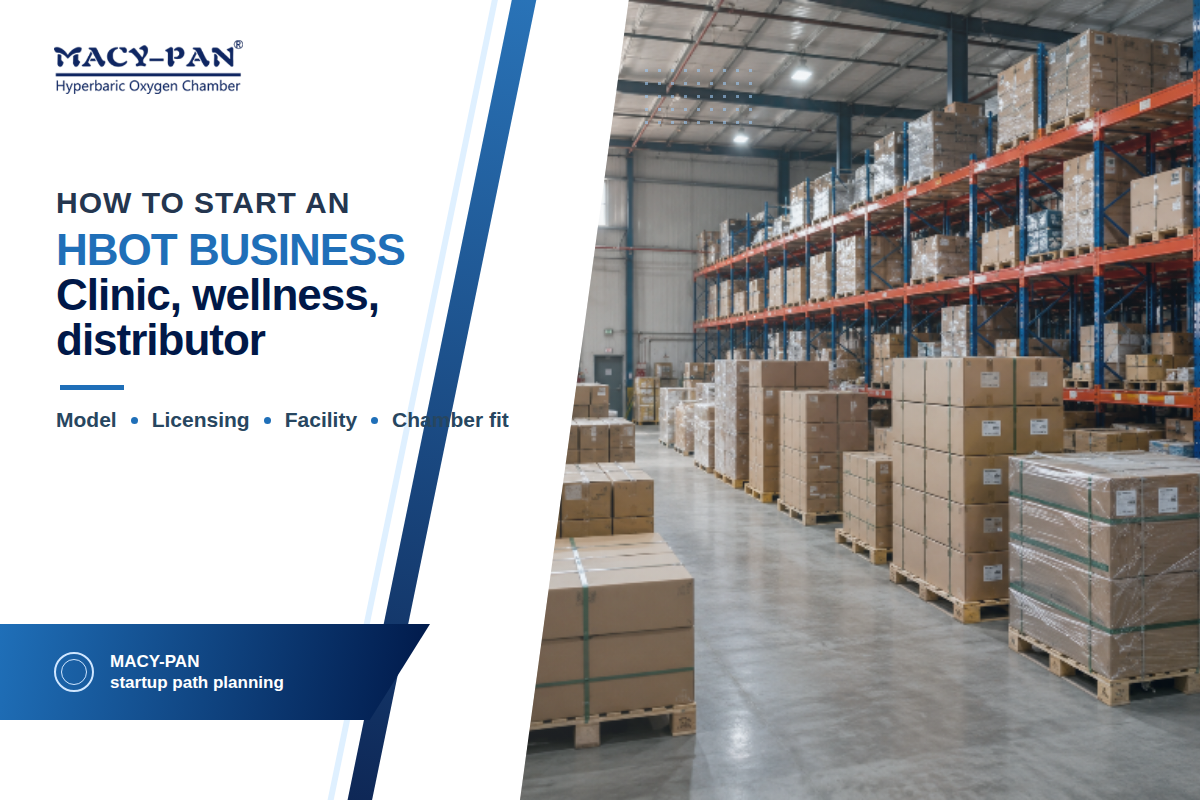
If you are researching how to start a hyperbaric oxygen therapy business, do not begin with chamber cost. Decide first whether you are creating a medical clinic, a wellness service, a new service line in an existing business, or a dealership, because licensing, staff requirements, claim boundaries, facility review, and equipment choices all follow that path.
The guide is aimed at new entrepreneurs, owners of existing medical practices, managers of wellness centers, sports and recovery brands and chamber distributors. It provides business planning guidance, not medical, legal, facility, or insurance reimbursement advice. Read it to clarify questions that need answering before you ask for pricing, lease space or advertise HBOT.
Quick Specs for HBOT Business Planning
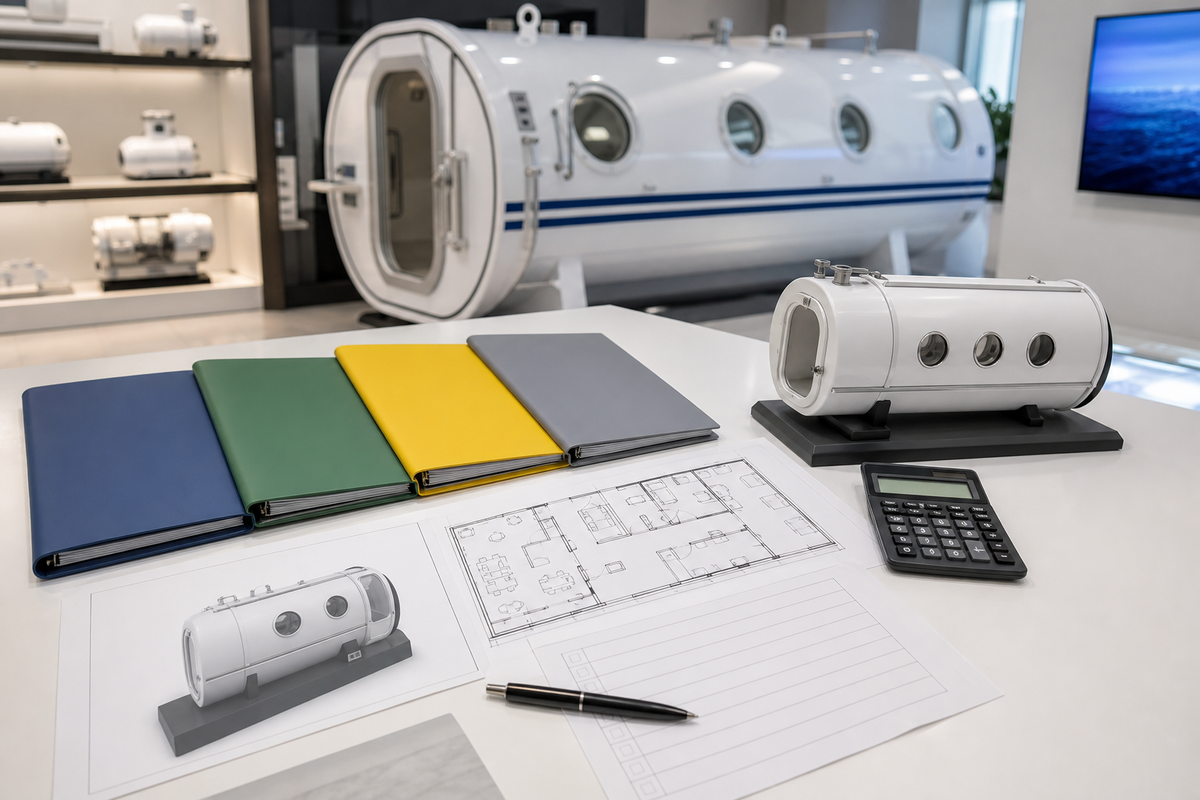
| First decision | Choose medical clinic, wellness/recovery center, existing-practice add-on, or distributor/dealer path before comparing a hyperbaric chamber. |
| Medical boundary | UHMS frames medical HBO2 as physician-prescribed and supervised, commonly at not less than 2.0 ATA while breathing medical-grade oxygen. |
| Payer boundary | CMS NCD 20.29 limits Medicare HBOT coverage to specified conditions. Do not build an insurance model until indications, payer policy, records, and local billing rules are checked. |
| Safety boundary | FDA warns that oxygen at high concentration raises fire risk and says buyers should follow manufacturer instructions and verify FDA clearance for the specific HBOT device. |
| Commercial next step | MACY-PAN offers clinic, wellness, OEM, and distributor paths, including factory-direct dealer support for qualified partners. |
Start With the HBOT Business Path Matrix
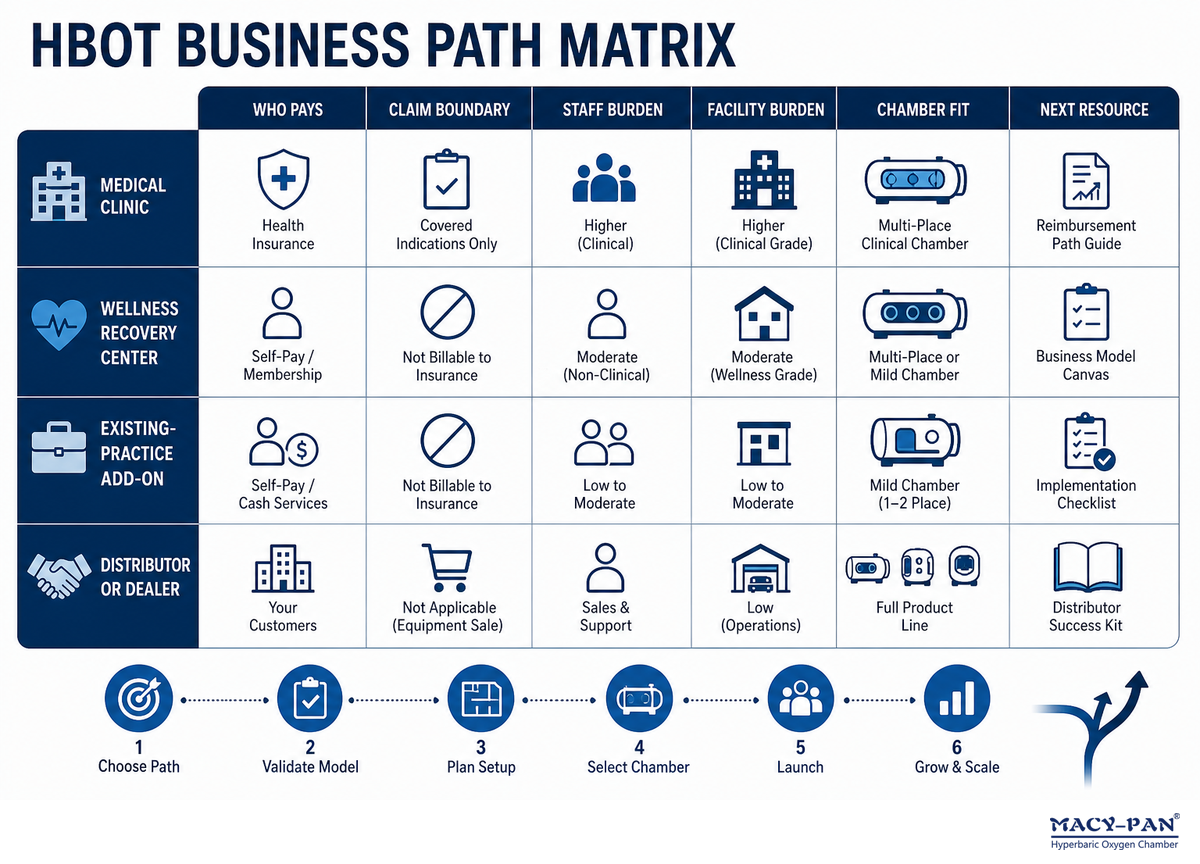
Most weak hyperbaric oxygen business plans begin with a price list for equipment. More resilient business plans begin with the path. An entrepreneur exploring a hyperbaric oxygen business might be seeking a program to treat medical wounds, offer cash-pay recovery at a wellness center, add a new service for an existing chiropractor or functional medicine practice, or operate a distributor that sells equipment.
Consider this matrix before you start your full business plan, research locations, or project profits.
| Path | Who pays | Claim boundary | Burden to plan | Best next resource |
|---|---|---|---|---|
| Medical HBOT clinic | Patients, insurers, referral networks | Use medical indications and provider oversight; verify payer rules. | Highest: licensing, medical director, facility, staff, and clinical files. | Clinic HBOT chamber solutions |
| Wellness or recovery center | Cash-pay clients, memberships, packages | Avoid medical claims unless licensed, documented, and supervised for that use. | Medium: claims, safety, intake, room, staff training. | Wellness center HBOT options |
| Existing-practice add-on | Current patients, athletes, recovery clients, local referrals | Must match scope of practice, state rules, and referral language. | Medium to high: staff, consent, contraindication screening, scheduling. | HBOT practice guide |
| Distributor or dealer | Clinics, wellness centers, home buyers, regional channel buyers | Sell equipment and support buyer education without making unsupported treatment claims. | Commercial: sourcing, margins, logistics, sales enablement, after-sales support. | MACY-PAN Distributor Program |
Medical HBOT, Wellness HBOT, and Dealer Models Are Not the Same Business
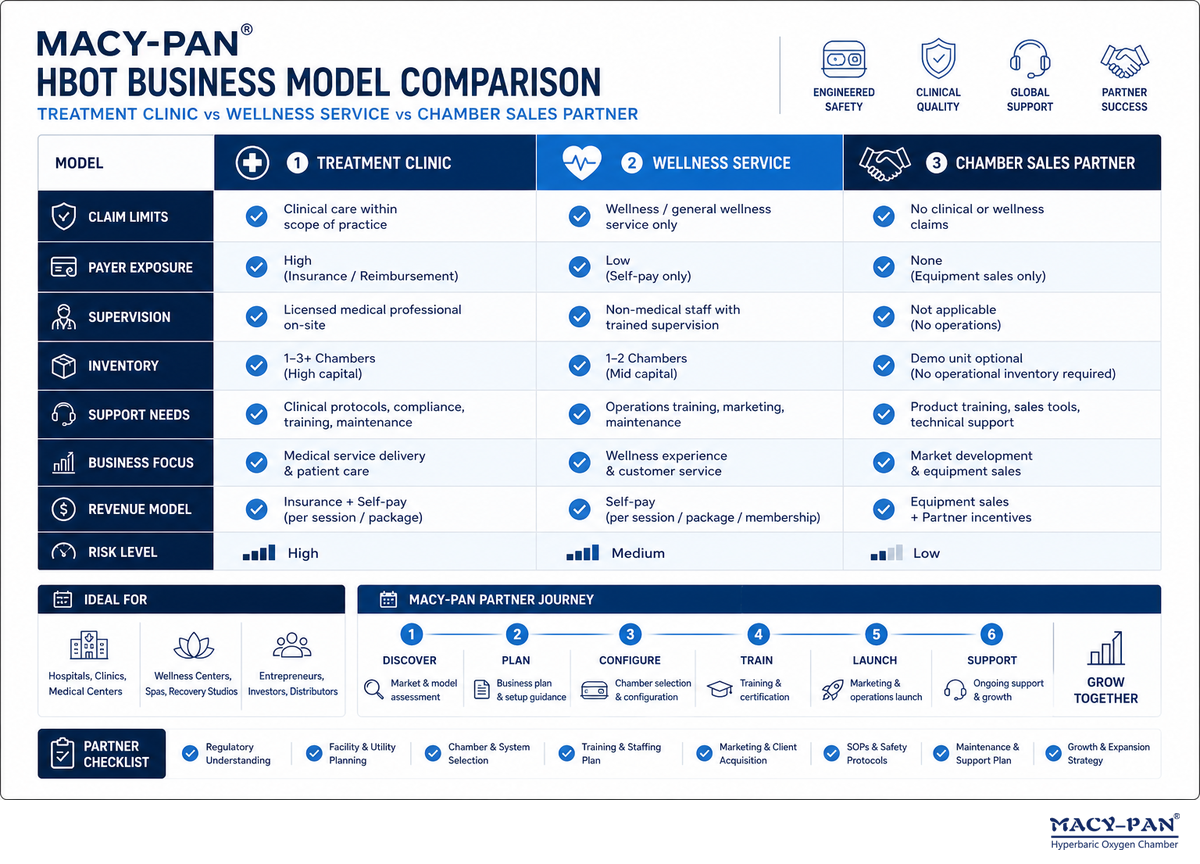
The quickest path to a problematic startup is confusing model language. Hyperbaric oxygen medical clinics often need a provider, policies and procedures, patient charts, referrals, and a claims processing plan. A wellness center may be able to sell cash-pay sessions but needs to carefully consider any claims about medical outcomes and what they advertise. Dealerships may not ever operate any sessions, instead selling chambers to others.
UHMS explicitly defines medical HBOT as a procedure requiring physician orders and oversight. Operators need that boundary, because simply describing sessions in marketing collateral could lead to medical claim liability even if chambers are in a wellness center setting.
Many search results use broad terms such as hyperbaric business, hyperbaric therapy, or profitable hyperbaric chamber business. Treat those phrases as starting points, not conclusions. A profitable hyperbaric plan still has to prove demand, price, staff coverage, risk controls, and the healthcare provider role before it can handle insurance billing or sell hyperbaric chamber services with confidence.
Advantages
HBOT can offer clients a new, repeatable experience, drive referral business and help distinguish a clinic, PT group, sports medicine provider, wellness center or chamber dealer.
Limitations
It is a capital-intensive service, susceptible to claims-based reimbursement and dependent on a suitable facility and competent staff. Equipment cost alone is insufficient for assessing profitability.
MACY-PAN supports diverse approaches, including hyperbaric planning for clinics, chambers for wellness centers, private-label manufacturing, and cooperative distributor programs. For established sales channels not interested in delivering therapy, the MACY-PAN Distributor Program might be a better choice than launching a clinic.
Check Licensing, Medical Oversight, and Payer Rules Before Marketing HBOT
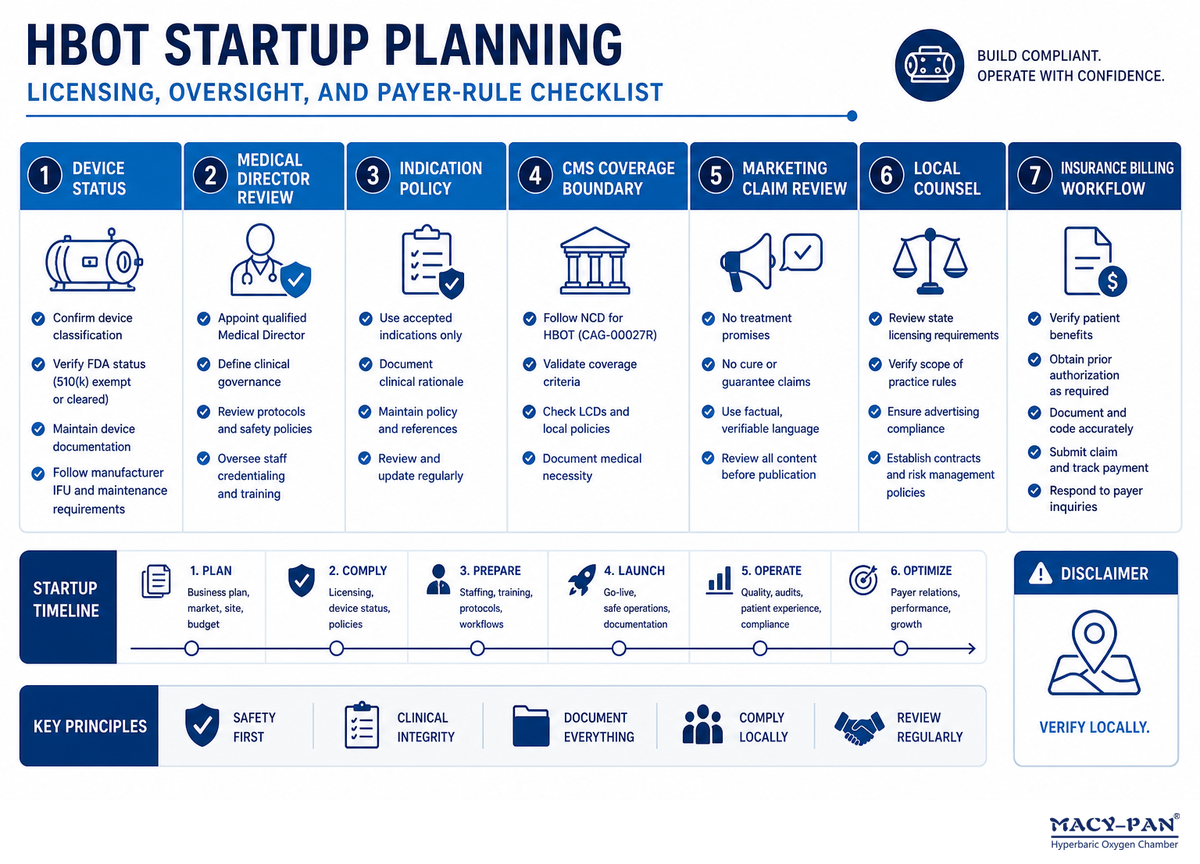
Review these questions with your legal counsel, medical director (if applicable), payer consultants and local regulatory authorities before publishing your service offerings online. The answers can change chamber type, staff plan, pricing structure, and timeline.
For a startup company or entrepreneurship path, treat HBOT as a regulated health-care-adjacent investment, not a simple equipment purchase. Ask a medical doctor or qualified clinical lead how hyperbaric medicine policies, professional liability insurance, legal liability, ventilation, and overhead fit your state. The Undersea and Hyperbaric Medical Society can help frame clinical expectations, while a chiropractic or wellness add-on still needs its own risk review. Some buyers may call the chamber a diving chamber, but your files, training, and marketing should use the supplier’s exact device language.
| Question | Why it matters | Source boundary |
|---|---|---|
| Is the specific HBOT device cleared for the intended use? | Procurement should verify device status, manufacturer instructions, grounding, fire-risk controls, and allowed accessories. | FDA Class II / 510(k) / Product Code CBF guidance. |
| Will you treat covered medical conditions or sell cash-pay wellness sessions? | This changes provider oversight, charting, referral, claims, and whether insurance billing is even realistic. | CMS NCD 20.29 covers specified conditions only. |
| Does your marketing language match the service model? | Wellness businesses should not borrow medical indication language unless the operation is qualified for that claim. | UHMS distinguishes medical HBO2 from mild or unproven uses. |
| Who signs clinical policies and handles screening? | Contraindication screening, emergency procedures, staff duties, and referral language must be written before launch. | MACY-PAN readiness checklist. |
Common clinical indications for medical HBOT include carbon monoxide poisoning, decompression sickness, gas embolism, certain types of diabetic ulcers, refractory chronic osteomyelitis, and compromised skin grafts or flaps. Do not present these as universal promises; claims-based coverage requires verification of indications, patient diagnosis, medical records, physician supervision, and continuous treatment criteria.
Choose a Chamber Around the Service Model, Not the Other Way Around
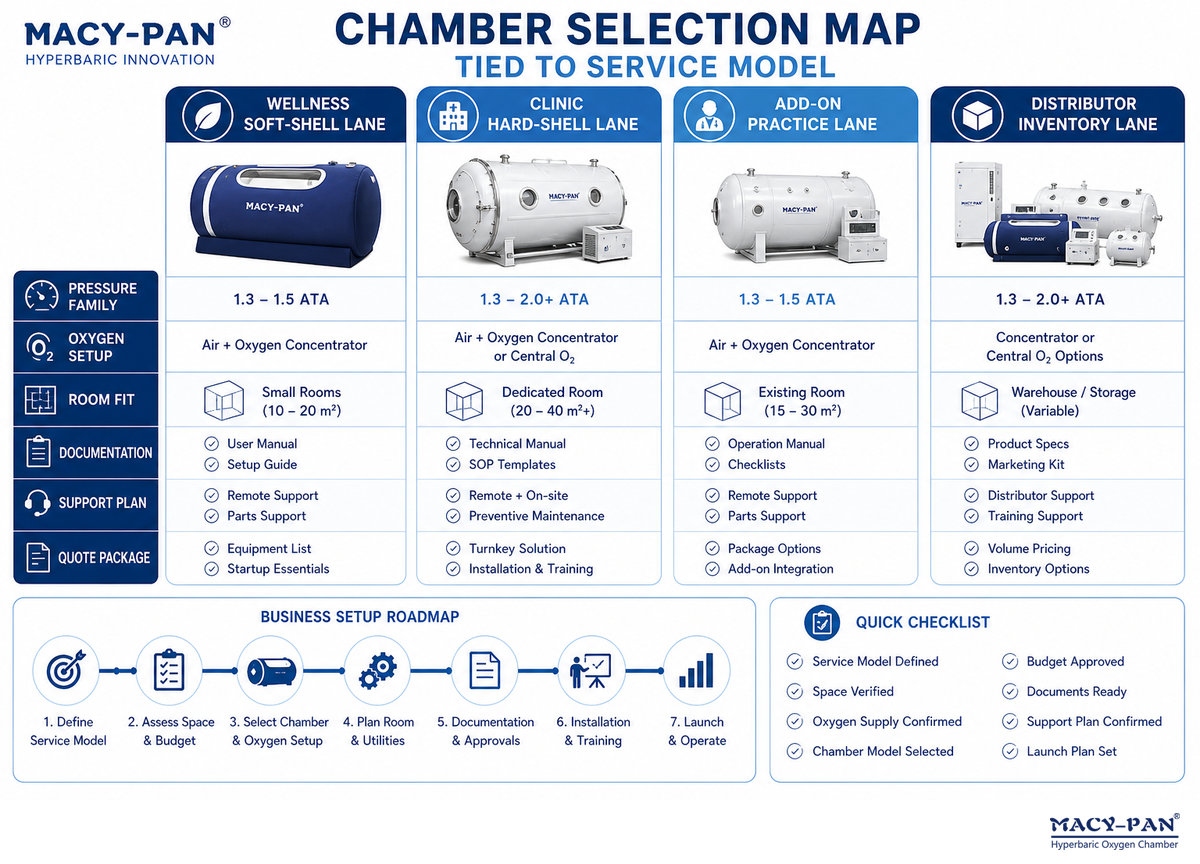
Chamber choice depends on claim posture, pressure target, patient comfort, throughput, room plan, oxygen plan, staff plan, and client budget. Soft-shell mild chambers, hard medical chambers, 2.0 ATA systems, and portable chambers may seem to belong in the same buyer conversation, but they are not the same business decision.
Medical HBOT is often described as a way to breathe pure oxygen in a pressurized environment, but that shorthand can mislead a business plan. The amount of oxygen, the pressure level, and whether a client is breathing pure oxygen or hyperbaric air affect claims, room planning, and patient outcomes language. Keep the science wording tied to the right chamber, not to a generic sales pitch.
| Decision point | Ask before quote | MACY-PAN page |
|---|---|---|
| Medical pressure and oxygen plan | Will the service require 2.0 ATA or higher, medical-grade oxygen planning, and physician oversight? | Hard medical chambers |
| Mild or wellness use | Can the offer stay inside a non-medical wellness claim boundary? | Soft-shell mild chambers |
| Pressure comparison | What ATA range matches your service model, room, oxygen setup, and claim review? | Chambers by pressure ATA |
| Clinic throughput | How many sessions per day can staff, room turnover, and client flow support? | Clinic throughput estimator |
When your business plan requires medical HBO2, do not rely on wellness language or mild-pressure claims. If wellness is your direction, your claim statements, intake form, and referral script need to follow that line.
Facility Readiness Is the Hidden Bottleneck
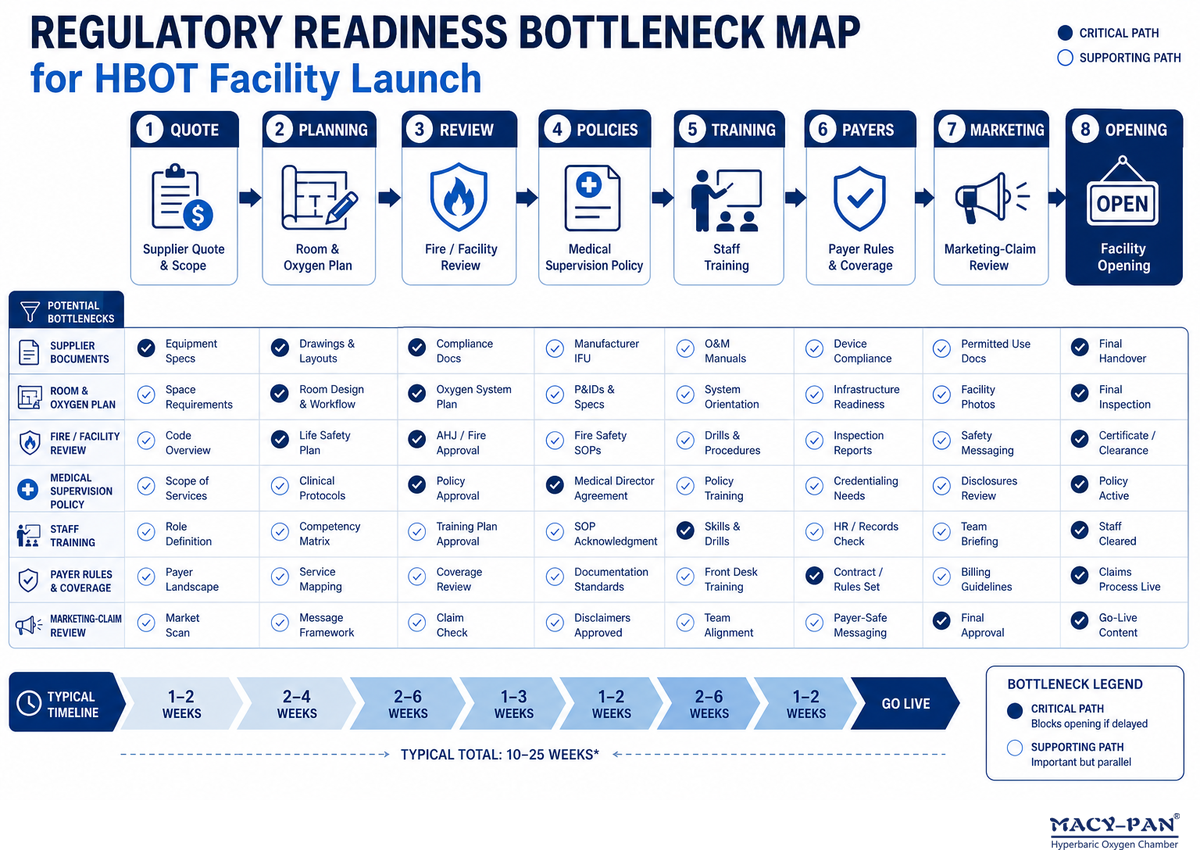
Most HBOT launches have an unseen choke point in the process – it is not selecting the chamber. The chamber’s approval stack is the problem: device files, room design, oxygen handling, local fire approval, staff training, supervision policy, client screening and payer rules.
| Bottleneck | What to collect | Owner |
|---|---|---|
| Supplier documents | ISO 13485 quality management system, ISO 9001, CE, patent record, model files, warranty, and service process. | Founder, procurement, supplier |
| Room and oxygen plan | Chamber placement, power, grounding, compatible clothing, prohibited items, oxygen storage, and local review. | Facility lead, AHJ, supplier |
| Clinical policy | Oversight, staff training, emergency response, and changes that could affect accreditation or quality review. | Medical director, operations |
| Payer and claim review | Covered indication list, chart rules, patient selection, cash-pay wording, ad copy review. | Billing advisor, counsel, marketing |
| Pre-purchase readiness | Use a readiness checklist before placing the chamber order. | Clinic HBOT regulatory readiness tool |
Consult the local authority having jurisdiction before signing off on your room plan. Local fire officials, building officials, oxygen plan reviewers and state medical boards can all require changes to your equipment list and delay opening day.
Staffing, Training, Referrals, and Screening Decide Day-to-Day Capacity
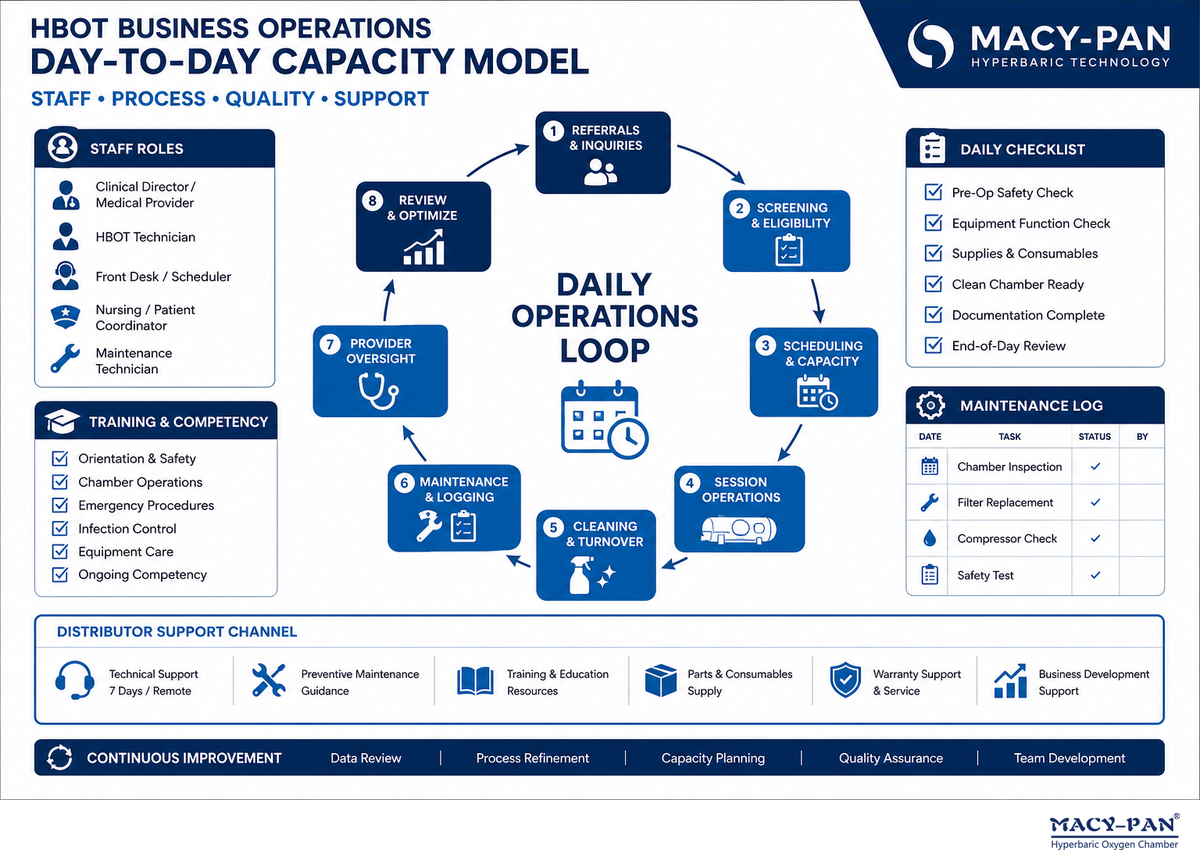
A chamber may appear to be capable of multiple daily sessions but can still be idle due to poor intake procedures, staff schedules, client bookings, referrals or chamber maintenance. The staff is not just a payroll cost. Their input will affect client safety, the quality of patient care, throughput and word-of-mouth referrals.
| Role | Clinical path | Wellness or add-on path | Dealer path |
|---|---|---|---|
| Provider oversight | Plan physician prescription, oversight, referral review, and indication policy. | Check scope of practice and avoid medical claims if not qualified. | Educate buyers to review local supervision needs. |
| Certified hyperbaric staff | Consider CHT, CHRN, or related hyperbaric training where appropriate. | Train intake, chamber operation, safety checks, escalation, and record keeping. | Know enough to discuss safe installation, warranty, and handoff limits. |
| Referral channels | Physicians, wound care, hospitals, and local health networks. | Chiropractor, physical therapists, sports teams, gyms, recovery and functional medicine practitioners. | Clinic buyers, wellness founders, spa groups, distributors, and OEM partners. |
Model Cost and Break-Even With Inputs, Not Promises
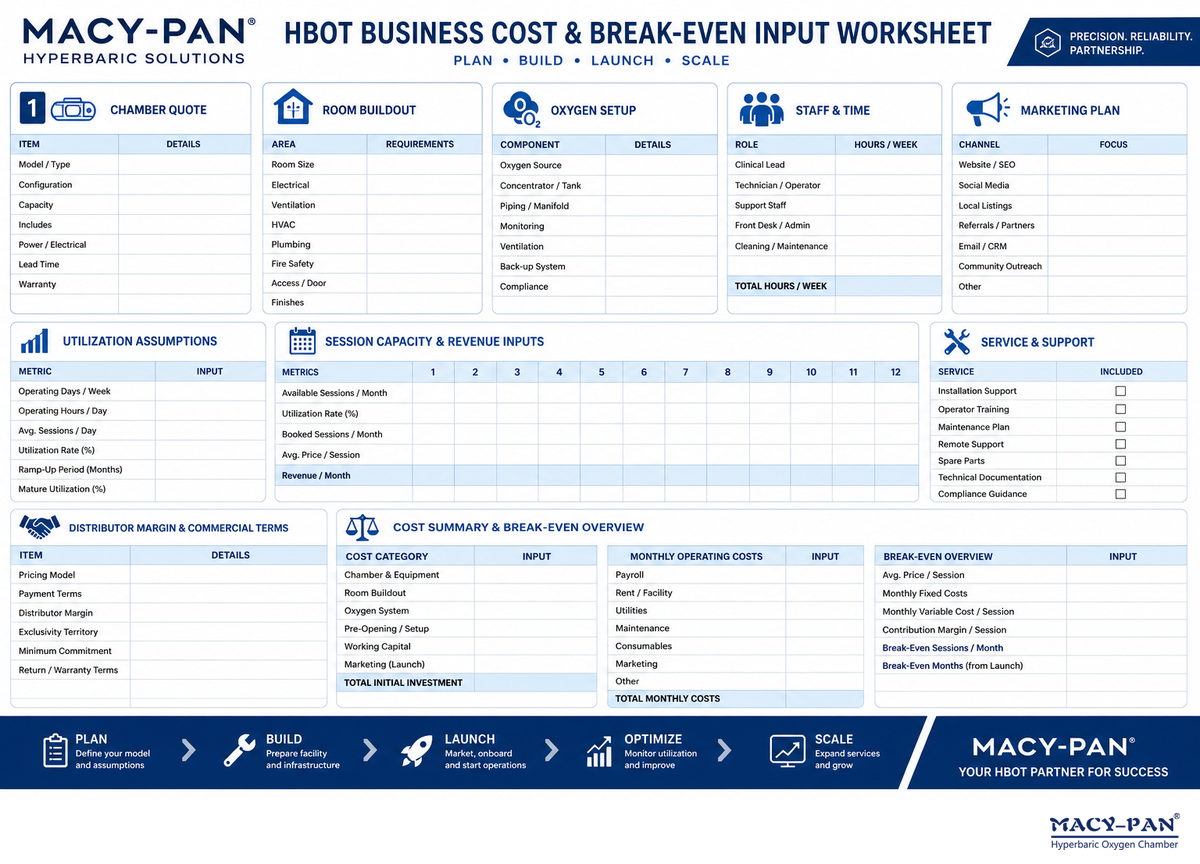
When looking up business information for HBOT, you can easily find lists that cite estimated start-up costs and potential monthly revenues. Treat them as market rumor unless you find source assumptions supporting the numbers.
A safer approach to finance involves researching local information and building your own spreadsheet.
ROI Inputs Worksheet
| Input | What to verify locally |
|---|---|
| Chambers in operation | Room count, staff coverage, planned chamber installations, downtime, and backup schedule. |
| Sessions per chamber per day | Session length, cleaning/turnover, intake time, staff shift, client demand, referral flow. |
| Price per session | Cash-pay market, membership offers, payer policy, discount rules, and local competition. |
| Operating days per month | Staff availability, holidays, maintenance, referral clinics, and weekend coverage. |
| Capital cost and monthly operating cost | Chamber, freight, room work, oxygen, service, insurance, rent share, marketing, staff, and financing. |
Using that local data as input, the MACY-PAN HBOT Business ROI Estimator calculates projected monthly gross revenues, net income after monthly operating expenses, and month to break-even.
All projections are estimates and may vary based on location, usage rate, licensing, and mix of payers.
The spreadsheet calculation looks different for distributors.
Your focus becomes resale price, dealer cost, unit sales volume, gross profit per unit, gross profit multiple, and total annual gross profit. You can use the Dealer Margin Calculator as a starting point, and then get quotes for current model pricing, minimum purchase quantity, freight costs, training programs, and service terms.
Treat HBOT as a revenue stream only after the detailed business plan survives local checks. Recurring revenue, new revenue streams, and running a successful hyperbaric program depend on demand, room flow, staff, maintenance, referral quality, and the claim boundary.
Distributor Program, Franchise, or Independent Clinic: Which Route Fits?
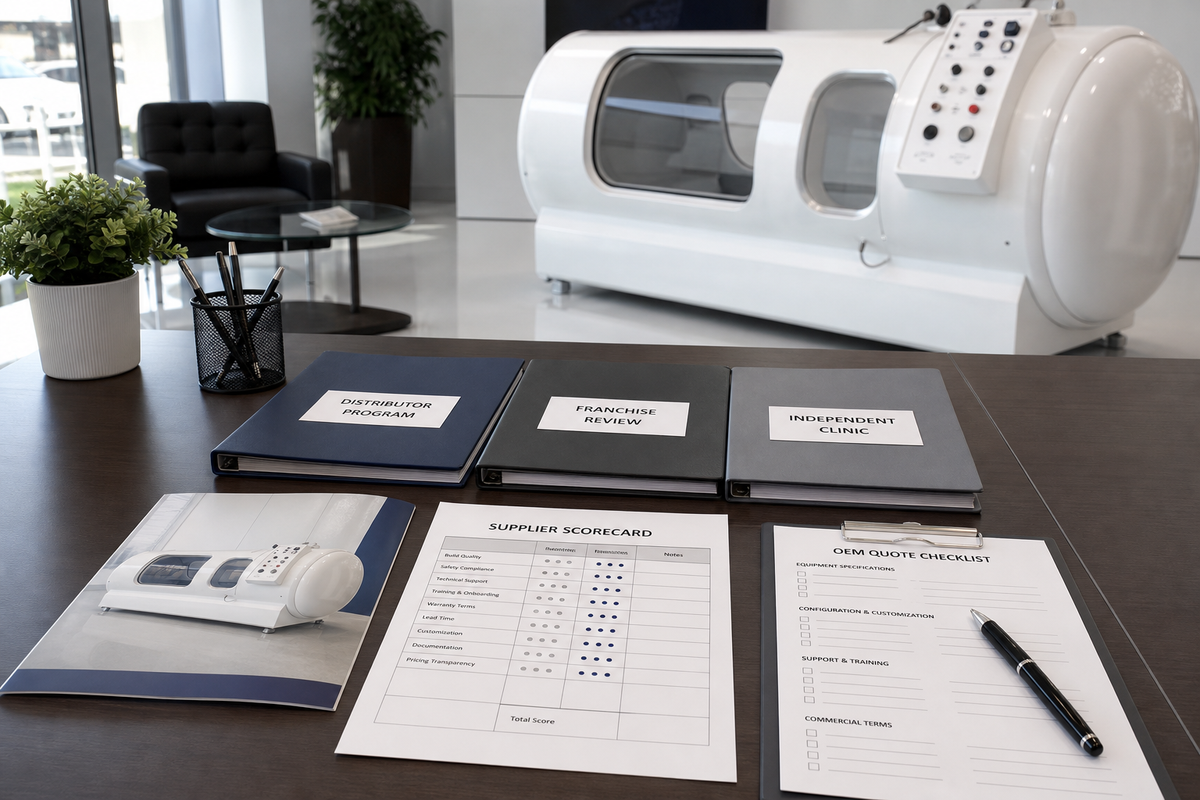
For some founders, running the day-to-day operations makes sense. Others focus on selling equipment, training new owners, and building out regional distribution networks. Franchise-like models may offer a clear path forward and support from a proven model but will also add fees and branding limitations.
Independent clinics provide more control, but also add the burden of navigating licensing, medical policy, facility improvements, staffing and marketing on your own.
MACY-PAN, owned by Shanghai Baobang Medical Equipment Co., Ltd, offers more than 19 years of HBOT chamber production experience, with products sold to over 126 countries. The company lists certified quality management system, ISO9001, CE certifications and patent registration for its chambers. For distributors, MACY-PAN provides OEM/private label, factory-direct pricing, a 2-year warranty, US technical support, sales enablement, training and export paperwork.
To explore opportunities selling chambers, or providing clinics and wellness centers with HBOT services in your area, consider applying for the MACY-PAN Distributor Program and analyze whether operating a dealer program is more attractive than building a clinic from scratch.
If private label or wholesale supply is the best fit for you, compare MACY-PAN OEM and wholesale chamber options before you develop your product inventory.
A chamber partner also needs a claim-safe sales playbook. Facebook and Instagram ads, any testimonial, and relationships with local clinics or traditional medicine providers should avoid promises for specific medical conditions or certain medical conditions unless the buyer has the regulatory requirements, provider review, and evidence to support those claims. For the medical industry, supplier research and development is useful, but it does not replace local approval.
Business opportunities in the market for hyperbaric chambers can include dealer, OEM, service, and support revenue opportunities, but a growing hyperbaric category or a claim that the therapy market is expanding does not prove buyer demand in your city. Keep phrases such as high-quality hyperbaric care, effective hyperbaric services, blood cells, oxygen throughout the body, various health conditions, or safe and effective in a claim-review file until a qualified healthcare provider and counsel approve the wording.
90-Day Launch Sequence for HBOT Business Planning
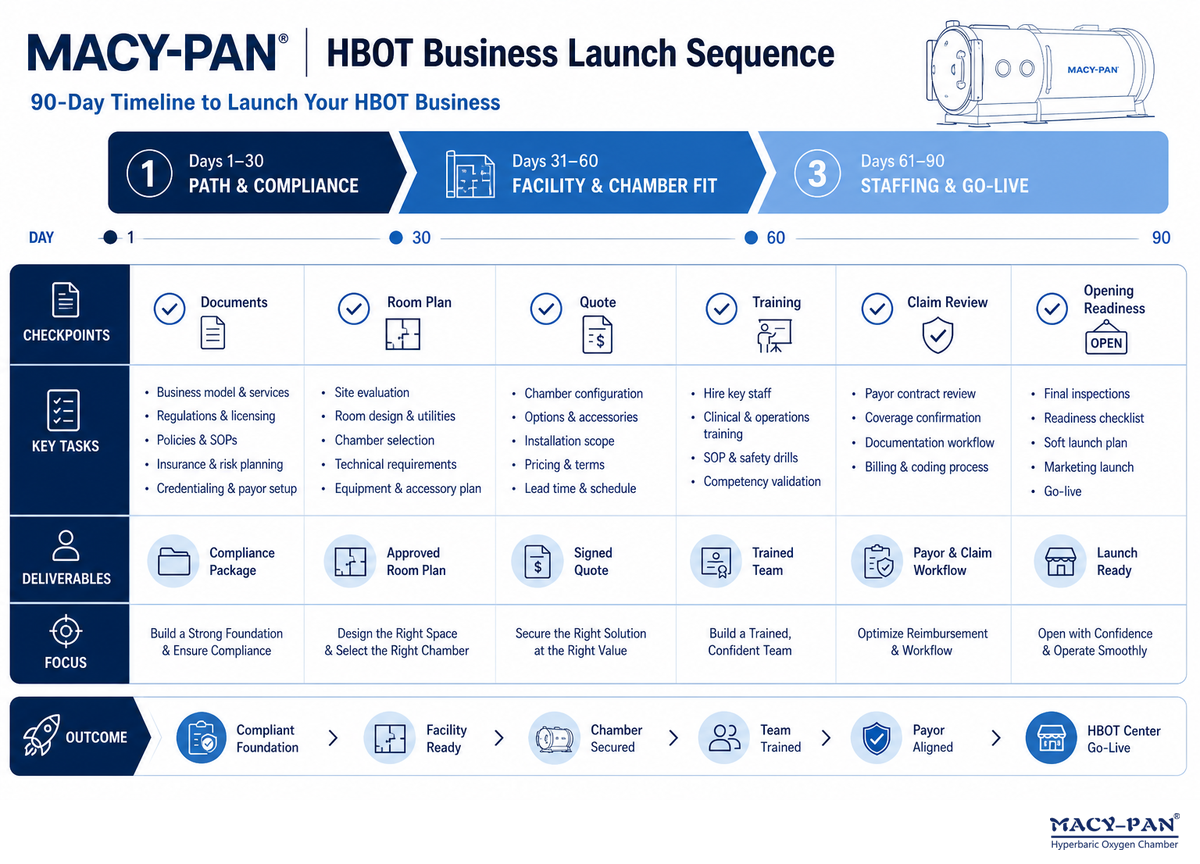
This launch sequencing will prevent you from buying equipment before you are ready to execute on a solid business plan. Be sure to tailor the launch timeline to include time for local review, lease negotiation, physical space setup, funding acquisition and lead times from suppliers.
| Period | Main work | Decision gate |
|---|---|---|
| Days 0-30 | Choose business path, define claim boundary, check payer and legal questions, map demand, and shortlist chamber type. | Can you explain who buys, who supervises, and what claims are allowed? |
| Days 31-60 | Check site selection, room plan, oxygen plan, staff, training, insurance, intake forms, and referral channels. | Can the site, staff, and supplier documents survive local review? |
| Days 61-90 | Finalize chamber order, marketing copy, launch packages, maintenance plan, emergency procedure, and sales follow-up. | Can you model the first 90 days of utilization without unsupported reimbursement or profit claims? |
Engineering Note
View the chamber as one part of an interconnected system, which includes the pressure vessel, the oxygen source, the room, electrical and grounding systems, staff protocols, emergency response procedures, records, support, and maintenance. Whenever one component changes, reassess the whole setup. This matters if you relocate, renovate the space, modify service offerings, expand the team, or shift from wellness-focused wording to medically oriented HBOT language.
What 2026 HBOT Business Owners Should Watch
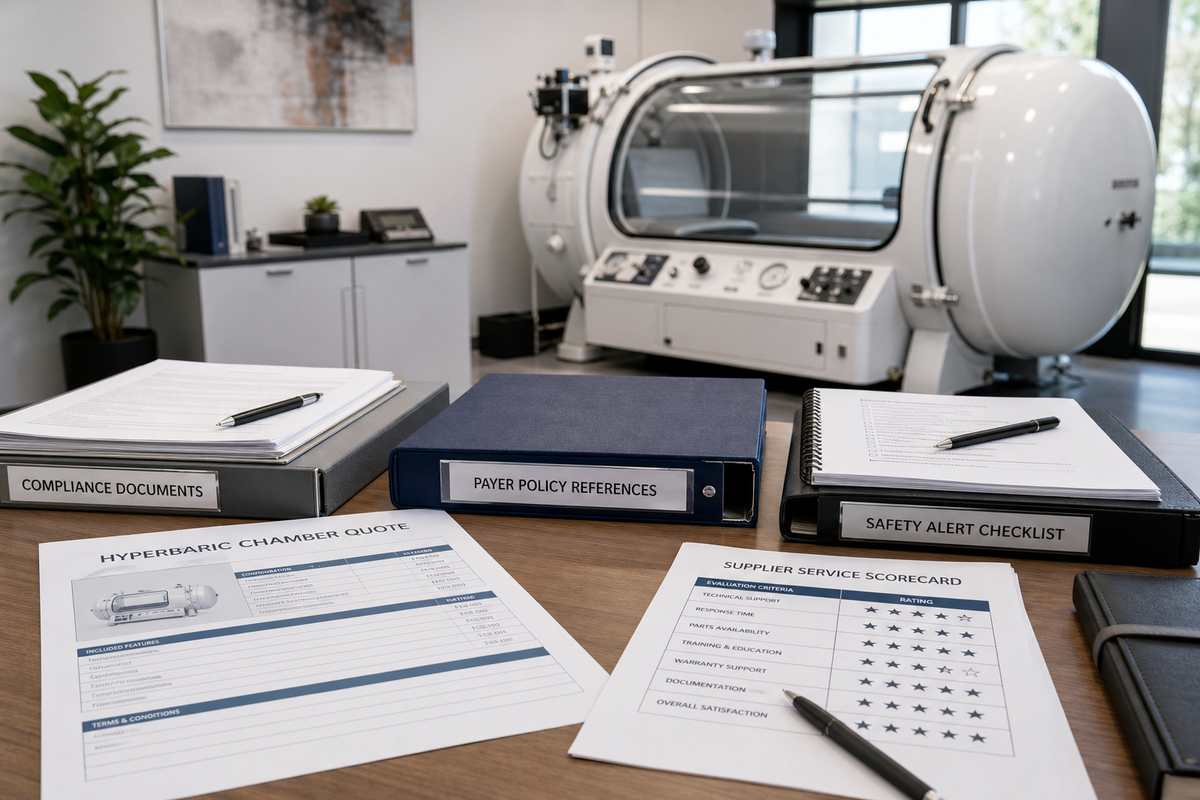
In 2026, owners should keep three issues on the desk. Device and fire safety are not back-office tasks; FDA’s safe-use letter puts oxygen safety and manufacturer instructions at the center of purchasing and staff training. Payer assumptions also stay narrow, because CMS coverage is tied to specific indications, patient records, and treatment criteria rather than broad wellness demand. Buyer education is the third issue: clinics, wellness studios, and dealers may all use HBOT in marketing, but the business models and claims should stay distinct.
For this reason, instead of asking “Which chamber is cheapest?”, the first question should be: “What kind of HBOT business am I trying to build, and what must be true before launch?”
Talk to MACY-PAN About Your HBOT Business Path
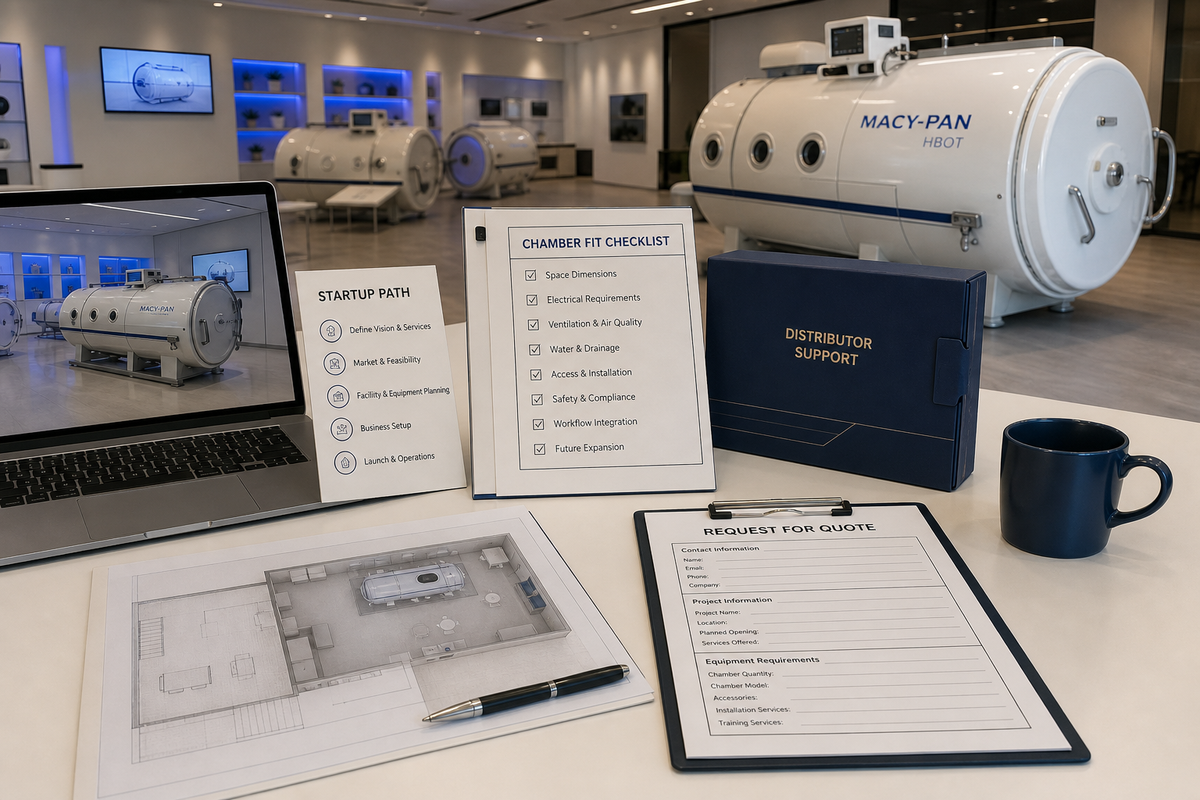
Whether you are considering opening a clinic, a wellness studio, operating as a dealer, or providing OEM or private-label services, consult with MACY-PAN to obtain the relevant information, product options, and cost inputs for the specific pathway you choose.
Frequently Asked Questions
Do you need a license to operate a hyperbaric chamber?
It depends entirely on your specific business model, your state’s regulations, the claims you plan to make, the type of chamber you will use, your staff setup and whether your service is medical or wellness-based. Medical hyperbaric clinics often require provider oversight, detailed clinical policies, compliance with local laws, a patient intake process and patient records that show the service provided. While wellness-focused businesses might have a different regulatory framework, they still require safe operations, intake procedures, staff training and careful marketing. Consult your state medical board, local authority, insurer and legal counsel before marketing a package of services.
How much does it cost to start a hyperbaric chamber business?
There is no precise, one-size-fits-all number for startup costs. Your budget will need to account for the type of chamber, shipping, space renovations, oxygen equipment, insurance premiums, rent, personnel, marketing expenses, ongoing maintenance, financing arrangements and any necessary local permits and reviews. Use an online calculator for early estimates, then refine the figures with actual quotes from suppliers and your local operating context.
Is a hyperbaric chamber business profitable?
Profitability is driven by factors such as patient utilization rates, per-session pricing, payer mix, staffing costs, facility expenses, lease agreements, demand for referrals, marketing strategies and the overall service model. Develop a conservative financial model to judge the plan’s potential profitability.
What is the difference between a medical and wellness HBOT business?
HBOT businesses built around clinical indicators, provider oversight, records, screening, and, when applicable, payers are distinct from wellness HBOT. Wellness HBOT services, most often cash-pay, must limit their claim boundaries unless properly trained, licensed and clinically capable of asserting medical claims.
What is the best hyperbaric chamber for a new business?
Can I operate a hyperbaric chamber business from home?
There are several critical zoning, insurance, fire, supervision, privacy and safety issues with home based commercial HBOT service providers. Do not believe a home HBOT purchase will easily evolve into a public service operation. First consult local regulations and manufacturer guidelines.
How long does it take to open a hyperbaric chamber business?
Launch timing will vary based on licensing, build-out schedule, chamber lead time, staffing requirements, payer review, marketing efforts and local AHJ inspections. A ninety-day sequence can be an organizing framework, but a facility based medical or regulated business will often take longer if the space, oxygen plan, medical policies, or a local review requires further development or modifications.Begin by outlining the intended path to market and reviewing any existing payer requirements or claim limitations before considering site selection, chamber bids, staff training, and sales copy.
Should I join a distributor program instead of opening a clinic?
Consider the distribution route if you have existing sales channels, regional market access or a strong network of interested parties, but prefer to manage a broader business rather than day to day service. The clinic route should only be pursued if you are comfortable with facility management, staff, provider, referral sources and the working details of service delivery.
Sources and Further Reading
- FDA: Follow Instructions for Safe Use of Hyperbaric Oxygen Therapy Devices
- CMS: National Coverage Determination 20.29, Hyperbaric Oxygen Therapy
- UHMS: Hyperbaric Oxygen Therapy Indications
- UHMS: Hyperbaric Facility Accreditation Program
- NBDHMT: Hyperbaric Technology Certification Information
![Decision lenses: occupancy, gas path, access, staffing, facility interfaces, and exact-model evidence [article].](https://macypansolutions.com/wp-content/uploads/2026/10/monoplace-vs-multiplace-hyperbaric-chambers-featured-1-768x512.png)