Get in Touch with MACY-PAN Company

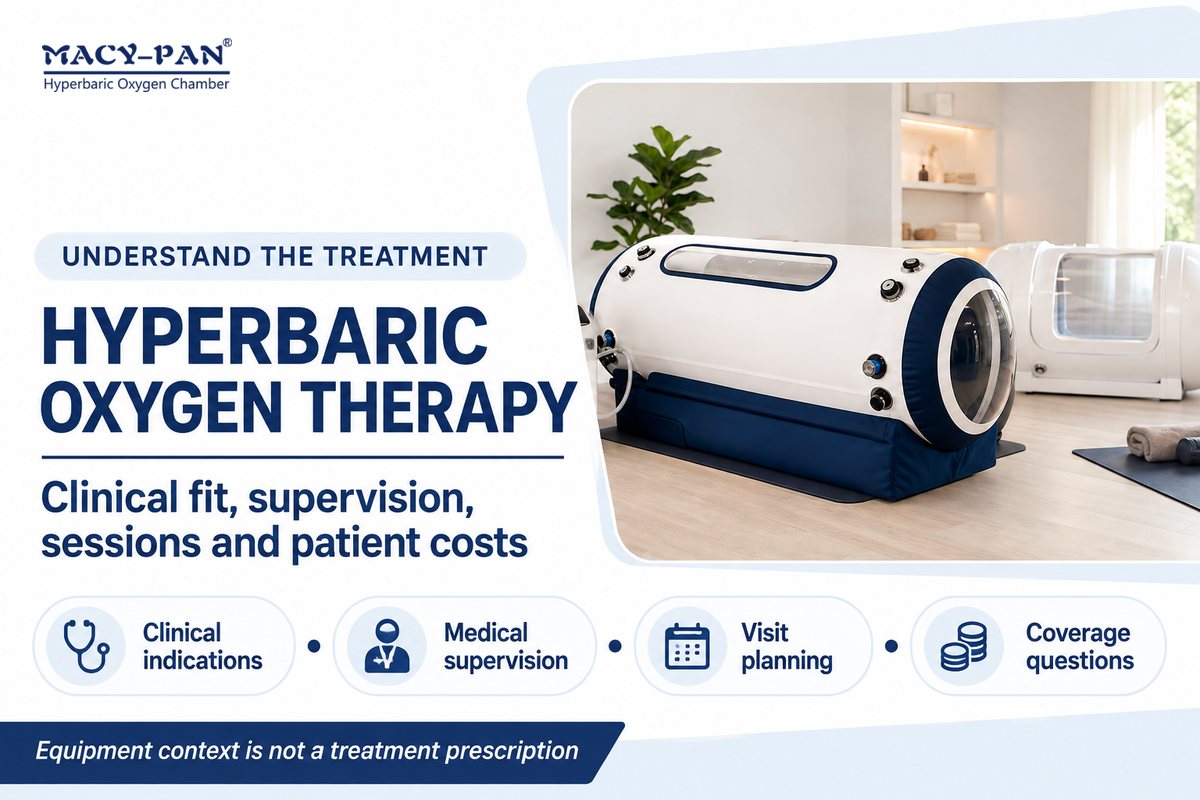
Hyperbaric oxygen therapy, also known as HBOT or HBO therapy, is used to treat conditions using increased oxygen and pressure within a chamber. The reason for the treatment is more important than the chamber picture. An emergency, a non-healing wound and a wellness ad all inspire different questions concerning benefit, timing and cost. Be sure to clarify the condition to be treated and who will be in charge of the treatment prior to booking.
Hyperbaric oxygen therapy is medically supervised oxygen treatment in a pressurized chamber. HBOT has established uses for selected conditions, but a clinical indication, a device’s permitted use and insurance coverage are separate decisions.
Before you book
- Insurance eligibility is a payment question; whether treatment is likely to help is a separate clinical decision.
- Time in the chamber and time away from home are different budgets.
- For a mild chamber, compare the actual breathing gas, pressure, protocol and supervision with the prescribed treatment.
- Sudden hearing loss and suspected carbon monoxide poisoning need prompt medical assessment, not a routine shopping process.
What is hyperbaric oxygen therapy?
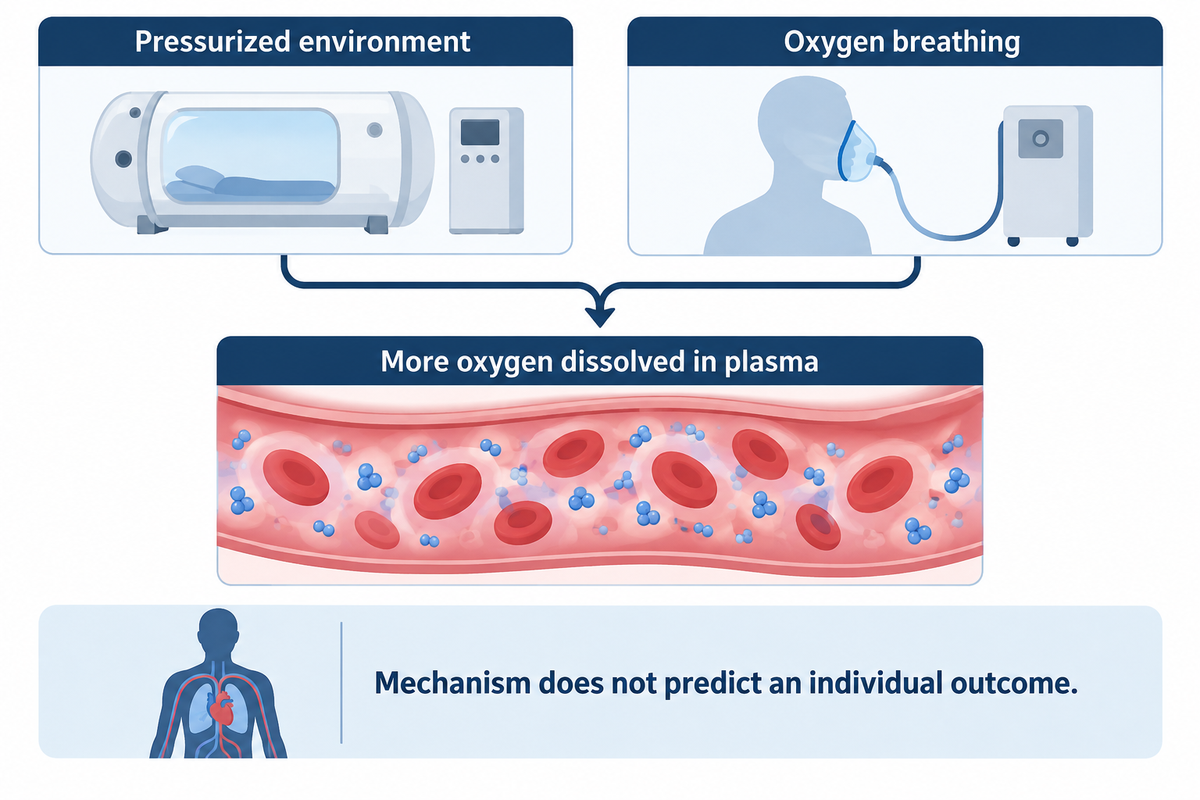
Hyperbaric oxygen therapy increases oxygen delivery by combining a pressurized environment with oxygen breathing. Breathing pure oxygen under increased pressure raises the partial pressure of oxygen and the amount of oxygen dissolved in plasma above the levels achieved at normal atmospheric pressure. A clinician prescribes the exposure for a particular medical purpose and assesses the patient for the response to treatment.
As the treatment overview at the Mayo Clinic states, increased oxygen can help the blood carry more oxygen to tissue that needs it. The amount of oxygen dissolved in plasma also increases. More oxygen in the blood can therefore reach damaged areas where the normal amounts of oxygen supplied through the circulation aren’t sufficient.
Explanation of the mechanism of treatment doesn’t predict an individual outcome. Oxygen in the tissue supports processes involved in wound healing, including the work of white blood cells and new blood vessels. A chronic wound still needs the underlying problems to be addressed, such as poor circulation, infection or pressure on the affected area.
A monoplace chamber treats one patient. A multiplace chamber can be occupied by several people, who can sit or lie inside and breathe oxygen through a mask or hood. The air pressure and the patient’s breathing gas are separate treatment parameters. Chamber size alone doesn’t tell you which treatment is appropriate. For that, we recommend that you have a look at our explanation on the role of pressure and oxygen.
What can hyperbaric oxygen therapy do?
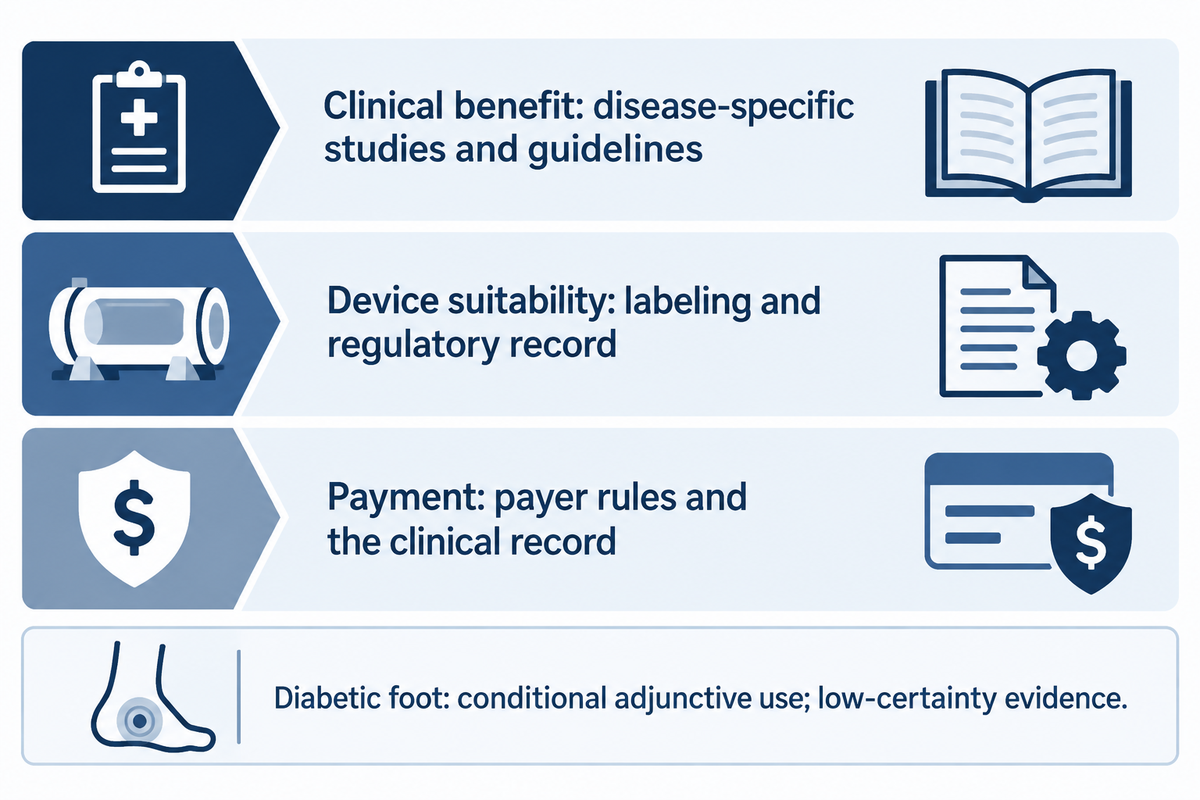
Medical HBOT is indicated for the treatment of select emergency conditions and aids in the management of select difficult wounds and tissue injuries. The expected benefit, urgency and supporting evidence vary for these medical conditions. A helpful consultation identifies the diagnosis, the outcome being sought and the other medical treatments that must continue, rather than offering oxygen as a general cure.
The Undersea and Hyperbaric Medical Society’s indications guidance includes decompression sickness, carbon monoxide poisoning, selected crush injury and acute traumatic ischemia, delayed radiation injury, and selected diabetic wounds. Some of these belong in the emergency or critical care category; others are part of planned treatments. The expected benefits of HBOT differ across these conditions.
| Question | Relevant evidence | What it answers |
|---|---|---|
| Could treatment help this condition? | Disease-specific studies and clinical guidelines | Expected outcomes and limits of the evidence |
| Is this device suitable for the proposed use? | The device’s labeling and applicable regulatory record | The particular equipment and permitted use |
| Will this patient’s plan pay? | Payer rules and the patient’s clinical record | Coverage conditions and possible out-of-pocket charges |
As for diabetic foot ulcers, the 2023 International Working Group on the Diabetic Foot guideline, recommendation 12, conditionally supports adjunctive HBOT for neuro-ischemic or ischemic ulcers when standard care has failed and suitable resources already exist. Evidence certainty is low. Wound-healing findings are mixed, and good evidence that this treatment prevents amputation is lacking.
Hearing loss brings a different decision. The 2019 specialist guideline on sudden hearing loss describes HBOT combined with steroids as an option for adult idiopathic sudden sensorineural hearing loss: within 2 weeks of onset as initial treatment, or within 1 month as salvage treatment. Those are treatment windows, not advice to wait. Sudden hearing changes warrant prompt clinical assessment.
HBOT may also be used for selected tissue damage following radiation therapy. Treating injury from radiation is different from treating cancer. Ask the clinical team about their intended goal and how they would assess progress toward that goal. Our article on condition-specific benefits and evidence limits discusses related uses.
What happens during an HBOT treatment session?
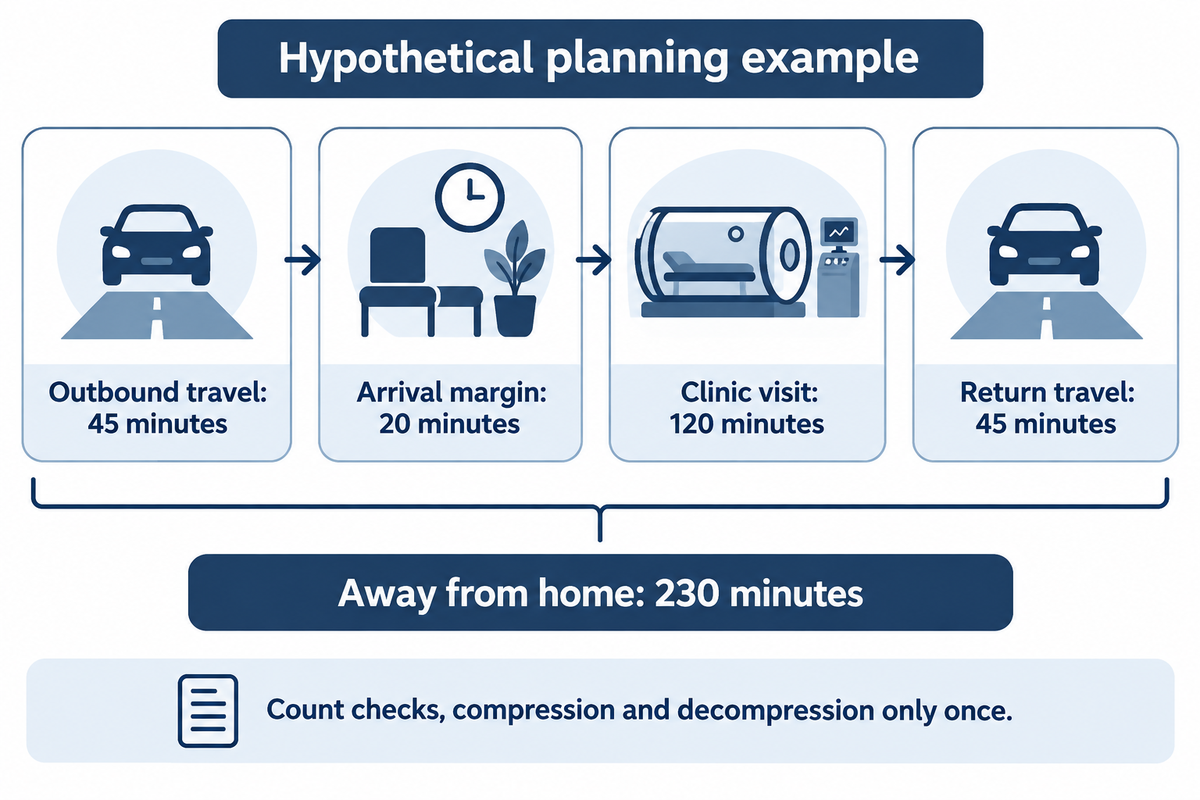
An HBOT treatment session includes gradual pressurization and treatment with prescribed oxygen and controlled decompression. Mayo Clinic describes treatment for most conditions as lasting 1.5 to 2 hours. The appointment may also include other activities such as changing clothes, checks and discussion with staff, so verify the clinic’s actual arrival-to-departure time before arranging transportation.
UCSF’s hyperbaric service FAQ states that the first visit to evaluate a patient (medical history and review of tests) may last 1-3 hours. Later treatment visits are timed by the session itself, which Mayo Clinic describes as lasting 1.5 to 2 hours for most conditions.
Prior to entering the hyperbaric oxygen chamber, staff check pertinent medications and changes in health. Staff explain how communication will happen with the operator, check clothing and screen for prohibited items. A technician or other staff member is in contact while the team follows the prescribed protocol. The controls used to pressurize the chamber aren’t a setting for patients to adjust themselves.
What does hyperbaric oxygen therapy feel like?
As pressure builds, hyperbaric oxygen therapy can feel like an aircraft descent: ears may pop, and the enclosed space can feel unfamiliar. This can make your ears feel full and staff can teach you to swallow or yawn to help adjust the pressure. Tell the staff about ear pain or claustrophobia before and during treatment so they can respond.
Information from Tufts Medicine details the use of gradual compression and decompression with staff monitoring. Learn how to alert the team to your discomfort before the door closes. The team can help you manage discomfort during treatment. Enduring pain silently isn’t part of a successful session.
2-Clock HBOT Visit Planner
Plan the clinic appointment and the whole trip separately. Say a clinic confirms a total of 120 minutes. Add 45 minutes of travel each way and a 20-minute arrival margin: 120 + 45 + 45 + 20 = 230 minutes away from home, or 3 hours 50 minutes.
These examples aren’t a recommended exposure or a hospital’s timetable. A caregiver arranging transport can block off the full 230 minutes, while a clinic scheduler confirms what the 120 minutes includes. Count compression, decompression and checks only once if they’re already part of the quoted appointment. For a separate first consultation, use its actual allotted time.
What are the risks of hyperbaric oxygen?
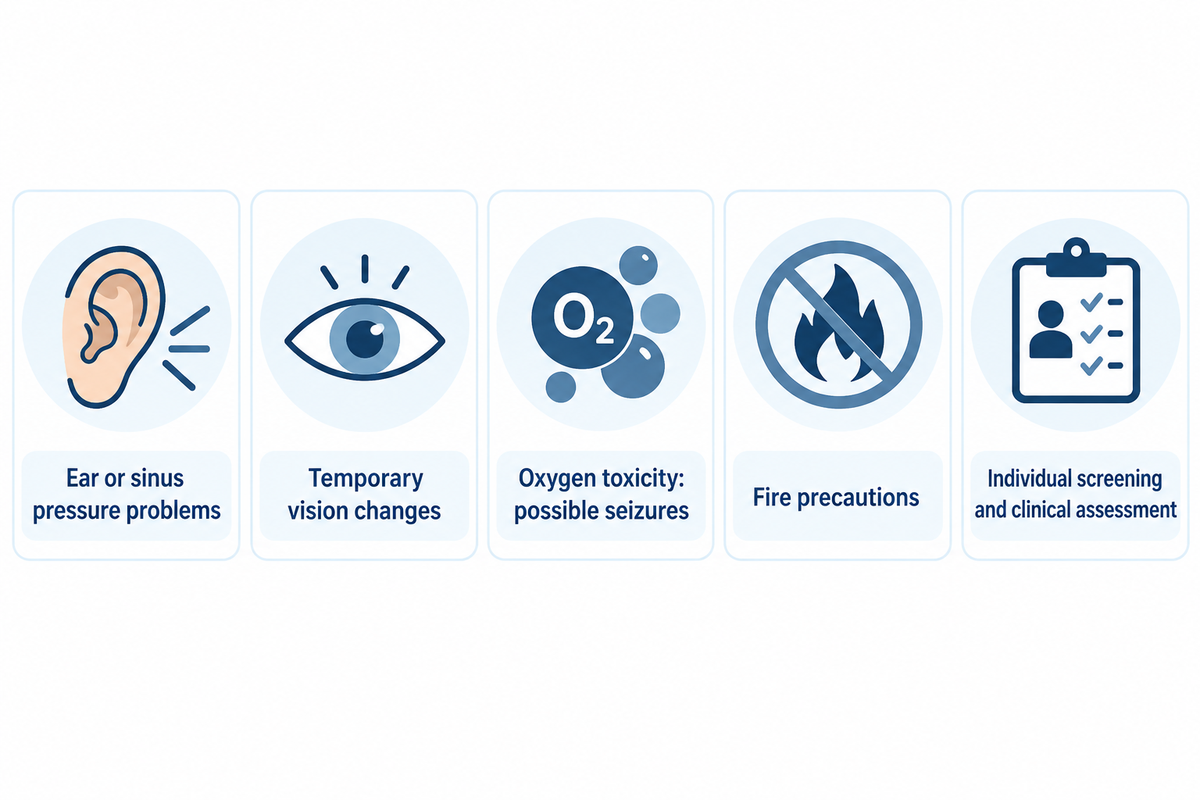
Hyperbaric oxygen treatment can cause pressure-related ear or sinus problems, temporary changes in vision and less common serious complications. High-pressure oxygen also calls for fire precautions. There are potential side effects from Hyperbaric oxygen treatment that are avoidable with medical screening and supervision. Medical screening, trained supervision and the correct equipment reduce avoidable risks; hyperbaric oxygen treatment is non-invasive but still requires a clinical assessment before someone enters the chamber.
Mayo cites lung collapse and seizures due to oxygen toxicity as possible complications. The expression “oxygen poisoning” is sometimes used informally, but oxygen toxicity has a specific medical definition; extra oxygen is prescribed exposure, not something to be increased without limits. Blood glucose can also drop in patients taking insulin, so the team’s guidance on food and medicine, as well as glucose-level checks, is important.
Bring a current medication list and describe lung disease, ear or sinus trouble, recent procedures and new symptoms. The staff may change the plan after reviewing these. Never discontinue a prescribed medication because of an interaction with HBOT, as listed on an online resource.
Who shouldn’t do hyperbaric oxygen therapy?
An untreated pneumothorax, or collapsed lung with air in the pleural space, is a contraindication to HBOT treatment. Other health histories require individual assessment. The treating physician reviews the lung and ear issues, medications and other risks and determines if treatment is safe to administer.
The contraindication for HBOT treatment is described in more detail in the Journal of Trauma and Injury case report and discussion. Pregnancy also requires individual assessment. Carbon monoxide poisoning is an exception to any blanket advice to not receive treatment during pregnancy. This is further explained in the pregnancy section.
Equipment precautions protect everyone in an oxygen-rich hyperbaric environment. Follow the center’s rules regarding what you may take into the treatment area. Ask a staff member to check an item if you aren’t sure. Your previous experience at other treatment centers doesn’t override instructions for this device.
The effects of hyperbaric oxygen therapy require clinical assessment; a change in blood oxygen or a sensation after treatment doesn’t establish whether an illness is improving. Report new or persistent symptoms to the treating team and use the agreed upon clinical outcome measures. For additional information, see side effects to discuss with your care team.
Is a mild home chamber the same as medical HBOT?
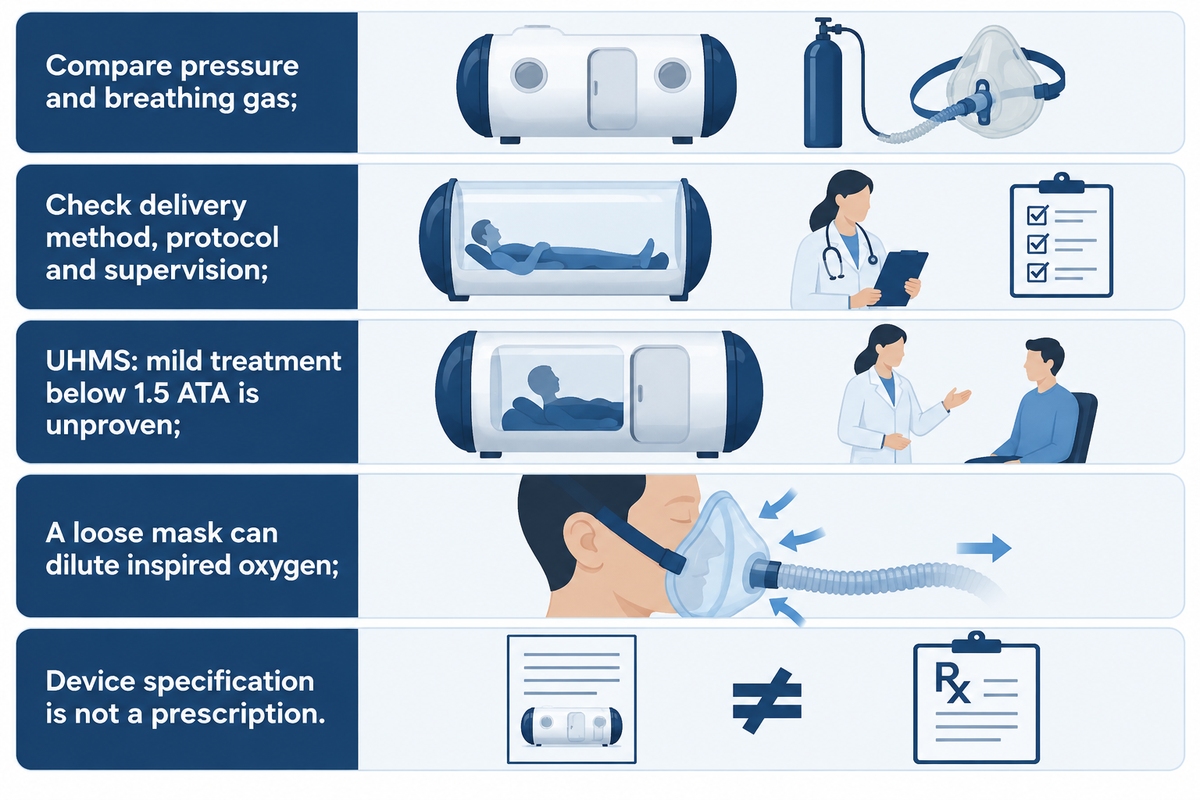
A mild chamber at home isn’t automatically equivalent to prescribed medical HBOT. The comparison relies on the actual pressure, breathing gas, delivery method, protocol and clinical supervision. With a mask-based setup, the fit of the mask determines how much surrounding air mixes with the oxygen supplied.
The current UHMS guidance states that unproven status for mild hyperbaric treatments at below 1.5 ATA (ATA means atmospheres absolute, a measure of total pressure) exists. The same UHMS guidance explains that a loosely fitting mask can draw surrounding chamber air into the breathing mixture, reducing the concentration of oxygen the person actually inhales.
A distinction needs to be made between a generator’s oxygen levels and the delivery of oxygen at a patient’s face. An equipment specification determines the source gas. A mask, hood or other breathing arrangement determines how that gas reaches the patient. For the clinical comparison, look at the pressure and that breathing arrangement, not at a normal blood oxygen reading on a home monitor or a claim of “more oxygen throughout the body”.
Exposure and monitoring are combined with the medical prescription to provide the treatment. Use the device’s intended-use information during the consultation. The clinician can then compare its pressure and breathing arrangement with the prescribed treatment.
Users can compare “mild chamber configurations” separately from a determination of medical appropriateness. For an individual referred for a specific treatment, changing the chamber or breathing gas is a clinical decision, not a way to reproduce a prescription from a brochure.
How much does a hyperbaric oxygen therapy treatment cost?
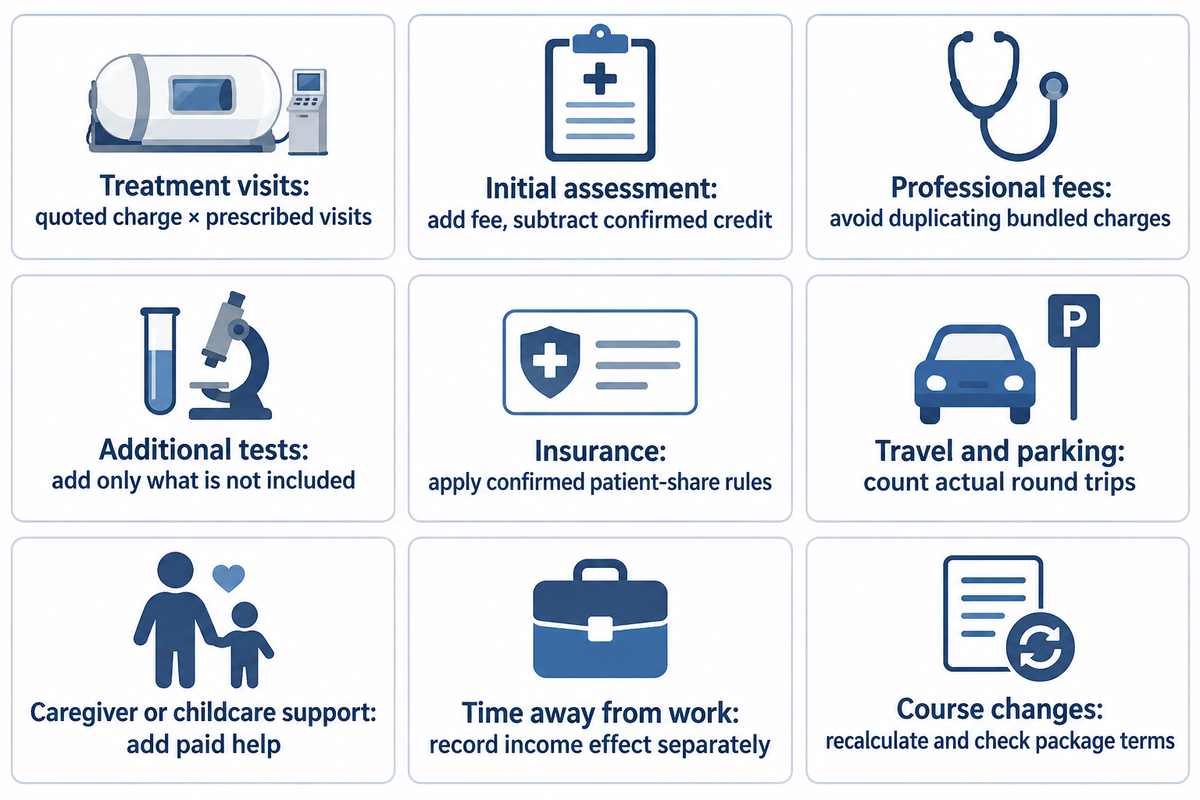
Medicare’s cost for a single HBOT session was $595.86 in 2022, according to an analysis of Hyperbaric Oxygen Therapy Registry data. The price you pay for a course of treatment is dependent upon the number of prescribed visits, the facility and the professional services, and your insurance. Request a written estimate for the full course that breaks down those costs, then add any travel and support costs.
Different billing arrangements can be seen between a clinic’s cash package and a hospital’s insured treatment. Services should be compared before their totals are assessed. An assessment charge billed upfront may later be credited against treatment, while a professional fee may be billed independently of the facility bill.
| Cost category | How to count it | Who supplies the information |
|---|---|---|
| Treatment visits | Quoted session charge multiplied by prescribed visits; use the package total only when its terms apply | Treating team and billing office |
| Initial assessment | Add a separate fee; subtract it if the provider credits it toward treatment | Billing office |
| Professional fees | Add separately billed clinician charges; avoid duplicating bundled fees | Clinician’s billing office |
| Additional tests | Add ordered tests that are not already included | Treating team and test provider |
| Insurance payment | Apply the plan’s confirmed allowance and patient-share rules to covered services | Health plan |
| Travel and parking | Count actual round trips, including separate assessment or review visits | Patient or caregiver |
| Caregiver or childcare support | Add paid help needed during appointments | Household |
| Time away from work | Record the household’s income effect separately from medical charges | Patient or caregiver |
| Changes to the course | Recalculate when the clinician changes the plan; check cancellation or unused-package terms | Treating team and billing office |
A patient decides if a course is affordable by assessing the billing office’s medical estimate and combining it with the caregiver’s estimate of costs for the trip and any needed support. The clinician dictates what the course will be; the budget follows the clinician’s plan. Don’t buy extra sessions to reach a package discount without a clinical rationale.
Is hyperbaric oxygen therapy covered by Medicare?
Medicare covers HBOT only for the 15 conditions listed in its national coverage rules; when Part B covers it, you usually pay 20% of the Medicare-approved amount, and the Part B deductible may apply. For diabetes related lower extremity wounds, the NCD requires type I or II diabetes, a Wagner grade III or higher wound, and failure of adequate standard wound care.
CMS National Coverage Determination 20.29 requires at least 30 days without measurable healing under standard care for that wound category. Standard wound care continues for HBOT. Reassessment is required at least every 30 days, and continued treatment isn’t covered without measurable healing in any 30-day period. The clinical team supplies the record; the payer defines the coverage terms.
Where can you find a medically supervised HBOT center?
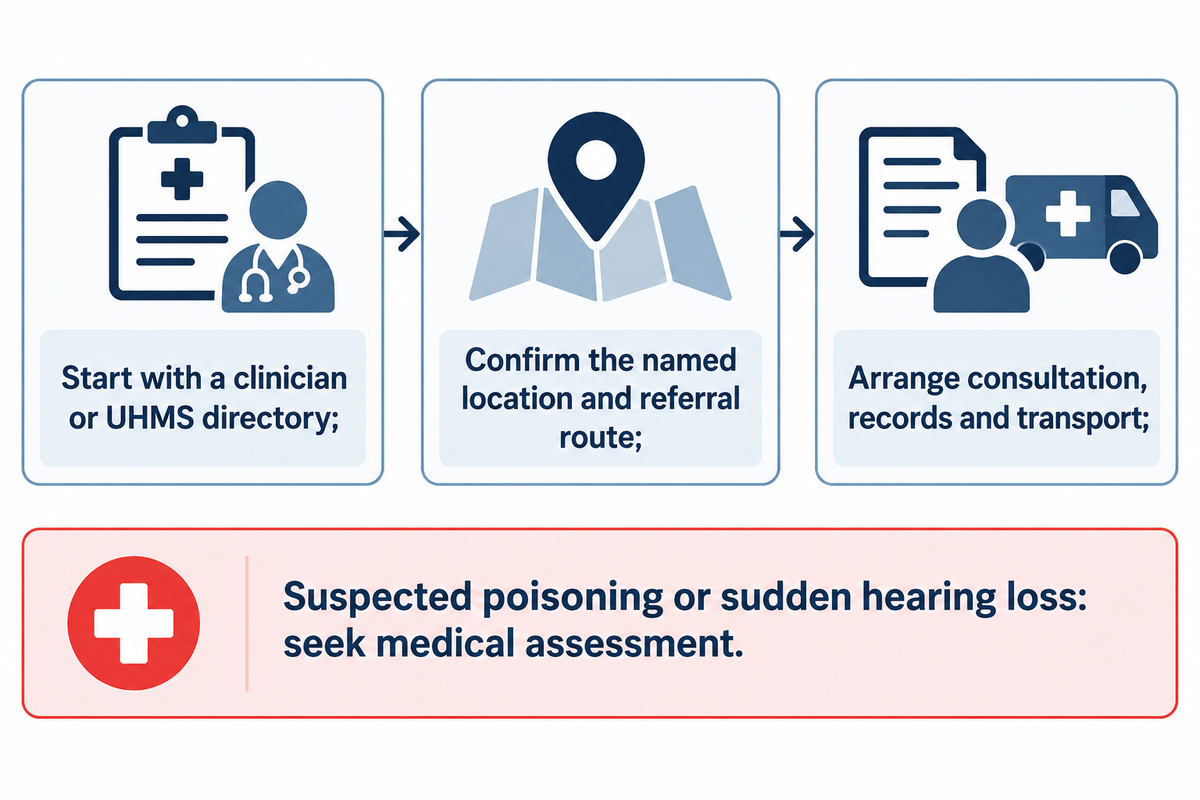
A medically supervised HBOT center can be found through a clinician’s referral and the UHMS accredited-facility directory. Contact the named site to confirm that they provide your kind of treatment. Ask about consultation and payment. For a first visit, have the referring clinician send your diagnosis and pertinent treatment records to the reviewing team.
The UHMS accredited clinical facilities directory has a list and a map. Use the directory to find potential facilities, then contact the facility to confirm the service.
An example where the second check is important is in Johns Hopkins medical center’s HBOT Overview. It states that its locations don’t offer the service.
- Identify the clinical service. Start with the treating clinician or directory, using the actual diagnosis rather than a general wellness promise.
- Confirm the location and referral route. Ask which site performs treatment and which records the reviewing team needs.
- Arrange the consultation. Patients confirm assessment and coverage; caregivers confirm arrival, transport and help needed afterward.
Patients need a clinician and a treatment service; an organization developing a program needs equipment information alongside its medical and facility planning. Suspected poisoning or sudden hearing loss should go directly to medical assessment rather than through this routing procedure.
For clinics: choose a treatment program before a chamber
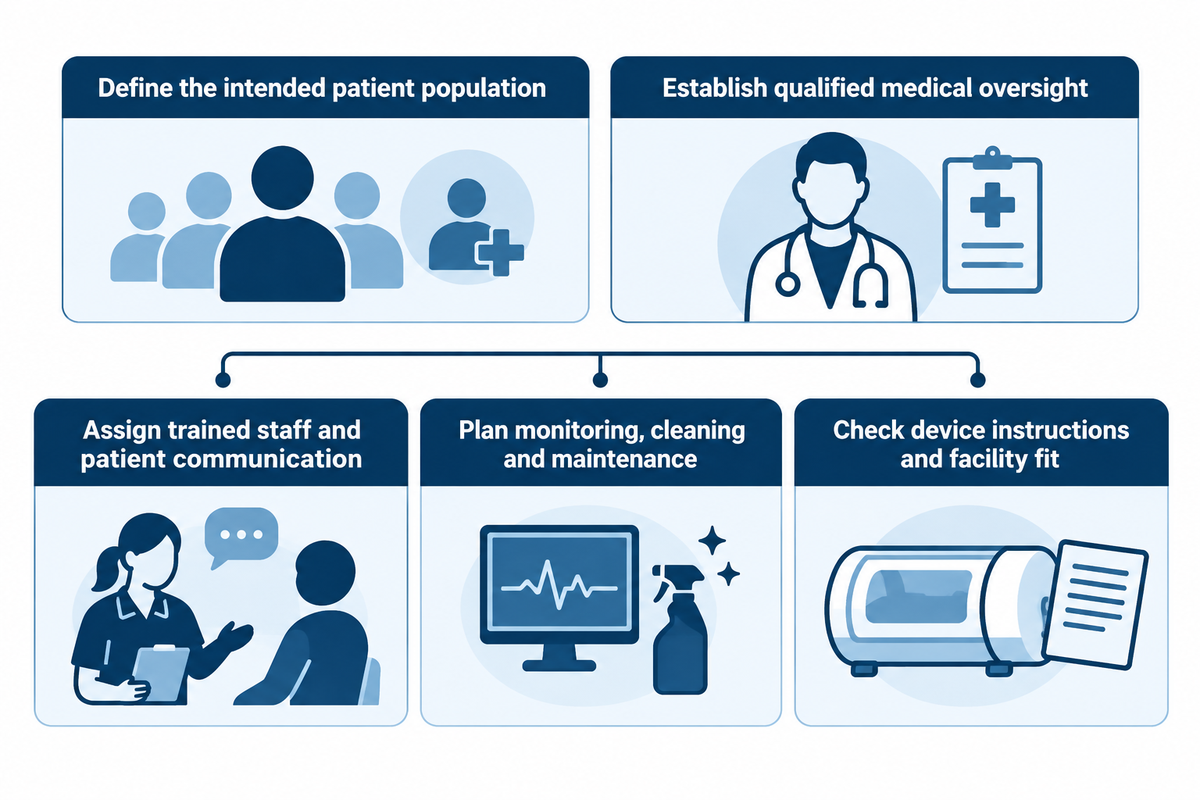
A clinical service should define its intended patient population and qualified medical oversight before comparing equipment, including hyperbaric oxygen therapy chambers. A special chamber is a part of the clinical service, and obtaining equipment doesn’t mean a treatment program is established.
The FDA safe-use recommendations address trained staff, supervision and maintenance. Assign responsibility for screening, operation, communicating with patients, cleaning and maintenance. Review the intended use and instructions for use with the staff who will operate the device. A proposed application of hyperbaric oxygen also has to fit the site’s facilities and meet the requirements applicable to that installation.
MACY-PAN offers information on its hyperbaric chambers. Clinics should review hyperbaric chamber options and model-specific room requirements as they prepare an equipment request. Include the intended service, patient access requirements and the proposed location to give the equipment request a practical basis.
What’s changing in hyperbaric oxygen therapy safety?
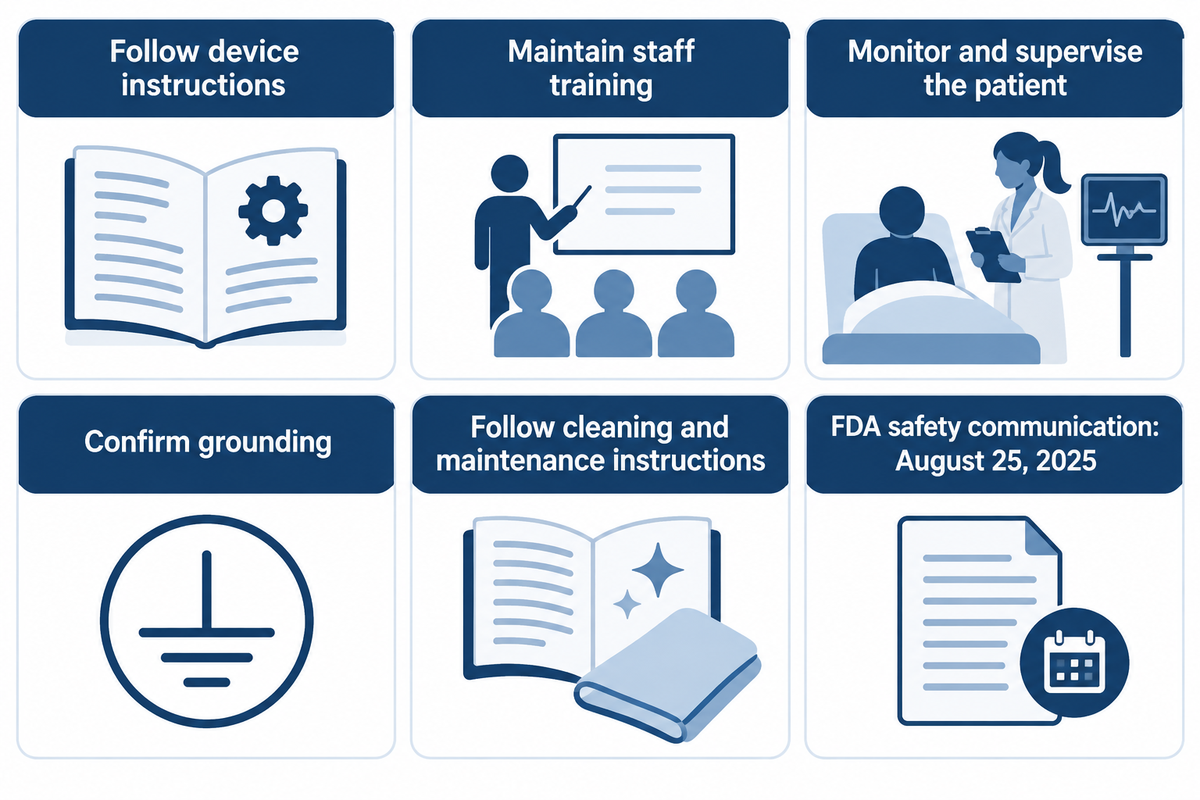
The FDA’s August 2025 safety communication centers hyperbaric therapy safety on practical operation: device instructions, trained staff, supervision, and maintenance. The useful response is to understand the center’s preparation and monitoring process. For operators, the response is to determine how these requirements are implemented for a particular device.
The August 25, 2025 FDA letter to health care providers followed reports of fires involving serious injuries and deaths. The agency said the root causes were then unknown.
“Ensure the patient is properly monitored and supervised for the duration of the treatment with use of HBOT devices.”
Hyperbaric chambers require training for safe operation; before each session, staff must know how to communicate with patients and who will monitor them. It’s critical for operators to confirm grounding and staff training. These arrangements, along with the manufacturer’s instructions for cleaning and maintenance, tell the patient more than an unsubstantiated claim that a session is “completely safe.”
Frequently asked questions
What should I wear during hyperbaric oxygen therapy?
Wear only clothing approved by the treatment center; many centers provide compatible cotton garments. Staff also screen personal items and skin products for the particular chamber. Bring questions about dressings, medical devices or products you need to use so the team can check them before treatment. Leave unapproved electronics and personal belongings outside.
How often should you do hyperbaric oxygen therapy?
Many patients in the Tufts wound-care program receive treatment once a day over several weeks. Mayo Clinic notes that carbon monoxide poisoning might be treated with a few sessions, while nonhealing wounds may require 40 treatment sessions or more. Your treating clinician sets your frequency and total course; emergency protocols differ. Ask when progress will be reviewed and what would change the plan. A package sold online isn’t a prescription.
What is the recovery time after hyperbaric oxygen therapy?
Most patients can return to normal activities right away, according to Tufts, unless their physician advises otherwise. Transport and work arrangements should still follow your own team’s advice. Tufts allows most patients to drive, while Hopkins’ overview advises arranging a ride. Medicines, vision changes and the condition being treated can affect the plan.
Can hyperbaric oxygen therapy make you tired?
Yes, some patients feel tired afterward. Tiredness doesn’t show that treatment worked. Tell the clinical team about persistent or unexpected symptoms.
Are there unapproved uses of hyperbaric oxygen therapy?
Some advertised uses remain investigational, including treatment claims involving traumatic brain injury and long COVID. In the 2025 HOT-LoCO randomized trial, 80 participants were assigned to HBOT or sham treatment; 79 entered the primary analysis. Ten sessions didn’t show a significant between-group benefit on the primary outcomes at 13 weeks. That result applies to this trial’s population and regimen, not every condition. Ask which evidence supports the proposed use and whether it’s research or routine care.
Can I get hyperbaric oxygen therapy if I’m pregnant?
Pregnancy requires specialist assessment, but it isn’t a blanket exclusion. CDC guidance on carbon monoxide poisoning recommends HBOT for pregnant patients even with less severe poisoning. That emergency guidance doesn’t justify elective wellness treatment during pregnancy. Suspected exposure needs immediate medical care.
Written by XCX for MACY-PAN, a chamber equipment supplier. This educational overview relies on clinical and institutional sources cited below. It doesn’t provide a personal diagnosis, treatment, or plan. The time and cost calculations are hypothetical planning examples. Medical decisions rest with the treating clinical team.
References & Sources
- Mayo Clinic, Hyperbaric oxygen therapy: procedure, risks and results
- UHMS, Hyperbaric oxygen definition and indications
- IWGDF, 2023 guideline on interventions to improve diabetic foot-ulcer healing
- AAO-HNSF, 2019 sudden hearing loss guideline executive summary
- UCSF Health community hospitals, Hyperbaric oxygen therapy FAQ
- Tufts Medicine, What to expect during hyperbaric oxygen therapy, 2026
- Journal of Trauma and Injury, CO poisoning and pneumothorax case report, 2019
- CMS, National Coverage Determination 20.29
- UHMS, Accredited clinical hyperbaric medicine facilities
- Johns Hopkins Medicine, HBOT educational overview and service statement
- FDA, Follow Instructions for Safe Use of HBOT Devices, August 25, 2025
- BMJ Open, HOT-LoCO randomized sham-controlled trial, 2025
- CDC, Clinical Guidance for Carbon Monoxide Poisoning