Get in Touch with MACY-PAN Company

Oxygen toxicity, often referred to as oxygen poisoning, is Cellular and Organ Injury caused by breathing high partial pressures of oxygen; hyperoxia describes elevated oxygen levels in tissues and can occur therapeutically without toxic injury. According to peer reviewed physiology data in PubMed Central (PMC4925834), pulmonary oxygen toxicity can occur after long periods of exposure to oxygen partial pressures above 0.5 ATA, with the first reported case of signs of toxicity occurring after 10 hours at 1ATA or 3 to 6 hours at 2 ATA. Increasing the time of exposure to elevated hyperbaric oxygen partial pressures increases the risk of Central nervous system toxicity.
Protocol & Threshold Summary: At sea level, ambient air has an oxygen mole fraction of 0.21, corresponding to an oxygen partial pressure of 0.21 atmospheres absolute (ATA). DAN reports a PADI oxygen partial pressure limit of 1.4 ATA for open-circuit nitrox diving and a NOAA normal single-exposure limit of 45 minutes at 1.6 ATA. Most clinical hyperbaric protocols use 2.0 to 2.8 ATA of oxygen with scheduled air breaks. At chamber pressures of 1.3 to 1.5 ATA, an assumed mask oxygen fraction of 0.24 to 0.90 yields a calculated dry-gas oxygen partial pressure of 0.312 to 1.35 ATA based on normobaric mask data rather than direct soft-chamber measurements.
The effect of oxygen and the risk of oxygen toxicity are tracked using a combination of continuous variables and inspired partial pressures, treating oxygen toxicity as an important safety boundary in pressurized care. Because human enzymes evolved for oxygen levels at normal sea-level pressure (0.21 ATA), raising either ambient cabin pressure or the inspired fraction increases arterial oxygen tension and dissolved oxygen in plasma. Clinicians are able to determine when the impacts of supplemental oxygen vs. hyperbaric oxygen therapy influence blood oxygen and oxygen content, allowing them to distinguish safe therapeutic limits from the toxic effects of oxygen and the effects of oxygen toxicity.
Oxygen Toxicity Defined: How Hyperoxia and the Effect of Oxygen Split Into CNS and Pulmonary Forms
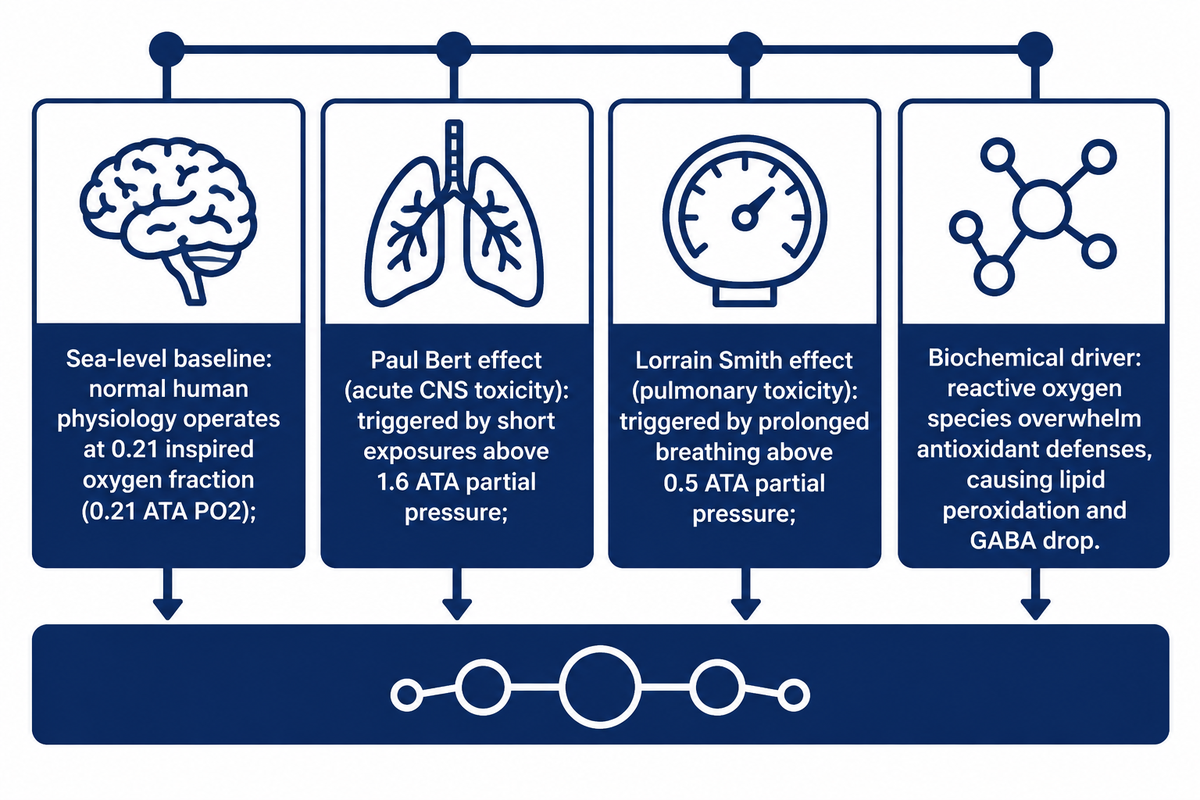
In terms of medical physiology, there are two primary classifications of hyperoxic injury: Lorrain Smith effect and the Paul Bert effect. The Paul Bert effect classifies acute CNS toxicity; the Lorrain Smith effect classifies cumulative injury to the lungs. Signs of injury to the lungs take longer to occur. Pulmonary onset depends on oxygen partial pressure: published examples include early signs after about 10 hours at 1 ATA and after 3 to 6 hours at two atmospheres.
According to the DAN clinical guide on oxygen toxicity, normal human physiology is set to an inspired fraction of 0.21 (0.21 ATA partial pressure of oxygen at sea level). When supplemental oxygen is administered or an individual breaths oxygen at greater than atmospheric pressure, the level of oxygen in the plasma raises rapidly. That excess of oxygen in body fluids increases oxygen in body tissues beyond normal metabolic consumption.
In clinical care and diving medicine, clinicians manage the therapeutic use of oxygen by tracking the inspired partial pressure of oxygen and the duration to achieve adequate cellular oxygenation. When clinicians use oxygen at high pressure, reactive oxygen species, such as superoxide ions, hydrogen peroxide, and peroxynitrite, attack lipid membranes. Brain tissue toxic oxygen, on the other hand, inhibit glutamic acid decarboxylase, reducing GABA neurotransmitters, resulting in enhanced synchronous neuronal firing. In the lungs, prolonged breathing damages capillary endothelium, impairs gas exchange of oxygen and carbon dioxide, and causes alveolar fluid leakage in severe cases of oxygen toxicity.
To assist operators to separate two timelines and track pulmonary oxygen tolerance during treatment planning, we have a Two-Clock Hyperoxia Threshold Split. Thresholds published from early studies of toxicity in man show a good deal of day-to-day variability, therefore published thresholds should be considered best estimates and should not be guaranteed personally.
| Clinical Dimension | Clock 1: Acute CNS Toxicity (Paul Bert Effect) | Clock 2: Cumulative Pulmonary Toxicity (Lorrain Smith Effect) | Verification Source |
|---|---|---|---|
| 1. Historical Discovery Benchmark | Paul Bert (1878) demonstrated convulsions in larks at 15–20 ATA air | Lorrain Smith (1899) documented fatal pneumonia in rats after 4 days at 0.73 PO2 at 1 ATA | Chawla & Lavania (PMC4925834) |
| 2. Primary Pressure Threshold | Above 1.4–1.6 ATA in diving; 2.0–3.0 ATA in dry hyperbaric chambers | Prolonged breathing above 0.5 ATA (normobaric ICU or hyperbaric) | DAN & PMC4925834 |
| 3. Onset Latency Window | Minutes to a few hours during a single pressurized session | About 10 hours at 1.0 ATA (tolerated 24–48 h); 3–6 hours at 2.0 ATA | PMC4925834 |
| 4. Primary Cellular Target | Neuronal plasma membranes, ion channels, and GABAergic synapses | Tracheobronchial mucosa, type I alveolar epithelium, capillary endothelium | PMC4925834 & EMS World |
| 5. Key Biochemical Mediator | Peroxynitrite production and glutamic acid decarboxylase inhibition | Superoxide and hydroxyl radical lipid peroxidation and surfactant loss | PMC4925834 |
| 6. Earliest Clinical Manifestation | Lip or facial muscle twitching, tunnel vision, tinnitus, nausea, or sudden seizure | Mild carinal irritation, substernal burning on deep inhalation, dry cough | DAN & UMass Memorial Health |
| 7. Severe Endpoint Risk | Generalized tonic-clonic convulsion (drowning underwater or barotrauma) | Alveolar flooding, pulmonary edema, progressive FVC decline | DAN & EMS World |
| 8. Primary Accelerating Factor | Carbon dioxide retention from exercise, immersion, or rebreathing | Continuous uninterrupted high FiO2 across 24 to 48+ hours | DAN & PMC2688103 |
| 9. First-Line Prevention Control | Cap diving PO2 at 1.4–1.6 ATA; schedule periodic air breaks in HBOT | Keep normobaric PO2 at or below 0.5 ATA when possible; use HBOT air breaks | PMC6693142 & EMS World |
Signs and Symptoms of Oxygen Toxicity: Early CNS Warnings Versus Pulmonary Progression
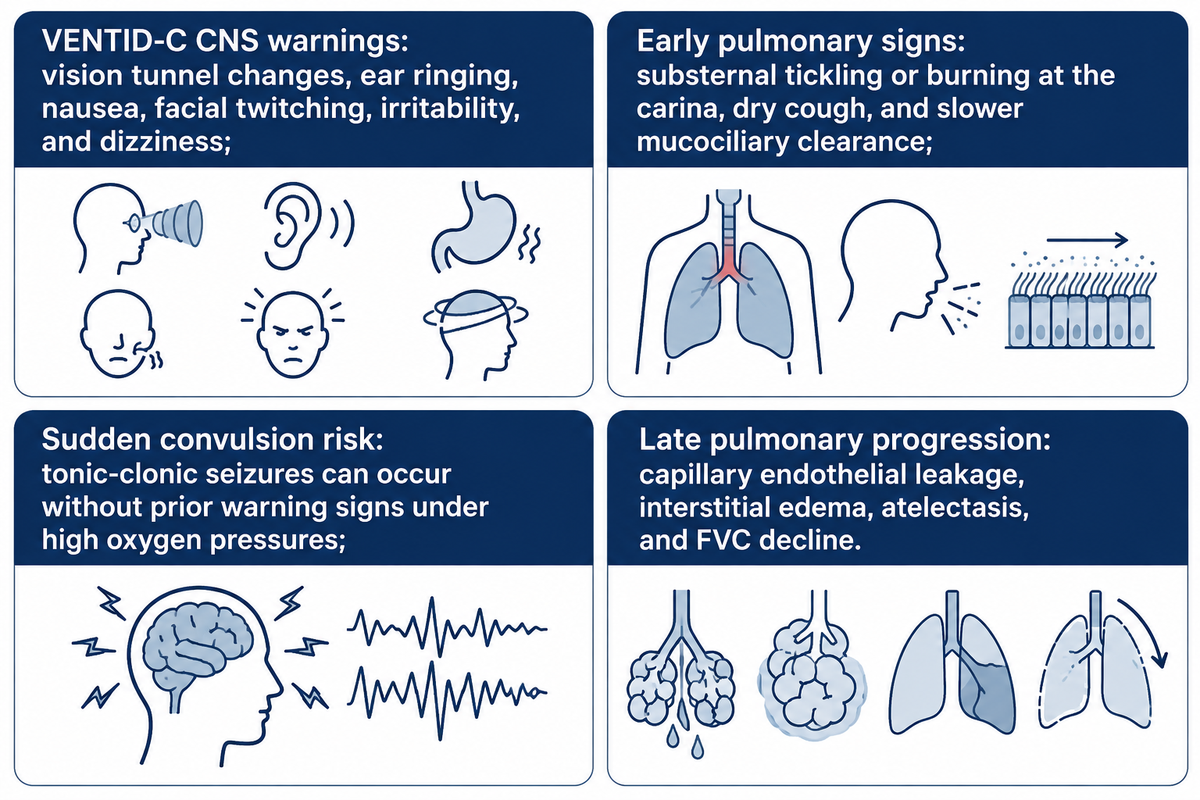
This two-clock physiological split clinically manifests as signs and symptoms of oxygen toxicity. Central nervous system toxicity causes rapid changes in the nervous system which include twitching of the face, loss of peripheral vision, tinnitus and nausea which may proceed tonic-clonic seizures. Pulmonary progression causes substernal chest irritation, dry cough, and shortness of breath after 3 to 6 hours at two atmospheres or 10 hours at 1 ATA.
As summarized in the UMass Memorial Health clinical guide to understanding oxygen toxicity, lung damage happens from breathing in too much oxygen so alveoli fill with fluid or collapse. Early recognition of oxygen toxicity symptoms allows the chamber attendants to immediately switch the breathing supply to room air.
What Are the Earliest Warning Signs of CNS Versus Pulmonary Oxygen Toxicity?
Early CNS symptoms include: involuntary muscular twitches in eyelids, lips, and hands, tunnel vision, tinnitus (ear ringing), and spasmodic nausea. The earliest pulmonary symptom is a tickling/burning sensation at the tracheal carina during deep inspiration, accompanied by a dry, unproductive cough. Persistent monitoring for both symptom clusters enables chamber attendants to identify potentially life-threatening issues in the early stages.
Dive medics and hyperbaric nurses group neurological signs and symptoms of oxygen exposure under the mnemonic VENTID-C. This covers Vision changes (flashing lights or tunnel vision), Ear symptoms (loud ringing or roaring tinnitus), Nausea and vertigo, Twitching of facial and hand muscles, Irritability or confusion, Dizziness, and Convulsions. However, as Ed Thalmann, M.D., notes in DAN’s guidance, convulsions are rare, and those prodromal symptoms do not always warn of an impending convulsion.
Operators cannot rely on subjective symptom reporting for the generalized seizure episode since the visual and muscular clues to a seizure may not be there when the person is exposed to high oxygen pressures. Chawla and Lavania (PMC4925834) report that the administration of pure oxygen at sea level can be tolerated for 24-48 hours without serious tissue damage. Exposure to oxygen at two atmospheres produces characteristic pulmonary manifestations of oxygen toxicity beginning with mild carinal irritation after 3–6 hours.
- Some examples of acute CNS neurological signs (Paul Bert track) include perioral and facial fasciculations, extremity numbness or tingling, constriction of peripheral vision, auditory roaring, confusion, and tonic-clonic seizures due to oxygen toxicity.
- Early symptoms as described by Lorraine Smith include sub-sternal tickling behind the breastbone, dry, non-productive cough, and a slowing of mucociliary clearance within the airways of the conducting system.
- Capillary endothelial leakage caused by oxygen toxicity and interstitial edema progress with absorption atelectasis in the alveoli, resulting in a decline in forced expiratory lung volume (Late Lorrain-Smith track findings).
What Conditions Cause Oxygen Toxicity: ATA Pressure Thresholds and Exposure Time Limits
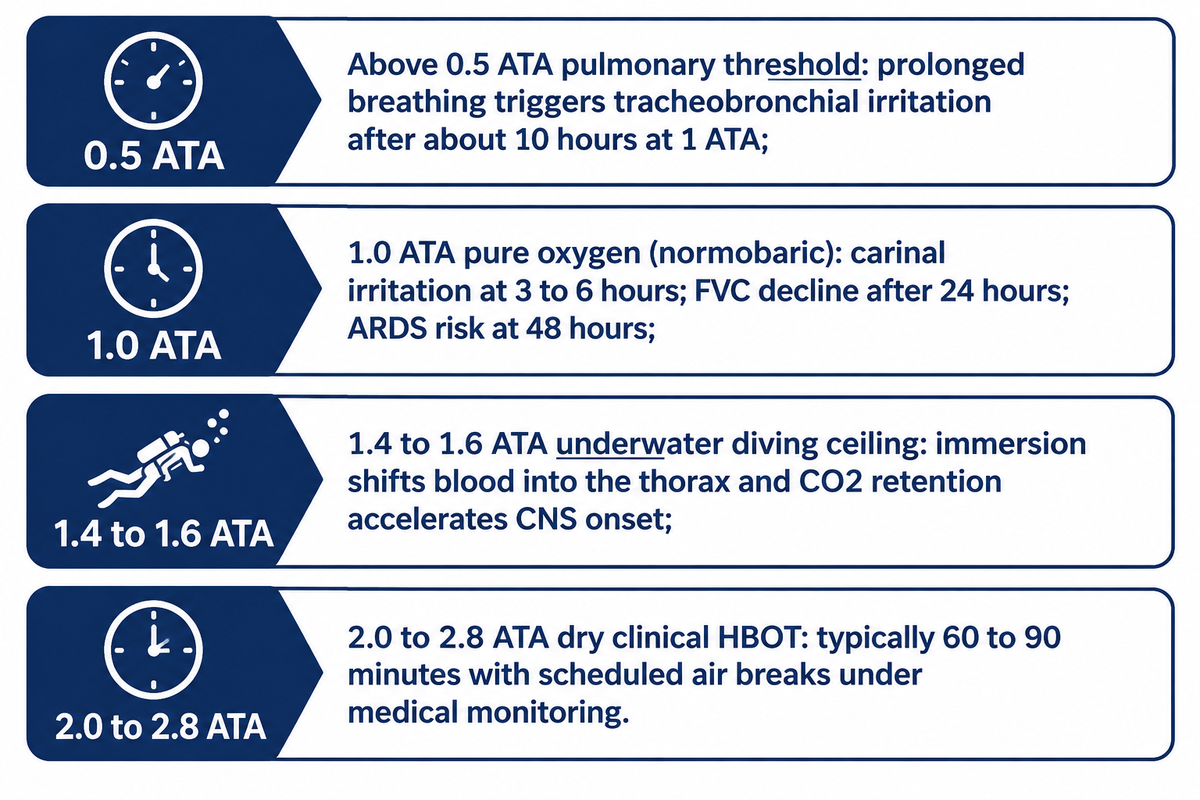
Neurological and respiratory symptoms occur with three types of exposure. These include underwater nitrox or rebreather diving above 1.4 to 1.6 ATA oxygen partial pressure, clinical hyperbaric oxygen treatment at 2.0 to 2.8 ATA, and prolonged intensive-care mechanical ventilation delivering high concentrations of oxygen across multi-day courses.
Because oxygen toxicity depends on both partial pressure and duration, clinicians track the exact amount of oxygen used during any exposure to increased oxygen levels. At 1.0 ATA, the EMS World clinical review reports that inspired oxygen concentrations below 60% are not associated with pulmonary toxicity in patients with otherwise healthy lungs. Prolonged exposure to elevated concentrations of oxygen for twenty-four hours or more increases the risk of alveolar-capillary injury, fluid leakage, and pulmonary edema depending on dose and individual susceptibility.
At What Oxygen Partial Pressure and Duration Does Oxygen Toxicity Occur?
Chawla and Lavania report that pulmonary toxicity can arise after prolonged exposure to oxygen partial pressures above 0.5 ATA, with first signs after about 10 hours breathing pure oxygen at 1 ATA and mild carinal irritation after 3 to 6 hours at two atmospheres. Therefore, the risk of toxicity from Central nervous system exposure is a function of the oxygen partial pressure and the duration of exposure.
Underwater divers face stricter ceilings than dry chamber patients because immersion shifts blood into the thorax, exercise increases carbon dioxide retention, and an underwater convulsion risks drowning. Carbon dioxide retention during exertion causes cerebral vasodilation so cerebral blood flow and brain tissue oxygen increases, which elevates the risk of central nervous system injury. For open-circuit scuba, DAN’s partial pressure guidelines define 1.4 ATA or less (82 feet or 25 meters on a 0.40 oxygen mix) as the “green light” region, 1.4 to 1.6 ATA (99 feet or 30 meters) as the “yellow light” caution zone, and above 1.6 ATA as the “red light” zone.
| Operating Environment & Protocol | Inspired PO2 (ATA) | Standard Time Limit / Latency | Primary Organ Risk & Governing Standard |
|---|---|---|---|
| 1. Sea-Level Ambient Air Baseline | 0.21 ATA (0.21 O2 fraction at 1.0 ATA) | Unlimited physiological baseline | None; normal antioxidant homeostasis (DAN) |
| 2. Normobaric Low-Concentration Therapy (FiO2 ≤0.50) | 0.24–0.50 ATA at 1.0 ATA (up to <0.60 ATA in ICU) | Tolerated for extended clinical courses | At or below 0.5 ATA threshold; low risk in healthy lungs (PMC4925834 & EMS World) |
| 3. Normobaric High-Concentration ICU Therapy | >0.50 to 1.0 ATA at sea level | First signs ~10 h at 1.0 ATA; tissue injury >24–48 h | Pulmonary tracheobronchitis & alveolar edema (PMC4925834) |
| 4. U.S. Navy Closed-Circuit Rebreather Limit | 1.3 ATA continuous | NOAA: 180 min normal / 240 min exceptional | Low CNS risk; prolonged dives track lung dose (DAN / NOAA) |
| 5. PADI Open-Circuit Nitrox “Green Light” | 1.4 ATA max (e.g., 82 ft / 25 m on 0.40 O2 mix) | Standard recreational no-decompression limits | Recommended working dive ceiling (DAN / PADI) |
| 6. NOAA Nitrox Decompression “Yellow Light” | 1.6 ATA (e.g., 20 ft / 6.1 m stop on pure O2) | 45 min normal / 120 min exceptional exposure | Resting decompression only; slim margin for CNS seizure (DAN / NOAA) |
| 7. U.S. Navy Combat Swimmer Excursion | 1.7 ATA (pure O2 at 25 ft / 7.6 m) | Up to 4 hours for trained military swimmers | A 5 ft (1.5 m) depth excursion reaches convulsion range (DAN) |
| 8. Hadanny et al. Clinical HBOT Cohort | 2.0 ATA dry chamber (pure O2) | 90 min with 5-min air breaks every 20 min (60 sessions) | No significant decline in measured spirometry endpoints (PMC6693142) |
| 9. Clinical Hyperbaric Oxygen Exposure Ceiling | 2.0–2.8 ATA routine O2 PO2 (3.0 ATA max O2 PO2 allowed) | Protocol-specific treatment tables with scheduled air breaks | Chamber pressure and gas mix together determine PO2 (DAN Alert Diver) |
Notice that NOAA dive exposure limits apply to underwater immersion and do not directly govern dry hospital chambers, where resting patients undergo clinical testing and monitoring by medical staff. For dive-table recompression schedules used when nitrogen bubbles form after rapid ascent, see our companion guide to decompression sickness recognition and recompression protocols.
Testing for Oxygen Toxicity and Clinical Differential Diagnosis in Diving and Therapy
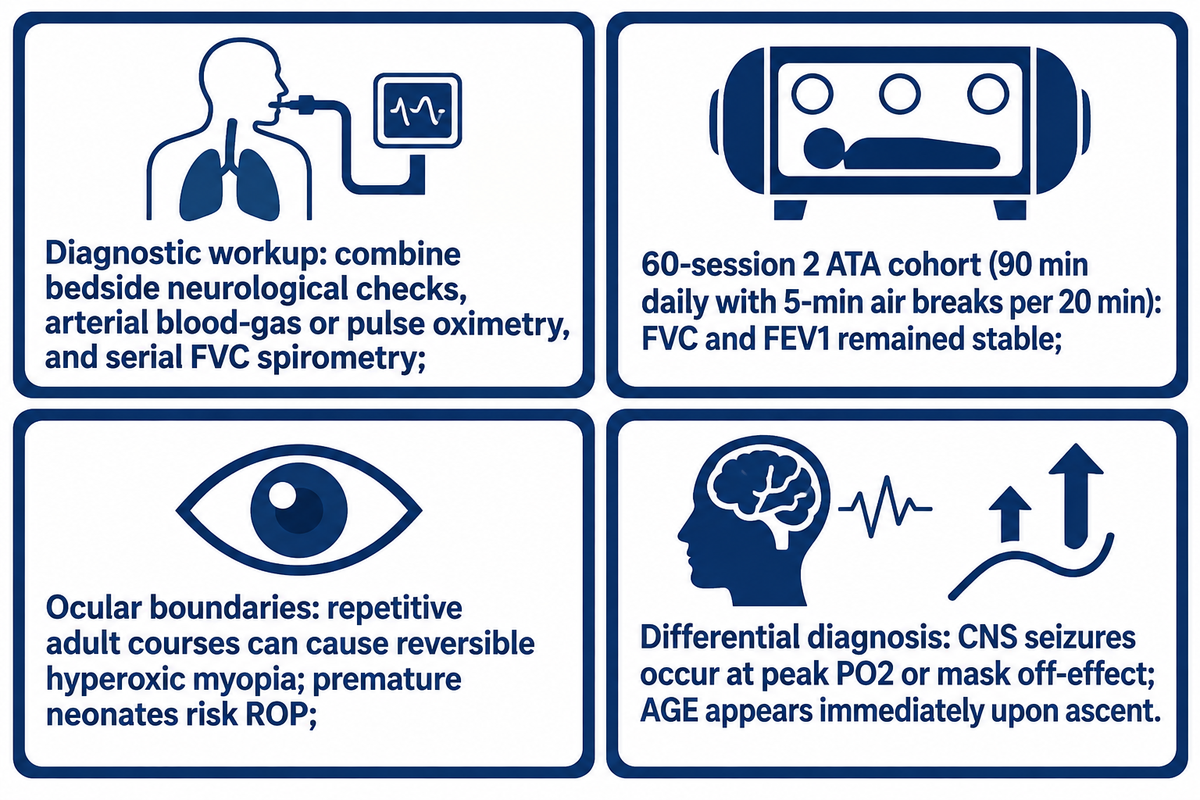
Beyond those exposure limits, clinicians perform testing for oxygen toxicity by combining bedside neurological assessment, arterial oxygen blood-gas or pulse oximetry monitoring, and serial spirometry tracking of forced expiratory volume (FVC and FEV1). Differentiation of hyperoxic injury from other diseases, e.g. myopia, hypoglycemia or drug-induced seizures, and carbon dioxide retention in COPD, may be also useful.
This study by Hadanny et al. in BMC Pulmonary Medicine (PMC6693142) describes a clinical cohort in which adults underwent 60 hyperbaric sessions consisting of 90 minutes of pure oxygen at 2 ATA daily with 5-minute air breaks every 20 minutes, five days a week. Spirometry assessments of this 60-session cohort indicated no notable decline in any of the measured endpoints, including FVC and FEV1, as well as mid-expiratory flows.
Outside the lungs and brain, repetitive courses can cause ocular toxicity, most typically reversible hyperoxic myopia from lens changes. Premature infants who are exposed to high oxygen concentrations in neonatal care are at risk for retinopathy of prematurity (ROP). When a patient convulses inside a chamber, physicians rule out other non-hyperoxic causes including hypoglycemia and analgesic or tramadol co-administration, and pre-existing structural epilepsy.
| Condition / Clinical Mimic | Primary Mechanism | Distinguishing Clinical & Diagnostic Clues | Immediate Clinical Action |
|---|---|---|---|
| Acute CNS Hyperoxic Seizure | Neuronal free radicals & GABA inhibition at elevated hyperbaric PO2 | Occurs under hyperbaric pressure; may follow lip twitching/tinnitus or strike without warning; usually self-limiting after PO2 reduction | Switch to air supply; hold chamber pressure during tonic phase; verify airway patency |
| Pulmonary Parenchymal Injury | Alveolar-capillary ROS injury during prolonged exposure above 0.5 ATA | Substernal burning on deep inhalation, dry cough, progressive FVC drop on spirometry | Reduce excess oxygen exposure while maintaining adequate oxygenation; provide supportive care and reassess |
| Hypoglycemic or Drug-Induced In-Chamber Seizure | Accelerated cerebral glucose utilization or epileptogenic medication effect | Diaphoresis, pre-session insulin/oral hypoglycemic dose, or tramadol co-administration; low capillary blood glucose | Promptly assess and treat glucose via chamber-compatible procedures alongside airway protection and oxygen reduction |
| COPD Oxygen-Induced Hypercapnia | Loss of hypoxic pulmonary vasoconstriction (V/Q mismatch) & Haldane effect | Drowsiness, bounding pulse, and rising arterial PaCO2/respiratory acidosis without free-radical tracheobronchitis | Titrate controlled supplemental oxygen to maintain target arterial oxygen saturation without worsening hypercapnia |
| Ocular Hyperoxic Myopia vs. Cataract | Oxidative crystalline lens refractive shift across repetitive HBOT | Progressive nearsightedness across multi-week courses (usually reversible within weeks) vs. delayed lens opacity | Use hood vs. mask selection and baseline/follow-up optometric refraction |
Chamber Pressure Comparison: 1.3 to 1.5 ATA Concentrator Systems Versus 2.0 to 3.0 ATA Clinical Chambers
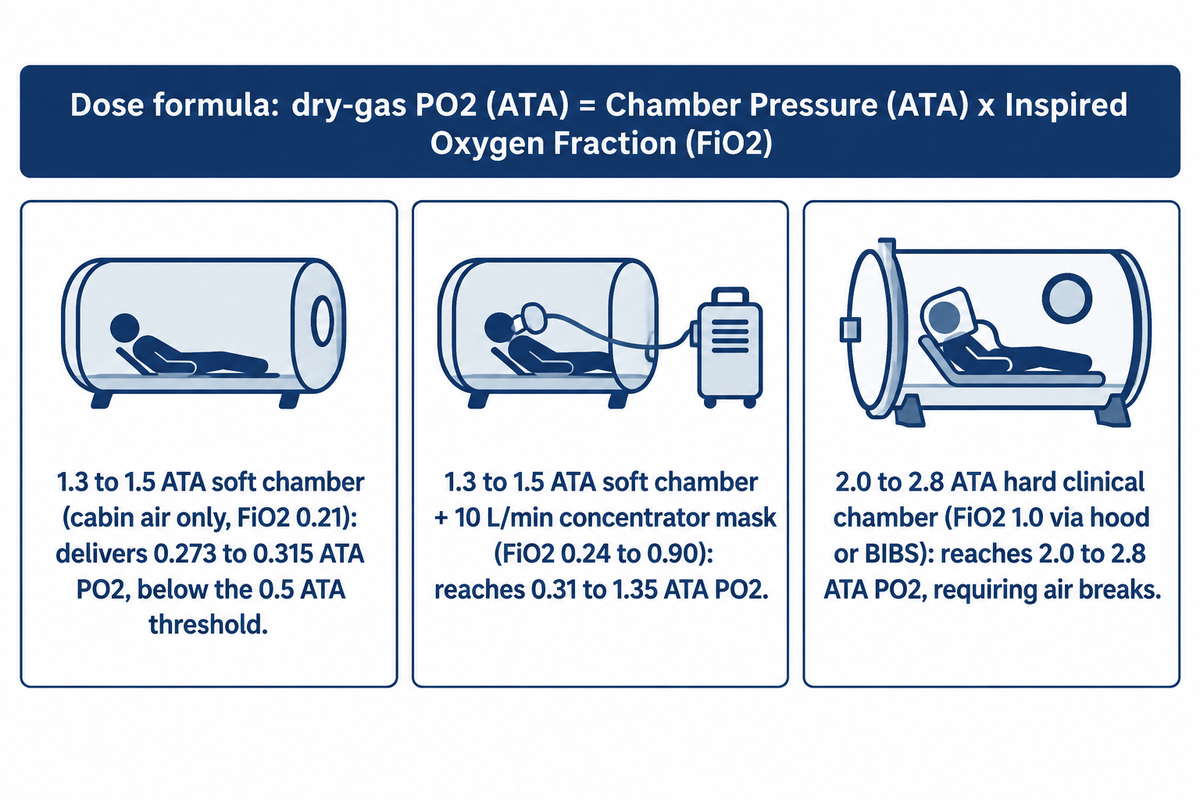
While a clinical differential diagnosis guides patient management, a comparison of a 1.3 to 1.5 ATA soft-shell chamber fed by a 5 to 10 L/min concentrator with a clinical hard-shell chamber pressurized with pure oxygen demonstrates a significant difference in oxygen partial pressure. A clinical hard chamber is operated at 2.0 to 2.8 ATA in routine therapy (a ceiling of 3.0 ATA). In comparison, the cabin air in an air-pressurized soft chamber dilutes mask oxygen.
Bitterman notes in Haim Bitterman’s Critical Care review on hyperoxia (PMC2688103), standard masks deliver fractions of oxygen from 24% to 90% depending on mask design, reservoir bag configuration, and room-air entrainment. Specialized hoods or mechanical ventilators deliver highest concentration of oxygen. On MACY-PAN hyperbaric chambers by ATA pressure rating hub, engineering specifications state that per the Undersea and Hyperbaric Medical Society, 1.4 ATA represents the lower clinical treatment floor, and the most professional protocols run at 2.0 ATA.
Can a 1.3 to 1.5 ATA Soft Chamber With a 10 L/min Concentrator Cause CNS Oxygen Toxicity?
For an air-pressurized 1.3 to 1.5 ATA soft-shell chamber with a 5 to 10 L/min concentrator supplying oxygen through a non-sealed mask or headset, assuming an inspired oxygen fraction of 0.24 to 0.90 yields a calculated dry-gas oxygen partial pressure of 0.312 to 1.35 ATA. The published data on normobaric masks was used in making this determination, and the 1.4 ATA figure is representative of the lower clinical treatment floor and the most professional protocols rather than the fixed CNS seizure threshold.
In our 3-Variable Chamber Dose Formula, dry-gas inspired oxygen partial pressure equals absolute chamber pressure multiplied by the inspired oxygen fraction, and the air-break duty cycle tracks the timing of oxygen and air exposure. In an air-pressurized soft chamber, if the mask is not sealed, cabin air can be entrained during inspiration if the demand is greater than the supply from the concentrator and any reservoir. Therefore, an inspired oxygen fraction is affected by mask fit and the reservoir of stored oxygen. For readers converting gauge pressure readings on their control panel, our ATA to PSI absolute pressure conversion guide explains that 1.3 to 1.5 ATA correlates to a sea level gauge pressure of 4.4 to 7.4 psi.
Worked Example – 3-Variable Chamber Dose Formula Across Soft and Hard Chambers:
- Assumed Inputs: Cabin pressure = 1.3 to 1.5 ATA for soft TPU models and 2.0 to 2.8 ATA for hard clinical chambers (MACY-PAN & DAN Alert Diver); standard mask FiO2 delivery envelope = 0.24 to 0.90 (PMC2688103); clinical pure-oxygen chamber FiO2 = 1.00.
- Formula: Dry-gas partial pressure of oxygen
PO2 (ATA) = Chamber Pressure (ATA) × Inspired Oxygen Fraction (FiO2); track oxygen periods and air breaks separately over time. - Calculation 1 (1.3–1.5 ATA Soft Chamber, Ambient Cabin Air Only, FiO2 = 0.21): At 1.3 ATA,
1.3 × 0.21 = 0.273 ATA; at 1.5 ATA,1.5 × 0.21 = 0.315 ATA. Both sit below the 0.5 ATA pulmonary threshold. - Calculation 2 (1.3–1.5 ATA Soft Chamber + Concentrator via Mask, FiO2 = 0.24 to 0.90 Arithmetic Envelope): At the 0.24 lower bound at 1.3 ATA,
1.3 × 0.24 = 0.312 ATA; at a mid-range 0.50 oxygen fraction at 1.3–1.5 ATA,1.3 × 0.50 = 0.65 ATAto1.5 × 0.50 = 0.75 ATA; at the 0.90 reservoir upper bound at 1.5 ATA,1.5 × 0.90 = 1.35 ATA. Note: this 0.312 to 1.35 ATA span is an arithmetic envelope derived from published mask ranges, not a direct in-chamber clinical measurement. - Calculation 3 (2.0–2.8 ATA Hard Clinical Chamber, Pure O2, FiO2 = 1.00): At 2.0 ATA,
2.0 × 1.00 = 2.0 ATA; at 2.8 ATA,2.8 × 1.00 = 2.8 ATA. Clinical protocols at these partial pressures incorporate scheduled air breaks to manage cumulative oxygen dose.
Preventing Oxygen Toxicity and Treating Oxygen Toxicity: Air Break Protocols and Acute Seizure Response
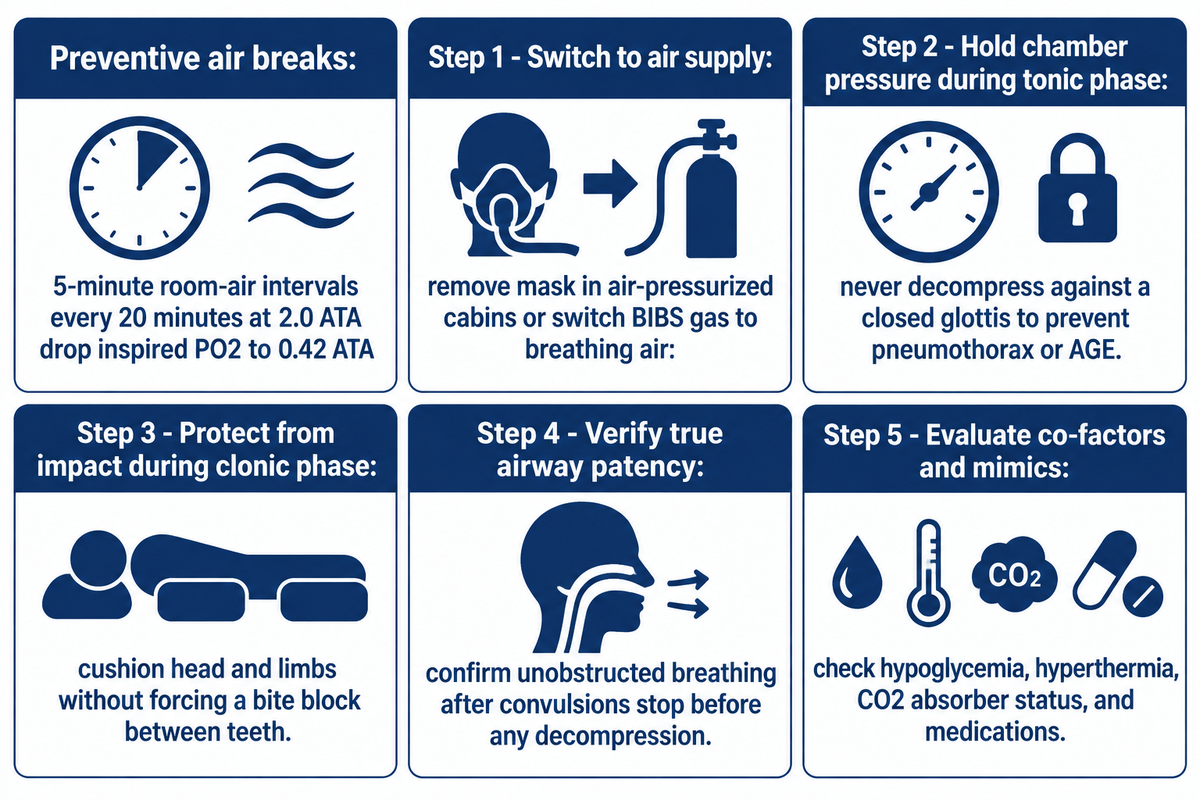
Because hard clinical chambers reach those elevated oxygen partial pressures, preventing oxygen toxicity in clinical chambers relies on scheduling periodic air breaks—such as 5-minute room-air intervals every 20 minutes in the Hadanny et al. protocol—during hyperbaric sessions. Treating oxygen toxicity when premonitory twitching or a generalized seizure occurs, the patient is switched to an air supply and chamber pressure is held until unobstructed breathing resumes.
“Within hyperbaric chambers, the maximum oxygen partial pressure allowed is 3 ATA. Most treatment protocols are performed at 2-2.8 ATA of oxygen. Exposure to these levels is appropriate in controlled clinical settings… Air breaks are unnecessary and inappropriate for a diver breathing emergency oxygen at the surface.”
During a 90-minute session at two atmospheres, inserting a five-minute air break every 20 minutes drops the patient’s inspired partial pressure down to 0.42 ATA (2.0 ATA × 0.21). This rapid drop lowers arterial oxygen levels so antioxidant defenses can clear free-radical intermediates. While Hadanny et al. (PMC6693142) observed no spirometric decline across 60 daily sessions using that full schedule, clinical literature notes that air breaks reduce—but do not completely eliminate—the residual risk of an in-chamber seizure.
If a patient has a lip twitch, visual aura or grand mal seizure in a pressure chamber, operators perform a five-step stabilization procedure:
- Switch the patient to an air supply appropriate to the chamber design: removing a mask or hood provides an air break only in an air-pressurized chamber, whereas an oxygen-pressurized chamber requires switching the designated air-breathing system.
- Maintain chamber pressure during the tonic phase. Decompressing the chamber under these conditions can result in a pneumothorax or an arterial gas embolism.
- During the clonic phase, protect the patient from potential injury from cabinet hardware. Protect the patient from mechanical injury: in a multiplace cabin, an inside tender cushions the patient’s head and limbs without forcing a bite block between clenched teeth, while monoplace operators hold pressure steady until clonic jerking subsides.
- Verify true airway patency and effective gas exchange before decompression: wait until convulsions stop and confirm unobstructed airflow, because postictal tachypnea or chest wall movement alone does not rule out partial airway obstruction or secretions.
- Ask for and evaluate co-factors and potential mimics of the grand mal seizure including hypoglycemia, hyperthermia, CO2 absorber status and medications.
Chamber Hardware Tiers: How 1.3 to 2.0 ATA Pressure Controls and Air-Break Systems Compare by Cost
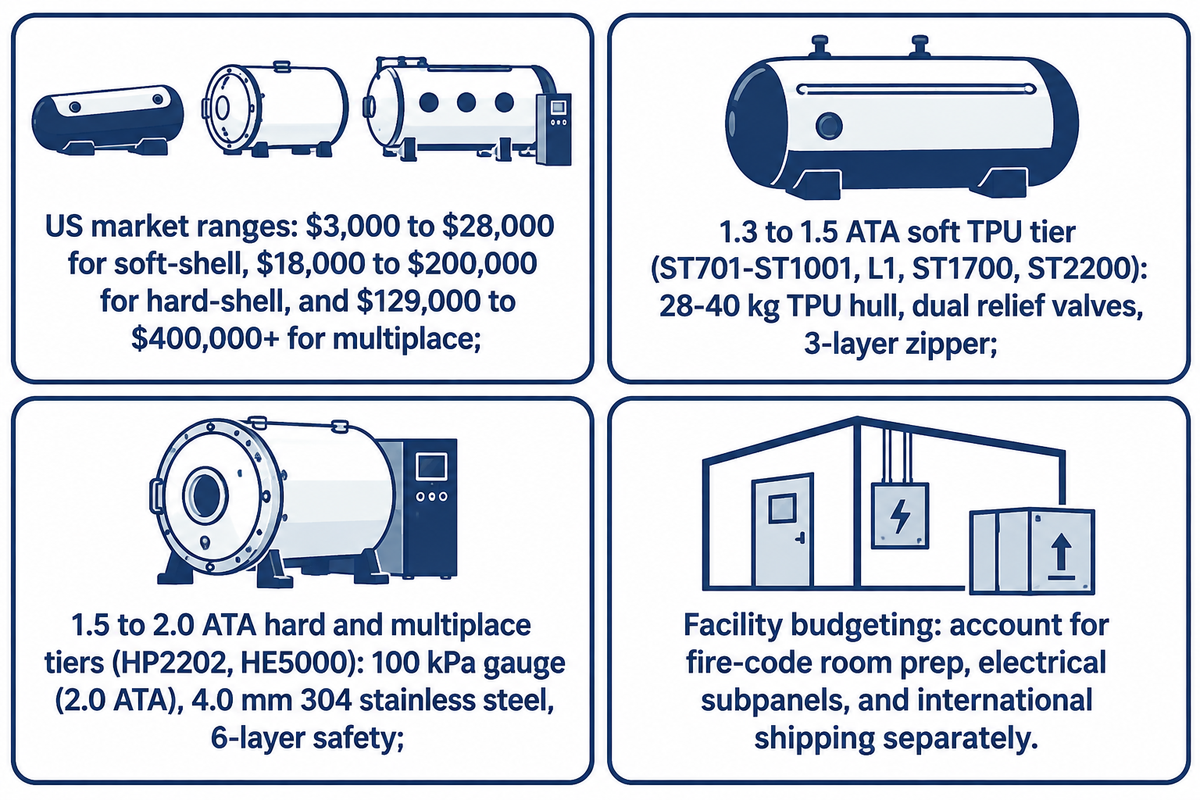
Depending on the hardware in the chamber, air-break and emergency stabilization protocols must be developed. MACY-PAN’s hyperbaric chamber cost guide lists US market ranges of roughly $3,000 to $28,000 for soft-shell units, $18,000 to $200,000 for hard-shell chambers, and $129,000 to $400,000 or more for multiplace systems; capacity, shell construction, and control hardware all contribute to these price differences.
The two systems marketed as home or clinic hyperbaric systems can be in very different price bands, because the fabrication of the pressure vessels, gas-monitoring sensors, and hardware for delivering air-breaks change when the working pressure increases from 1.3 to 1.5 ATA (4.4 to 7.4 psi gauge) to 2.0 ATA (100 kPa / 14.7 psi gauge). As disclosed in USPTO Patent US6520180B1 on breathing gas concentration measurement, accurate monitoring of respiratory mixtures under varying pressure requires pressure-compensated sensing so operators know the true oxygen concentration delivered to the breathing line.
| Hardware & Safety Dimension | 1.3–1.5 ATA Soft-Shell Tier (ST701–ST1001 / L1 / ST1700 / ST2200) | 1.5–2.0 ATA Hard-Shell Monoplace & Sitting Tier (HP1501 / HP2202 / MC750) | 2.0 ATA (100 kPa Gauge) Multiplace Tier (HE5000 / DIA-HE5000) |
|---|---|---|---|
| US Market Price Range | $3,000 to $28,000 (retail & wholesale tiers) | $18,000 to $200,000 depending on pressure & controls | $129,000 to $400,000+ for multi-seat cabins |
| Hull Material & Weight | Reinforced TPU fabric; ST701–ST1001 lying models weigh 28–40 kg (62–88 lb) | Rigid hard-shell construction; HP1501 & HP2202 lying cabins; MC750 stretcher unit 80 kg (176 lb) | 4.0 mm 304 stainless steel on HE5000 (1–5 seats, 480–850 kg / 1,058–1,874 lb); DIA-HE5000 575 kg (1,268 lb) |
| Oxygen Supply Architecture | Air-pressurized cabin + external PSA oxygen concentrator via mask or headset | Air-pressurized cabin + PSA concentrator mask or hood delivery system | 280 L/min air compression + 20 L/min O2 supply to individual breathing masks/hoods |
| Pressure & Safety Controls | Dual mechanical relief valves, internal/external gauges, 3-layer zipper | HP2202: 100 kPa gauge pressure (2.0 ATA absolute at sea level), emergency depressurization valve | Six-layer independent pressure safety system, dual interior/exterior touchscreens |
| Air-Break Execution Method | Manual removal of face mask or headset to breathe ambient cabin air | Scheduled mask removal or timed gas-delivery switch to cabin air | Timed multi-station mask/hood air breaks monitored via dual control panels |
Price bands reflect the range of US market units and do not include room construction for fire-code compliance, electrical subpanels and international shipping. Clinic directors evaluating total ownership costs of soft vs. rigid vessels can consult our soft-shell vs. hard-shell hyperbaric chamber dealer guide.
Sourcing Hyperbaric Chambers Across 1.3 to 2.0 ATA: Safety Trends and Manufacturer Verification
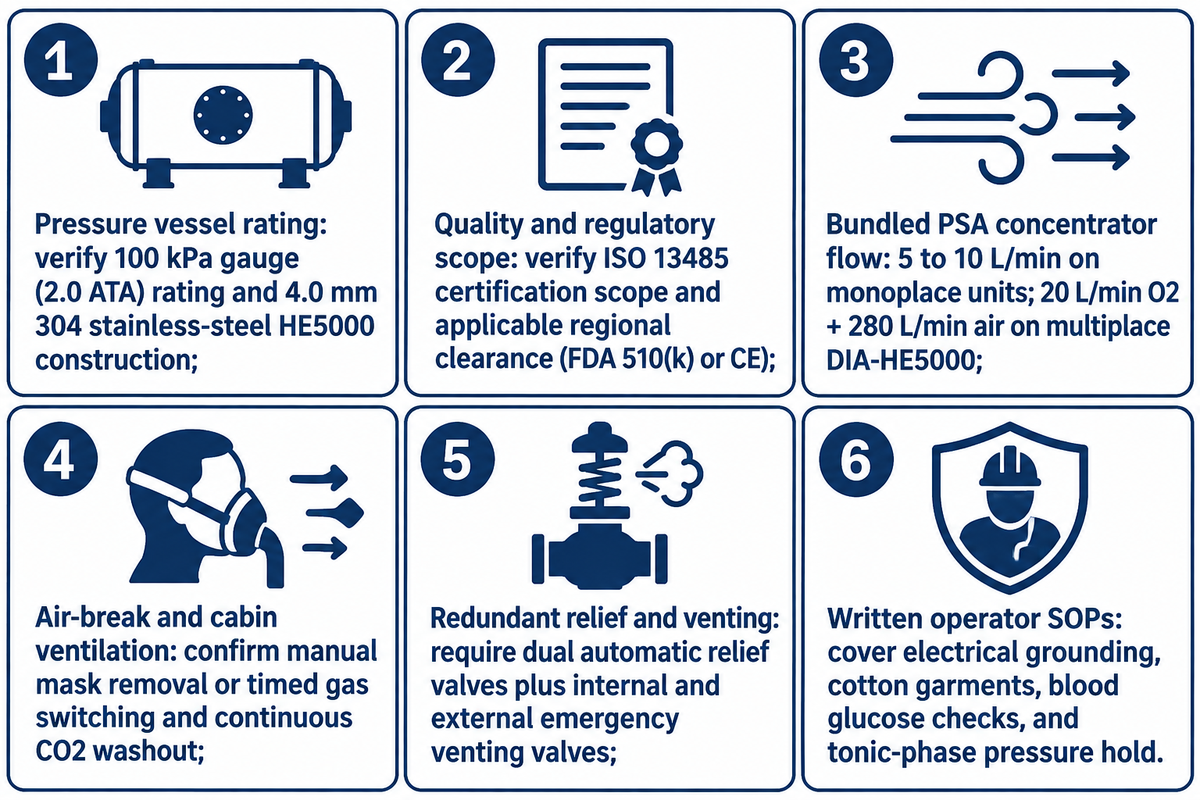
Aside from considering equipment cost tiers, in 2026, higher clinical oversight from the UHMS and hospital safety committees led buyers to distinguish between 1.3-1.5 ATA soft chambers and hard shell chambers rated at 2.0 ATA absolute pressure (100 kPa gauge). Quality management systems, fire safety and regulatory clearances were also independently audited.
As the UHMS HBO2 Safety Committee clinical patient-care guidance emphasizes, facility medical directors bear ultimate responsibility for screening patient implants, middle-ear history, and concurrent medications before pressurization. Simultaneously, clinical cohorts such as Hadanny et al. (PMC6693142) highlight the widespread adoption of 60-session protocols operating at two atmospheres with 20-minute oxygen and five-minute air-break cycles. These schedules require chambers that hold stable pressure and deliver consistent air turnover without overheating.
While single-tier brands often supply only 1.3 ATA inflatable bags, MACY-PAN (Shanghai Baobang Medical Equipment Co., Ltd.) manufactures the full pressure ladder under a certified ISO 13485 medical-device quality management system. This lineup spans 1.3–1.5 ATA lying and sitting soft chambers (ST701–ST1001, L1, ST1700, ST2200) through 100 kPa gauge hard-shell monoplace and multiplace cabins (HP2202, HE5000 built with 4.0 mm 304 stainless steel, and DIA-HE5000). However, procurement teams must never conflate factory manufacturing quality (ISO 13485), local regulatory clearance (such as US FDA 510(k) marketing authorization for specific indications), and on-site fire safety (grounding, cotton garments, banning ignition sources, and cabin ventilation).
6-Point Clinic & Distributor RFQ Verification Checklist (1.3 to 2.0 ATA Sourcing):
- Verify that chamber working pressure is rated to 100 kPa gauge (2.0 ATA absolute at sea level) separately, and 4.0 mm construction of 304 stainless-steel HE5000 models.
- Request the manufacturer’s current ISO 13485 certificate scope and independently verify what regulatory clearance (such as FDA 510(k) or CE mark) applies in your jurisdiction; never market non-cleared chambers as disease cures.
- Verify that the bundled PSA oxygen concentrator provides adequate outlet pressure and flow (5 to 10 L/min on a monoplace chamber; 20 L/min of O2 plus 280 L/min of air on a multiplace DIA-HE5000) to meet the requirement of the chamber in use.
- Instruct the attendants to perform air breaks manually via mask removal or via timed switching of gas delivery, and confirm that ventilation of the ambient cabin is sufficient to remove exhaled carbon dioxide and to remove leaked mask oxygen.
- Require dual redundant automatic relief valves and a manual emergency venting valve that is located internally and externally to the chamber for safe and controlled venting to relieve pressure after a medical emergency.
- Develop written standard operating procedures (SOPs) for the operators to cover electrical grounding, wearing cotton only to sessions by the patient, and checking the patient’s blood glucose level, and to instruct the operator to remain with the patient during a tonic-phase seizure hold.
Are you considering a 1.3 to 1.5 ATA soft chamber or a 2.0 ATA hard shell system for your facility? Compare full pressure specifications and cabinet dimensions. Also, compare six layer controls in the MACY-PAN chamber directory by ATA pressure rating. Compare full pressure specifications, cabin dimensions, and six-layer safety controls in the MACY-PAN chamber directory by ATA pressure rating , or contact MACY-PAN engineering for an engineer-reviewed quotation within 24 hours (MOQ 1 unit, EXW/FOB/CIF/DDP). For model-specific drawings and relief valve documentation, contact MACY-PAN engineering.
Frequently Asked Questions
Can you die from oxygen toxicity during diving or hyperbaric oxygen therapy?
Convulsions during medical hyperbaric oxygen therapy usually resolve when inspired oxygen partial pressure is reduced. In an air-pressurized cabin, removing an oxygen mask achieves this. But in an oxygen filled cabin, the breathing supply needs to be switched. In the second case, if chamber pressure is held constant during the convulsion and airway patency is verified before chamber is depressurized, in-chamber convulsions are usually not fatal. Loss of regulator due to convulsion during scuba diving results in drowning. In intensive care units, leaving patients in 100% oxygen for more than 48 hours at an absolute pressure of more than 0.5 ATA results in chronic toxicity and severe pulmonary edema and respiratory failure.
Why does high-flow supplemental oxygen cause carbon dioxide retention in COPD patients?
Excess supplemental oxygen can increase carbon dioxide retention in susceptible chronic obstructive pulmonary disease (COPD) patients by reversing hypoxic pulmonary vasoconstriction and worsening ventilation-perfusion mismatch across damaged alveoli. The combination of these effects can lead to hypercapnic acidosis. While not due to free-radical injury, hypercapnic acidosis can also occur in a gas exchange imbalance, this is usually treated by adjusting the supplemental flow and/or oxygen saturation.
What is the difference between reversible hyperoxic myopia and permanent cataract formation after HBOT?
Hyperoxic myopia is the development of temporary near-sightedness in some subjects receiving repetitive courses of hyperbaric oxygen therapy (HBOT). This effect is believed to be the result of oxidative changes to the crystalline lens. It has been reported to reversed in a matter of weeks, following discontinuation of treatment. Formation of nuclear cataracts is an irreversible opacification of the lens, and has been associated with cumulative exposures to HBOT, even if the total number of sessions do not reach the threshold for immunity.
Does breathing enriched air at a recreational oxygen bar carry any risk of CNS or pulmonary oxygen toxicity?
A brief 15-to-30-minute session at sea-level pressure using a low-flow nasal cannula is unlikely to cause CNS or pulmonary oxygen toxicity because exposure is short and supplied oxygen mixes with room air, as detailed in our recreational oxygen bar safety guide.
Why must chamber operators wait until the tonic seizure phase ends before decompressing a patient?
Maintaining chamber pressure during the tonic phase avoids expansion of gas that may be trapped by impaired exhalation or a closed glottis; decompressing under these conditions can cause pulmonary barotrauma, pneumothorax, or arterial gas embolism.
Edited by MACY-PAN technical team; written by XCX. This clinical and engineering reference synthesizes the peer-reviewed literature, Undersea and Hyperbaric Medical Society (UHMS) and Divers Alert Network (DAN). It is not a substitute for a clinician’s best judgment. Always operate hyperbaric chambers under the supervision of a physician.
References & Sources
- Oxygen Toxicity (PMC4925834), Anuj Chawla and A.K. Lavania, Medical Journal Armed Forces India, published by the National Center for Biotechnology Information (NCBI).
- Pulmonary Functions in Patients Undergoing Hyperbaric Oxygen Therapy (PMC6693142), Amir Hadanny, Tal Zubari, Liat Tamir-Adler, Yair Bechor, and Shai Efrati, BMC Pulmonary Medicine, August 13, 2019.
- Bench-to-Bedside Review: Oxygen as a Drug (PMC2688103), Haim Bitterman, Critical Care, February 24, 2009.
- Oxygen Toxicity: Signs, Symptoms, and Prevention, Ed Thalmann, M.D., Divers Alert Network (DAN).
- Emergency Oxygen and Oxygen Toxicity, Divers Alert Network (DAN) Alert Diver Clinical Reference.
- Understanding Oxygen Toxicity, UMass Memorial Health Library.
- MEDFAQs: Medical and Patient Care in Hyperbaric Oxygen Therapy, Undersea and Hyperbaric Medical Society (UHMS) HBO2 Safety Committee.
- Oxygen Toxicity in Emergency Medical Services and Hyperbaric Care, EMS World, HMP Global Learning Network.
- US Patent US6520180B1: Device for Measuring a Gas Concentration in a Breathing Gas Line, United States Patent and Trademark Office (USPTO).
- ISO 13485:2016 Medical Devices — Quality Management Systems — Requirements for Regulatory Purposes, International Organization for Standardization (ISO).