Get in Touch with MACY-PAN Company

Updated November 2026 · Reviewed by the Shanghai Baobang Medical Equipment Co., Ltd. technical team
HOCATT is a single-person, head-out ozone sauna cabinet, operated at ambient atmospheric pressure (1.0 ATA). The acronym stands for Hyperthermic Ozone and Carbonic Acid Transdermal Technology. Each 30-minute session sequences carbon dioxide, transdermal ozone, steam heat, and far infrared inside the lower enclosure. Optional modules add pulsed electromagnetic fields, photon light, microcurrent and ambient nasal O2 while the head of the user is kept outside a neck collar.
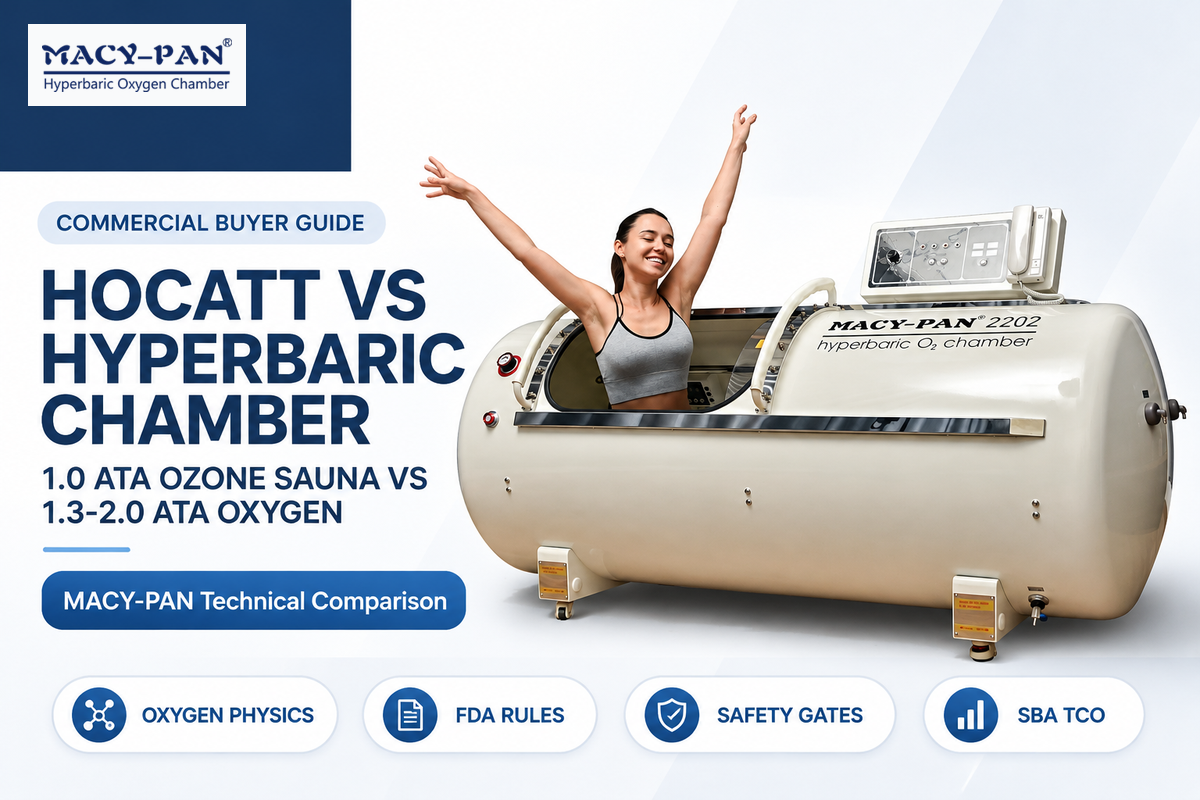
There are a lot of studio buyers who confuse a HOCATT™ pod with a pressurized hyperbaric oxygen chamber, since both look like enclosed recovery capsules. In physics and regulation, both are opposite machines. A hyperbaric chamber raises ambient pressure above atmospheric pressure so that breathing oxygen-enriched gas helps dissolve more molecular oxygen into blood plasma. An ozone steam sauna stays at ambient pressure and moist skin is exposed to reactive triatomic ozone gas (O3).
Direct Technical Summary: HOCATT therapy runs steam heat, carbonic acid, transdermal ozone, far infrared, and add-on wellness modules inside a non-pressurized ambient cabinet. It does not reproduce the physics of pressurized hyperbaric oxygen. Under 21 CFR 801.415, FDA describes ozone as a toxic gas with no known useful medical application; the provision addresses ozone-generating devices that cause accumulation above 0.05 ppm in enclosed spaces intended for prolonged occupancy. FDA classifies hyperbaric chambers separately as Class II devices under 21 CFR 868.5470. Vendor pages list new commercial HOCATT investment from $32,900 to $65,000 before freight, buildout, and staffing.
Quick Specs: HOCATT Ozone Sauna vs. Commercial Hyperbaric Chamber
| Parameter | HOCATT Ozone Sauna | Commercial Hyperbaric Chamber |
|---|---|---|
| Operating Pressure | 1.0 ATA (ambient room pressure, head outside) | 1.3–1.5 ATA (MACY-PAN soft-shell catalog) or 1.5–2.0 ATA (hard-shell) |
| Primary Active Gas | CO2 + steam + ozone (O3) on skin; optional ambient nasal O2 | Pressurized air with concentrator mask or clinical near-100% O2 |
| Session & Turnaround Structure | 30-minute vendor cycle with dual-destructor purge + wet disinfection | Protocol-dependent active time + pressurization, decompression, and surface sanitation |
| Key U.S. Federal Reference | 21 CFR 801.415 (0.05 ppm occupied-space accumulation); OSHA 0.1 ppm 8-hr PEL-TWA; NIOSH 0.1 ppm ceiling | 21 CFR 868.5470 (Class II); ASME PVHO-1 (>2 psig / 1.14 ATA) |
| Published Pricing & Visit Range | $32,900–$65,000 new (vendor page); $125–$275/visit (~$150 vendor example) | Model-specific written quote required; cash-pay wellness or clinical billing |
What Is HOCATT Therapy and What Happens During a 30-Minute Session?
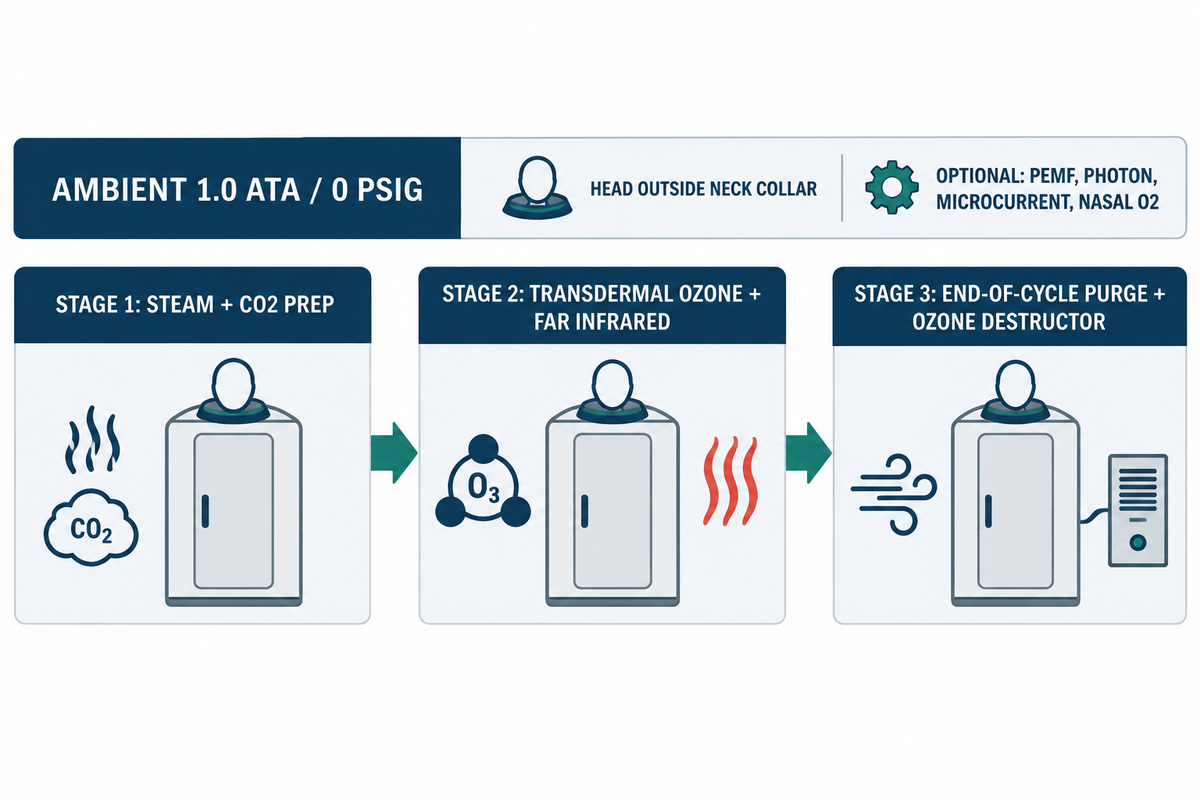
A standard HOCATT session occurs at room pressure in a seated steam cabinet. According to the official vendor practice sheets, HOCATT stands for Hyperthermic Ozone and Carbonic Acid Transdermal Technology. Many wellness menus shorten that name to carbonic acid transdermal therapy. During the session the guest is seated in the cabin, and a neck collar and towel are used to keep the head in the open air.
A seated steam cabinet fitted with a timed gas manifold is described instead of a sealed diving bell. Because the collar rests around the neck at atmospheric pressure, the enclosure holds 0 psig. HOCATT therapy works across three successive stages in a single 30-minute session.
| Stage | Cycle Timing | Active Inputs Inside Cabin | Operational Purpose & Safety Check |
|---|---|---|---|
| 1. Thermal & CO2 Prep | Opening prep phase (preset-dependent, typically first 8 minutes) | Steam heat, far infrared panels, and carbon dioxide gas | Warms the torso and humidifies the cabin for the opening CO2 phase. |
| 2. Transdermal Ozone & Add-Ons | Main cycle segment after CO2 prep | Ozone gas (O3), steam, far infrared, optional PEMF, microcurrent, photon light; optional nasal O2 delivered outside the neck collar | Exposes torso and limbs to reactive ozone vapor while staff verify neck-seal closure. |
| 3. Catalytic Purge & Exit | End-of-cycle extraction before door unlatch | Internal extraction through dual ozone destructors | Neutralizes residual cabin ozone before the door opens to protect guest and staff airways. |
Vendor materials on HOCATT’s official practice overview state the HOCATT system combines ozone with nine other technologies in one cabinet. In short, HOCATT provides a combination of ozone, along with steam, carbonic acid, and radiant heat, under one controller. Patent filing US20220313525A1 describes an openable enclosure that couples steam, CO2, ozone, far infrared, and pulsed fields. A separate published patent application, US20080023386A1, describes an inline cabinet ozone destructor that scrubs residual ozone before exit.
| # | Modality Name | Delivery Route | Physical Action Inside the HOCATT Capsule |
|---|---|---|---|
| 1 | Transdermal Ozone | Gas vapor on wet skin | Generates O3 from an external oxygen concentrator feed into the lower cabin. |
| 2 | Carbonic Acid (CO2) | CO2 gas + steam film | Introduced as gas during the opening prep stage before ozone starts. |
| 3 | Steam Sauna / Hyperthermia | Warm humid vapor | Raises skin temperature, stimulates cutaneous vasodilation, and triggers sweating. |
| 4 | Far Infrared Heat | Radiant cabin panels | Adds radiant warming; vendor pages state 1.5 inches of skin penetration. |
| 5 | High-Intensity PEMF Therapy | Pulsed electromagnetic coils | Emits pulsed magnetic fields through cabin walls; requires implanted-device screening. |
| 6 | Frequency-Specific Microcurrent | Footplates or hand electrodes | Passes low-level electrical pulses through contact pads; disabled for cardiac implants. |
| 7 | Concentrated Oxygen Breathing | External nasal cannula | Delivers non-pressurized concentrated oxygen at ambient 1.0 ATA outside the collar. |
| 8 | Photon Light & Color | Internal LED arrays | Provides visible light therapy and ambient chromotherapy during the sauna session. |
| 9 | Essential Oil Infusions | Aromatherapy vapor cup | Disperses plant aromatics into cabin steam for spa comfort and sensory relaxation. |
| 10 | Ultraviolet Irradiation | Internal UV light element | Included on vendor modality lists for surface-level light exposure inside the enclosure. |
How Does Carbonic Acid Prepare the Skin Before Ozone Enters the Cabin?
During the opening prep phase, steam heat raises the temperature of the skin and stimulates sweating. Locally, skin circulation increases. Carbon dioxide forms a weak carbonic acid on the skin. During the ozone phase, the body doesn’t absorb ozone intact into arterial plasma. Reactive O3 rapidly decomposes on wet skin surfaces into secondary oxidation products.
Some buyers believe that a personal sauna pod with ten switches generates ten different clinical outcomes. In a spa setting, operators typically run steam and far infrared as the constant base. Staff turn off ozone, microcurrent, or PEMF therapy when they see a contraindication in client intake. A loose neck towel allows cabin vapor to reach breathing air, making the external ozone destructor and end-of-cycle purge the most critical safety controls.
Does HOCATT Work? Separating Clinical Evidence From Wellness Claims
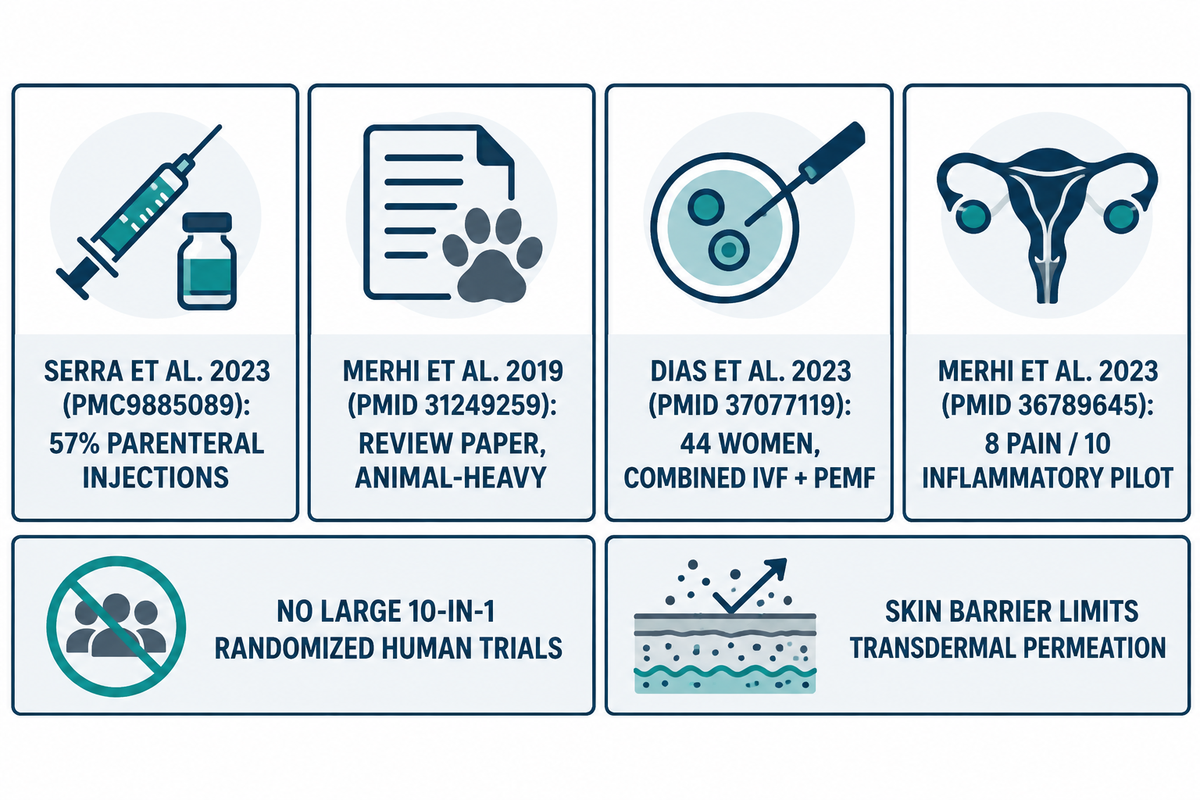
A HOCATT™ ozone sauna produces far-infrared heat and steam, which raise the temperature of the skin and promote sweating and cutaneous circulation. No large randomized controlled human trials evaluate the complete 10-in-1 cabinet for systemic detoxification, heavy metals removal, fat loss, or immune disease treatment. It’s important to keep marketing copy within thermal relaxation to minimize exposure and liability. Exposure controls, local rules and regulations still apply.
Many brochures market broad benefits of HOCATT therapy citing general ozone studies that never tested a steam cabinet. An evidence gap map by Serra et al. (2023, PMC9885089) reviewed medical ozone therapy literature across administration routes. Exactly 57% of mapped clinical associations (192 associations) used parenteral gas mixtures, such as intra-articular, intradiscal, or paravertebral injections, instead of transdermal steam saunas. Reviews in Ribeiro et al. (2024, PMC11803873) and Bocci (2010, PMC7498916) justify the difference in behavior of skin exposure. The stratum corneum limits transdermal permeation, and ozone rapidly decomposes on moist skin into reactive oxygen species rather than crossing into the systemic blood.
Claims about the clinical benefits of HOCATT™ therapy often point to three reproductive health papers. Most peer-reviewed publications on HOCATT are small, non-randomized studies with combined transdermal and intravaginal reproductive cohorts. The studies don’t focus on standalone head-out wellness sessions for systemic detox.
- Literature Review, Not a Human Trial: Merhi et al. (Medical Gas Research, 2019, PMID 31249259) is a review paper, not a human intervention study. It indicates that most ozone fertility data is from animals, and there are very few human studies. Four of the six authors, including first author Zaher Merhi as a paid consultant alongside co-authors serving as founder/Co-CEO, CEO, and COO/Medical Director, disclosed roles at HOCATT USA, while two co-authors reported nothing to disclose.
- Combined Transdermal + Intravaginal IVF Cohort: Dias et al. (Medical Gas Research, 2023, PMID 37077119) studied 44 women in two non-randomized IVF cycles. Women received transdermal and intravaginal ozone treatments twice weekly for 3 weeks along with PEMF. As intravaginal ozone and PEMF occurred together without a control arm and co-authors include HOCATT founder Andre Hugo Smith and Zaher Merhi, the outcomes do not isolate the effects of a standard head-out spa visit.
- Small Open-Label Endometriosis Pilot: Merhi et al. (American Journal of Reproductive Immunology, 2023, PMID 36789645) studied combined transdermal and intravaginal ozone sauna therapy with PEMF for 6 sessions. The study included 8 women for pelvic pain assessment and 10 women for inflammatory marker assessment. The authors, including Zaher Merhi and HOCATT founder Andre Hugo Smith, directly stated larger studies and randomized controlled trials are needed.
| Marketed Wellness Claim | Single-Modality Literature | Whole-System 10-in-1 HOCATT Data | Safe Clinic Framing |
|---|---|---|---|
| Relaxation, Sweating & Circulation | Consistent with general heat and sauna exposure | Driven by steam and far infrared warming | Promote for thermal relaxation and post-workout warmth |
| Heavy Metals & Systemic Detox | Sweat excretes trace elements; liver and kidneys clear toxins | Zero randomized trials showing superior heavy-metal clearance | Avoid promising medical detox or heavy-metal chelation |
| Cellular Level Oxygenation | Pressurized HBOT raises plasma O2; ambient skin ozone does not | No clinical blood-gas trials equating 1.0 ATA cabin to HBOT | Do not market as a substitute for pressurized oxygen |
| Pelvic Pain & Fertility Adjunct | Mixed small pilot data on PEMF and topical ozone | Small non-randomized combined transdermal+intravaginal reports | Never promise fertility or disease outcomes in spa menus |
| Lasting Weight Loss & Immunity | Acute heat loss is mostly water weight | No controlled fat-loss or clinical immunity trials | Frame around general energy and subjective wellness goals |
What Is an Ozone Sauna Good For According to Peer-Reviewed Research?
An ozone sauna supports general heat comfort and sweating during a seated sauna session, while published literature doesn’t validate it for treating disease or clearing heavy metals. Guests who benefit from HOCATT in cash-pay studios typically value a warm head-out wellness experience with steam and infrared therapy while breathing room air. Clients needing clinical care should choose an evaluated and licensed medical pathway rather than complementary therapy.
Promising detoxification products for overall health creates client friction. On public wellness forums, some users report feeling refreshed while others report itchy chest rashes or fatigue crashes after ozone runs. The most successful treatment strategy for managing client expectations is protecting guest comfort by setting conservative expectations during the intake appointment to establish a strong clinic reputation.
HOCATT vs. Hyperbaric Chamber: Oxygen Delivery Physics and Mechanism
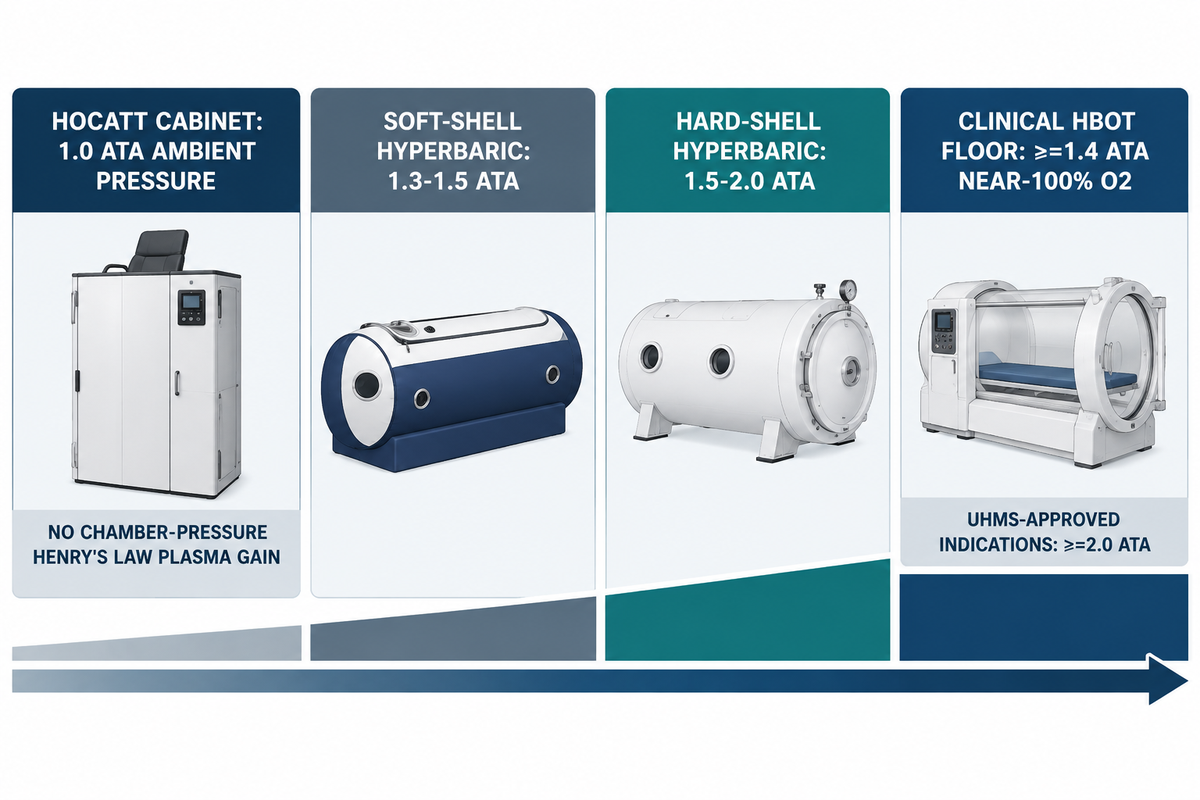
The HOCATT cabinet operates at 1.0 ATA room ambient pressure. Higher chamber pressures are offered by MACY-PAN’s catalog tiers of soft-shell units at 1.3-1.5 ATA and hard-shell models at 1.5-2.0 ATA, respectively. Oxygen delivery in any chamber depends on total ambient pressure and inspired oxygen fraction (FiO2). By Dalton’s law and Henry’s law, combining higher total pressure with concentrated oxygen increases inspired oxygen partial pressure and dissolves additional molecular oxygen (O2) into blood plasma.
Think of opening a bottle of sparkling water. Pressure makes gas dissolve in the liquid. Sealing the bottle maintains the pressure. When the cap is unscrewed, the pressure is lowered to that of the atmosphere and the gas comes out. Likewise, raising the chamber pressure above ambient dissolves additional oxygen in the blood plasma, while a head-out HOCATT sauna is maintained at ambient pressure.
“A hyperbaric chamber is a device that is intended to increase the environmental oxygen pressure to promote the movement of oxygen from the environment to a patient’s tissue by means of pressurization that is greater than atmospheric pressure.”
The Undersea and Hyperbaric Medical Society (UHMS) revised position statement on low-pressure fabric chambers defines strict clinical thresholds. Clinical HBOT requires breathing near-100% oxygen at 1.4 ATA or higher. Every current UHMS-approved indication requires at least 2.0 ATA. UHMS notes that room air below 1.4 ATA delivers no more oxygen than breathing oxygen by mask at sea level. In the United States, hyperbaric chambers are Class II medical devices, and UHMS states that the cleared indication for FDA-cleared low-pressure fabric chambers is acute mountain sickness only. ASME PVHO-1 applies to any human-occupied pressure vessel exceeding 2 psig above ambient (1.14 ATA).
Commercial clients interested in pressure tiers can review our post on 1.3, 1.5, and 2.0 ATA chamber pressure tiers. Our technical article on supplemental oxygen versus pressurized hyperbaric oxygen explains that a nasal cannula worn outside a HOCATT collar still delivers unpressurized air.
| Engineering Dimension | HOCATT Ozone Sauna | Soft-Shell Chamber (e.g., 1.3–1.5 ATA) | Hard-Shell Chamber (1.5–2.0 ATA+) |
|---|---|---|---|
| Enclosure Pressure | 1.0 ATA (0 psig) | 1.3–1.5 ATA (MACY-PAN soft-shell range) | 1.5–2.0 ATA (clinical HBOT ≥2.0 ATA) |
| Head & Airway Position | Head outside neck collar | Whole body enclosed inside zipper shell | Whole body enclosed inside rigid steel/acrylic vessel |
| Gas Chemistry | Steam + CO2 + O3 on skin; optional nasal O2 | Pressurized air + optional O2 concentrator mask | Pressurized air + mask/hood O2 or clinical near-100% O2 |
| Pressure-Driven Plasma O2 Gain | None from cabin pressure (1.0 ATA) | Depends on pressure tier plus actual inspired FiO2 | High dissolved plasma O2 at ≥2.0 ATA with near-100% O2 |
| Thermal Load | High heat and humid steam vapor | Dry ambient air (cooling chiller optional) | Dry air-conditioned interior (chiller standard) |
| Primary Operational Hazard | Ozone inhalation, heat stress, wet-room shock | Ear barotrauma, oxygen-enriched fire risk | Oxygen-enriched fire risk, barotrauma, grounding |
| ASME PVHO-1 Threshold | Not applicable (0 psig) | Exceeds 2 psig (1.14 ATA) vessel threshold | Applies (>2 psig / 1.14 ATA human occupancy) |
| Client Comfort Requirement | Undressed torso, towel and shower access | Fully clothed in cotton attire; ear equalization | Fully clothed in cotton attire; ear equalization |
| Active Cycle Structure | 30-minute vendor cycle | Protocol-based pressurization, stay, and decompression | Protocol-based clinical or wellness schedule |
| Best Commercial Fit | Fast-turnover cash-pay spa heat & steam menus | Dry recovery lounges and multi-chamber hubs | Flagship longevity suites or supervised clinics |
Assumed inputs: Dry-gas inspired PO2 equals total ATA times FiO2 (NIH StatPearls NBK448104), calculated at the mask inlet before alveolar water vapor and leakage.
| Setup Condition | Total Pressure (ATA) | Dry Gas FiO2 | Dry-Gas Inspired PO2 | Practical Qualification |
|---|---|---|---|---|
| HOCATT Head-Out Room Air | 1.0 ATA | 0.21 | 0.21 ATA (160 mmHg) | Sea-level baseline air; skin ozone does not raise arterial PO2. |
| 1.3 ATA Chamber (Room Air Only) | 1.3 ATA | 0.21 | 0.27 ATA (207 mmHg) | UHMS notes air below 1.4 ATA does not exceed sea-level mask O2 exposure. |
| 1.4 ATA Clinical Floor (Near-Pure O2) | 1.4 ATA | Near 1.00 | ~1.40 ATA upper bound | UHMS minimum definition floor for clinical HBOT. |
| 2.0 ATA Clinical HBOT (Near-Pure O2) | 2.0 ATA | Near 1.00 | ~2.00 ATA (1,520 mmHg) | Meets minimum UHMS pressure for all approved clinical HBOT indications. |
At dry-gas inputs, 2.0 ATA pure oxygen creates an inspired partial pressure of oxygen nearly ten times that of ambient sea-level room air. Increased partial pressure and concentration of oxygen under pressure raise ignition and fire danger; thus, stricter grounding and fire safety are warranted.
Does a HOCATT Ozone Sauna Increase Blood Oxygen Like a Hyperbaric Chamber?
No. A HOCATT ozone cabinet operates at 1.0 ATA and therefore provides no chamber-pressure-driven increase in plasma oxygen dissolution through Henry’s law. Optional nasal O2 outside the collar can offer oxygen therapy at ambient pressure that can increase the inspired oxygen fraction without pressure augmentation. Even when the spa menu touts a combo of advanced ozone, skin ozone reacts at the surface rather than adding pressurized plasma oxygen.
FDA Status, Ozone Exposure Limits, and Compliance Boundaries
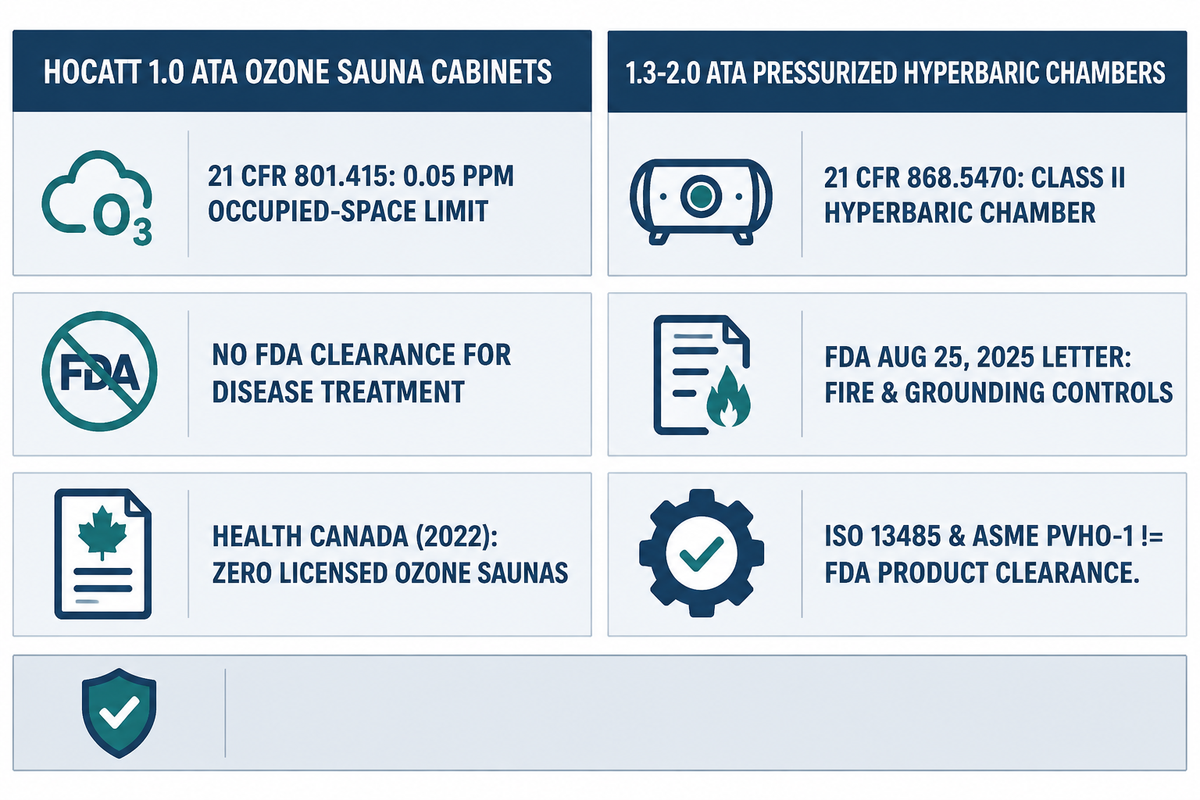
Under 21 CFR 801.415, the 0.05 ppm provision addresses ozone accumulation in enclosed occupied spaces from ozone-generating devices at 25 °C and 760 mmHg. For worker safety, OSHA sets a legal 8-hour time-weighted-average limit of 0.1 ppm, while NIOSH recommends a ceiling limit of 0.1 ppm. No HOCATT ozone sauna holds FDA clearance to diagnose, treat, cure, or prevent any disease. In Canada, Health Canada’s public advisory (updated November 2, 2022) states that Health Canada has not licensed any ozone saunas for sale. The agency also reports receiving zero submissions with evidence supporting medical treatment claims.
“Ozone is a toxic gas with no known useful medical application in specific, adjunctive, or preventive therapy … Since olfactory fatigue develops readily, the odor of ozone is not a reliable index of atmospheric ozone concentration.”
Federal rules under 21 CFR 801.415 go beyond the 0.05 ppm occupied-space accumulation provision in paragraph (c)(1). Paragraph (c)(2) prohibits releasing ozone into the air of hospitals or establishments occupied by the ill or infirm. In paragraph (c)(4), any ozone device is considered misbranded when used for a medical condition lacking proven safety and effectiveness. Low room ozone readings alone do not make disease-treatment claims legally permissible.
Buyers also require distinctions among device credentials. Under 21 CFR 807.39, highlighted in Regenerated.com’s HOCATT regulatory review, FDA establishment registration or device listing never equals FDA approval or clearance. ISO 13485:2016 specifies medical-device quality management system requirements, while ASME PVHO-1:2023 specifies requirements for pressure vessels for human occupancy; neither standard confers U.S. FDA product clearance. The oversight of safety for pressurized chambers is parallel. On August 25, 2025, the FDA Letter to Health Care Providers noted reports of HBOT fires causing serious injuries and deaths. FDA noted that serious adverse events are believed to be rare and root cause remained unknown. The letter instructs facilities to follow manufacturer instructions for use, fire grounding, cotton clothing, and active supervision.
| Authority / Standard | Numeric Limit or Rule | Scope & Facility Impact |
|---|---|---|
| FDA 21 CFR 801.415 | 0.05 ppm occupied-space accumulation (25 °C, 760 mmHg); (c)(2) & (c)(4) bans | Blocks disease claims and ozone release in establishments serving the ill or infirm. |
| OSHA 29 CFR 1910.1000 Table Z-1 | 0.1 ppm (0.2 mg/m³) 8-hour PEL-TWA | Legal workplace breathing-zone 8-hour average limit for staff. |
| NIOSH Pocket Guide (npgd0476) | 0.1 ppm (0.2 mg/m³) Ceiling (REL-C); IDLH = 5 ppm | Recommended instant ceiling; ozone density is 1.66 and strongly oxidizing. |
| Health Canada Advisory (2022) | 0 licensed ozone saunas in Canada | Warns of delayed pulmonary edema, bystander risk, fire/explosion, and oxygen tank burns. |
| FDA 21 CFR 868.5470 & 2025 Letter | Class II medical device (Product Code CBF) | Requires 510(k) clearance for medical claims and strict IFU/fire-grounding compliance. |
| ISO 13485:2016 & ASME PVHO-1:2023 | Medical QMS & human pressure-vessel standards (>2 psig / 1.14 ATA) | Specify quality-system and vessel design criteria; neither grants FDA clearance. |
Marketing materials are audited by liability insurers before underwriting wellness studios. Any studio operating a wellness device should keep websites, consent forms, and staff scripts strictly inside non-medical relaxation language. Under 21 CFR 868.5470, pressurized chambers are considered Class II medical devices; buyers should review the specific regulatory clearances and intended-use range of each model rather than assuming a shell type is exempt.
Who Should Not Use HOCATT? Contraindications and Ozone Safety Controls
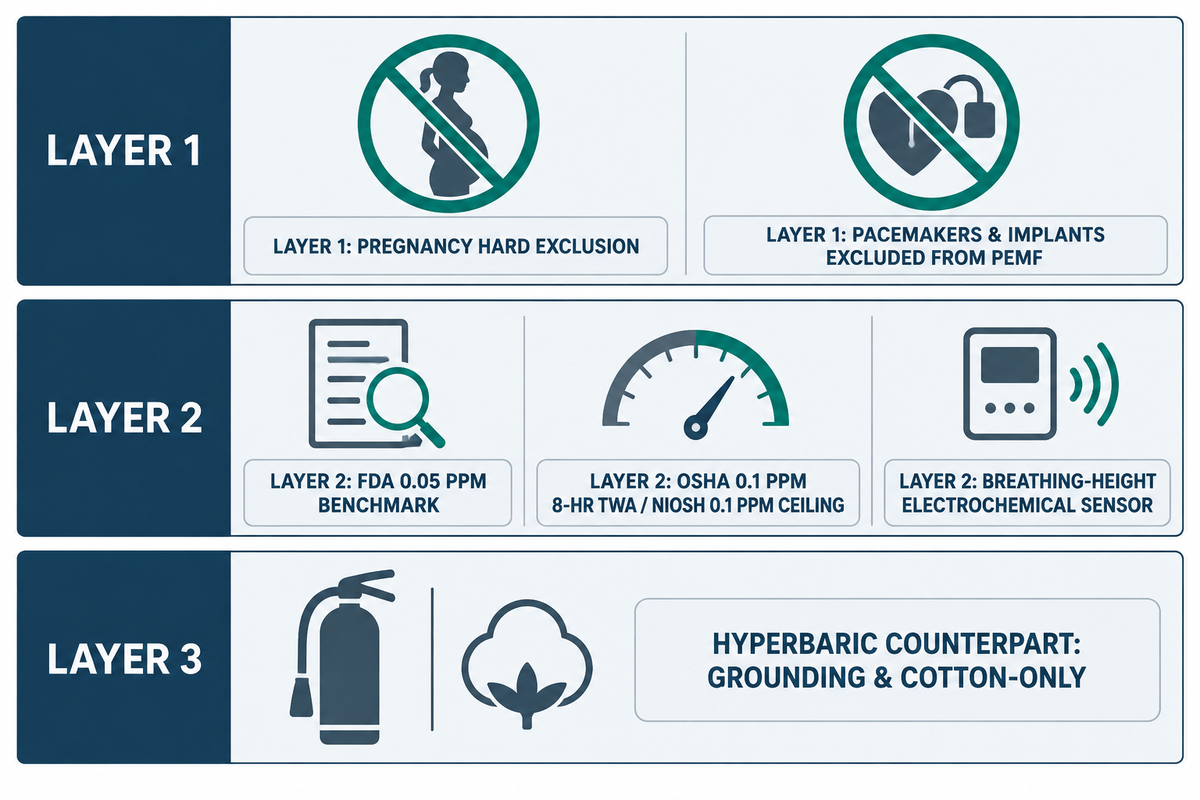
Pregnant clients must not use HOCATT under any circumstances. Persons with implanted electronic devices, such as pacemakers or insulin pumps, require hard exclusion from PEMF and microcurrent and physician clearance before any heat exposure. Because HOCATT™ combines ozone, heat, and electromagnetic pulses in one pod, generic spa waivers aren’t sufficient. Every client health history form should screen each condition against its triggering modality.
Research such as Cheng et al. (2023, PubMed 37010870) links first-trimester ozone exposure to higher gestational hypertension risk, supporting strict pregnancy exclusion. For airway safety, NIOSH (npgd0476) lists mucous membrane irritation, pulmonary edema, and chronic lung disease as ozone hazards, with 5 ppm marked immediately dangerous to life or health (IDLH). Under 21 CFR 801.415(b), pulmonary edema often appears hours after exposure while olfactory fatigue quickly masks escaping gas. Additional contraindications in the triage matrix below reflect standard commercial clinic screening protocols across thermal, oxidative, and electromagnetic modalities.
| Client Condition / Screen | Triggering Modality | Operational Action |
|---|---|---|
| Pregnancy (any trimester) | Hyperthermia + Ozone + PEMF | Decline session completely (hard exclusion across all modes). |
| Pacemaker, ICD, Insulin Pump, Cochlear Implant | High-Intensity PEMF & Microcurrent | Hard exclusion for PEMF and microcurrent; require physician clearance before heat-only use. |
| Unstable Cardiovascular Disease / Recent MI or Stroke | Steam Heat & Far Infrared | Decline session; heat stress alters heart rate and blood pressure rapidly. |
| G6PD Deficiency (Favism) | Transdermal Ozone | Disable ozone cycle completely due to oxidative stress sensitivity. |
| Uncontrolled Hyperthyroidism | Ozone + Hyperthermia | Decline until medically stabilized by a physician. |
| Severe Asthma, COPD, or Ozone Airway Sensitivity | Ambient Ozone Leak & Humid Heat | Decline ozone and require physician clearance before any humid heat exposure. |
| Active Hemorrhage, Open Wounds, or Acute Fever | Heat + Vasodilation + Wet Contact | Decline session until bleeding stops, fever clears, and skin is intact. |
| Seizure Disorders or Photosensitivity | PEMF, Microcurrent, Photon Light | Disable PEMF, microcurrent, and strobing LED light modes; require physician clearance. |
| Intoxication or Impaired Heat Sensation | Steam & Far Infrared Heat | Decline session to prevent thermal burns, dehydration, or syncope. |
The 3-Layer Ozone and Wet-Room Safety Gate should be implemented by operators before the opening of a commercial HOCATT suite:
- Layer 1: Breathing-Zone Monitoring and Neck-Seal Fit. Human olfactory senses cannot be relied on to detect the presence of ozone in the breathing zone, because olfactory fatigue rapidly occurs. Mount a calibrated electrochemical ozone sensor at breathing height to verify ambient air remains below OSHA’s 0.1 ppm 8-hour PEL-TWA and NIOSH’s 0.1 ppm ceiling, using FDA’s 0.05 ppm occupied-space limit as a stricter reference benchmark. Always check the collar seal before activating the ozone.
- Layer 2: Catalytic Destruct and End-of-Cycle Purge. Service the catalytic ozone destructors on the manufacturer’s recommended interval. Exhaust treatment-room air directly to the outdoors. Perform a full purge of the ozone prior to opening the door.
- Layer 3: Wet-Room Electrical & Oxidizer Separation. Follow local electrical codes and OSHA workplace chemical standards for wet steam zones. Use listed equipment, dedicated Ground Fault Circuit Interrupter (GFCI) protection, dry cord routing away from condensate drains, and separation between oxygen intakes and flammable oils.
Hyperbaric chambers also present a separate, equally serious safety profile. Pressurized units avoid ozone toxicity and wet steam shock. However, they carry risks of claustrophobia, ear or sinus barotrauma, rapid oxygen-enriched fire hazard, and oxygen toxicity at clinical pressures. Operators comparing the two systems should look at hyperbaric oxygen therapy contraindications and side effects. Pair that review with our hyperbaric chamber fire safety and grounding checklist to enforce static control and cotton-only clothing.
HOCATT Machine Price, Session Cost, and Operating Economics
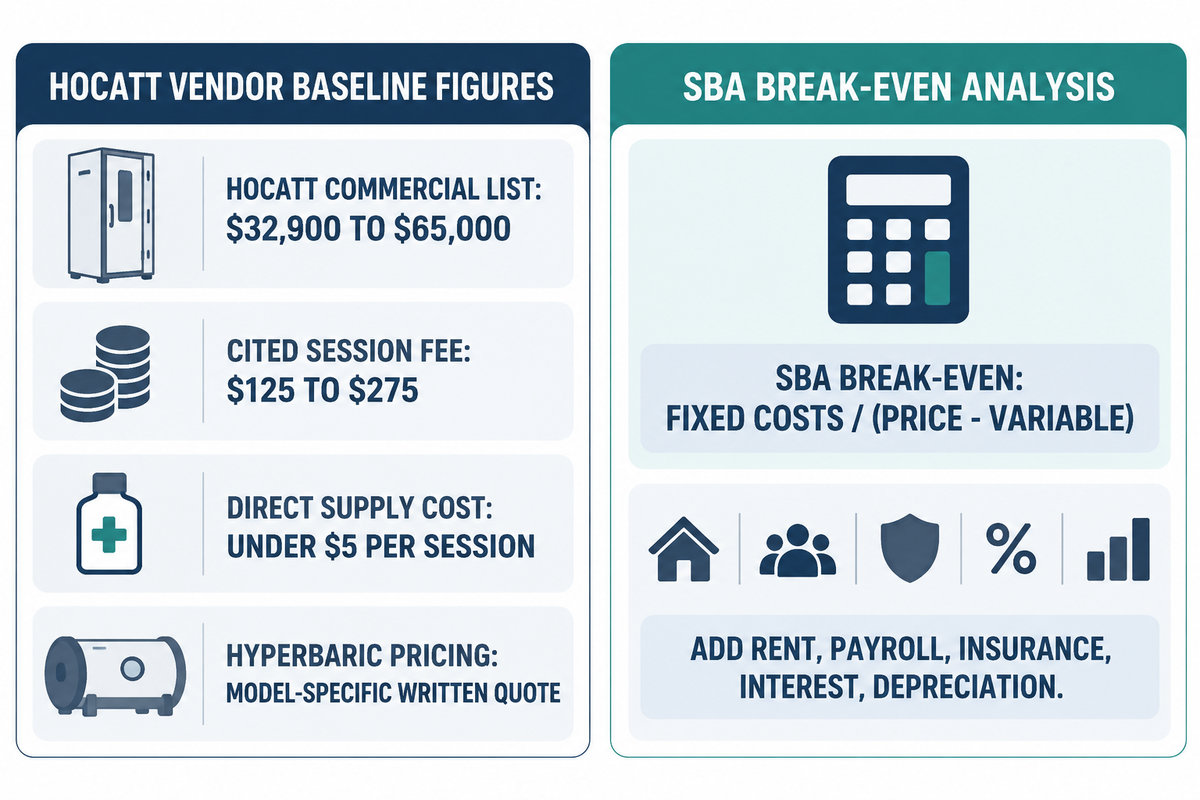
New commercial HOCATT systems start at $32,900 on HOCATT’s practice page and HOCATT’s home page. Full commercial packages list from $32,900 to $65,000 on HOCATT’s business economics page. That same vendor page cites clinic pricing of $125 to $275 for a typical HOCATT session (around $150 in practice examples) and advertises hypothetical payback in 3 to 6 months.
HOCATT’s business page lists direct supply costs at under $5 per session for ozone, oxygen, electricity, and filtered water. That page also carries a clear disclaimer, “This is not an income claim or guarantee. These are hypothetical scenarios.” Published HOCATT prices and direct supply ranges come from manufacturer pages excluding freight, buildout, wages, rent and insurance. Commercial hyperbaric pricing requires a model-specific written quote. Using the U.S. Small Business Administration (SBA) break-even formula (Fixed Costs divided by the difference between Unit Price and Unit Variable Cost), studios must add rent, payroll, insurance, interest, and depreciation before projecting payback.
Commercial electricity rates also vary widely across U.S. states, and measured kilowatt-hour draw per HOCATT cycle isn’t published by independent laboratories. High-traffic practices can generate strong gross receipts when fully booked, yet modeling payback strictly on direct utility costs overlooks paid sanitation turnover, maintenance parts, and realistic Year 1 occupancy.
SBA Break-Even & 5-Year Cost Structure Matrix: HOCATT vs. Commercial Hyperbaric Chamber
Use the SBA break-even structure below to plug in your local lease, hourly wage, insurance quote, and supplier landed pricing instead of relying on direct utility costs projection alone.
| SBA Cost Category | 1 HOCATT Ozone Sauna Room | 1 Commercial Hyperbaric Room |
|---|---|---|
| Upfront Equipment Baseline | $32,900–$65,000 new (vendor page); resale units priced by condition | Model-specific written quote by shell type and ATA rating |
| Site Buildout & Commissioning | Freight, wet-room flooring, GFCI circuit, outdoor ozone exhaust, O3 alarm | Freight, dry room grounding, compressor/chiller power, floor-load check |
| Variable Consumables / Visit | Under $5/visit vendor estimate (O3/O2, power, water) + CO2, towels, disinfectant | Compressor/chiller power, cotton laundry, disposable masks or wipe-down supplies |
| Attendant Labor / Visit | Intake, collar seal setup, end-of-cycle purge, wet disinfection, boiler descaling | Intake, static/cotton screening, pressurization assist, dry interior wipe-down |
| Fixed Monthly Overhead | Room lease share, ozone-inclusive liability insurance, software, loan interest | Room lease share, pressurized-device liability insurance, software, loan interest |
| Preventive Maintenance Parts | Dual ozone destruct cartridges, neck gaskets, steam boiler scale service | Intake filters, door/zipper seals, concentrator sieve beds, acrylic inspections |
| Published Retail Session Benchmark | $125–$275/visit (~$150 vendor example) on cash-pay menus | Set by local market, pressure tier, and membership bundle structure |
| Payback Sensitivity Driver | Vendor cites 3–6 months hypothetically; real payback hinges on daily utilization minus fixed overhead | Multi-chamber attendant ratio lets one staffer supervise multiple dry rooms simultaneously |
For commercial economics and occupancy modeling based on multiple chamber businesses, review our Hyperbaric Oxygen therapy Business Payback Benchmarks.
Facility Footprint, Utilities, Ventilation, and Daily Turnover
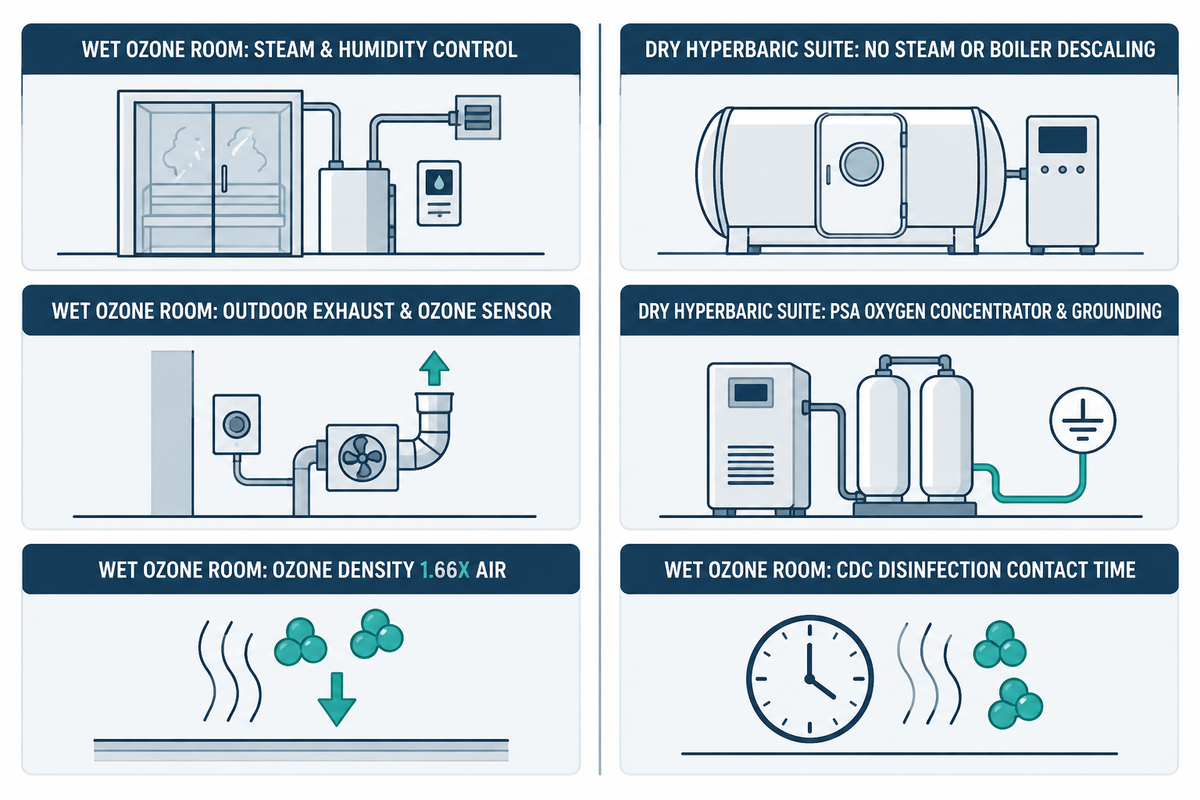
A commercial HOCATT room requires wet-location electrical protection, filtered or distilled water, CO2 cylinder storage, an external oxygen concentrator, and outdoor exhaust. By contrast, a commercial hyperbaric suite stays dry and doesn’t require steam plumbing or boiler descaling. Floor loading, door clearance and air conditioning are considerations for the design and construction of hyperbaric suites (See hyperbaric chamber electrical circuit and grounding requirements). Dimensions and the placement of exhaust, disinfectant wet contact time, and cabinet amp draw vary based on the mechanical code, machine revisions, and disinfectant label.
Room size alone doesn’t dictate safe indoor air. The U.S. Environmental Protection Agency (EPA) guide on indoor ozone generators outlines that the concentration of indoor ozone is dependent on the size of the room, the output of the generator, outdoor ozone, ventilation, and reactive surfaces. Fewer reactive surfaces leave higher airborne ozone, while surface reactions consume ozone and can generate irritating secondary byproducts. NIOSH states that the relative density of ozone is 1.66 times that of air, and as such, pure ozone is heavier than air. The actual air distribution within a room is highly dependent on thermal convection and mixing, so outdoor exhaust and calibrated sensors are essential.
Daily room capacity is determined as much by sanitation dwell times as by cabin timers. According to CDC disinfection recommendations (Recommendation 3.c) , noncritical healthcare surfaces that contact intact skin require low-level disinfection that respects product label contact times and material compatibility. In commercial wellness studios, wiping perspiration, disinfecting seat and neck collars, venting steam, and allowing dry time reduce total daily bookings below theoretical back-to-back clock math.
| Facility Requirement | HOCATT Ozone Sauna Room | Commercial Hyperbaric Room |
|---|---|---|
| Moisture & Flooring | Wet-rated waterproof flooring; steam condensation & towel laundering | Dry anti-static flooring; zero steam or drain lines |
| Electrical Circuit | Dedicated GFCI-protected wet-location circuit sized to nameplate amps | Dedicated circuit for compressor, concentrator, and chiller + grounding |
| Gas & Water Feeds | Secured CO2 cylinder, filtered/distilled water, external PSA O2 concentrator | Oil-free air compressor + optional PSA oxygen concentrator (zero CO2) |
| Ventilation & Exhaust | Direct outdoor exhaust + dual catalytic destruct + calibrated O3 alarm | Standard HVAC heat-rejection airflow for compressor and chiller |
| Turnover Routine | End-of-cycle purge + wet disinfection + drying + fresh neck towel | Interior surface sanitation of mattress/controls + swap cotton linens |
Understanding how a PSA oxygen concentrator supplies flow and purity helps inform sieve bed maintenance planning. For layouts of dry-rooms check out our designs for hyperbaric chamber room space and ventilation.
HOCATT vs. Infrared Sauna, Traditional Sauna, and IV Ozone
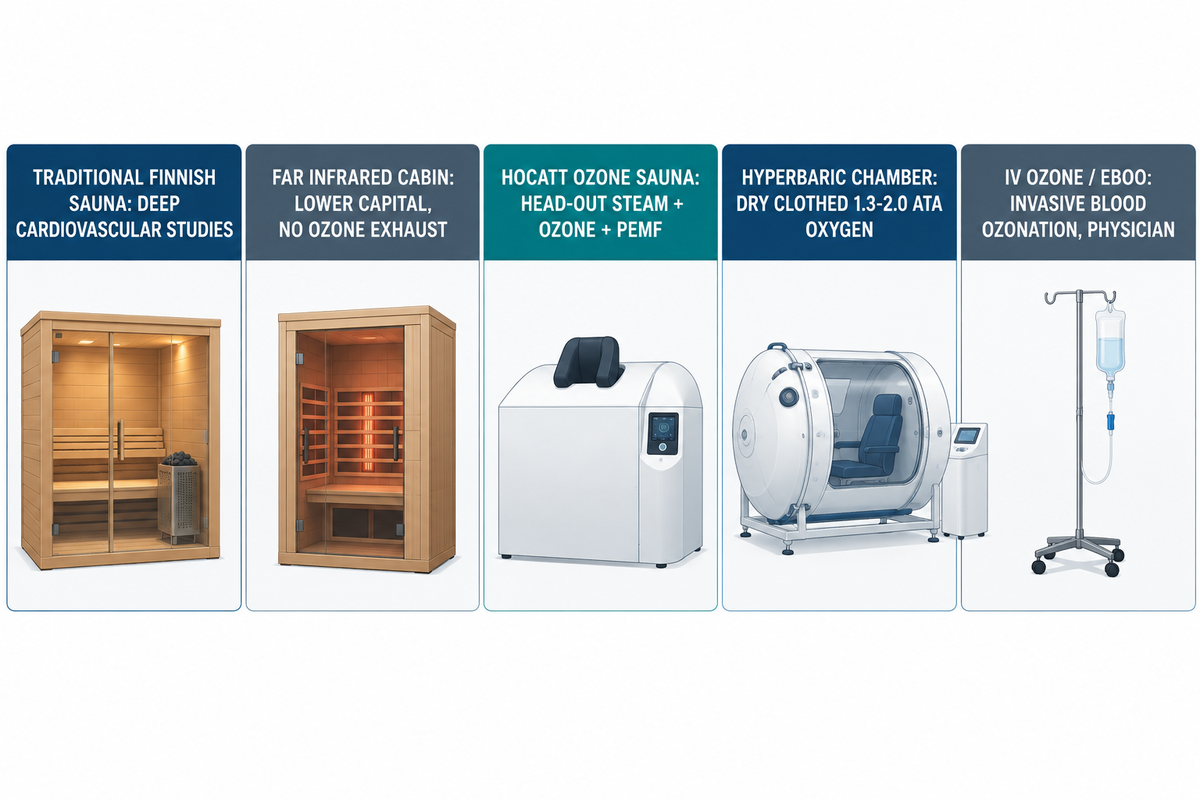
HOCATT services the market between a far infrared sauna and an IV ozone or EBOO performed by a physician. Compared to a traditional sauna or an infrared sauna, HOCATT delivers head-out comfort and combines ozone therapy with steam, carbonic acid, and PEMF. Marketing brochures often state that the pod delivers ozone through the skin. Unlike invasive blood ozonation, the cabinet exposes skin to an ozone-containing atmosphere without drawing blood, and escaping ozone still creates an inhalation risk.
That gap creates a sharp budget choice for wellness owners. For simple sweat recovery, a multi-person infrared cabin carries a much lower capital cost than a $32,900+ HOCATT pod. Infrared rooms also avoid ozone exhaust, CO2 cylinders and catalytic cartridges. Studios seeking a higher-ticket solo recovery anchor without hiring IV nurses generally compare HOCATT against dry hyperbaric units or lower-cost alternatives to hyperbaric chambers.
| Dimension | HOCATT Ozone Sauna | Commercial Infrared Sauna | Traditional Steam / Finnish Sauna | IV Ozone / EBOO (Clinic Only) |
|---|---|---|---|---|
| Exposure & Route | Head-out steam, FIR, CO2, skin O3, optional PEMF | Dry radiant infrared panels (full cabin) | High ambient hot air or wet steam room | Invasive intravenous blood draw & reinfusion |
| Typical Equipment Tier | $32,900–$65,000 new (vendor list) | Lower commercial spa capex tier | Custom carpentry or room buildout tier | Medical generator + sterile IV consumables |
| Staffing & Licensing | Trained wellness attendant (non-medical spa scope) | Minimal staff supervision (self-guided) | Minimal supervision; shared multi-guest room | Licensed physician/RN required; high medical liability |
| Published Evidence Base | Thermal heat well known; no whole-pod detox RCTs | Moderate cardiovascular & recovery literature | Extensive Finnish longitudinal cardiovascular data | 57% of ozone map (PMC9885089) parenteral; not FDA-approved |
| Key Operational Constraint | Ozone safety controls, wet cleaning, 1 guest/slot | Lower ticket price per visit; commodity competition | Hot air uncomfortable for heat-sensitive heads | Strict medical scope, biohazard waste, infection risk |
Is HOCATT Better Than a Traditional or Infrared Sauna for Recovery?
HOCATT is better than standard saunas only for guests who don’t like hot air on their face and want a seated head-out sauna experience (steam, carbonic acid, photon light therapy, and PEMF). Traditional Finnish saunas have deeper long-term cardiovascular studies and a commercial far infrared sauna costs far less to buy, clean, and insure. Pick HOCATT for novelty; pick Finnish saunas or infrared for dry heat recovery for less.
Who Makes HOCATT and How Wellness Centers Choose Between HOCATT and Hyperbaric Chambers
According to HOCATT’s official About page and practice disclosures, André Smith founded the HOCATT brand in 2010. The North American side of the business operates via HOCATT Enterprises USA LLC and authorized distributors. Owners of wellness centers should choose between an ozone sauna and a hyperbaric chamber based on service positioning, insurance approval, and room utilities rather than feature count. Purchasing the wrong anchor unit ties up a significant amount of startup capital, and leaves rooms underbooked ($32,900-$65,000, on HOCATT’s published list).
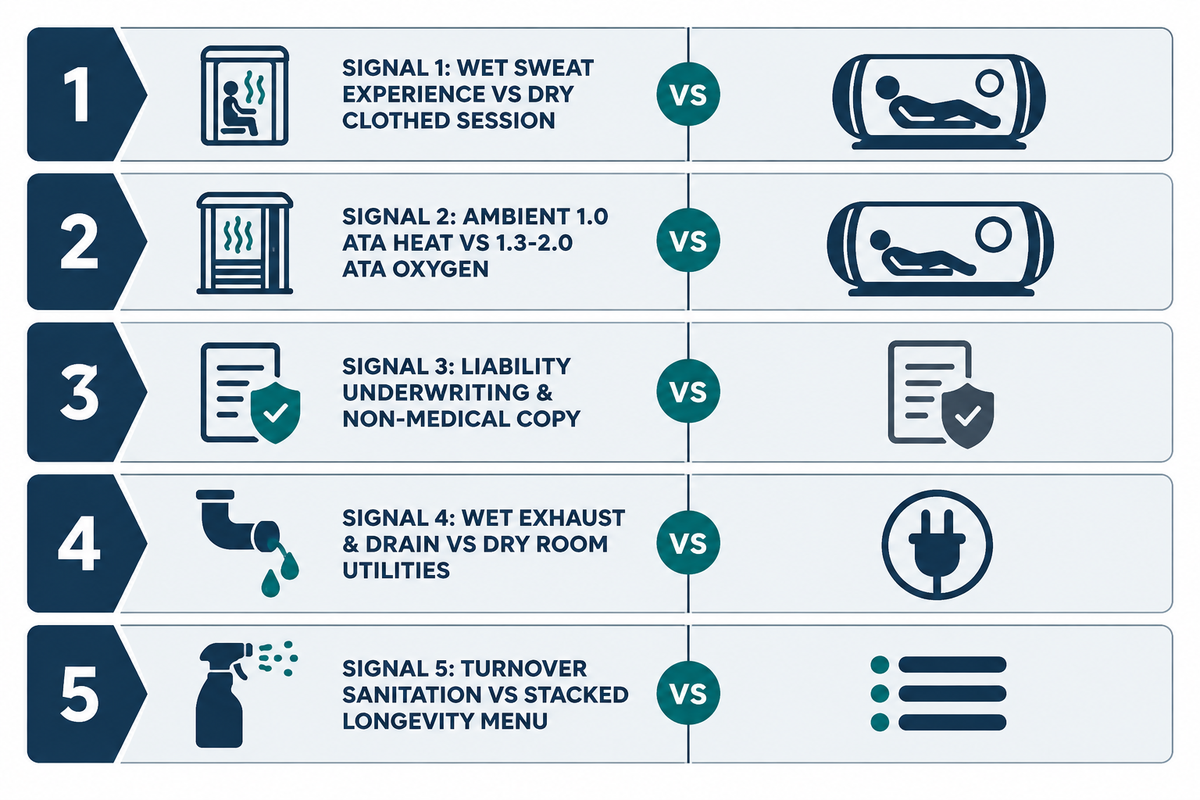
Some multi-room longevity studios offer HOCATT alongside pressurized chambers so clients can book dry oxygen and warm steam sessions in one facility. Most single-room startups take the opposite approach. Use the 5-Signal Wellness Modality Decision Matrix below to help match equipment to your operating model.
| Decision Signal | Favors HOCATT Ozone Sauna | Favors Commercial Hyperbaric Chamber |
|---|---|---|
| 1. Core Client Promise | Short sweating, thermal relaxation, head-out spa ritual | Dry, clothed pressurized oxygen recovery (1.3–2.0 ATA) |
| 2. Insurance & Regulatory Posture | Insurer approves indoor ozone use; non-Canadian jurisdiction | Carrier prefers dry pressurized suites; zero ozone gas storage |
| 3. Room & Lease Limits | Landlord permits outdoor ozone ducting and wet-room GFCI build | Dry commercial office or retail suite without wet plumbing |
| 4. Guest Convenience | Guests willing to undress, sweat heavily, and shower/towel off | Lunch-break or athletic guests staying dry in cotton attire |
| 5. Staffing & Turnover | Dedicated attendant available for wet disinfection after every visit | Lean attendant workflow supervising multiple dry chambers at once |
Make sure you have all the technical and compliance documents on the checklist before placing a deposit on commercial equipment.
Pre-Order Vendor Verification Checklist (HOCATT vs. Hyperbaric Suppliers)
| Verification Area | Confirm for HOCATT Supplier | Confirm for Hyperbaric Supplier |
|---|---|---|
| Safety & Electrical Listing | Wet-location electrical listing, nameplate amp draw, dual ozone destruct service interval | ASME PVHO-1:2023 pressure-vessel specs (>1.14 ATA), grounding kit, IFU fire manual |
| Quality & Regulatory Scope | Written non-medical claim boundaries; local health & insurer approval for ozone | ISO 13485:2016 QMS documentation and explicit U.S. regulatory clearance status |
| Gas & Pressure Specs | External oxygen concentrator flow requirement and CO2 regulator spec | Rated maximum ATA tier (1.3, 1.5, or 2.0 ATA), relief valves, and O2 flow spec |
| Warranty & Spare Parts | Steam boiler, neck gasket, ozone generator, and PEMF board lead times; resale transfer rules | Zipper/door seal lifecycle, compressor service kit, acrylic window inspection interval |
| Landed Total Cost | Itemized unit price, crating, freight, exhaust ducting, training, and start-up consumables | Itemized chamber, compressor, chiller, concentrator, freight, and staff commissioning |
If your decision matrix points toward dry, clothed, pressurized sessions, MACY-PAN (Shanghai Baobang Medical Equipment Co., Ltd.) provides 1.3 to 1.5 ATA soft-shell and 1.5 to 2.0 ATA hard-shell commercial hyperbaric chambers for wellness centers. Contact our engineering team for models’ pressure specs, room layouts, and drawings, and an itemized landed quote before finalizing your floor plan.
MACY-PAN (Shanghai Baobang Medical Equipment Co., Ltd.) manufactures soft-shell and hard-shell hyperbaric chambers and doesn’t manufacture or sell HOCATT ozone saunas. We compiled this comparison because owners of wellness centers frequently ask whether an ambient ozone pod can replace pressurized 1.3 to 2.0 ATA oxygen equipment. Reviewed by the Shanghai Baobang Medical Equipment Co., Ltd. technical team.
What Is Changing for Multi-Modality Wellness Pods and Commercial Hyperbaric Suites
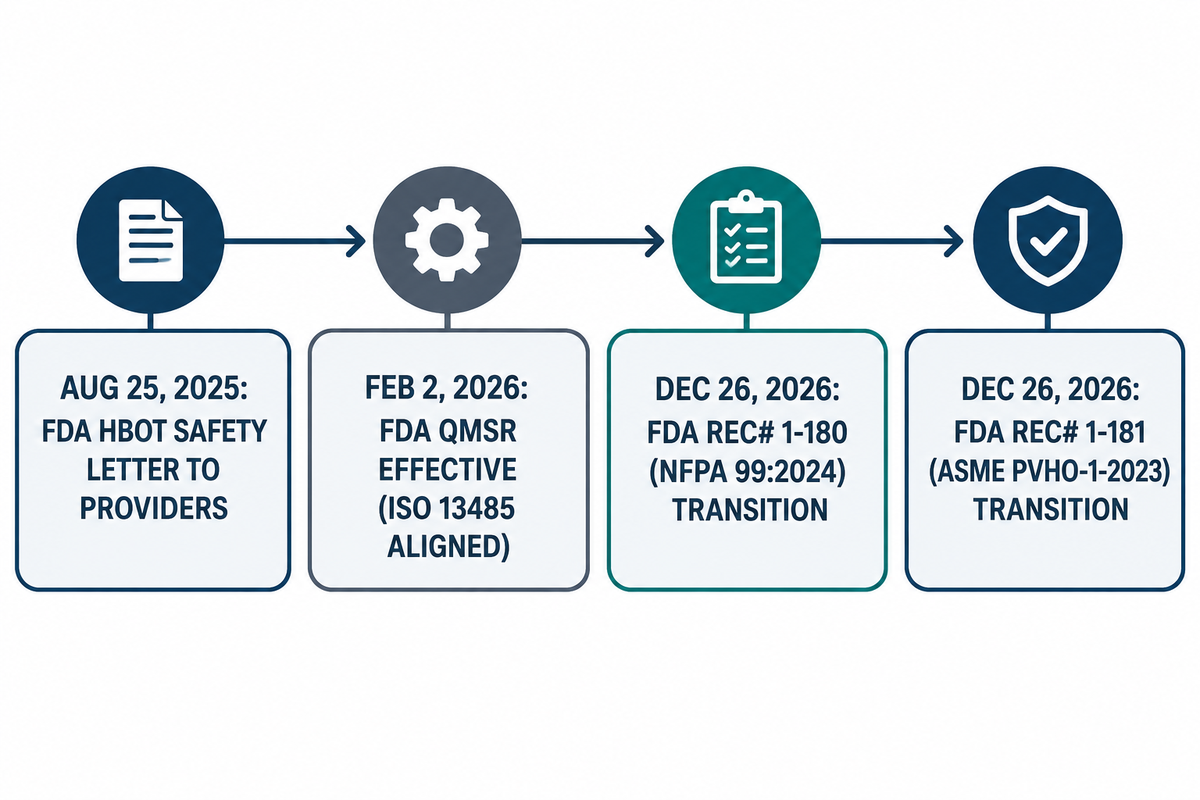
In 2026, regulatory oversight and commercial insurance underwriting are tightening across ozone pods and pressurized chambers, and documented safety engineering takes priority over raw feature counts. Meanwhile, two key U.S. regulatory shifts, along with existing U.S. and Canadian safety notices, set the baseline for North American compliance.
First, the FDA Quality Management System Regulation (QMSR) took effect on February 2, 2026. It amended 21 CFR Part 820 to incorporate ISO 13485:2016 by reference and moved FDA inspections onto Compliance Program 7382.850. Equipment buyers evaluating electrical medical devices also reference Intertek’s IEC 60601-1 summary on essential performance, defining clinical functions beyond basic safety whose degradation creates unacceptable risk.
Second, FDA updated its recognized consensus standards for Class II hyperbaric chambers (21 CFR 868.5470, Product Code CBF). Recognition Number 1-180 (NFPA 99:2024) and Recognition Number 1-181 (ASME PVHO-1-2023) replace the older 2021 and 2019 editions after December 26, 2026.
Alongside these two 2026 transitions, active North American advisories and international ozone updates continue to shape underwriting. International ozone societies launched the 4th edition of the Madrid Declaration on Ozone Therapy on June 5, 2025 per AEPROMO’s congress announcement. Clinic summaries such as Leicester Ozone Clinic cite blood-ozone concentration bands, yet U.S. FDA and Health Canada rules remain unchanged, rewarding transparent safety controls, active air monitoring, and disciplined non-medical claims.
Frequently Asked Questions About HOCATT Therapy
How often should you do HOCATT sessions?
Most wellness studios schedule HOCATT sessions individually according to client heat tolerance for general recovery and relaxation. Wellness staff space visits across recovery days to allow clients to rehydrate and recover from steam heat stress. Because no standardized clinical dosing schedule exists for whole-system ozone saunas, frequency should be determined by intake screening, heat tolerance, and physician advice.
Does insurance cover HOCATT therapy?
HOCATT sessions are not covered by standard health insurance because the ozone sauna cabinet is not cleared by the FDA to diagnose, treat, or cure covered medical conditions. HOCATT is offered on a cash-pay basis with fees reported to be in the range of $125 to $275 per session. Some clients contact their plan administrators to ask if they can pay for HOCATT with their HSA or FSA.
Can you combine HOCATT and hyperbaric oxygen therapy on the same day?
Same-day stacking shouldn’t be presumed safe based on the order of the sessions alone. Recovery centers that allow guests to experience HOCATT therapy and hyperbaric sessions on the same day typically place the hyperbaric chamber first in the schedule to ensure sauna heat doesn’t precede pressurization. Chamber sessions still require medical and fire-safety screening before entry.
Does HOCATT help with weight loss or heavy metal detox?
No randomized human trials show that HOCATT leads to lasting fat loss or clears heavy metals better than normal liver and kidney function. Any weight loss that may be observed on a scale is due to sweat loss.
Is a medical license or prescription required to operate a HOCATT machine?
Most U.S. wellness studios operate a HOCATT sauna without a physician’s prescription when sold exclusively as a non-medical spa service. Local licensing policies vary by state and city. Staff must avoid disease-treatment claims and keep microcurrent settings within local scope-of-practice rules. Prior to purchasing an ozone cabinet, the operator should confirm the restrictions by the municipal health department, state spa board, and OSHA workplace ozone standards. Confirming written commercial general liability insurance covering indoor ozone delivery equipment is a prerequisite to signing the lease.
Can you run a HOCATT session without ozone?
Yes. Commercial HOCATT consoles allow operators to disable ozone generation and run steam, far infrared, carbonic acid, or photon light, individually, for ozone-sensitive guests or locations where there are strict indoor air limits.
What warranty and maintenance checks matter when buying a used HOCATT machine?
Important checks prior to purchase of a used HOCATT cabinet include verification of factory warranty transfer eligibility, steam boiler scale, presence of dual catalytic ozone destruct cartridges, and status of neck-seal gaskets. Also test external oxygen concentrator purity and flow rate, and verify that PEMF and microcurrent boards operate cleanly. Original manufacturer warranties rarely transfer automatically on resale units without authorized distributor recertification. Request written assurance on history of serial number, availability of replacement parts, service lead times, and transfer of operator training before purchasing a used unit.
References & Sources
- U.S. Food and Drug Administration — Electronic Code of Federal Regulations (eCFR), 21 CFR 801.415: Maximum Acceptable Level of Ozone.
- Electronic Code of Federal Regulations (eCFR), 21 CFR 868.5470: Hyperbaric Chamber Classification (U.S. Food and Drug Administration).
- U.S. FDA, Follow Instructions for Safe Use of Hyperbaric Oxygen Therapy Devices: Letter to Health Care Providers (August 25, 2025).
- U.S. FDA, Quality Management System Regulation (QMSR) Incorporating ISO 13485:2016 (Effective February 2, 2026).
- U.S. FDA Recognized Consensus Standards Database, Rec# 1-180 (NFPA 99:2024 Health Care Facilities Code) (Transition cutoff December 26, 2026).
- Health Canada, Unlicensed Ozone Saunas May Pose Serious Health Risks to Users and Anyone in Close Proximity (November 2, 2022)
- U.S. Occupational Safety and Health Administration (OSHA), Chemical Data: Ozone (CAS 10028-15-6, PEL-TWA 0.1 ppm).
- CDC / NIOSH Pocket Guide to Chemical Hazards, Ozone (REL Ceiling 0.1 ppm, IDLH 5 ppm).
- U.S. Environmental Protection Agency (EPA), Ozone Generators That Are Sold as Air Cleaners.
- U.S. Centers for Disease Control and Prevention (CDC), Summary of Recommendations for Disinfection and Sterilization in Healthcare Facilities.
- U.S. Small Business Administration (SBA), Plan Your Business: Break-Even Analysis.
- Undersea and Hyperbaric Medical Society (UHMS), Revised Position Statement on Low-Pressure Fabric Hyperbaric Chambers.
- NIH StatPearls, Hyperbaric Physics (NBK448104).
- Serra MEG, Baeza-Noci J, Mendes Abdala CV, et al., The Role of Ozone Treatment as Integrative Medicine: An Evidence and Gap Map (PMC9885089, 2023).
- Merhi Z, Garg B, Moseley-LaRue R, et al., Ozone Therapy: A Potential Therapeutic Adjunct for Improving Female Reproductive Health (Med Gas Res, 2019, PMID 31249259).
- Dias AR, Bitsaktsis C, Emdin D, et al., Ozone Sauna Therapy and Pulsed Electromagnetic Field Therapy in Women With Diminished Ovarian Reserve (Med Gas Res, 2023, PMID 37077119).
- Zaher Merhi, Daniella Emdin, L. Bosman, et al., Ozone Sauna Therapy and PEMF Delivered via the HOCATT Machine for Endometriosis Pain and Inflammatory Markers (Am J Reprod Immunol 2023, PMID 36789645).
- Cheng et al. — Maternal Ozone Exposure and Risk of Gestational Hypertension (PubMed 37010870, 2023).
- Ribeiro et al., Enhancing Transcutaneous Drug Delivery: Advanced Perspectives on Skin Models (PMC11803873, 2024).
- Bocci V. The Clinical Application of Ozonetherapy (PMC7498916, 2010).
- AEPROMO, 4th Edition of the Madrid Declaration on Ozone Therapy (Launched June 5, 2025)
- Intertek, IEC 60601-1 Medical Electrical Equipment Essential Performance FAQ.
- Vendor Specification Source: HOCATT Official Practice Page, Ten-Modality Configuration and Commercial Pricing Overview
- HOCATT Business Economics Page, Investment Range, Supply Cost, and Hypothetical Scenario Disclosures (Vendor specification source).
- HOCATT About Page, Brand History and Founder Overview (Vendor specification source).
- Regenerated.com, HOCATT Ozone Sauna Evidence and Regulatory Review.