Get in Touch with MACY-PAN Company

Reviewed by the Shanghai Baobang Medical Equipment Co., Ltd. technical team (Updated November 2026)
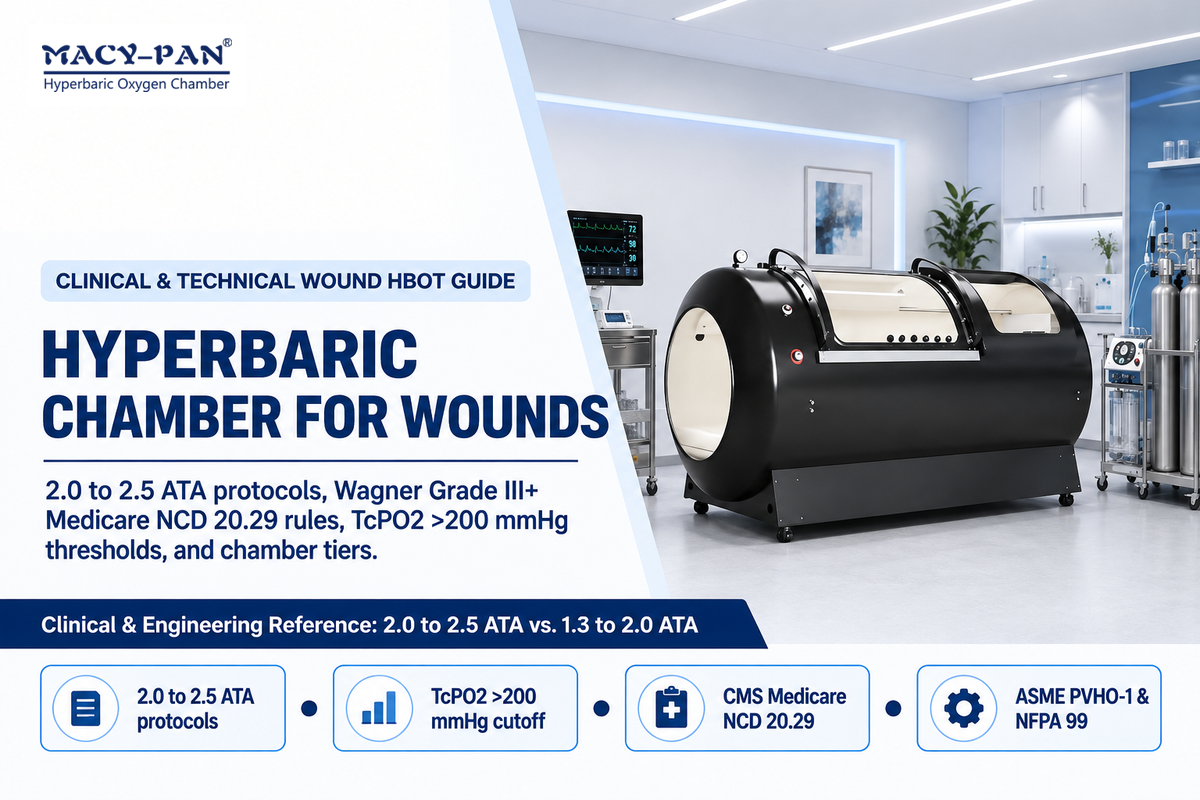
Selecting or prescribing a hyperbaric chamber for wounds requires separating hospital pressure vessels from low-pressure wellness bags. When deep surgical flaps, irradiated bone, or lower extremity ulcers aren’t healing and have been stalled for weeks, standard wound coverings can’t correct cellular hypoxia. Treatment to provide 2.0 to 2.5 atmospheres absolute (ATA) of medical-grade oxygen can resolve hypoxia in the ischemic edges and assist in rebuilding microvascular beds.
Clinical wound protocols use rigid chambers pressurized to 2.0 to 2.5 ATA (14.7 to 22.0 psig) with pure medical oxygen for 90 to 120 minutes of oxygen breathing per session across 20 to 40 dives. As mentioned in CMS Medicare NCD 20.29, diabetic lower-extremity ulcers must attain Wagner Grade III or higher before adjunctive hyperbaric referral can be considered.
Key Clinical & Engineering Takeaways
- Plasma dissolution threshold: At sea-level ambient pressure (1.0 ATA, 21% O2), arterial PaO2 stays below 200 mmHg. At 3.0 ATA with pure oxygen, arterial PaO2 exceeds 2,000 mmHg and dissolved plasma oxygen reaches 6 mL O2 per 100 mL of plasma (Lam et al., 2017).
- Prognostic oximetry cutoff: In a six-center retrospective analysis of 1,144 patients (Fife et al., 2002), an in-chamber transcutaneous oxygen tension (TcPO2) above 200 mmHg was the single strongest healing discriminator (74% standalone reliability, 58% positive predictive value).
- Strict Medicare Exclusions: CMS NCD 20.29 Section B excludes cutaneous, decubitus (pressure) and venous stasis ulcers as well as thermal skin burns from Medicare reimbursement.
- Dressing ignition & fire safety: Testing 44 wound materials at 3 atm (>99.5% O2, 60°C) produced zero spontaneous ignitions, with autogenous ignition temperatures spanning 138°C to 384°C (Bernatchez et al., 2017).
Quick Clinical & Vessel Specifications
| Clinical Wound Operating Pressure | 2.0 to 2.5 ATA (14.7 to 22.0 psig / 202.7 to 253.3 kPa); up to 3.0 ATA acute |
| Dissolved Plasma O2 Capacity (2.0–3.0 ATA) | ~4.3 to 6.0 mL O2 / 100 mL plasma (PaO2 ~1,400 to >2,000 mmHg; tissue pO2 ~500 mmHg) |
| In-Chamber TcPO2 Responder Cutoff | >200 mmHg on pure O2 (74% reliability, 58% PPV; <50 mmHg predicts flap failure) |
| Session Duration & Air-Break Schedule | 90 to 120 minutes O2 time (120–130 min total door-to-door); 5-min air breaks every 30 min |
| Optimal Barotrauma Compression Rate | 2.0 psi/min (~0.136 ATA/min) minimizes 43% cohort middle-ear barotrauma rate |
| Wound Dressing AIT Range (ASTM G72) | 138°C to 384°C at 3 atm >99.5% O2 (0/44 spontaneous ignitions at 60°C) |
| US Medical Device & Vessel Codes | FDA 21 CFR 868.5470 (Class II CBF), ASME PVHO-1-2023 (>2 psig), NFPA 99 Ch. 14 |
| MACY-PAN OEM Quality & Pressure Scope | 1.5–2.0 ATA SUS304 hard & 1.3–1.5 ATA TPU soft units; general ISO 9001 & CE |
What Is a Hyperbaric Chamber for Wounds and How Does It Heal Tissue?
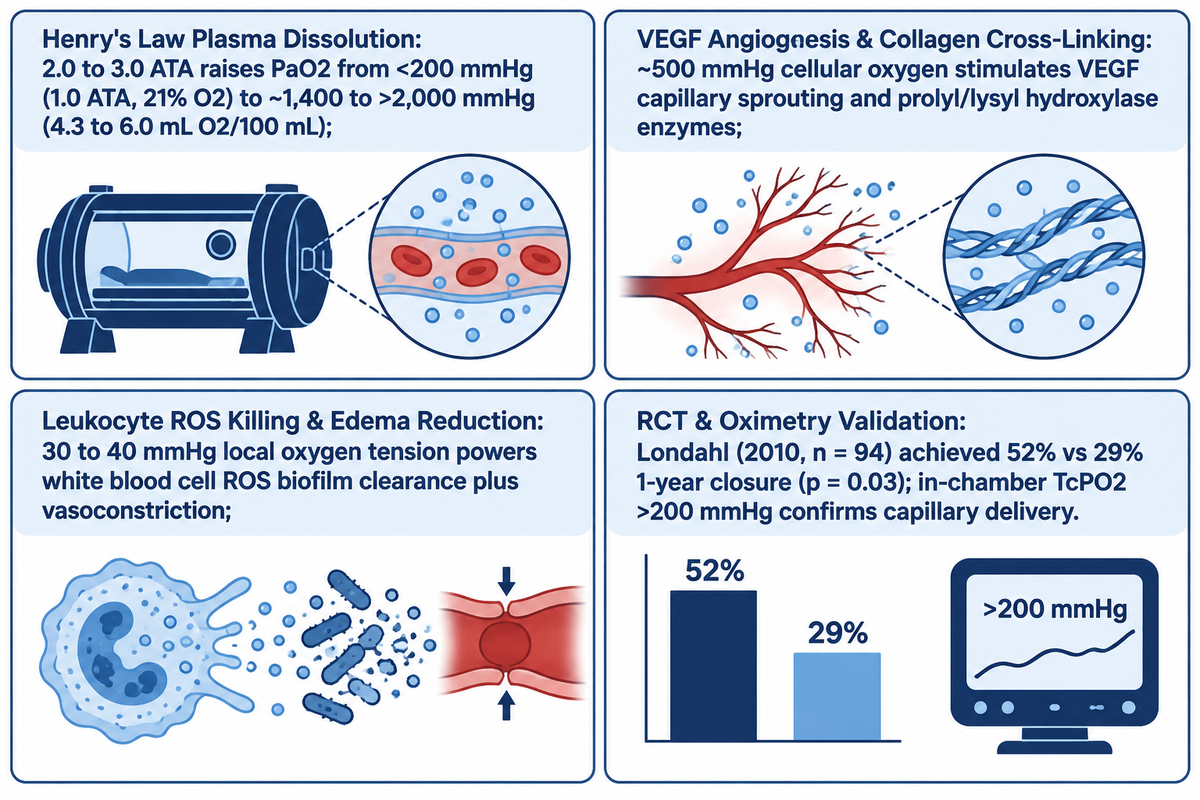
A hyperbaric chamber is a closed clinical vessel that heals hypoxic tissue injuries by dispersing 100 percent oxygen at two to three times normal air pressure (2.0 to 3.0 ATA). Compared with sea-level air (where the air we breathe is 21 percent oxygen and arterial PaO2 stays below 200 mmHg), pressurization raises arterial PaO2 from ~1,400 to over 2,000 mmHg and dissolves 4.3 to 6.0 mL O2 per 100 mL of plasma (Lam et al., 2017).
It’s commonly thought that an oxygen chamber works by blowing gas across a wound. In actuality, systemic hyperbaric oxygen therapy (HBOT) relies on the absorption of gas in the lung and is therefore limited by Henry’s Law. If capillaries around a wound collapse or swell with edema, the red blood cells can’t squeeze through the narrowed microvessels. Because delivering oxygen in a pressurized environment raises the concentration of oxygen dissolved directly in liquid plasma more than tenfold, plasma carries extra oxygen past microthrombi to areas deprived of oxygen.
According to Heyboer et al. (2017), applying a cellular oxygen levels to approximately 500 mmHg has four cascading effects. First, the hyperoxic environment brings about the production of VEGF which stimulates the sprouting of endothelial cells to form new blood vessels. Second, fibroblasts need oxygen as an essential cofactor for prolyl and lysyl hydroxylase enzymes to cross-link collagen fibers and restore tensile strength.
Third, white blood cells rely on local oxygen tension of 30 to 40 mmHg to generate reactive oxygen species (ROS) to fight infection and clear bacterial biofilm. Fourth, hyperbaric vasoconstriction reduces periwound edema, while dissolved plasma delivery of oxygen sustains tissue oxygenation (Lam et al., 2017). Together, delivering oxygen and nutrients through newly formed capillaries is how pressurized oxygen helps promote healing after standard dressings have failed.
Do hyperbaric chambers help heal wounds?
Yes, when an ulcer stems from reversible local hypoxia rather than uncorrected large-vessel occlusion. In a double-blind randomized controlled trial of 94 patients with chronic Wagner Grade II, IV foot ulcers (Löndahl et al., 2010), 52% of the hyperbaric group achieved complete ulcer closure at 1-year follow-up compared with 29% in the sham air group (p = 0.03).
Depending on the patient’s initial level of perfusion and their adherence, clinical outcomes can vary. When breathing pure oxygen inside the chamber raises periwound transcutaneous oxygen tension (TcPO2) above 200 mmHg, the supply of oxygen is sufficient to support collagen synthesis and angiogenesis. On the other hand, if the femoral or popliteal arteries are totally occluded, even more oxygen wouldn’t be able to reach the foot. Once macrovascular inflow is established, adjunctive oxygen treatment increasing the amount of oxygen delivered to hypoxic tissue must pair with surgical debridement, mechanical offloading, and infection control.
Which Chronic and Non-Healing Wounds Qualify for Hyperbaric Oxygen Therapy?
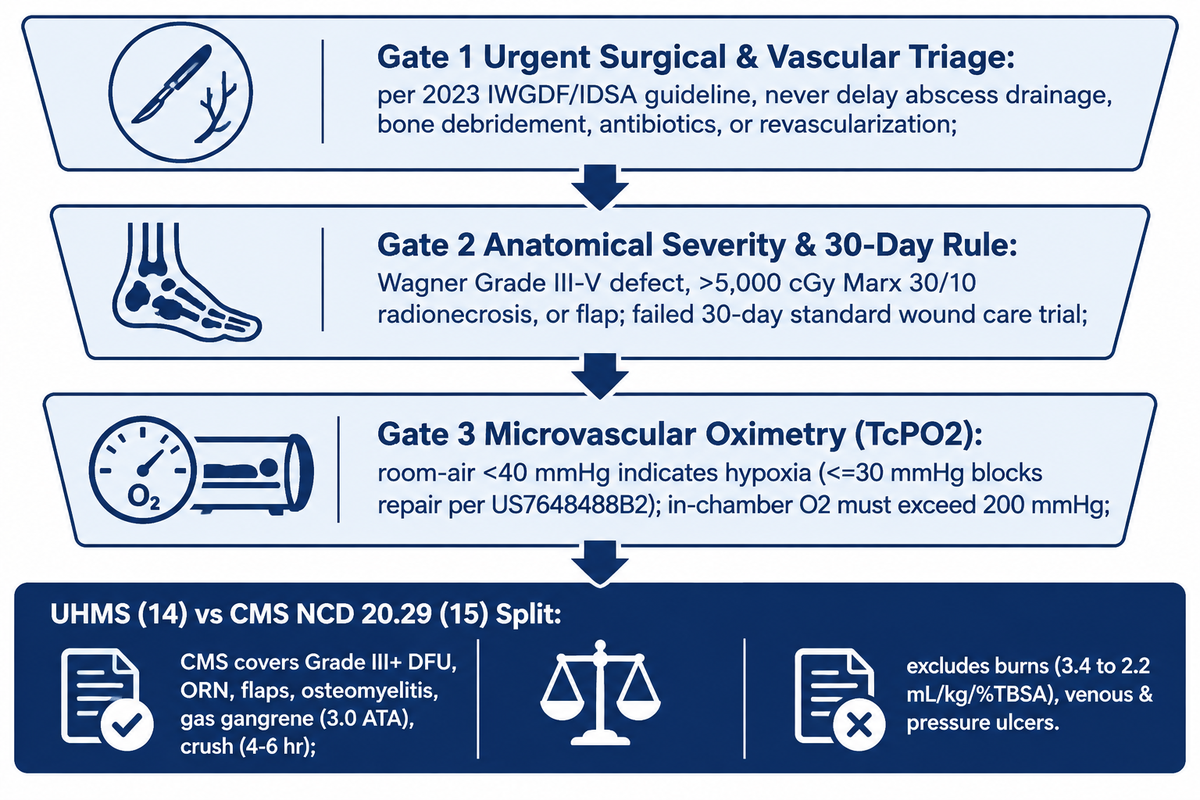
Qualifying chronic and non-healing wounds include Wagner Grade III or higher diabetic lower-extremity ulcers, late radiation tissue injury (osteoradionecrosis and soft-tissue radionecrosis), compromised skin grafts and flaps, chronic refractory osteomyelitis, and necrotizing soft-tissue infections (CMS Medicare NCD 20.29). Routine venous stasis ulcers and pressure sores are excluded.
The Undersea and Hyperbaric Medical Society (UHMS) defines 14 clinical hyperbaric medicine indications, and CMS NCD 20.29 defines 15 systemic conditions. Outpatient clinics usually see referrals for simple, uncomplicated venous leg ulcers and skin tears which don’t qualify as healing properly. Under federal reimbursement rules, a primary care physician or wound specialist can’t prescribe HBO therapy as a first-line substitute for basic wound care.
“The use of HBO therapy will be covered as adjunctive therapy only after there are no measurable signs of healing for at least 30-days of treatment with standard wound therapy, and must be used in addition to standard wound care.”
Source: Centers for Medicare & Medicaid Services (CMS), Decision Memo NCAId=37 & NCD Manual Section 20.29
Beyond refractory ulcers, other systemic emergencies including carbon monoxide poisoning, acute arterial gas embolism, and clostridial myonecrosis, to name a few, qualify immediately, without any standard care waiting period. To help hospital intake teams screen referrals accurately, the framework below differentiates between covered and non-covered ulcers.
3-Gate Chronic Wound HBOT Qualification Sieve
Prior to scheduling hyperbaric treatment at a hospital medical center, clinicians vet every non-healing referral through three diagnostic gates without a waiting period:
- ✔ Gate 1: Triage of Infection & Surgical Emergency. Per the 2023 IWGDF/IDSA Diabetic Foot Infection Guideline , hyperbaric oxygen is never used as standalone antimicrobial therapy for infection. Per the 2023 IWGDF/IDSA Diabetic Foot Infection Guideline, urgent removal of an overlying abscess and bone debridement should be done, as well as administration of systemic antibiotics. A bone infection’s engagement and revascularization of an ischemic limb should be done as soon as possible.
- ✔ Gate 2: Anatomical Severity and Verification of Prior Standard Care. Confirm the defect is of Wagner Grade III-V osteomyelitis or abscess, tissue radionecrosis or a failing myocutaneous flap. Verify the prior use of standard care to offload, manage blood glucose and nutrition.
- ✔Gate 3: Microvascular Oximetry Challenge (TcPO2). Measure baseline room-air TcPO2 (<40 mmHg indicates hypoxia, with ≤30 mmHg blocking spontaneous repair per US7648488B2) and verify that in-chamber oxygen raises TcPO2 above 200 mmHg to confirm capillary delivery into the treatment plan.
| Wound / Tissue Indication | Clinical & Grading Threshold | UHMS Approved | CMS NCD 20.29 Status | Mandatory Prerequisite / Timing |
|---|---|---|---|---|
| 1. Diabetic Lower-Extremity Wounds | Wagner Grade III+ (deep abscess, osteomyelitis, tendon/joint capsule) | Yes (Grade II–V) | Covered (Sec. A.15) | Failed 30-day standard care trial; periodic wound measurement |
| 2. Osteoradionecrosis & Soft-Tissue Radionecrosis | Late radiation tissue damage (>5,000 cGy exposure; Marx 30/10 protocol) | Yes | Covered (Sec. A.10–11) | Documented radiation history & progressive hypovascular necrosis |
| 3. Compromised Skin Grafts & Flaps | Hypoxic or irradiated recipient bed; post-op congestion/ischemia | Yes | Covered (Sec. A.14) | Immediate / 24–72 hr window after mechanical pedicle check |
| 4. Chronic Refractory Osteomyelitis | Persistent bone infection unresponsive to surgery & antibiotics | Yes | Covered (Sec. A.9) | Unresponsive to definitive surgical debridement & culture-guided drugs |
| 5. Necrotizing Soft-Tissue Infections | Fournier gangrene, necrotizing fasciitis, progressive bacterial gangrene | Yes | Covered (Sec. A.7) | Immediate adjunctive use after emergent surgical debridement |
| 6. Clostridial Myonecrosis (Gas Gangrene) | Acute Clostridium perfringens alpha-toxin myonecrosis | Yes (3.0 ATA) | Covered (Sec. A.5) | Emergent 3.0 ATA dives tid/bid alongside surgery & antibiotics |
| 7. Crush Injury & Compartment Syndrome | Gustilo Grade III open fractures or post-fasciotomy skeletal muscle ischemia | Yes | Covered (Sec. A.12) | Initiated within 4–6 hours post-injury/fasciotomy |
| 8. Acute Thermal Burns | Deep partial- or full-thickness thermal burns (Heyboer et al., 2017) | Yes | Excluded (Sec. B.2) | UHMS notes fluid drop from 3.4 to 2.2 mL/kg/%TBSA; excluded by CMS |
| 9. Venous Stasis & Decubitus Pressure Ulcers | Cutaneous venous insufficiency or sacral/heel pressure sores | No | Excluded (Sec. B.1) | Managed with compression, pressure offloading, and standard dressings |
| 10. Wagner Grade I, II Superficial Diabetic Ulcers | Superficial dermis/subcutaneous ulcers without bone or deep abscess | Select Grade II | Excluded (Sec. A.15) | Must progress to Grade III+ or use non-Medicare payment pathways |
This policy split details why primary care referral coordinators must document exact bone or tendon exposure when submitting a prior authorization request for hyperbaric therapy for wound healing.
Diabetic Foot Ulcers, Radiation Tissue Damage, and Compromised Skin Grafts: Clinical Outcomes
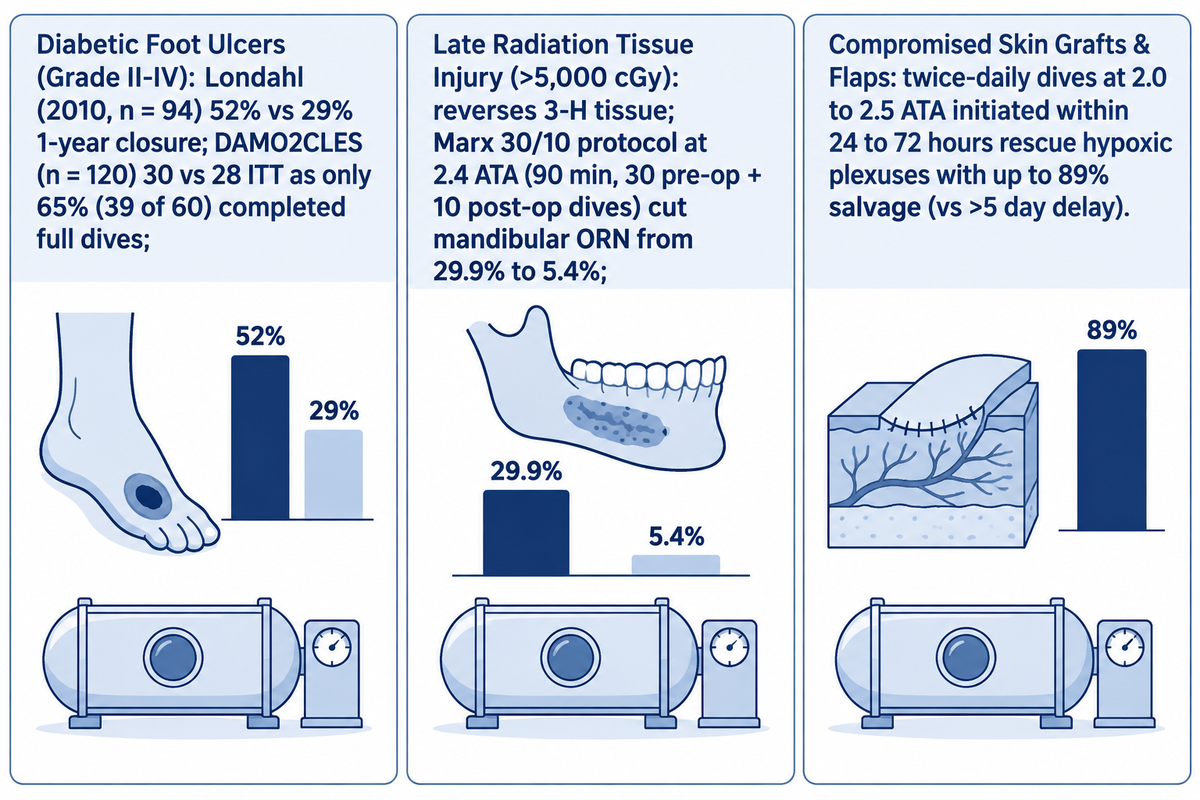
Clinical outcomes across the three major wound indications show distinct trajectories: chronic Wagner Grade II, IV diabetic foot ulcers achieved 52% vs. 29% 1-year closure in completed protocols (Löndahl et al., 2010), the Marx 30/10 radiation protocol reduced post-extraction mandibular osteoradionecrosis from 29.9% to 5.4%, and compromised surgical flaps reached up to 89% salvage.
Evidence from trials shows that, for diabetic wounds, there are barriers to biological potential and adherence. In Löndahl’s randomized trial of 94 patients with ulcers present for more than three months, completing the prescribed course of treatment nearly doubled 1-year closure rates. Yet the multicenter Dutch DAMO2CLES trial (n = 120 ischemic patients) found no statistically significant intention-to-treat difference at 12 months (30 vs. 28 healed sores) because only 65% (39 of 60 patients) completed the full hyperbaric schedule. Patients who finished their dives showed higher limb salvage, and the 2024 DAMO2CLES economic evaluation (Brouwer et al., 2024) noted more favorable outcomes concentrated in Wagner Grade III and IV subgroups. For deeper staging criteria, see our guide to hyperbaric oxygen therapy protocols for diabetic foot ulcers.
Late radiation injury takes a different path. High-dose radiation therapy (>5,000 centigray) obliterates small blood vessels through endarteritis obliterans, producing hypoxic, hypovascular, and hypocellular (“3-H”) tissue (Heyboer et al., 2017). Unlike acute wounds that heal by spontaneous cellular proliferation and capillary growth, irradiated tissue can’t do the same without an external hyperoxic stimulus. By the ‘Marx 30/10’ schedule at 2.4 ATA (90 minutes daily), patients undergo 30 dives before oral extractions or reconstructive surgery and 10 dives post-op, in order to establish a permanent capillary bed before surgical incisions.
For compromised skin grafts and flaps, the goal of treatment is to improve arterial and venous supply before the graft becomes compromised. Once venous congestion or arterial insufficiency threatens a post-mastectomy, head-and-neck, or traumatic limb flap, initiating twice-daily dives at 2.0 to 2.5 ATA within 24 to 72 hours provides increased oxygen to keep dermal and subdermal plexuses alive. When started promptly, clinical series report high flap healing success; delay beyond five days after demarcation rarely rescues necrotic dermis. Acute surgical schedules for other patients are described in our resource on post-surgical HBOT.
Hyperbaric Wound Protocols: ATA Pressure Ratings, Session Duration, and TcPO2 Thresholds
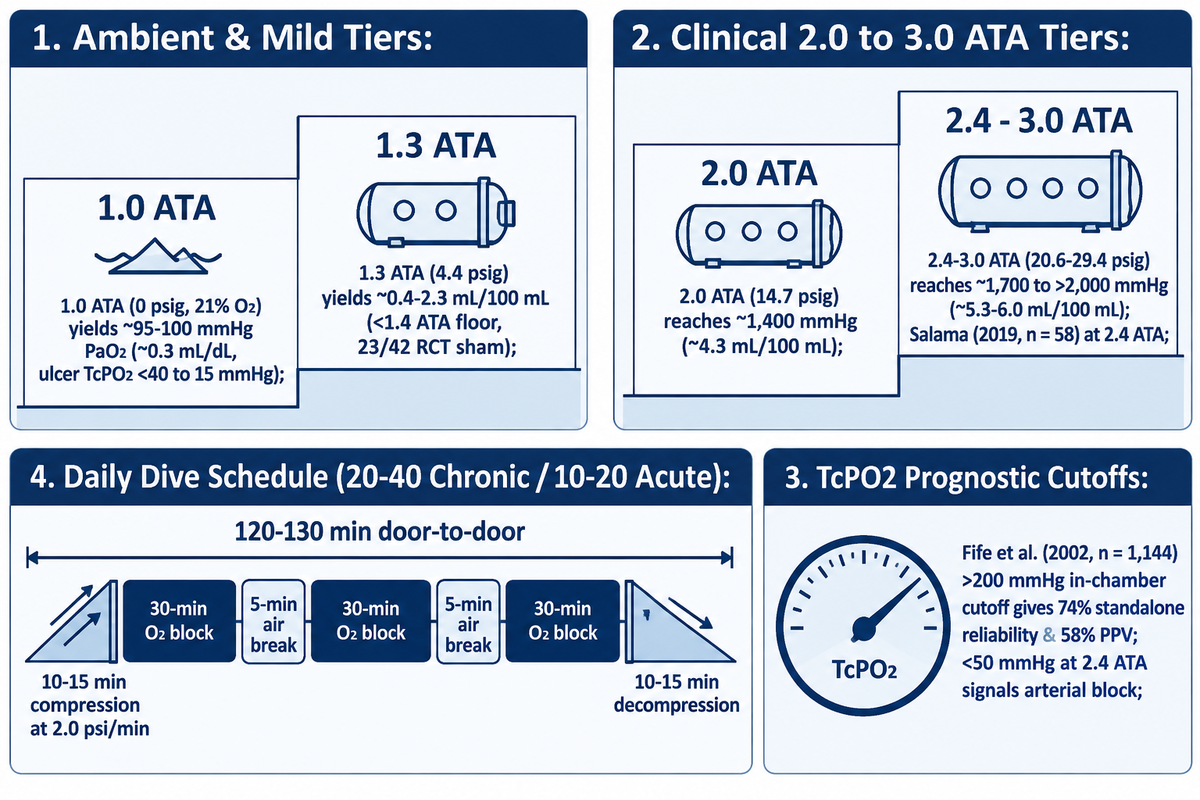
Standard hospital Wound Protocols pressurize patients to 2.0 to 2.5 ATA (14.7 to 22.0 psig, with 2.0 to 2.4 ATA applied in most chronic ulcer regimens) for 90 to 120 minutes daily, taking 5-minute breaks every 30 minutes to prevent CNS oxygen toxicity (Heyboer et al., 2017).
Under Henry’s law (~0.0031 mL O2 dissolved per dL of plasma per mmHg PaO2), pressurizing a vessel to the 2.0 to 2.5 ATA clinical standard for the treatment of diabetic and radiation defects raises arterial PaO2 from ~100 mmHg on ambient room air (0.3 mL/dL plasma O2) to 1,400–1,700+ mmHg (4.3–5.3 mL/dL plasma O2). In a prospective trial of 58 patients with Wagner Grade ≥2 ulcers (Salama et al., 2019), administering 2.4 ATA for 90 minutes per session alongside conventional care produced measurable wound-area reduction across days 0, 10, 20, and 30. Clinics evaluating vessel ratings can also review our technical breakdown comparing 1.3, 1.5, and 2.0 ATA hyperbaric pressure tiers.
| Pressure Tier (ATA / psig / kPa) | Inspired Gas (FiO2) | Approximate Arterial PaO2 | Dissolved Plasma O2 (vol%) | Expected Periwound TcPO2 & Clinical Role |
|---|---|---|---|---|
| 1.0 ATA (0 psig / 101.3 kPa) | 21% O2 (ambient air) | ~95–100 mmHg (<200 mmHg) | ~0.3 mL O2 / 100 mL plasma | <40 mmHg in hypoxic ulcers (down to 15 mmHg in severe ischemia) |
| 1.3 ATA (4.4 psig / 131.7 kPa) | 21% air (sham) or ~90–93% PSA concentrator mask | ~140 mmHg (air) to ~750 mmHg (non-sealed mask) | ~0.4 to ~2.3 mL O2 / 100 mL | Below UHMS ≥1.4 ATA floor; 1.1–1.5 ATA air used as sham in 23/42 RCTs |
| 2.0 ATA (14.7 psig / 202.7 kPa) | Near-100% medical O2 | ~1,400 mmHg | ~4.3 mL O2 / 100 mL plasma | Reaches responder cutoff in patent limbs; clinical wound protocol entry floor |
| 2.4–3.0 ATA (20.6–29.4 psig) | Near-100% medical O2 | ~1,700 to >2,000 mmHg | ~5.3 to 6.0 mL O2 / 100 mL | Meets full resting tissue oxygen consumption from dissolved plasma alone |
In assessing transcutaneous oximetry, it is important to distinguish a prognostic discriminator from an absolute biological guarantee. Because Fife et al.’s (2002) six-center cohort (n = 1,144) showed 74% standalone reliability and a 58% positive predictive value at the 200 mmHg cutoff, roughly one in four outcomes still depended on adjunct vascular and surgical care. Sea-level room-air baseline TcPO2 alone correlated weakly with failure, and some patients with low baseline scores still improved when hyperbaric therapy was paired with revascularization. However, if in-chamber TcPO2 at 2.4 ATA stays below 50 mmHg (Heyboer et al., 2017), arterial inflow is severely obstructed and vascular intervention is required before continuing dives.
How many hyperbaric treatments are needed for wound healing?
Most chronic wound protocols require 20 to 40 daily hyperbaric oxygen therapy sessions delivered five days per week over four to eight weeks. Acute compromised skin grafts or crush injuries typically require 10 to 20 sessions over five to ten days (Heyboer et al., 2017).
Each dive follows a structured 120- to 130-minute total door-to-door profile inside a hyperbaric environment: 10 to 15 minutes of gradual compression at 2.0 psi/min, 100 minutes at treatment pressure (three 30-minute blocks of breathing oxygen separated by two 5-minute room-air breaks), and 10 to 15 minutes of controlled decompression. Under CMS NCD 20.29, the wound team must document measurable reductions in ulcer length, width, or depth at regular monthly intervals to justify extending therapy toward 40 dives to achieve complete healing.
Monoplace vs. Multiplace vs. Soft-Shell Chambers: Why 2.0–2.5 ATA Matters for Wound Care
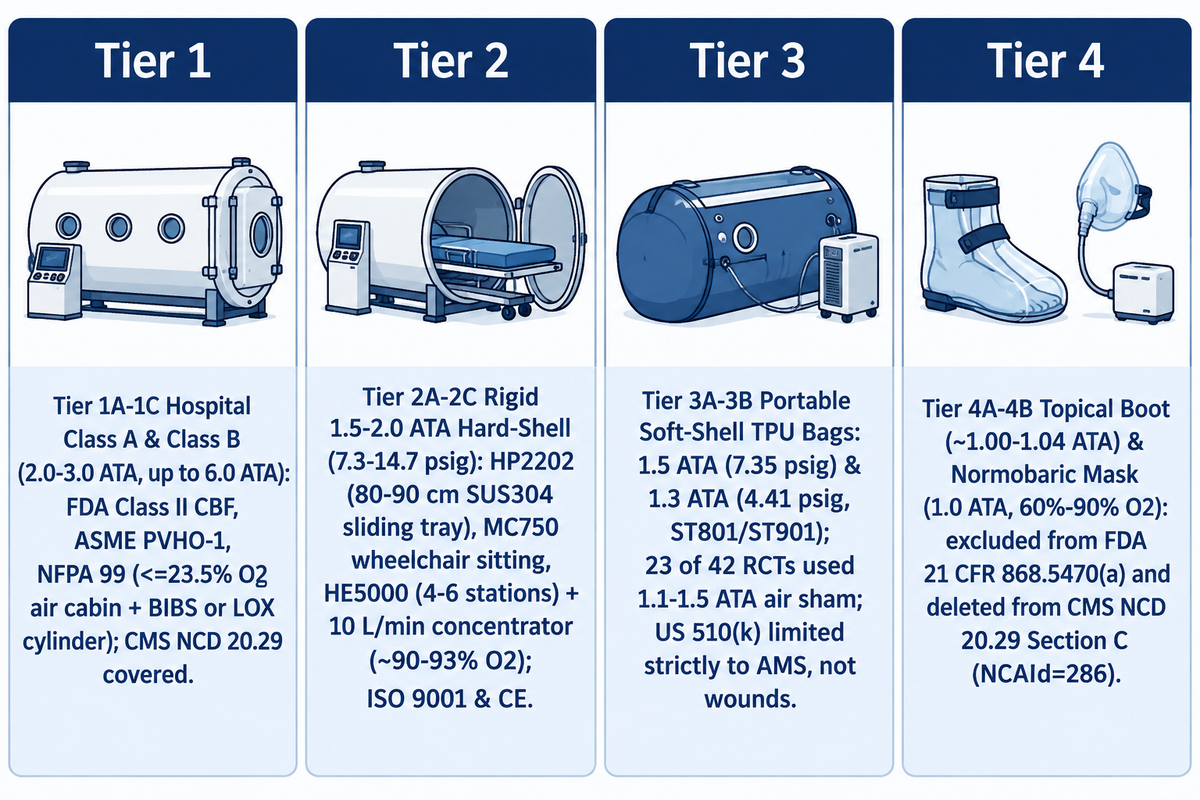
Wound centers use NFPA 99 Class B monoplace chambers (pressurized to 2.0-3.0 ATA with medical oxygen) or Class A multiplace chambers (pressurized with compressed air, while patients breathe medical O2 via hood or mask). Portable 1.3 ATA soft-shell bags don’t meet the UHMS ≥1.4 ATA clinical definition or CMS wound reimbursement guidelines.
Comparing a monoplace hyperbaric cylinder against a walk-in multiplace unit or a 1.5–2.0 ATA clinic hard-shell system across absolute chamber pressure (ATA), inspired oxygen fraction (FiO2), and patient transfer ergonomics shows why hospital vessels and home bags belong to separate clinical categories. In a systematic review of 42 clinical trials (Lansdorp & van Hulst, 2018), 23 trials used 1.1 to 1.5 ATA compressed air (21% O2) as a sham control to blind participants. While a 1.3 to 1.5 ATA chamber paired with an external 10 L/min PSA oxygen concentrator delivers higher oxygen than a 21% air sham, SIMSI (2025) notes that concentrator purity drops from ~93% at 5 L/min to ~90% at 10 L/min. Open headsets dilute alveolar FiO2 even further.
Separately, UHMS confirms that FDA 510(k) clearances for 1.3 ATA zippered fabric bags cover only Acute Mountain Sickness (AMS), not chronic wound care or biofilm eradication. Clinics evaluating rigid steel or acrylic construction can inspect our hard-shell medical hyperbaric chambers and our engineering guide on monoplace versus multiplace chamber facility planning.
4-Tier Wound Oxygenation & Chamber Pressure Matrix
This 10-profile engineering matrix compares hospital Class A and Class B vessels to 1.5-2.0 ATA rigid clinic chambers, 1.3 ATA soft bags and non-hyperbaric topical oxygen boxes:
| Tier & Chamber Architecture | Working Pressure | Cabin Gas & Patient FiO2 | Wound Patient Access & Transfer | Regulatory & Quality System Scope |
|---|---|---|---|---|
| Tier 1A: Hospital Class A Multiplace (Walk-In) | 2.0–3.0 ATA (up to 6.0 ATA) | Air cabin (≤23.5% O2) + medical O2 hood/BIBS | Roll-in hospital gurney or wheelchair + inside tender | FDA Class II CBF / NFPA 99 Class A / CMS NCD 20.29 |
| Tier 1B: Hospital Class B Acrylic Monoplace (LOX) | 2.0–3.0 ATA (14.7–29.4 psig) | Medical O2 pressurized cylinder + air-break mask | Hydraulic transfer stretcher sliding onto rail tray | FDA Class II CBF / ASME PVHO-1 / CMS NCD 20.29 |
| Tier 1C: Hospital Class B Air-Pressurized Monoplace | 2.0–3.0 ATA | Compressed medical air cabin + medical O2 BIBS mask | Horizontal stretcher tray; lower cabin O2 inventory | FDA Class II CBF / ASME PVHO-1 / NFPA 99 Class B |
| Tier 2A: Rigid 1.5–2.0 ATA Horizontal Hard-Shell (HP2202) | 1.5–2.0 ATA (7.3–14.7 psig) | Air hull + dual 10 L/min O2 concentrator mask (~93% O2) | Sliding bed tray inside 80–90 cm SUS304 steel hull | General ISO 9001 QMS & CE conformity (non-Medicare clinic) |
| Tier 2B: Rigid 1.5–2.0 ATA Wheelchair/Sitting (MC750) | 1.5–2.0 ATA | Air hull + concentrator mask/headset (~90–93% O2) | Wide side door + foldable chair for amputee/elderly access | General ISO 9001 QMS & CE conformity (non-medical-device QMS) |
| Tier 2C: Modular 1.5–2.0 ATA Multiplace Cabin (HE5000) | 1.5–2.0 ATA | Air cabin + 4–6 individual oxygen breathing stations | Walk-in flat threshold + bolted sectional installation | General ISO 9001 QMS & CE conformity (no US FDA 510(k)) |
| Tier 3A: Portable 1.5 ATA TPU Soft-Shell Horizontal | 1.5 ATA (7.35 psig) | Oil-free air compressor + 10 L/min concentrator headset | Top/side dual-zipper entry; requires step-in mobility | Subject to NFPA 99 & PVHO-1 (>2 psig); non-covered for wounds |
| Tier 3B: Portable 1.3 ATA Soft-Shell Bag (ST801/ST901) | 1.3 ATA (4.41 psig) | Ambient air + optional concentrator cannula/mask | Zippered lying or sitting TPU bag | US 510(k) limited strictly to Acute Mountain Sickness (AMS) |
| Tier 4A: Topical Extremity Oxygen Chamber / Boot (TOT) | ~1.00–1.04 ATA (local limb seal) | Local oxygen gas blown over superficial ulcer bed | Plastic bag or boot cuffed around lower leg at home | Excluded from 21 CFR 868.5470; local MAC discretion (NCAId=286) |
| Tier 4B: Normobaric O2 Non-Rebreather Mask | 1.0 ATA (0 psig ambient) | ~60%–90% O2 at sea-level atmospheric pressure | Standard hospital bed or clinic chair | Diagnostic TcPO2 challenge only (>100 mmHg responder check) |
Notice how Tier 4A topical oxygen boots differ fundamentally from a hyperbaric oxygen therapy chamber. Under 21 CFR 868.5470(a), the FDA explicitly excludes topical extremity oxygen bags from the hyperbaric chamber device classification. Similarly, CMS Decision Memo NCAId=286 deleted the former Section C topical oxygen clause from NCD 20.29, separating local limb gas sleeves from systemic HBOT and leaving local topical oxygen coverage to regional Medicare Administrative Contractors (MACs).
Wound Care Preparation and Chamber Safety: Approved Dressings, Clothing, and NFPA 99 Rules
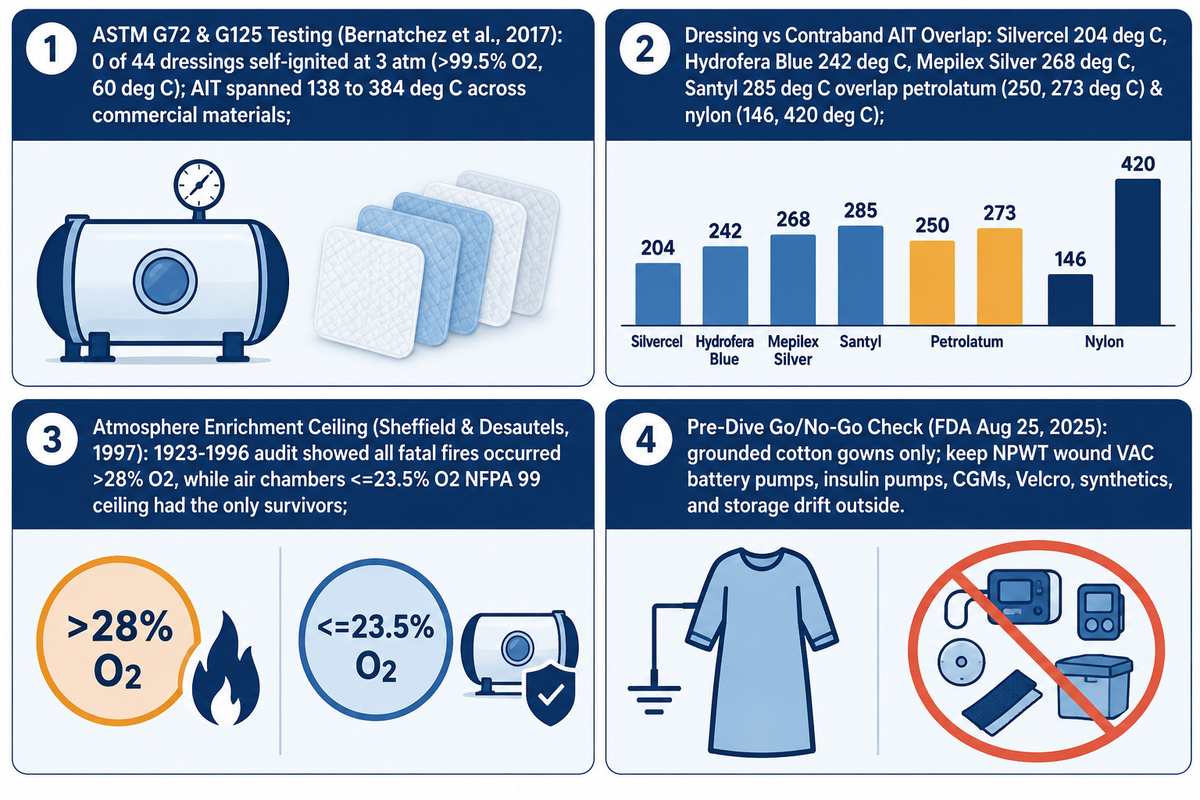
In a laboratory study of 44 commercial wound dressings exposed to 3 atm and >99.5% oxygen at 60°C (Bernatchez et al., 2017), 0 of 44 dressings self-ignited and autogenous ignition temperatures (AIT) ranged from 138°C to 384°C. However, NFPA 99 Chapter 14 strictly bans external battery wound VAC pumps, chemical warmers, synthetic clothing, and unapproved oil or alcohol skin care products inside the hyperbaric chamber.
Fire prevention inside a pressurized chamber rests on controlling oxygen concentration, fuel load, and ignition energy. In Sheffield & Desautels’ (1997) 1923–1996 audit, every fatal accident occurred in atmospheres exceeding 28% oxygen, whereas air-pressurized chambers maintained below the 23.5% O2 NFPA 99 ceiling recorded the only survivors. When a Class B monoplace chamber is filled with nearly pure oxygen inside, static sparks or battery short circuits can ignite fabrics almost instantaneously.
Under ASTM G125 (Oxygen Index) and ASTM G72 testing (Bernatchez et al., 2017), specific dressing AIT values, such as Silvercel at 204°C, Hydrofera Blue Classic at 242°C, Mepilex Silver at 268°C, and Collagenase Santyl ointment at 285°C, overlapped with contraband items like petrolatum (250°C, 273°C), glycerin, and nylon (146°C, 420°C). Consequently, keeping ignition sources outside the chamber is mandatory. Additionally, UHMS facility safety guidance warns that storing general wound care supplies inside a hyperbaric room encourages storage drift where flammable paints, chemicals, and floor cleaners accumulate and staff traffic distracts operators. Facility managers can audit their room layout against our NFPA 99 hyperbaric chamber fire safety and room checklist.
Do you wear clothes in a hyperbaric chamber?
Yes, patients wear clinic-supplied cotton gowns or scrubs tested for low static discharge and connected to a patient grounding strap (FDA Safety Letter, August 25, 2025). Street clothes, polyester, nylon, wool, Velcro, underwire bras, jewelry, watches, and personal electronics are prohibited.
A “go/no-go” inspection is conducted by the hyperbaric technologist prior to each hyperbaric treatment. Patients must wash off hairspray, perfume, makeup, aftershave, deodorant, petroleum or alcohol lotions. Negative-Pressure Wound Therapy (NPWT) dressing and film seals remain intact on the ulcer. The external battery pump is disconnected and the tubing is clamped. The pump is placed outside of the chamber during pressurization. Same applies to external insulin pumps and non-rated continuous glucose monitor (CGM) transmitters.
Risks, Side Effects, and Contraindications of Hyperbaric Wound Treatment
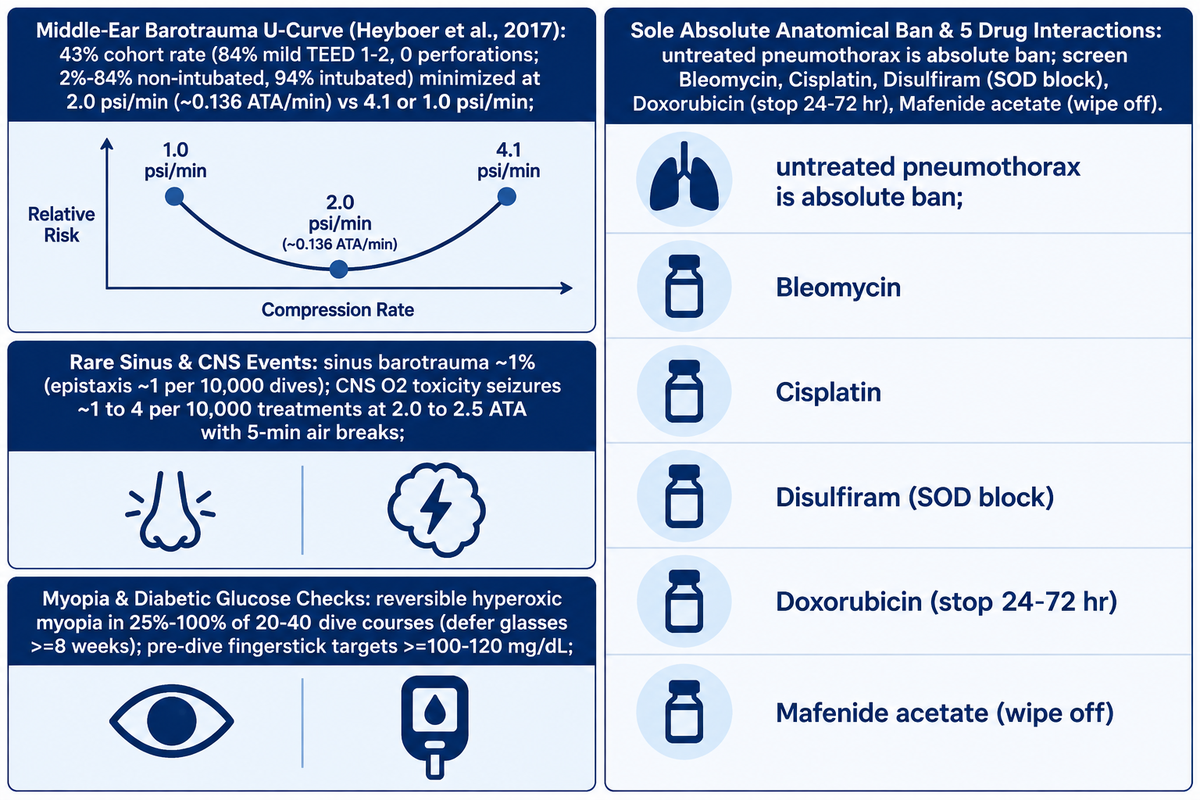
While life-threatening side effects are rare during supervised clinical protocols, Heyboer et al. (2017) report middle ear barotrauma in 43% of patients (84% mild TEED Grade 1–2, zero perforations), minimized at a 2.0 psi/min compression rate. Untreated pneumothorax is the sole absolute anatomical contraindication.
In Heyboer’s clinical cohort, compression rate followed a U-shaped barotrauma risk curve: compressing too rapidly (4.1 psi/min) or too slowly (1.0 psi/min) increased ear squeeze, making 2.0 psi/min (~0.136 ATA/min) the optimal pressurization rate. Across broader clinical literature, middle-ear barotrauma ranges from 2% to 84% in non-intubated patients and up to 94% in intubated patients (who often require myringotomy or tympanostomy tubes). Sinus barotrauma occurs in ~1% of patients (with epistaxis in roughly 1 per 10,000 dives), and central nervous system oxygen toxicity seizures occur in ~1 to 4 per 10,000 treatments at 2.0 to 2.5 ATA when 5-minute air breaks are enforced. See our clinical overview on preventing central nervous system oxygen toxicity with air breaks.
What are the downsides of hyperbaric oxygen therapy?
The four primary downsides are middle-ear pressure discomfort (up to 43% incidence), reversible hyperoxic myopia (nearsightedness in 25%–100% of multi-week courses), in-chamber blood glucose drops in patients with diabetes, and the 4- to 8-week daily schedule (Heyboer et al., 2017).
Patients completing 20 to 40 dives sometimes have temporary shifts in their crystalline lens refractions. Heyboer et al. (2017) note that prescribing of permanent eyeglasses is usually deferred until at least 8 weeks after the final diving session. In diabetic wound patients, hyperbaric sessions commonly lower serum glucose, so wound centers enforce pre-dive fingerstick checks (targeting ≥100–120 mg/dL before locking the hatch). Pre-dive fingerstick blood glucose levels are checked to ensure serum glucose is above 100 and 120 mg/dL to “lock the hatch.” Finally, clinicians screen for one absolute anatomical contraindication (i.e. pneumothorax) and five key drug interactions.
- Bleomycin: History of bleomycin interstitial pneumonitis carries a high risk of progression of fatal pulmonary fibrosis under hyperoxia.
- Cisplatin: Concurrent administration impacts fibroblast collagen synthesis and decreases wound tensile strength (failing to meet the purpose of wound HBOT).
- Disulfiram (Antabuse): Inhibits superoxide dismutase (SOD), leading to CNS and pulmonary oxygen toxicity.
- Doxorubicin (Adriamycin): Enhances anthracycline cardiotoxicity in animal models; discontinue at least 24 to 72 hours (~5 half-lives) before HBOT.
- Mafenide acetate (Sulfamylon): A cream used to treat burns that acts by locally retaining CO2 and causing vasodilation. Thoroughly wipe off all cream prior to entering the hyperbaric chamber.
How Much Does Hyperbaric Wound Therapy Cost? Session Pricing, Medicare Coverage, and Equipment
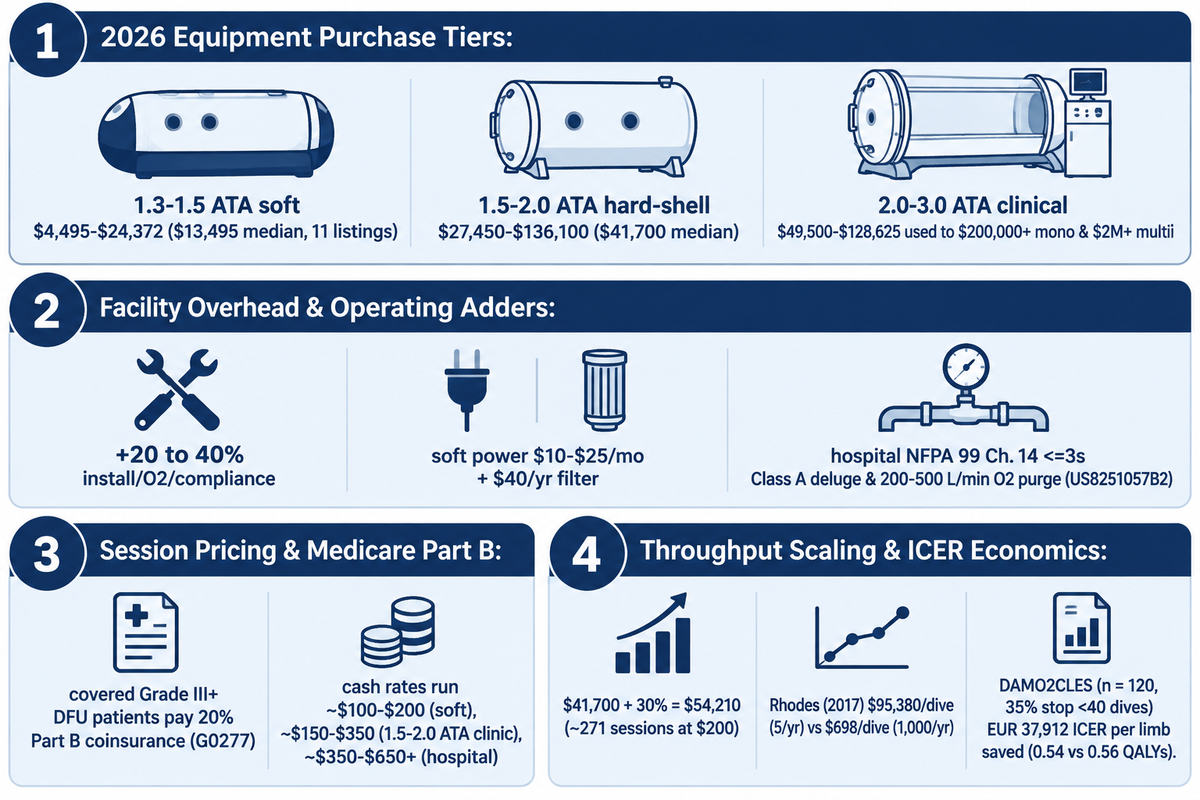
Under Medicare Part B, eligible patients with covered Wagner Grade III+ diabetic ulcers pay 20% of the Medicare-approved amount after the Part B deductible is met. Cash outpatient sessions range from $100 to $650+ per dive across soft-shell, private clinic, and hospital tiers (PCCI), while commercial equipment listings span $4,000 to over $2 million.
From a health-economics standpoint, hyperbaric wound care is sensitive to both patient selection and facility utilization volume. In the 2024 DAMO2CLES trial economic analysis (Brouwer et al., 2024, n = 120), the incremental cost-effectiveness ratio (ICER) was €37,912 per limb saved (95% CI −€112,188 to €1,063,561) with mean 12-month QALYs of 0.54 vs. 0.56. Those figures show that routine use across all ischemic ulcers isn’t automatically cost-saving and explain why payers restrict coverage to deep Wagner Grade III, IV defects. In addition, because 35% of trial participants discontinued before 40 sessions, clinic financial models must account for monthly reassessment stops rather than assuming every patient completes 40 dives.
On the facility side, Rhodes et al. (2017) demonstrated more than a 100-fold swing in per-treatment cost based on annual throughput. Operating a standalone chamber for only 5 treatments per year cost $95,380 per dive, whereas running 1,000 treatments per year in a busy hospital unit reduced unit cost to $698 per dive. When budgeting equipment acquisition from 2026 US commercial dealer catalogs (Regenerated.com, PCCI, and HBOT for Sale), buyers should add 20 to 40% for shipping, oxygen supply piping, and room compliance. See our full hyperbaric chamber equipment pricing and operating cost breakdown.
5-year total cost of ownership & session pricing comparison (2026 US commercial dealer listings & CMS rules):
| Cost item | 1.3–1.5 ATA Soft-Shell Portable | 1.5–2.0 ATA Rigid Hard-Shell (Clinic/Home) | 2.0–3.0 ATA Hospital Class B Monoplace / Class A Multiplace |
|---|---|---|---|
| Purchase price | $4,495–$24,372 ($13,495 median across 11 listings, Regenerated) | $27,450–$136,100 ($41,700 median personal hard-shell, Regenerated) | $49,500–$128,625 used monoplace; up to $200,000+ new monoplace & $2M+ multiplace (PCCI) |
| Installation & room compliance | Plug-and-play compressor + 10 L/min O2 concentrator (+20 to 40% total overhead band) | Dedicated circuit, HVAC cooling, and commercial doorway / modular rigging | NFPA 99 Ch. 14 room barriers, ≤3s Class A deluge, bulk LOX piping (+20 to 40% CapEx) |
| Energy & oxygen supply | $10–$25/mo electricity (HBOT for Sale) | Dual PSA oxygen concentrator power + chiller/AC load | 200–500 L/min medical O2 purge flow (US8251057B2) or compressed air bank |
| Maintenance & spares | $40 yearly replacement filter pack (HBOT for Sale), zipper gaskets, and sieve beds | Door silicone seals, relief valve calibration, and viewport inspection | Annual ASME PVHO-2 acrylic viewport audit, grounding tests, & oxygen seals |
| Patient per-session billing | Non-reimbursable cash wellness (~$100–$200/session benchmark) | Private cash clinic packages (~$150–$350/session; non-Medicare) | Medicare Part B G0277 (20% beneficiary coinsurance) or ~$350–$650+ hospital cash rate |
Payback & Utilization Example: Combining the $41,700 median hard-shell price (Regenerated.com) with a 30% midpoint installation, oxygen, and upkeep allowance (from the published 20 to 40% adder band) yields $54,210 installed capital cost. Dividing $54,210 by the $200 outpatient session benchmark equals roughly 271 sessions before staffing or lease expenses. In contrast, Rhodes et al. (2017) showed unit cost falling from $95,380 at 5 treatments/yr standalone to $698 at 1,000 treatments/yr in a hospital setting.
Selecting a Hyperbaric Chamber for Wound Clinics vs. Home Recovery: Supplier Checklist
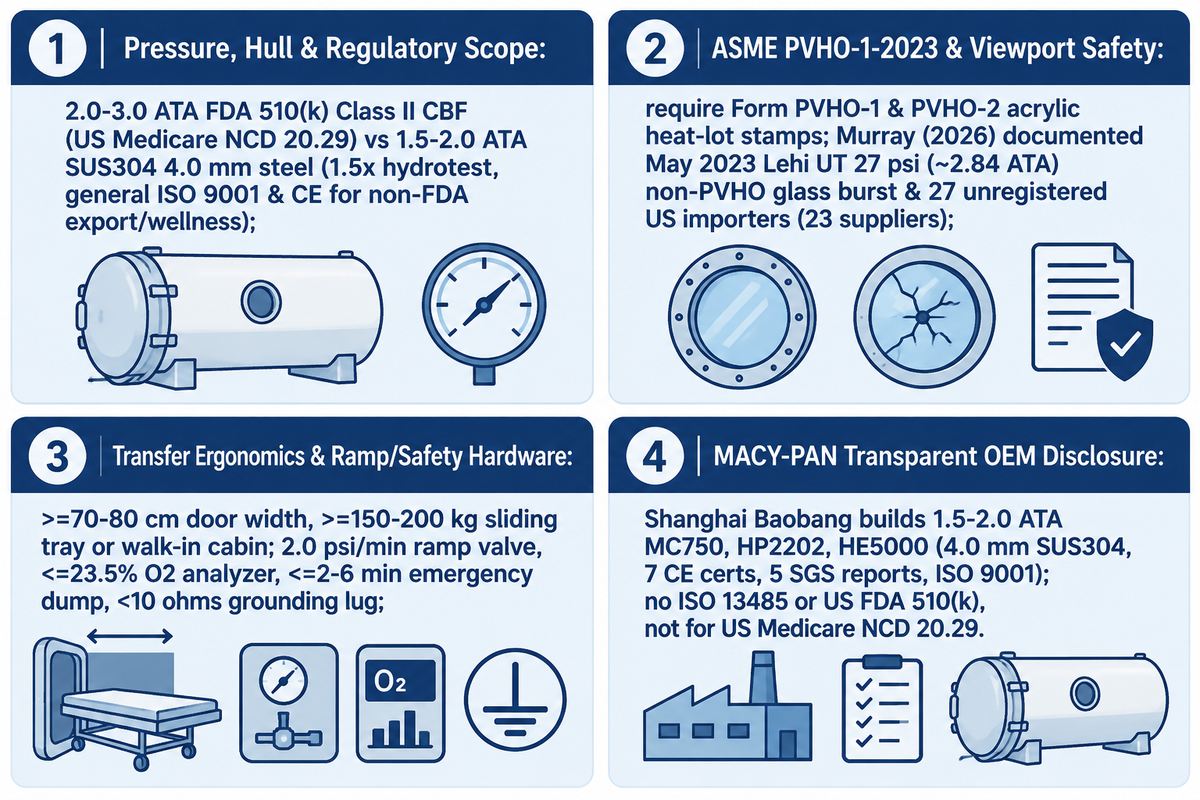
Procurement teams must tie equipment certification to their clinical business model. US hospital wound centers billing Medicare NCD 20.29 require FDA 510(k)-cleared Class II (Product Code CBF) 2.0–3.0 ATA chambers built to ASME PVHO-1-2023 and NFPA 99 Chapter 14. Cash-pay wellness or international outpatient practices often specify 1.5–2.0 ATA stainless-steel systems.
Cutting corners on pressure-vessel documentation carries severe legal and mechanical consequences. In Murray (2026, Undersea & Hyperbaric Medicine), a May 2023 incident in Lehi, Utah ruptured a non-PVHO flat glass viewport at 27 psi (~2.84 ATA), seriously injuring two occupants. The same audit identified 27 US importers bringing in chambers from 23 suppliers lacking FDA medical-device manufacturer registration. Beyond structural safety, clinic directors must evaluate entry ergonomics: elderly diabetic amputees or post-surgical patients often struggle to climb into top-zip soft bags. Specifying a sliding transfer stretcher tray, a wide-door wheelchair sitting cabin, or a walk-in modular multiplace room helps reduce transfer falls during daily clinic operations.
RFQ checklist (copy these specifications into your quote request):
| Parameter | Recommended range | Why it matters | How to verify |
|---|---|---|---|
| Rated Working Pressure & Hull Material | 2.0–3.0 ATA (hospital wound center); 1.5–2.0 ATA SUS304 4.0 mm stainless steel (private clinic/wellness) | Determines maximum alveolar PaO2 and structural fatigue life under daily cycling | Inspect mill test certificates (SUS304 4.0 mm) & 1.5× hydrostatic test report |
| Regulatory & Quality Management Scope | FDA 510(k) Class II CBF (for US hospital wound billing) vs. general ISO 9001 & CE conformity (non-FDA wellness/export) | Prevents illegal US clinical marketing or Medicare claim denials | Verify FDA 510(k) K-number in CDRH database or inspect audited ISO 9001 / CE certificates |
| Pressure Vessel & Acrylic Viewport Standard | ASME PVHO-1-2023 (FDA Rec #1-181) and PVHO-2 acrylic viewport serialization | Eliminates catastrophic non-PVHO glass burst risk (e.g., May 2023 Lehi 27 psi failure) | Require ASME Form PVHO-1 data report and acrylic lot heat-lot stamps |
| Patient Transfer & Accessibility Ergonomics | Rail-guided sliding stretcher tray, wheelchair-accessible side door, or walk-in flat threshold | Offloads weight from plantar foot ulcers and prevents transfer falls | Check clear door width (≥70–80 cm), tray load rating (≥150–200 kg), and ramp angle |
| Pressurization Ramp Control & O2 Monitoring | Adjustable compression valve capable of 2.0 psi/min linear ramp + continuous cabin O2 analyzer (≤23.5% O2 alarm) | 2.0 psi/min minimizes middle-ear barotrauma; ≤23.5% O2 prevents air-chamber fire enrichment | Review PLC/manual ramp valve curves and dual-sensor O2 calibration logs |
| Emergency Decompression & Grounding Hardware | Dual redundant mechanical relief valves, manual internal/external dump (≤2–6 min), and patient grounding lug | Required by NFPA 99 Ch. 14 and FDA Aug 2025 safety letter for rapid evacuation and static control | Test emergency exhaust time from MAWP to 0 psig and continuity (<10 ohms) to ground |
Transparent MACY-PAN OEM Scope & Certification Disclosure: MACY-PAN hyperbaric chamber configurations for clinics and medical practices (hard-shell sitting MC750, horizontal HP2202, and multiplace HE5000 systems operating at 1.5-2.0 ATA under ISO 9001 and CE conformity, without ISO 13485 or US FDA 510(k) clearance) are built by Shanghai Baobang Medical Equipment Co., Ltd. with 4.0 mm SUS304 stainless-steel or aluminum-alloy hulls, 7 CE conformity certificates, 5 SGS reports, and ASME PVHO-1 documentation on selected steel models. Because MACY-PAN devices do not hold ISO 13485 medical-device quality management certification or US FDA 510(k) clearance, they cannot be used for US Medicare/Medicaid NCD 20.29 reimbursement or >2.0 ATA inpatient hospital wound protocols. International buyers and private outpatient clinics evaluating 1.5–2.0 ATA hard-shell units can review our hyperbaric chamber solutions for clinics and medical practices.
Industry Outlook: Rising Chronic Wound Demand, Outpatient HBOT Expansion, and 2026 Standards
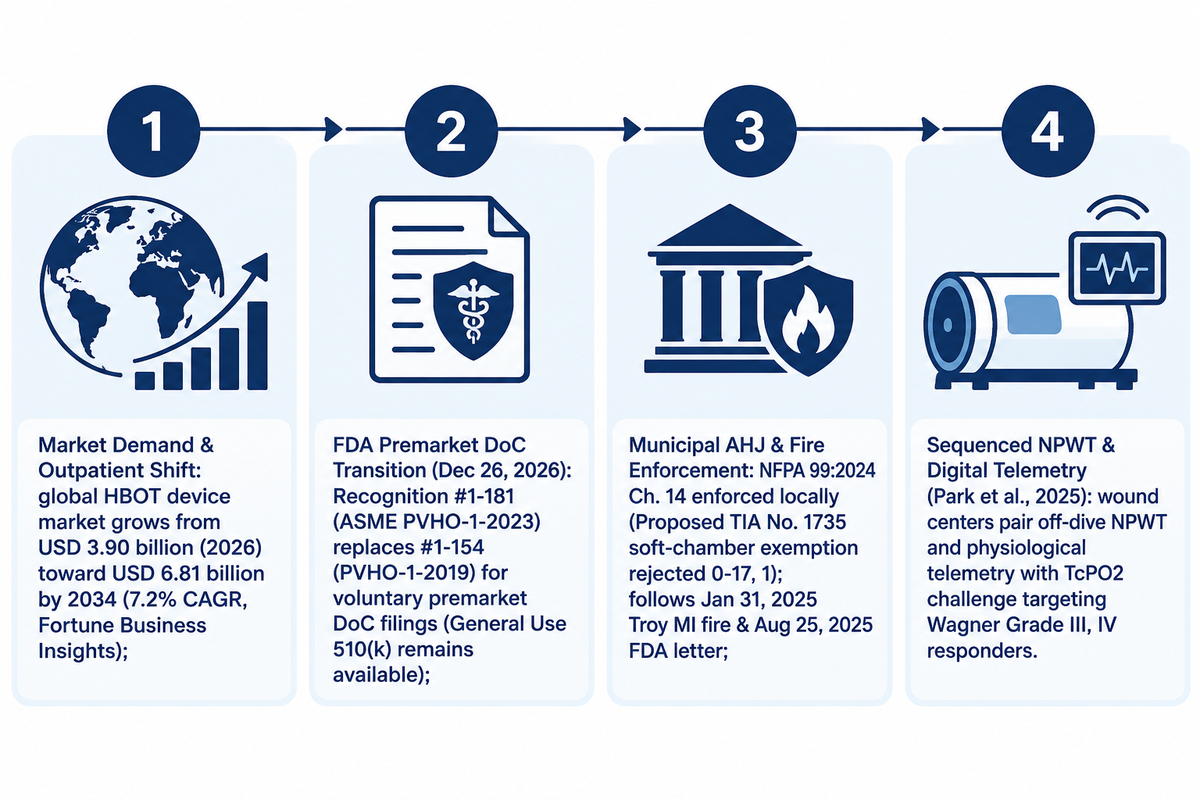
What regulatory and clinical shifts govern hyperbaric wound equipment through 2026 and 2027? Growing diabetic ulcer prevalence is expanding the global HBOT device market from USD 3.90 billion in 2026 toward USD 6.81 billion by 2034 (7.2% CAGR, Fortune Business Insights). At the same time, FDA and state fire marshals tighten enforcement around ASME PVHO-1-2023 and NFPA 99:2024.
Three concrete compliance milestones shape facility planning right now. First, under FDA CDRH Recognition #1-181 (ASME PVHO-1-2023) and Recognition #1-154 (ASME PVHO-1-2019), December 26, 2026 is the transition cutoff after which FDA stops accepting premarket Declarations of Conformity (DoC) to the 2019 edition. As FDA DSCA guidance clarifies, consensus standard recognition governs voluntary premarket DoC submissions rather than imposing an automatic federal retrofit or seizure mandate on installed clinic chambers (General Use 510(k) submissions remain available). However, local Authorities Having Jurisdiction (AHJs) independently enforce NFPA 99:2024 Chapter 14 where Proposed TIA No. 1735 seeking to exempt soft chambers was rejected 0–17, 1.
Second, following the fatal January 31, 2025 monoplace fire in Troy, Michigan (MedPage Today, March 2025) and the August 25, 2025 FDA Letter to Health Care Providers, insurers and hospital credentialing committees increasingly audit patient grounding straps, cotton apparel logs, and UHMS facility accreditation. Third, wound centers are pairing systemic HBOT with sequenced off-dive Negative-Pressure Wound Therapy (NPWT) and digital physiological telemetry (Park et al., 2025). Oximetry challenge data then helps target chamber slots to high-responder Wagner Grade III, IV cases.
Frequently Asked Questions
Can a 1.3 ATA soft-shell home hyperbaric chamber heal a Wagner Grade 3 diabetic foot ulcer?
No. A 1.3 ATA portable soft-shell chamber (~4.41 psig) is cleared by the FDA solely for Acute Mountain Sickness (AMS).
It cannot deliver the 2.0 to 2.5 ATA medical oxygen pressure required to resolve deep Wagner Grade III osteomyelitis or tissue hypoxia. As outlined by UHMS and CMS NCD 20.29, treatment for deep diabetic foot ulcers requires systemic pressurization in a rigid clinical vessel, in addition to surgical bone debridement, systemic antibiotics, vascular assessment and mechanical offloading.
When should you not use a hyperbaric chamber for wound treatment?
Of all contraindications, only absolute anatomical contraindications prevent entry into a hyperbaric chamber.
For example, a pneumothorax that hasn’t been properly treated is an absolute contraindication because the trapped pleural air will expand during the decompression and can lead to a tension pneumothorax. Key pharmacological contraindications and precautions include prior bleomycin pulmonary toxicity, active cisplatin or disulfiram therapy, recent doxorubicin infusion (<24–72 hours), and unwiped topical mafenide acetate (Sulfamylon) cream. Clinicians also postpone treatment in cases of severe uncompensated heart failure and active viral upper respiratory infection (URI) that blocks middle-ear equalization.
Does Medicare cover hyperbaric oxygen therapy for chronic wounds?
Yes, CMS NCD 20.29 stipulates that Medicare Part B will cover specific adjunctive hyperbaric oxygen therapy for certain hypoxic defects.
Coverage is limited to Wagner Grade III lower-extremity ulcers (diabetic wounds) that haven’t shown any clinical improvement after 30 consecutive days of standard therapy. Medicare-approved Part B coverage is conditional. Generally, beneficiaries are responsible for 20% of the Medicare-approved amount after meeting the annual Part B deductible. Section B excludes routine pressure, venous, and thermal burn wounds.
How long is each daily hyperbaric oxygen session for wound care?
A clinical wound dive delivers 90 minutes of oxygen breathing across three 30-minute blocks with two 5-minute air breaks, plus 10–15 minutes each for compression and decompression (120–130 minutes total).
Why must petroleum-based wound dressings and battery wound VAC pumps be removed before entering a monoplace chamber?
In a monoplace chamber pressurized Class B with nearly pure oxygen, an unrated battery pump can cause a rapid flash fire due to an electrical spark.
Likewise, a static discharge can also lead to a flash fire. In ASTM G72 testing at 3 atm (>99.5% O2), Bernatchez et al. (2017) found autogenous ignition temperatures of 138°C to 384°C across commercial dressings and 250°C to 273°C for petrolatum. Under NFPA 99 Chapter 14, external NPWT wound VAC pumps and insulin pumps must be disconnected and kept outside while patients wear grounded cotton gowns.
Is topical oxygen therapy the same as a hyperbaric oxygen chamber?
No. Topical oxygen bags operate at ~1.0–1.04 ATA around a single limb (penetrating only 50–100 microns of dermis without systemic plasma oxygenation), so they are neither classified as hyperbaric chambers under FDA 21 CFR 868.5470 nor covered under national Medicare NCD 20.29 (NCAId=286).
How should an outpatient clinic or medical practice choose between a monoplace, sitting, or multiplace hyperbaric chamber?
Choose an FDA 510(k)-cleared Class II (2.0–3.0 ATA) monoplace or multiplace chamber in an NFPA 99 Chapter 14 room when your regulatory pathway requires US Medicare NCD 20.29 billing.
International clinics and private wellness centers, which don’t come under US Medicare billing, install 1.5-2.0 ATA rigid steel monoplace models based on the mobility and needs of the patients, and the dimensions of the floor. Horizontal sliding tray chambers suit patients in the recumbent position, and wider door units accommodate wheelchair users. Modular, sectional units fit through doorways.
Planning a 1.5–2.0 ATA Hard-Shell Chamber for a Private Practice or Recovery Clinic?
Plan facility installation around a 70–80 cm minimum clear doorway width (or sectional bolt-together panels for multiplace rooms), a 10 L/min PSA oxygen concentrator interface (~93% O2 at 5 L/min dropping to ~90% at 10 L/min), and transparent regulatory boundaries (general ISO 9001 quality management and CE conformity without ISO 13485 or US FDA 510(k) clearance).
The Team Behind This Report
Clinical mechanisms, TcPO2 thresholds, ignition data, and rates of barotrauma are taken from peer-reviewed medical literature (Lam et al. 2017, Heyboer et al. 2017, Bernatchez et al. 2017, Fife et al. 2002, Löndahl et al. 2010, DAMO2CLES 2024), UHMS guidelines, CMS Medicare NCD 20.29, and FDA 21 CFR 868.5470 / ASME PVHO-1-2023 records. Prepared and reviewed by the Shanghai Baobang Medical Equipment Co., Ltd. technical team.
References & Sources
- Medicare National Coverage Determination (NCD) 20.29: Hyperbaric Oxygen Therapy, Centers for Medicare & Medicaid Services (CMS)
- NCA Decision Memo (NCAId=37): Hyperbaric Oxygen Therapy for Hypoxic Wounds and Diabetic Lower Extremity Wounds, CMS
- NCA Decision Memo (NCAId=286): Topical Oxygen Therapy Section C Removal, CMS
- Medicare.gov: Hyperbaric Oxygen (HBO) Therapy Coverage and Part B 20% Coinsurance, US Centers for Medicare & Medicaid Services
- 21 CFR 868.5470: Hyperbaric Chamber Classification (Class II, excluding topical extremity bags), Electronic Code of Federal Regulations (eCFR)
- FDA CDRH Recognized Consensus Standard #1-181: ASME PVHO-1-2023 Safety Standard for Pressure Vessels for Human Occupancy, US FDA
- FDA CDRH Recognized Consensus Standard #1-154: ASME PVHO-1-2019 (December 26, 2026 Transition Cutoff), US FDA
- Division of Standards and Conformity Assessment (Voluntary Declaration of Conformity Process), US FDA
- Follow Instructions for Safe Use of Hyperbaric Oxygen Therapy Devices (August 25, 2025), US FDA Letter to Health Care Providers
- Lam et al. (2017): Hyperbaric Oxygen Therapy: Exploring the Clinical Evidence and Plasma Oxygen Physics, Advances in Skin & Wound Care / PMC
- Heyboer et al. (2017): Hyperbaric Oxygen Therapy: Side Effects Defined and Quantified (TcPO2 & Barotrauma Rates), Advances in Wound Care / PMC
- Bernatchez et al. (2017): Oxygen Index and Autogenous Ignition Temperature Testing of 44 Wound Care Materials at 3 atm, Advances in Wound Care / PMC
- Lansdorp & van Hulst (2018): Double-Blind Trials in Hyperbaric Medicine: A Narrative Review of Sham Protocols, Clinical Trials / PMC
- Fife et al. (2002): Transcutaneous Oximetry in Clinical Practice: Multi-Center Analysis of 1,144 Patients, Undersea & Hyperbaric Medicine / PubMed
- Salama et al. (2019): Efficacy of Hyperbaric Oxygen Therapy (2.4 ATA, 90 min) in Healing Diabetic Foot Ulcers, PubMed
- Brouwer et al. (2024): Economic Evaluation of HBOT for Ischemic Diabetic Foot Ulcers (DAMO2CLES Trial), PubMed
- ZonMw Final Project Report: Does Applying More Oxygen Cure Lower-Extremity Sores? (DAMO2CLES Trial Adherence & Outcomes), ZonMw
- IWGDF/IDSA Clinical Practice Guideline on the Diagnosis and Treatment of Diabetic Foot Infections (2023), Infectious Diseases Society of America
- Rhodes et al. (2017): Standalone vs. Community Hospital Hyperbaric Treatment Cost & Volume Analysis, Military Medicine / PubMed
- Park et al. (2025): Continuous Physiological Oxygen Saturation & Heart Rate Telemetry Under Pressure, Healthcare / PMC
- UHMS Position Statement on Low-Pressure Fabric Hyperbaric Chambers, Undersea and Hyperbaric Medical Society
- SIMSI Position on the Use of Low-Pressure Hyperbaric Chambers and Oxygen Concentrators, UHMS Pressure
- Sheffield & Desautels (1997): Hyperbaric and Hypobaric Chamber Fires: A 73-Year Analysis, UHMS
- Murray (2026): Hyperbaric Chamber Viewport Safety & US Import Compliance Review, Undersea & Hyperbaric Medicine
- UHMS MEDFAQs: Hyperbaric Room Storage Drift, Standards, and Safety Codes, Undersea and Hyperbaric Medical Society
- City of Des Moines Fire Department Appeal Report (May 2024; NFPA 99 Proposed TIA No. 1735 Vote Record), City of Des Moines
- US7648488B2: Transcutaneous Oxygen Tension (≤30 mmHg) Wound Healing Threshold, Google Patents
- Four Charged in Fatal Michigan Hyperbaric Chamber Explosion (March 11, 2025), MedPage Today
- Hyperbaric Oxygen Therapy Market Size, Share & Industry Analysis (2025–2034), Fortune Business Insights
Related Articles
- Hyperbaric Oxygen Therapy Protocols for Diabetic Foot Ulcers: Wagner grading, vascular triage, and clinical dosing