Get in Touch with MACY-PAN Company

Reviewed by the Shanghai Baobang Medical Equipment Co., Ltd. technical team (Updated November 2026)
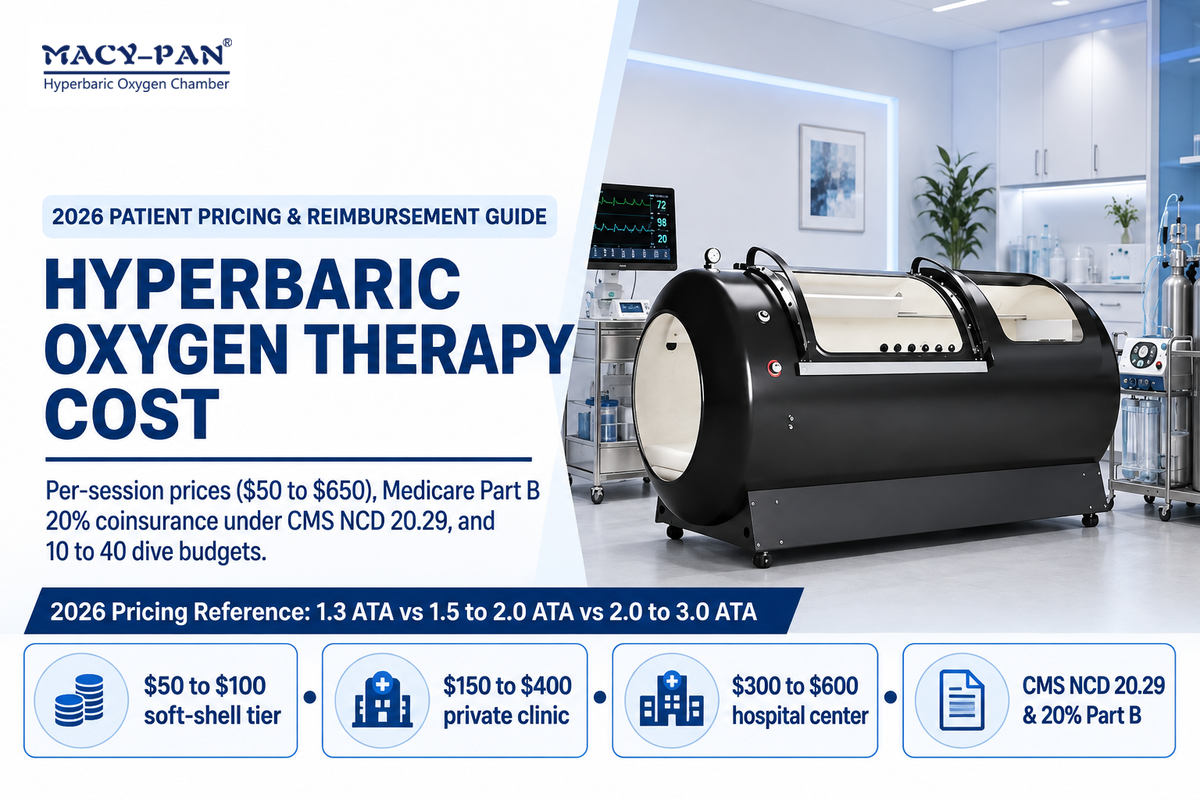
Understanding hyperbaric oxygen therapy cost starts with separating a low-pressure wellness visit from a hospital outpatient procedure. Depending on the chamber type, atmospheric pressure rating, and clinical staffing, a single hyperbaric oxygen therapy (HBOT) visit ranges from $100 to $650 across US outpatient facilities (90210Doc, 2026), while surveyed community providers average $110 to $367 per dive (Longevity Vanguard, October 2026).
For self-pay patients in 2026, a single session costs $50 to $100 in a 1.3 ATA soft-shell chamber, $150 to $250 in a 1.5 to 2.0 ATA hard-shell clinic ($60 to $150 with packages), and $250 to $600+ at a hospital-based or 2.0 to 3.0 ATA clinical facility (Project Wellbeing, 2026). Eligible Medicare Part B patients pay 20% of the Medicare-approved amount after meeting the annual Part B deductible for covered conditions under CMS NCD 20.29.
Key Patient Pricing & Reimbursement Takeaways
- Three distinct per-session price tiers: Walk-in HBOT prices split into $50–$100 for mild 1.3 ATA soft-shell sessions, $150–$400 for freestanding medical-grade clinics, and $300–$600+ for hospital-based wound centers (90210Doc, 2026).
- Full 10- to 40-dive protocol budgets: A 10-session acute course averages $1,500 to $2,500, whereas a 40-session chronic protocol at $250 per treatment totals $10,000 with package discounts (90210Doc, 2026).
- Strict Medicare & insurance gates: CMS Medicare NCD 20.29 restricts reimbursement to 15 approved indications (such as Wagner Grade III+ diabetic foot ulcers after 30-days of failed standard wound care), leaving off-label uses at 100% out-of-pocket pay.
- Clinic vs. home break-even threshold: With new soft-shell home units listing at a $13,495 US retail median ($3,000–$12,000 factory-direct) and personal hard-shell chambers at a $41,700 retail median (Regenerated.com, July 2026), home ownership crosses break-even around 35 to 90 sessions for long-term users.
Quick 2026 HBOT Pricing & Reimbursement Specifications
| 1.3 ATA Mild Soft-Shell Session Rate | $50 to $100 per session (home rentals $50–$100/day; wellness centers $100–$225) |
| 1.5–2.0 ATA Hard-Shell Clinic Rate | $150 to $250 per session ($60 to $150 effective per-session cost in packages) |
| 2.0–3.0 ATA Hospital / Clinical Rate | $250 to $650+ cash rate ($300–$600+ hospital wound center benchmark) |
| Medicare Part B Patient Coinsurance | 20% of Medicare-approved amount after Part B deductible (HCPCS G0277 + CPT 99183) |
| 10- to 40-Session Protocol Total | $1,500 to $2,500 (10 dives) up to $10,000+ (40 dives at $250/session) |
| Illustrative Clinical Dive Profile | 90-minute oxygen breathing (2.0–2.4 ATA) + 15-min compression/decompression at 2 psi/min |
| Home Chamber Purchase & Upkeep | $3,000–$12,000 factory-direct ($13,495 US retail median) soft; $10–$25/mo electricity |
| MACY-PAN OEM Quality & Regulatory Scope | 1.3–1.5 ATA soft & 1.5–2.0 ATA hard chambers; general ISO 9001 & CE (no FDA 510(k)) |
How Much Does Hyperbaric Oxygen Therapy Cost in 2026? Average HBOT Cost Overview
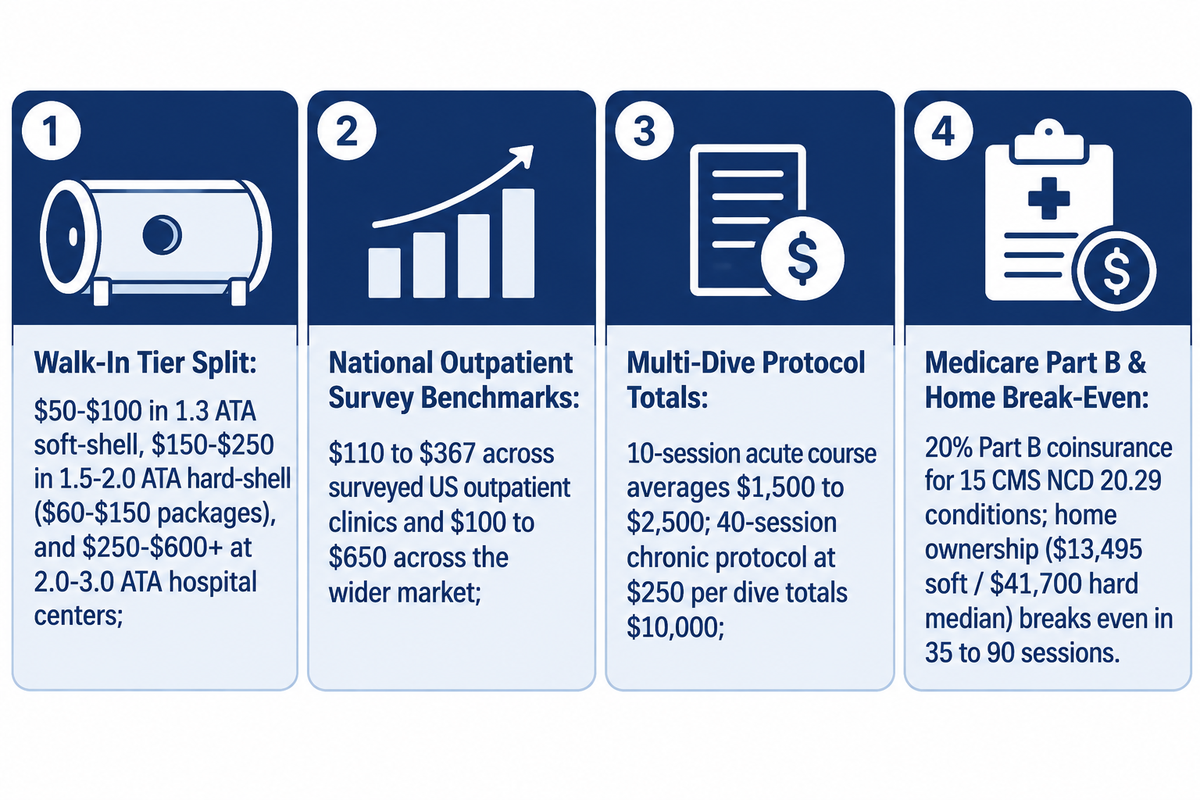
Published 2026 United States single-session hyperbaric oxygen therapy rates span $110 to $367 across surveyed outpatient clinics (Longevity Vanguard, October 2026) and $100 to $650 across the wider market, bringing a complete multi-week treatment plan to $1,500 to over $10,000 (90210Doc, 2026).
When patients ask why pricing varies so widely from one clinic to the next, the answer comes down to three variables: the pressure vessel rating in atmospheres absolute (ATA), whether the patient breathes 100% medical-grade oxygen vaporized from liquid storage or 90%–93% oxygen gas from a concentrator suitable for the chamber’s oxygen delivery system, and whether an on-site physician supervises the dive. A wellness studio running a zippered bag around 1.3 ATA has a completely different cost structure than an accredited hospital wound center operating a 3.0 ATA acrylic cylinder. For a foundational look at how pressurized oxygenation works inside the body, see our complete clinical overview of hyperbaric oxygen therapy.
To prevent sticker shock and assist patients in comparing quotes on an apples-to-apples basis, the cost of HBOT should always be segmented by facility tier. While a single walk-in visit gives a baseline therapy cost, chronic tissue repair requires cumulative exposure across 10 to 40 dives. Patients should consider both the per-session cost and the total cost of the prescribed treatment to avoid prematurely discontinuing treatment before complete angiogenesis.
Per-Session HBOT Session Cost Breakdown: 60-Minute vs. 90-Minute Dives
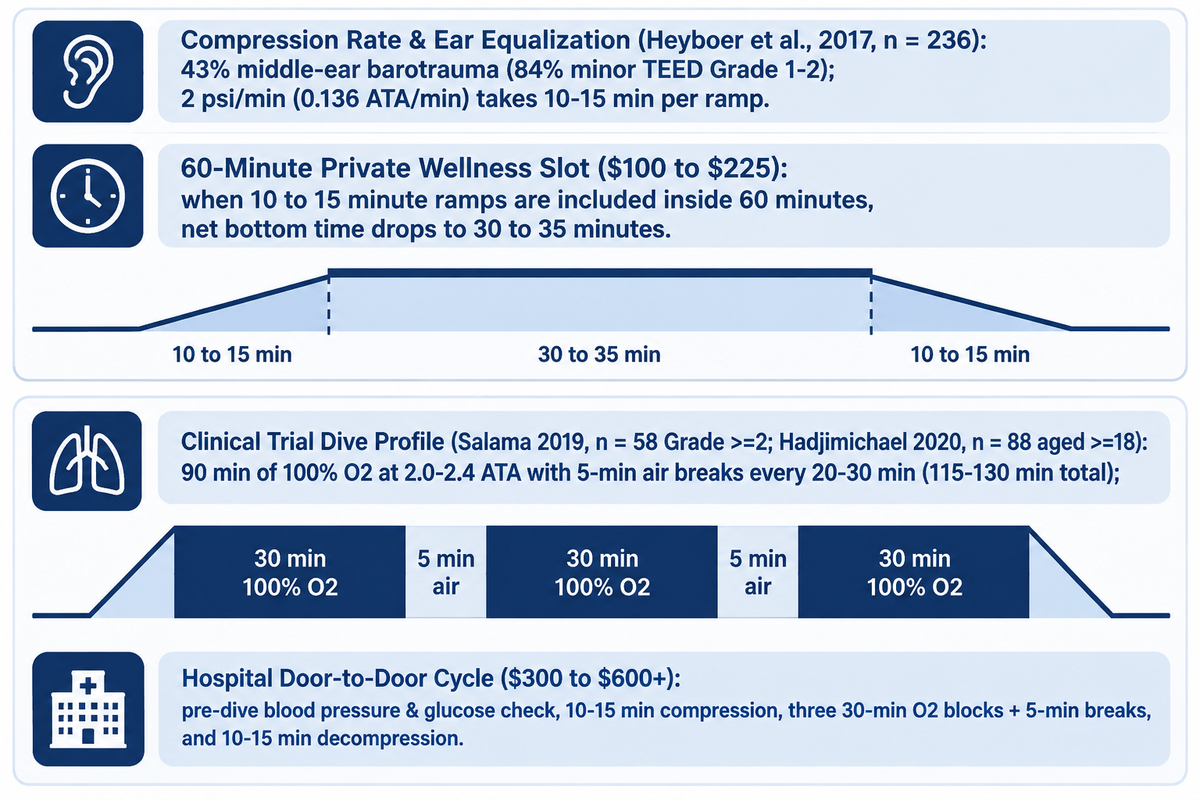
A standard 60-minute session at a private wellness studio costs $100 to $225, whereas a 90-minute clinical dive in a hard-shell chamber costs $180 to $450 at a freestanding center or $300 to $600+ at a hospital wound department (90210Doc, 2026; Project Wellbeing, 2026).
Comparing the cost of a single visit requires separating total door-to-door chamber time from actual bottom time at target pressure. Every HBOT session begins with gradual compression and ends with controlled decompression so your middle ear can equalize safely. In their clinical review citing a 2014 cohort study of 236 patients (Heyboer et al., 2017), middle-ear barotrauma was reported in 43% of patients (with 84% of affected cases classified as minor TEED Grade 1–2), and the authors supported a 2 psi/min (~0.136 ATA/min) compression rate compared with 1 psi/min or 4.1 psi/min.
At a 2 psi/min compression ramp, reaching 2.0 to 2.4 ATA can take 10 to 15 minutes when pauses are included, while decompression follows its own schedule. If you book a cheap 60-minute hyperbaric slot that includes ramp time inside the 60 minutes, you receive only 30 to 35 minutes at full therapeutic pressure. By contrast, in clinical wound trials such as Salama et al. (2019, n = 58 Wagner Grade ≥2 patients) and Hadjimichael et al. (2020, n = 88 participants aged 18 years or older), each scheduled dive delivered a full 90 minutes of 100% oxygen breathing at 2.0 to 2.4 ATA with 5-minute air breaks every 20 to 30 minutes, resulting in 115 to 130 minutes of total chamber occupancy.
| Booked Session Length | Typical Chamber Class & ATA | Compression & Decompression | Net Time at Target Pressure | 2026 Single-Session Price & Billing Basis |
|---|---|---|---|---|
| 60-Minute Wellness Slot | 1.3–1.5 ATA Soft-Shell / Mild Hard | 15–20 min total ramp time | 40–45 min on concentrator O2 | $50–$180 per treatment ($2.20–$4.00/pressurized min) |
| 90-Minute Clinical Dive | 1.5–2.4 ATA Hard-Shell Clinic | 20–25 min total ramp time | 65–90 min on 93%–100% O2 | $180–$400 per-session pricing ($2.50–$4.40/pressurized min) |
| 120-Minute Hospital Protocol | 2.0–3.0 ATA Hospital Class A/B | 20–30 min at 2.0 psi/min ramp | 90 min 100% O2 + two 5-min air breaks | $300–$650+ cash or 4 × 30-min CMS G0277 billing units |
How long do hyperbaric oxygen treatments last?
Individual hyperbaric oxygen treatments last 60-90 minutes at wellness clinics and 90-120 minutes door-to-door at hospital hyperbaric medicine centers (Heyboer et al., 2017; Salama et al., 2019).
During a hospital dive, the initial treatment consists of a blood pressure and blood sugar check before the dive, 10-15 minutes of compression, three 30-minute intervals of breathing pure oxygen separated by 5-minute air breaks to protect against central nervous system oxygen toxicity, followed by 10-15 minutes of decompression. Always ask an HBOT provider whether their quoted session length refers to total hatch-closed time or net bottom time at full working pressure.
Hospital-Based vs. Private Clinic vs. Wellness Center Hyperbaric Oxygen Therapy Pricing
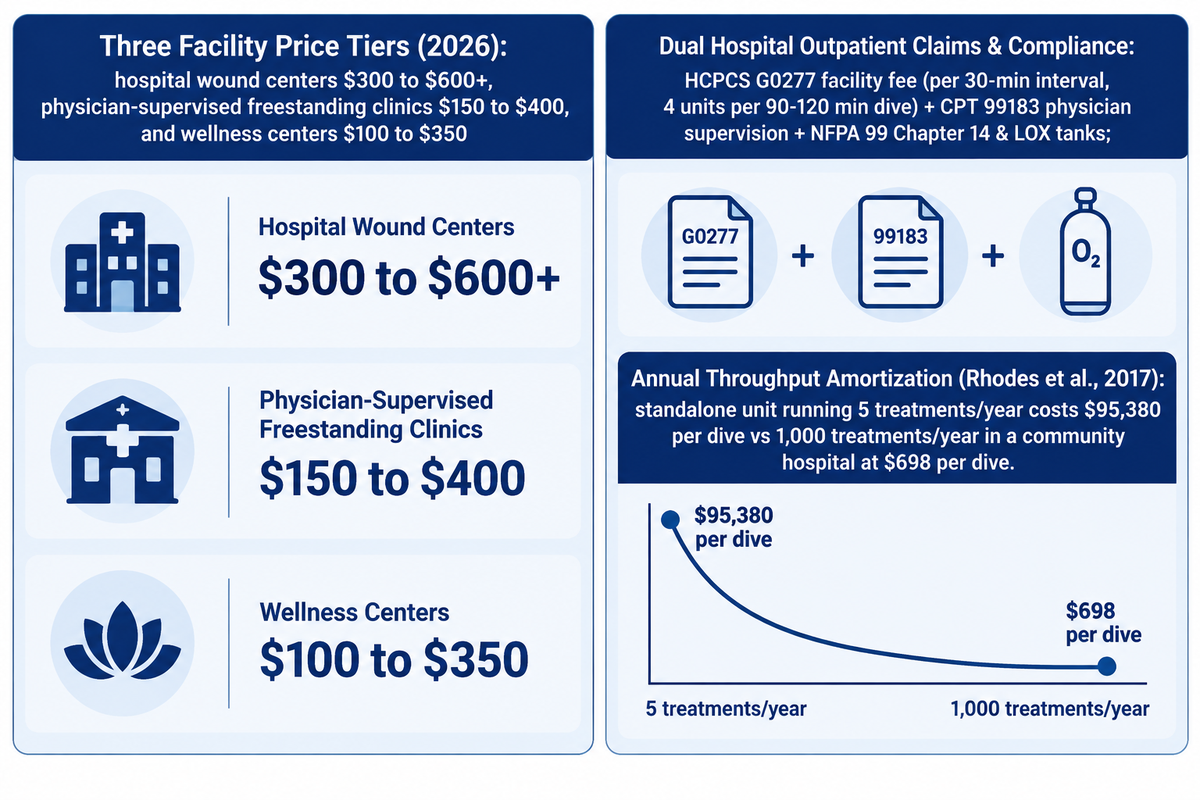
Published 2026 hyperbaric oxygen therapy pricing averages $300 to $600+ per session at hospital-based wound centers, $150 to $400 at freestanding physician-supervised medical clinics, and $100 to $350 at cash-pay wellness and longevity centers (90210Doc, 2026).
Why do hospital-based hyperbaric medicine departments bill far more than private clinics? First, hospital outpatient visits generate two separate claims for every dive: a facility fee billed under HCPCS code G0277 (calculated per 30-minute interval of chamber occupancy, usually four units per 90-to-120-minute dive) and a professional medical fee billed under CPT code 99183 for continuous on-site physician supervision. Second, hospital facilities carry large fixed infrastructure and compliance costs that can include bulk liquid oxygen (LOX) storage tanks, fire-rated room enclosures and deluge sprinkler systems under NFPA 99 Chapter 14 where required, staffing with Certified Hyperbaric Technologist (CHT) or ANDI (ANDI International) diver-medic technician credentials, and Food and Drug Administration Class II compliance where required.
In an economic volume analysis of hyperbaric facilities, Rhodes et al. (2017) demonstrated how strongly annual patient throughput shapes institutional cost per treatment: operating a standalone center for just 5 treatments per year resulted in an amortized per-treatment cost of $95,380, whereas delivering 1,000 treatments per year in an established community hospital lowered the institutional cost to $698 per treatment. These are institutional per-treatment figures reported by Rhodes et al. The 2017 costs reflect hospital fixed-cost amortization across annual dive volume rather than retail cash prices charged to walk-in patients. You can compare single-patient acrylic cylinders against multi-patient rooms in our guide to monoplace versus multiplace hyperbaric chambers and review hospital safety requirements in our NFPA 99 hyperbaric chamber fire safety and cotton garment checklist.
What Drives the Price: Medical-Grade 2.0–3.0 ATA Hard-Shell vs. 1.3 ATA Soft-Shell Chambers
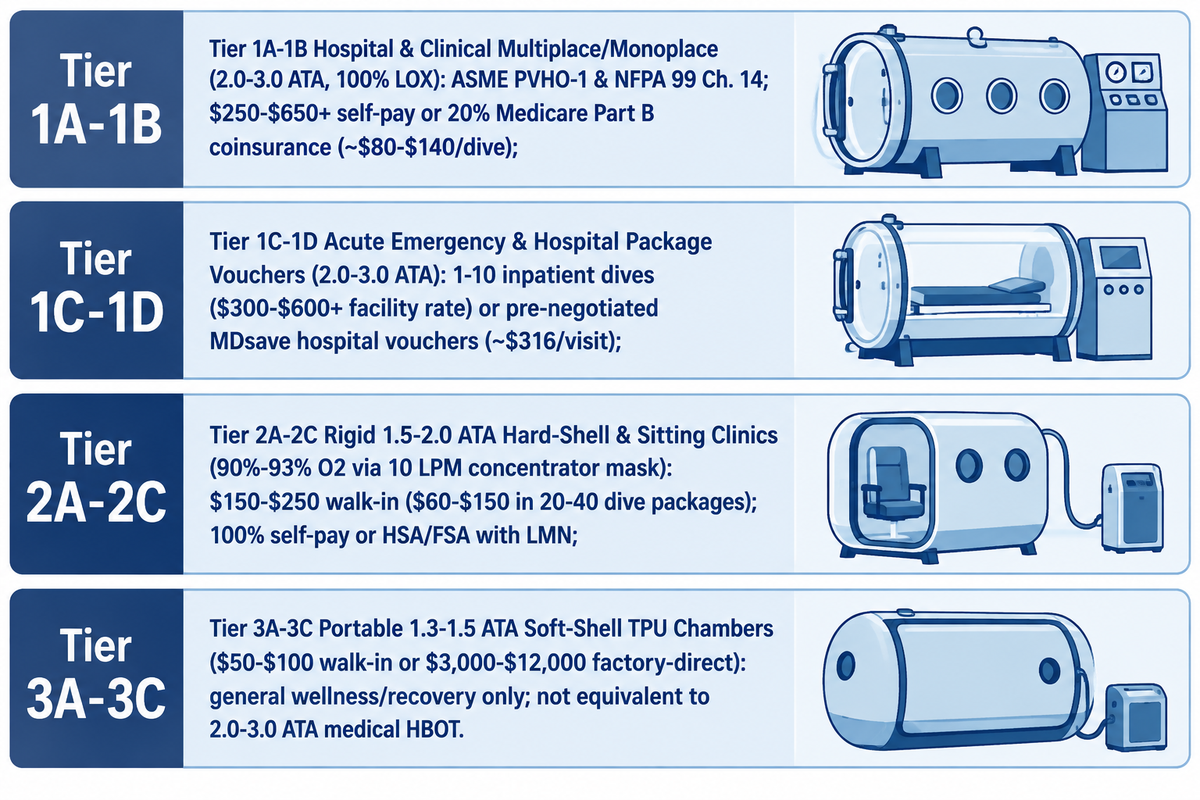
Medical-grade hard-shell hyperbaric chambers operating at 2.0 to 3.0 ATA with 100% pure oxygen cost $250 to $650+ per clinic session, with costs for medical oxygen supply, physician-supervised staff, and ASME PVHO-1 pressure vessels and NFPA 99 Chapter 14 fire safety systems where locally required, whereas 1.3 ATA soft-shell chambers using ambient air and a 10 LPM oxygen concentrator cost $50 to $200 per session (UHMS Position Statement; Project Wellbeing, 2026).
To understand what drives the price between a $75 spa visit and a $450 medical dive, look at the physics of oxygen delivery and pressure vessel engineering. The Undersea and Hyperbaric Medical Society (UHMS) defines clinical HBOT as breathing near 100% medical oxygen inside a vessel pressurized to 1.4 ATA or greater, and requires at least 2.0 ATA for all UHMS-approved indications. At 3.0 ATA with pure oxygen, arterial PaO2 exceeds 2,000 mmHg and dissolved plasma oxygen reaches 6 mL of oxygen per 100 mL of plasma (Bhutani & Vishwanath, 2012), supporting tissue oxygen saturation in ischemic beds and stem cell mobilization.
By contrast, portable soft-shell chambers operate around 1.3 ATA (4.4 psig) to 1.5 ATA using an oil-free air compressor paired with a bedside 5 to 10 L/min pressure-swing adsorption (PSA) oxygen concentrator. As the Italian Society of Underwater and Hyperbaric Medicine (SIMSI, 2025) documents, portable oxygen concentrators experience an oxygen concentration drop from ~93% at 5 L/min to ~90% at 10 L/min maximum flow, and non-sealed headsets mix that gas with cabin air. Meanwhile, a clinical 2.0 ATA chamber or 3.0 ATA monoplace cylinder consumes 200 to 500 L/min of certified medical oxygen during continuous purge flows (US8251057B2). For a detailed engineering comparison across pressure brackets, read our guide comparing 1.3, 1.5, and 2.0 ATA hyperbaric pressure tiers.
4-Tier HBOT Session & Reimbursement Cost Matrix
Use the following 4-tier matrix to link your clinical goal with the corresponding pressure tier, oxygen source, and expected 2026 per-session cost.
| Tier & Facility Category | Chamber Type & ATA Pressure | Oxygen Delivery System | 2026 Walk-In / Package Cost | Reimbursement & Regulatory Status |
|---|---|---|---|---|
| Tier 1A: Hospital Outpatient Wound Center (Monoplace) | Hard-shell Class B monoplace (2.0–3.0 ATA) | 100% medical oxygen atmosphere (PaO2 >2,000 mmHg at 3 ATA) | $300–$600+ hospital benchmark ($250–$650+ clinical range) | Medicare Part B 20% coinsurance after deductible for NCD 20.29 diagnoses |
| Tier 1B: Hospital Multiplace Hyperbaric Suite | Walk-in Class A multiplace chamber (2.0–3.0 ATA) | Compressed air cabin (<23.5% O2) + 100% O2 hood or mask | $300–$650+ cash or 4 × 30-min HCPCS G0277 + CPT 99183 | Covered under CMS NCD 20.29 for qualifying hypoxic and emergency conditions |
| Tier 1C: Hospital Pre-Negotiated Cash Voucher (MDsave) | Hospital Class A/B chamber (2.0–3.0 ATA) | 100% USP medical oxygen with on-site physician supervision | Starts at $316 per bundled outpatient visit on MDsave | Pre-paid self-pay voucher for uninsured or high-deductible patients |
| Tier 2A: Freestanding Physician-Supervised Medical Clinic | Medical-grade hard-shell monoplace (2.0–2.4 ATA) | 100% medical oxygen via chamber or sealed BIBS breathing hood | $150–$400 freestanding clinic range ($250/dive 40-session benchmark) | Selective insurance coverage for on-label; self-pay for off-label protocols |
| Tier 2B: Multi-Place Independent Medical Recovery Center | Multi-patient rigid cabin (2.0 ATA chamber) | Air-pressurized cabin + individual medical oxygen masks | $2,500 per 10 sessions or $10,000 per 40-session package ($250/dive) | Self-pay package or HSA/FSA with physician Letter of Medical Necessity |
| Tier 3A: Mid-Pressure Hard-Shell Wellness Clinic (Walk-In) | Rigid hard-shell lying or sitting chamber (1.5–2.0 ATA) | Compressed air + 10 L/min PSA oxygen concentrator (~90%–93% O2) | $150–$250 single session ($100–$350 wellness center range) | 100% cash-pay; excluded from CMS NCD 20.29 hospital reimbursement |
| Tier 3B: Mid-Pressure Hard-Shell Multi-Dive Package or Membership | Rigid 1.5–2.0 ATA horizontal or sitting cabin | Air cabin + supplemental oxygen concentrator headset | $60–$150 per session in multi-dive packages or memberships | Self-pay package pricing for athletic recovery and wellness |
| Tier 4A: Mild Soft-Shell Wellness Studio Session | Portable TPU soft-shell chamber around 1.3 ATA (1.3–1.5 ATA) | Ambient air compressor + 5–10 L/min oxygen concentrator mask | $50–$100 per session ($110–$367 surveyed provider band) | Non-reimbursable cash pay; below UHMS ≥1.4 ATA / ≥2.0 ATA clinical threshold |
| Tier 4B: At-Home Soft-Shell Chamber Monthly Rental | Portable 1.3 ATA soft-shell home rental unit | Bedside compressor + 10 L/min concentrator ($500–$2,500 add-on) | $50–$100 per day equivalent rental + $5–$25/mo electricity | 100% self-pay home trial before long-term equipment purchase |
| Tier 4C: Home & Private Practice Chamber Purchase | 1.3–1.5 ATA soft ($3k–$12k) or 1.5–2.0 ATA hard ($18k–$80k) | Bundled compressor + concentrator ($40–$100/yr filter swaps) | $13,495 US retail soft median; $41,700 US retail personal hard median | General ISO 9001 & CE conformity on MACY-PAN units (no US FDA 510(k)) |
Are soft-shell chambers worth the money?
Soft-shell hyperbaric chambers operating at 1.3 to 1.5 ATA cost $50 to $100 per session or $3,000 to $12,000 for a factory-direct purchase, but they are not clinically equivalent to 2.0 to 3.0 ATA medical HBOT (UHMS Position Statement). However, they are not clinically comparable to 2.0 to 3.0 ATA medical HBOT chambers (UHMS Position Statement).
In a review of 42 double-blind clinical trials (Lansdorp & van Hulst, 2018), 23 studies delivered 1.1 to 1.5 ATA compressed air as the sham control group. In addition, the Des Moines Fire Department (May 2024) documented that the NFPA 99 technical committee voted 0–17–1 (Proposed TIA No. 1735) to reject exempting soft-wall chambers from ASME PVHO-1 rules in commercial healthcare facilities. Consequently, soft-shell chambers make financial sense primarily for personal home recovery and wellness rather than reimbursable clinical wound or radiation care.
Does Medicare or Commercial Insurance Cover Hyperbaric Oxygen Therapy Cost?
Part B of Medicare and the majority of commercial plans cover hyperbaric oxygen therapy for 14 conditions specified by the CMS NCD 20.29. Medicare Part B and most commercial insurers cover hyperbaric oxygen therapy only for 14 FDA-cleared and CMS NCD 20.29 -listed conditions, such as Wagner Grade 3+ diabetic foot ulcers, delayed radiation injury, decompression sickness, and carbon monoxide poisoning, leaving insured patients with a standard 20% Part B coinsurance ( Medicare.gov ), while off-label conditions require 100% self-pay. Other off label conditions would not be covered and would result in 100% out of pocket expense for the patient. Medicare Part B beneficiaries are required to pay 20% of the cost for the service (Medicare.gov), however, for conditions not covered by Medicare and other insurance plans, the patient would be responsible for 100% of the cost.
To qualify as covered by insurance, a treatment must satisfy strict medical necessity criteria. Under CMS Medicare National Coverage Determination (NCD) 20.29, reimbursement applies to 15 specified diagnoses administered in a hospital or accredited clinic chamber, including acute carbon monoxide poisoning, decompression sickness, gas gangrene, acute traumatic peripheral ischemia, crush injuries, progressive necrotizing infections, acute peripheral arterial insufficiency, compromised skin grafts, chronic refractory osteomyelitis, osteoradionecrosis, soft-tissue radionecrosis, cyanide poisoning, actinomycosis, and severe diabetic lower-extremity wounds.
“The use of HBO therapy will be covered as adjunctive therapy only after there are no measurable signs of healing for at least 30-days of treatment with standard wound therapy, and must be used in addition to standard wound care.”
Source: Centers for Medicare & Medicaid Services (CMS), Decision Memo NCAId=37 & NCD Manual Section 20.29
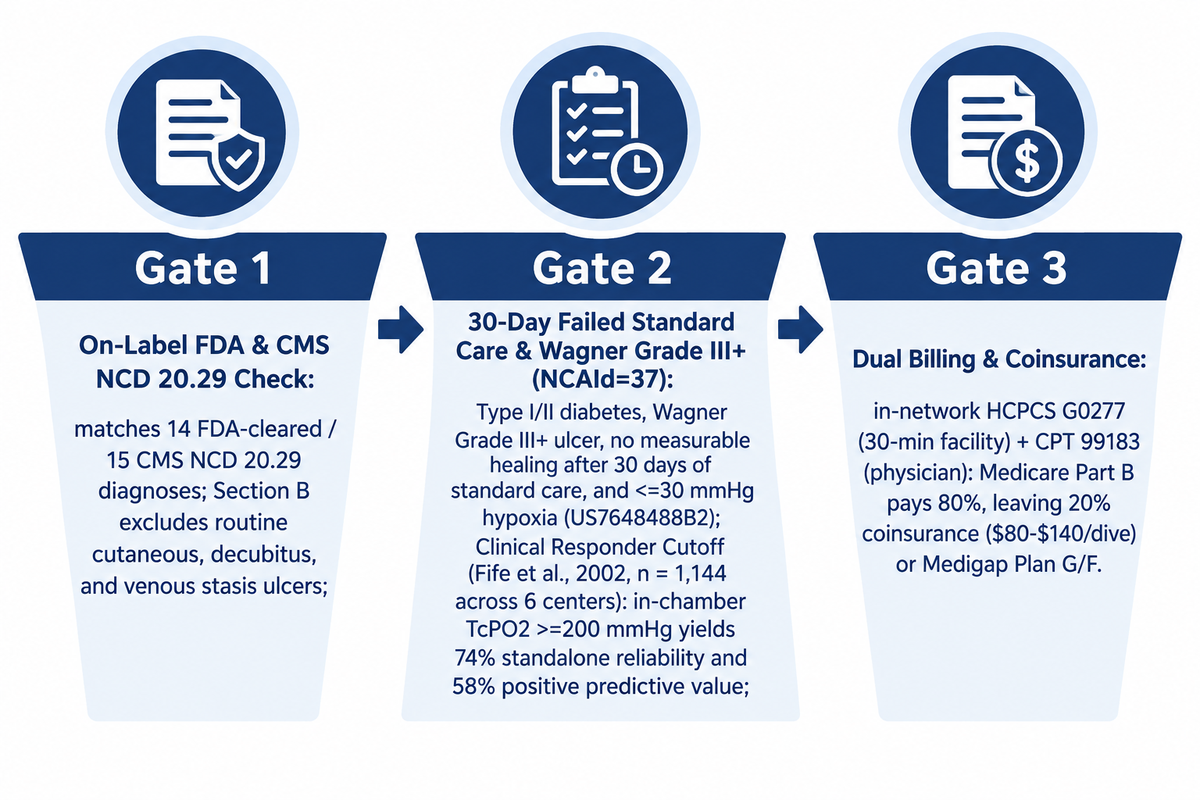
For a diabetic foot ulcer to qualify for Medicare coverage, CMS Decision Memo NCAId=37 requires three documented facts: the patient has Type I or Type II diabetes, the ulcer is due to diabetes and classified as Wagner Grade III or higher (Grade III involves a deep ulcer with abscess, osteomyelitis, or joint sepsis), and the wound has shown no measurable signs of healing after at least 30 days of standard wound care (surgical debridement, moist dressings, vascular assessment, glycemic control, and mechanical offloading). In a retrospective analysis of 1,144 patients across 6 centers (Fife et al., 2002), an in-chamber transcutaneous oxygen tension (TcPO2) cutoff of 200 mmHg served as the strongest responder discriminator. In-chamber transcutaneous oximetry above 200 mmHg acts as a prognostic discriminator with 74% standalone reliability and 58% positive predictive value rather than an unconditional guarantee of ulcer closure without macrovascular inflow and mechanical offloading.
3-Gate Insurance vs. Cash-Pay Qualification Sieve
Before beginning a $10,000 course of care, verify your diagnosis and quote through the following three gates:
- ✔Gate 1: On-Label FDA & CMS NCD 20.29 Diagnosis Check. Verify that your ICD-10 diagnosis matches one of the 14 FDA-approved conditions / 15 CMS NCD 20.29 covered medical conditions. Note that NCD 20.29 Section B explicitly excludes routine cutaneous, decubitus (pressure), and venous stasis ulcers, and off-label neurological or longevity conditions are 100% self-pay.
- ✔ Gate 2: Prior-Authorization Prerequisite & 30-Day Audit Trail. For chronic diabetic wounds, compile 30 successive days of failed standard wound-care logs, Wagner Grade III+ imaging/probe-to-bone notes, and vascular/TcPO2 measurements (less than or equal to 30 mmHg baseline hypoxia per US7648488B2). Under NCD 20.29, wounds must be re-evaluated at least every 30 days with measurable progress in healing to continue to be eligible for reimbursement.
- Gate 3: Dual-Billing Code & Supplemental Medigap Check.
Confirm the hospital bills in-network under HCPCS G0277 (per 30-minute facility interval) and CPT 99183 (physician attendance). You may be responsible for 20% of the bill ($80-$140 per dive) with Medicare Part B, unless you have a Medigap supplement (Plan G or F) or commercial insurance with an annual out of pocket maximum.
Does insurance cover hyperbaric oxygen?
Yes, Medicare, Medicaid, VA/Tricare, and major private insurers cover hyperbaric oxygen therapy when prescribed for FDA-approved conditions such as decompression sickness, carbon monoxide poisoning, delayed radiation injury, compromised skin grafts, and Wagner Grade III+ diabetic foot ulcers (CMS NCD 20.29).
However, commercial health plans require prior authorization for non-emergency outpatient protocols and deny claims for off-label conditions, including traumatic brain injury (TBI), stroke recovery, Long COVID, Lyme disease, autism, and sports recovery, even when ordered by a licensed physician. In addition, CMS Decision Memo NCAId=286 removed topical extremity oxygen bags from NCD 20.29, meaning local limb oxygen sleeves don’t qualify for systemic HBOT reimbursement.
Paying Out of Pocket: Self-Pay Rates, HSA/FSA Rules, and Financing Options
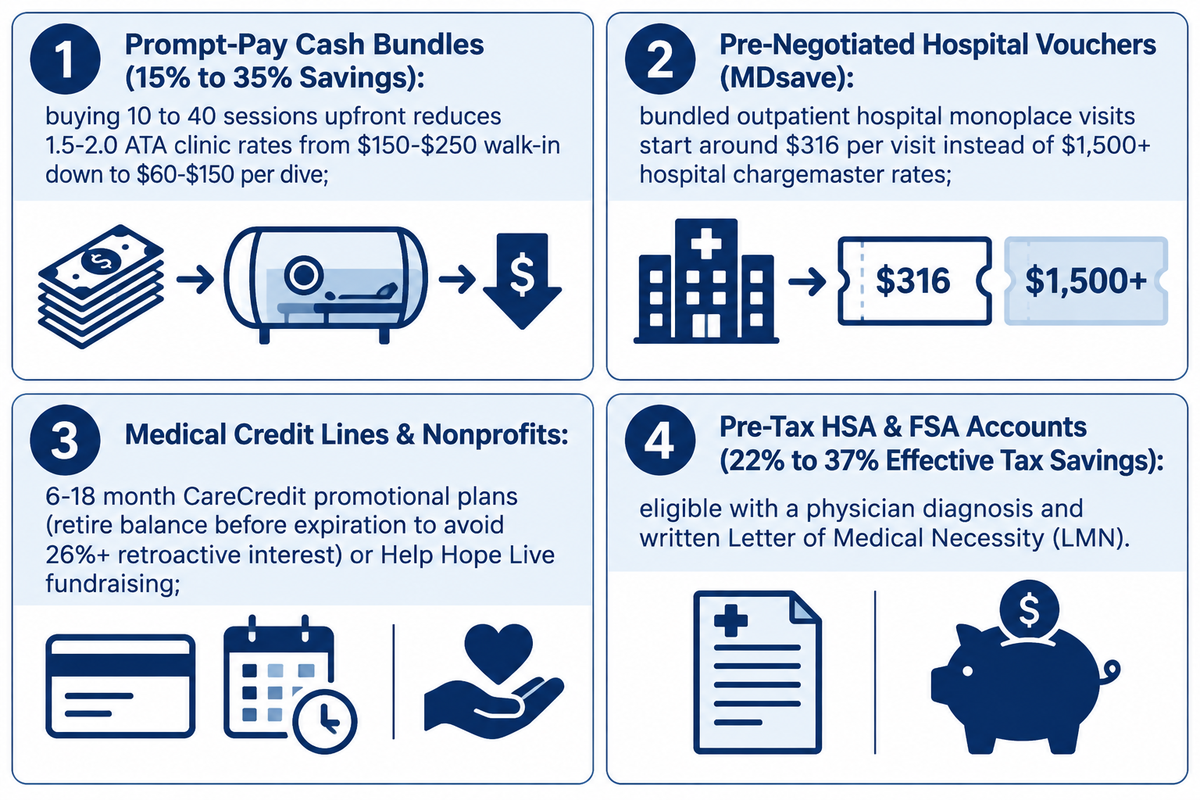
Patients paying out of pocket for off-label conditions or high-deductible plans spend $50 to $100 per visit for 1.3 ATA soft-shell sessions, $150 to $250 for 1.5–2.0 ATA hard-shell sessions ($60 to $150 in packages), or $250 to $500+ for 2.0–3.0 ATA clinical dives (Project Wellbeing, 2026).
When insurance denies an off-label protocol, self-pay patients can use four structured financing options to reduce their net outlay by 20% to 50%. First, ask the clinic for prompt-pay cash bundles: purchasing 10 to 40 hbot treatments upfront commonly lowers per-session pricing by 15% to 35% compared with walk-in credit card rates. Second, patients seeking hospital-grade monoplace care without insurance can purchase pre-negotiated outpatient procedure vouchers through platforms like MDsave (where bundled hospital HBOT visits start around $316 per visit instead of $1,500+ hospital chargemaster rates).
Third, many freestanding clinics accept medical credit lines, such as paying with CareCredit on 6- to 18-month promotional financing plans, or connect patients facing catastrophic injury expenses with medical fundraising nonprofits such as Help Hope Live. CareCredit, for example, offers promotional financing plans of 6-18 months interest free. Before signing a deferred interest financing agreement, make sure you can pay off the balance prior to the expiration of the promotional window, or you’ll be charged retroactive interest of 26%+ on your treatment costs.
Can I use my HSA or FSA for HBOT?
Yes, you’re able to pay for hyperbaric oxygen therapy with money from your HSA or FSA as long as a physician prescribes the treatment for a diagnosed medical condition and provides a Letter of Medical Necessity (LMN).
Using pre-tax HSA or FSA dollars lowers your effective cost by your federal and state marginal tax rate (between 22% and 37%). HSA/FSA funds can cover qualifying medical expenses for disease treatment, while an LMN documenting the diagnosis and treatment plan supports medical necessity without automatically establishing eligibility. HSA/FSA eligible expenses are often subjective and vary based on the discretion of the plan administrator. Spa or wellness memberships purchased for general health are not HSA/FSA-eligible expenses.
How Many HBOT Sessions Do You Need? Total Cost for 10, 20, and 40 Treatments
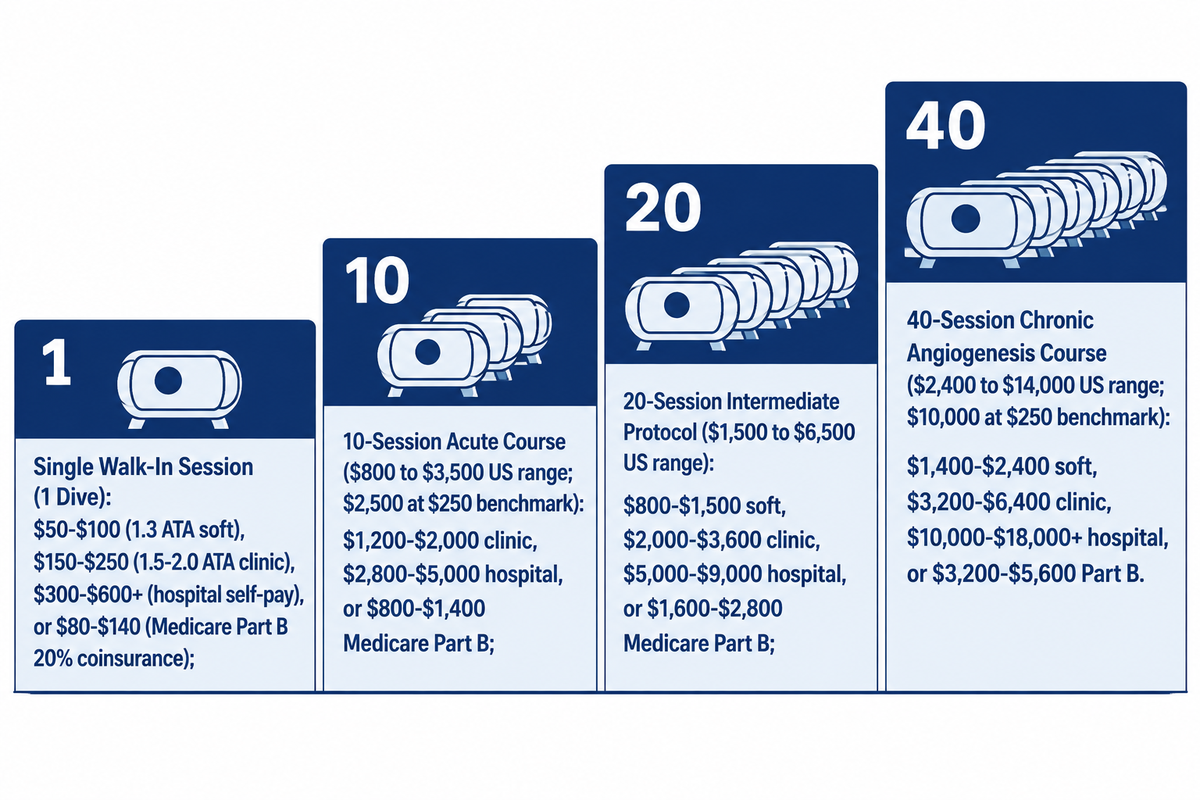
At a $250 per-session clinical benchmark, a 10-session hyperbaric course costs $2,500 and a 40-session chronic protocol costs $10,000 (90210Doc, 2026). Across all US tiers, buying a multi-session package brings 10 dives to $800–$3,500, 20 dives to $1,500–$6,500, and 40 dives to $2,400–$14,000 (Project Wellbeing, 2026).
How many HBOT sessions you need depends on whether you are treating an acute gas/ischemic emergency or rebuilding chronic hypoxic microvascular beds. For chronic wounds and delayed radiation injury, clinicians commonly prescribe HBOT as a structured course of treatment to support tissue oxygenation and healing, while acute conditions may require fewer sessions. When you buy a package of 10, 20, or 40 dives, clinics pass along volume discounts that lower the effective cost per dive.
| Payment & Chamber Pathway | Effective Per-Session Rate | 10-Session Package Total | 20-Session Package Total | 40-Session Full Course Total |
|---|---|---|---|---|
| Pathway A: Medicare Part B Covered Hospital (20% Coinsurance) | ~$80–$140 out-of-pocket/dive ($0 with Medigap Plan G) | $800–$1,400 ($0 after Medigap) | $1,600–$2,800 ($0 after Medigap) | $3,200–$5,600 (capped by plan OOP max) |
| Pathway B: Freestanding 2.0–3.0 ATA Clinical Hard-Shell (Self-Pay) | $250–$350/dive in ten-session bundles; longer-course rates vary ($300–$500 walk-in) | $2,500–$3,500 | $4,600–$6,800 | $9,000–$14,000 ($10,000 benchmark at $250/dive) |
| Pathway C: Mid-Pressure 1.5–2.0 ATA Hard-Shell Clinic Package | $100–$180/dive in bundles ($150–$250 walk-in) | $1,200–$1,800 | $2,200–$3,400 | $4,000–$6,400 |
| Pathway D: Mild 1.3 ATA Soft-Shell Wellness / Home Rental | $50–$100/dive ($1,200–$2,400/mo home rental) | $600–$1,000 | $1,100–$1,800 | $2,000–$3,600 (or 1–2 months home rental) |
Worked 40-Session Protocol Calculation: Suppose a patient requires 40 treatments of 90-minute HBOT. At a freestanding 2.0 ATA medical clinic charging $325 single-session retail ($13,000 unbundled), applying a 23% 40-dive package rate ($250/session, matching the 90210Doc benchmark) reduces the treatment protocols total to $10,000, or $7,200 net after a 28% marginal tax savings via an LMN-backed HSA account. Also factor in real-world adherence: in the multicenter DAMO2CLES randomized trial (n = 120), 65% of patients completed the full schedule while 35% stopped early, so always check a clinic’s refund policy for unused package dives.
Condition-Specific HBOT Cost: Wound Care, Radiation Injury, TBI, and Recovery Protocols
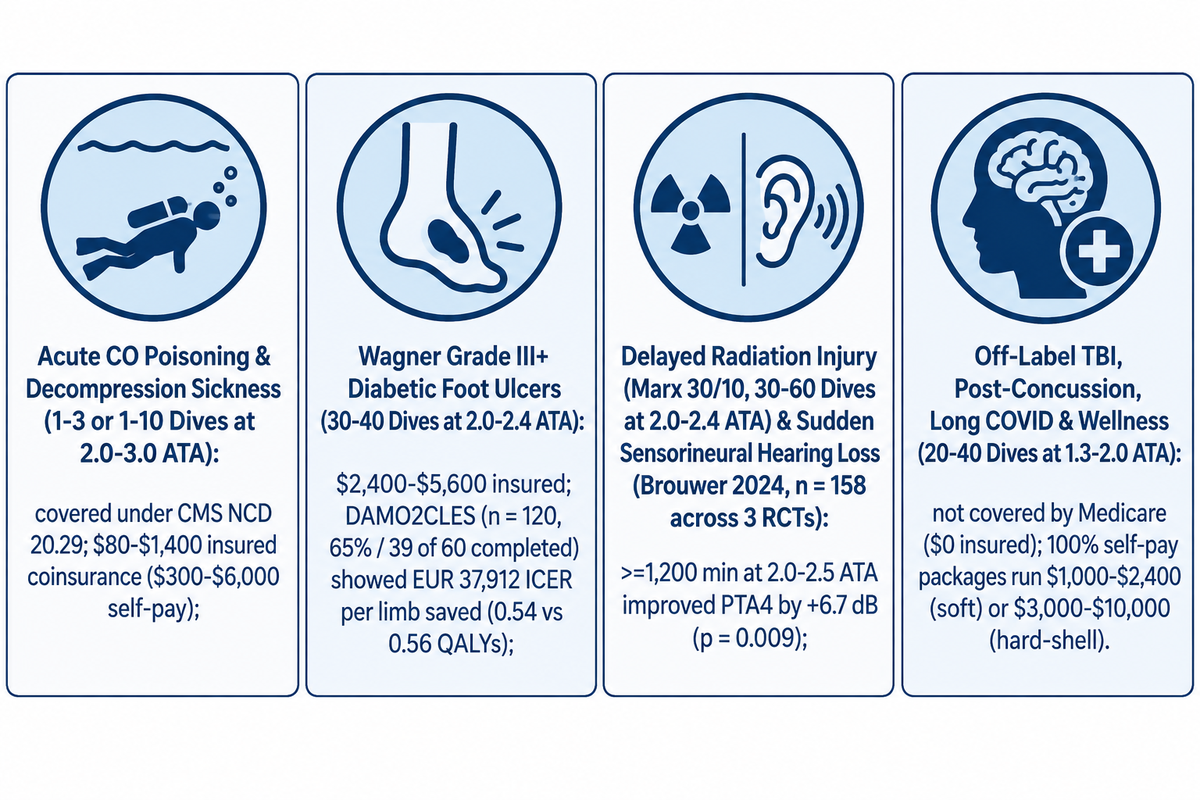
Total hyperbaric oxygen therapy cost by condition ranges from $300 to $1,500 in insured coinsurance for 1 to 5 acute emergency dives (decompression sickness or carbon monoxide poisoning) up to $3,200 to $5,600 insured ($8,000 to $16,000+ self-pay) for 30 to 40 chronic wound care or radiation injury sessions, and $3,000 to $12,000 out of pocket for off-label neurological or recovery regimens (CMS NCD 20.29; Bhutani & Vishwanath, 2012).
Different medical conditions require vastly different dosing schedules. As Bhutani & Vishwanath (2012) detail, compromised skin grafts and flaps commonly start with 2.0 to 2.4 ATA sessions for 90 minutes twice daily for 2 to 3 days before stepping down to daily dives across 20 to 30 total treatments, whereas late radiation tissue injury (such as mandibular osteoradionecrosis or radiation cystitis) requires 30 to 60 daily dives to stimulate dense capillary angiogenesis. In the DAMO2CLES economic evaluation (Brouwer et al., 2024, n = 120), the incremental cost-effectiveness ratio was €37,912 per limb saved, with favorable cost-effectiveness trends concentrated in the Wagner Grade III/IV subgroup.
Meanwhile, patients pursuing off-label protocols for traumatic brain injury (TBI), post-stroke cognitive function, Long COVID (post-COVID-19 chronic condition), or athletic recovery and wellness pay 100% out of pocket. Note also that room-safety discipline inside the clinic affects both safety and cost: UHMS safety guidance warns that storing non-hyperbaric items such as wound care supplies in a hyperbaric room can lead to paint, chemicals, and floor cleaners appearing there and distract chamber operators from continuous patient monitoring. Before starting any multi-week course, review our clinical guide to hyperbaric oxygen therapy side effects and contraindications.
| Condition / Clinical Goal | Target ATA Pressure | Standard Number of Treatments | Insurance / Medicare Status | Estimated Patient Out-of-Pocket Total |
|---|---|---|---|---|
| 1. Carbon Monoxide Poisoning & Decompression Sickness | 2.4–3.0 ATA (100% O2) | 1 to 5 emergency sessions | Medicare-covered indications under CMS NCD 20.29 | $100–$700 insured coinsurance ($600–$3,200 cash) |
| 2. Compromised Skin Grafts & Surgical Flaps | 2.0–2.4 ATA (100% O2) | 10 to 30 sessions (2×/day initial) | Covered (CMS NCD 20.29 Sec. A.14) | $800–$3,600 insured coinsurance ($2,500–$9,000 cash) |
| 3. Diabetic Foot Ulcers (Wagner Grade III+) | 2.0–2.4 ATA (100% O2) | 20 to 40 daily 90-min sessions | Medicare covers qualifying diabetes-related lower-extremity wounds of Wagner Grade III or higher with no measurable healing after at least 30 consecutive days of standard wound care, with HBOT added to continued standard care. | $1,600–$5,600 Medicare 20% ($5,000–$14,000 self-pay) |
| 4. Delayed Radiation Injury & Osteoradionecrosis | 2.0–2.4 ATA (100% O2) | 30 to 60 sessions (Marx 30/10) | Covered (CMS NCD 20.29 Sec. A.10–11) | $2,400–$6,500 insured ($7,500–$18,000 self-pay) |
| 5. Traumatic Brain Injury (TBI) & Post-Concussion | 1.5–2.0 ATA hard-shell | 20 to 40 sessions | Off-label (100% self-pay / HSA LMN) | $3,000–$10,000 in clinic packages |
| 6. Long COVID & Cognitive Function Protocols | 1.5–2.0 ATA hard-shell | 20 to 40 sessions (60–90 min) | Off-label (100% self-pay / HSA LMN) | $3,000–$9,500 in clinic packages |
| 7. Chronic Refractory Osteomyelitis & Bone Infection | 2.0–2.4 ATA (100% O2) | 30 to 40 daily 90-min sessions | Covered (CMS NCD 20.29 Sec. A.9) | $2,400–$5,600 Medicare 20% ($7,500–$14,000 cash) |
| 8. Necrotizing Soft-Tissue Infection & Gas Gangrene | 2.4–3.0 ATA (100% O2) | 5 to 15 inpatient sessions | Covered (CMS NCD 20.29 Sec. A.5 & A.7) | $400–$2,100 insured coinsurance ($1,500–$7,500 cash) |
| 9. Post-Stroke & Circulatory System Recovery | 1.5–2.0 ATA hard-shell | 20 to 40 sessions (60–90 min) | Off-label use (100% self-pay / HSA LMN) | $3,000–$10,000 in clinic packages |
| 10. Athletic Recovery, Saturation Diving Prep & Wellness | 1.3–1.5 ATA soft or hard | 5 to 20 sessions (or monthly pass) | Off-label wellness (100% cash pay) | $500–$2,500 ($150–$400/mo unlimited memberships) |
Clinic Visits vs. Home Units: Rent-or-Buy Break-Even Math and Hidden Operating Costs
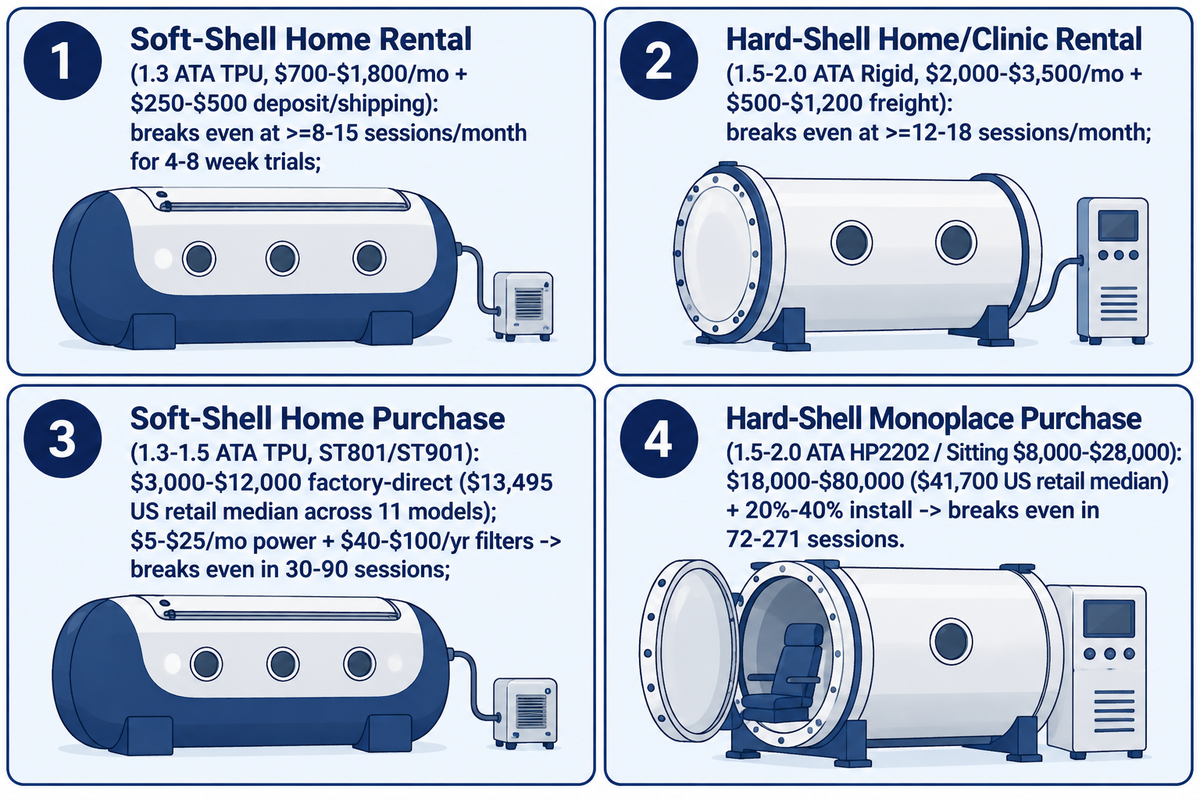
Comparing clinic packages against home units starts with published 2026 hardware tiers: under MACY-PAN’s 2026 chamber cost ladder, listed soft-shell home units cost $3,000 to $12,000 (US retail median $13,495 across 11 models on Regenerated.com), sitting chambers cost $8,000 to $28,000, and hard-shell monoplace units cost $18,000 to $80,000 (US retail median $41,700), reaching break-even against clinic packages in 30 to 110 sessions.
When patients or families need 40 to 100+ sessions for ongoing wellness and recovery, paying $150 to $350 per clinic visit quickly exceeds what chambers cost to rent or buy outright. Monthly home soft-shell rentals averaging $50 to $100 per day (90210Doc, 2026) allow patients to test tolerance for 30 days before committing to ownership. If you decide to purchase a unit for home oxygen sessions, you can model your exact crossover point using our interactive home versus clinic hyperbaric break-even calculator and inspect every hardware tier in our dedicated hyperbaric chamber purchase price and ownership cost guide.
At the same time, buyers must budget for peripheral and operating expenses on both sides of the ledger. At outpatient clinics, first-time patients routinely pay $150 to $350 for an initial physician intake clearance plus $35 to $75 for a personal mask and 100% cotton scrub kit. For home units, MACY-PAN’s 2026 ownership data and HBOT for Sale show that a standalone 10 L/min oxygen concentrator add-on costs $500 to $2,500, routine filter swaps run $40 to $100 per year, annual maintenance runs $300 to $600, and electricity draws roughly $5 to $25 per month (or $600 to $1,800 per year for commercial units running heavy weekly schedules, with a dedicated 20–30 A electrical circuit costing $800 to $3,500). These 2026 commercial catalog prices cover standalone chambers, including personal hard-shell units listed at $27,450 to $136,100, and exclude clinical room retrofits, bulk liquid oxygen piping, and medical staffing.
Clinic Session Packages vs. Home Rental & Ownership Total Cost Comparison (2026 Benchmarks):
| Cost Component | 40-Dive Clinic Package (Self-Pay) | 1.3–1.5 ATA Soft-Shell Home Unit | 1.5–2.0 ATA Hard-Shell Home / Clinic Unit |
|---|---|---|---|
| Upfront Acquisition / Package | $4,000–$6,000 (mild clinic) or $9,000–$14,000 (2.0 ATA clinic; $10,000 at $250/dive) | $3,000–$12,000 factory-direct (MACY-PAN) / $4,495–$24,372 US retail ($13,495 median) | $8,000–$28,000 sitting; $18,000–$80,000 lying monoplace ($41,700 US retail median) |
| Intake / Oxygen & Electrical Setup | $150–$350 physician consultation + $35–$75 personal mask & cotton scrub kit | 10 L/min O2 concentrator ($500–$2,500 if unbundled) + standard 110V/220V outlet | Dedicated 20–30 A circuit ($800–$3,500) + air chiller & dual concentrator setup |
| Ongoing Electricity & Filters | Included in session fee (patient bears travel time & fuel across 40–80 trips) | $5–$25/mo electricity + $40–$100/yr filter swaps & $300–$600/yr maintenance | $600–$1,800/yr power & chiller load + annual door gasket & relief valve check |
| Break-Even Crossover Point | Cheapest option for short 5–20 dive acute courses or Medicare-covered wounds | ~30–55 sessions (factory-direct) or ~90 sessions (at $13,495 retail median vs. $150/dive) | ~75–120 sessions (factory-direct $18k–$28k) or ~167 sessions (at $41,700 retail vs. $250/dive) |
Regional Price Differences and How to Vet an HBOT Provider or Chamber Supplier
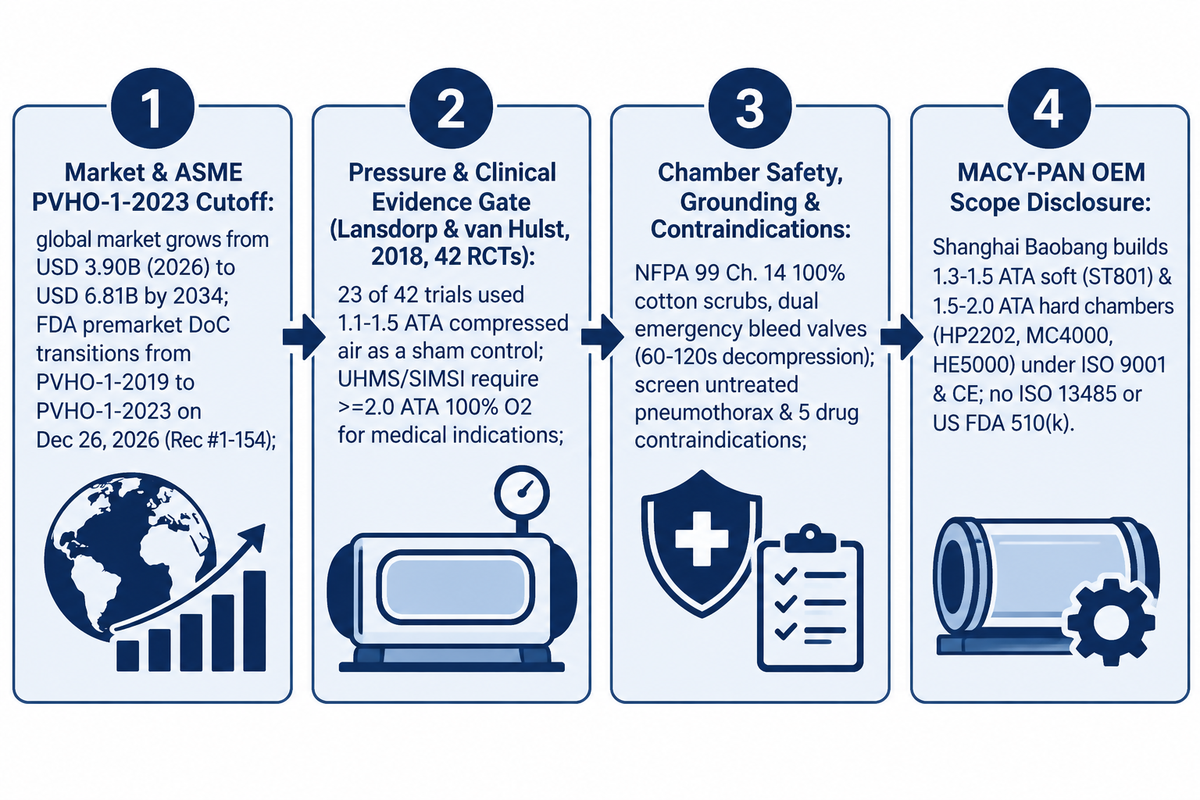
Regional hyperbaric oxygen therapy prices and vessel standards reflect an expanding global market projected to grow from USD 3.90 billion in 2026 to USD 6.81 billion by 2034 (Fortune Business Insights), walk-in rates average $110 to $650 in major US metros, while FDA premarket Declarations of Conformity transition from ASME PVHO-1-2019 to ASME PVHO-1-2023 on December 26, 2026 (FDA CDRH Rec #1-154).
Whether you are a patient booking a local 40-dive package or a clinic director purchasing a hard-shell chamber, vetting safety documentation is essential. In Murray (2026, Undersea & Hyperbaric Medicine), a non-PVHO rigid chamber glass window burst while pressurized to 27 psi in May 2023, seriously injuring two occupants, and customs records showed 27 US importers sourcing from 23 suppliers without FDA device registration. Likewise, in Sheffield & Desautels’ (1997) 73-year fire audit, every fatal chamber fire occurred in an enriched oxygen atmosphere above 28% oxygen, whereas chambers pressurized with air below 23.5% oxygen had the only survivors, a hazard underscored by the August 25, 2025 FDA Safety Letter and the March 2025 Michigan monoplace prosecution (MedPage Today).
6-Point Checklist to Vet an HBOT Provider or Hyperbaric Chamber Supplier:
| Verification Item | What Patients Should Ask a Clinic | What Clinic Buyers Should Require in an RFQ | Primary Reference Standard |
|---|---|---|---|
| 1. Working Pressure & Gas Purity | Does the session run at 2.0–2.4 ATA with 100% medical O2 or 1.3 ATA with a 10 L/min concentrator? | Specify rated ATA (1.3–1.5 ATA soft vs. 1.5–2.0 ATA hard vs. 2.0–3.0 ATA clinical) & 1.5× hydrostatic test | UHMS (≥1.4 ATA / ≥2.0 ATA clinical) & SIMSI (2025) |
| 2. Net Pressurized Bottom Time | Does a 60- or 90-minute quote exclude Compression and decompression can take 20–30 minutes in total, with 2 psi/min used for compression.? | Verify automated or manual linear ramp control capable of 2.0 psi/min compression | Heyboer et al. (2017, PMC5467109) |
| 3. Viewport & Vessel Certification | Is the chamber an ASME PVHO-1 certified vessel with serialized acrylic viewports rather than flat glass? | Require ASME PVHO-1-2023 (FDA Rec #1-181 after Dec 26, 2026) & PVHO-2 acrylic logs | FDA CDRH Rec #1-181 & Murray (2026) |
| 4. Fire & Grounding Protocol | Are 100% cotton scrubs enforced and battery devices/petrolatum dressings banned inside? | Verify patient grounding strap (<10 ohms), cabin O2 monitor (≤23.5% O2 in air cabins), & NFPA 99 Ch. 14 rules | NFPA 99:2024 & Bernatchez et al. (2017) |
| 5. Billing & Refund Transparency | Are hospital facility (G0277) and physician (99183) fees quoted together, and are unused package dives refundable? | Compare factory-direct landed cost (chamber + concentrator + chiller + shipping) vs. local reseller markup | CMS NCD 20.29 & DAMO2CLES (65% completion) |
| 6. Regulatory & QMS Scope | Is the facility UHMS-accredited with an on-site physician for FDA-cleared medical treatments? | Match FDA 510(k) Class II CBF (21 CFR 868.5470) for US hospital billing vs. ISO 9001/CE for wellness/export | 21 CFR 868.5470 & FDA DSCA Guidance |
Transparent Factory-Direct Cost Context & Regulatory Scope: MACY-PAN factory-direct hyperbaric chamber product tiers and cost context (1.3-1.5 ATA soft-shell ST801, sitting ST1700, 1.5-2.0 ATA hard-shell HP1501/HP2202, and multiplace HE5000 systems manufactured under ISO 9001 quality management and CE conformity, without ISO 13485 or US FDA 510(k) clearance) allow private wellness centers, international clinics, and home buyers to eliminate 30% to 60% regional distributor markups. Because general ISO 9001 quality management and CE conformity do not substitute for ISO 13485 medical-device certification or US FDA 510(k) clearance, these systems do not establish eligibility for US Medicare NCD 20.29 hospital wound billing. Compare direct manufacturer pricing in our factory-direct hyperbaric chamber cost breakdown and explore commercial configurations on our page for hyperbaric chamber solutions for clinics and medical practices.
Frequently Asked Questions
Why does hospital-based hyperbaric oxygen therapy cost more than a private wellness center session?
Hospital-based hyperbaric medicine departments charge $300 to $600+ per session because every visit generates two separate medical claims: an outpatient facility fee billed in 30-minute intervals under HCPCS code G0277 and a physician supervision fee under CPT code 99183, reflecting 2.0 to 3.0 ATA clinical vessels, medical-grade oxygen systems, and hospital safety infrastructure.
What is the out-of-pocket cost for Medicare Part B hyperbaric oxygen therapy under HCPCS G0277 and CPT 99183?
Once a patient meets the annual Medicare Part B deductible for a diagnosis covered under CMS National Coverage Determination 20.29, Medicare generally reimburses 80% of the approved physician supervision (CPT 99183) charges, leaving eligible beneficiaries responsible for 20% coinsurance unless a supplemental Medigap policy covers that share, with hospital outpatient facility (HCPCS G0277) copayments determined separately. The patient is then responsible for the remaining 20% of the charges, unless a Medigap policy is also held, in which case that 20% would be covered as well.
How many sessions make renting or buying a home hyperbaric chamber cheaper than paying per clinic visit?
Assuming equivalent mild sessions at home and in a clinic charging $150 per session, a soft-shell home chamber listed at $3,000 to $12,000 reaches acquisition-only break-even in 20 to 80 sessions (or roughly 90 sessions at the $13,495 US retail median), before adding $5 to $25 in monthly electricity, $40 to $100 in annual filter swaps, and maintenance.
Do you wear clothes in a hyperbaric chamber during a paid clinic session?
Yes, patients change into 100% cotton scrubs or gowns provided by the clinic and remove all synthetic clothing, petroleum skin products, watches and battery operated electronic devices prior to pressurization as outlined in NFPA 99 Chapter 14.
Why are off-label conditions like Long COVID, traumatic brain injury, and sports recovery excluded from standard insurance reimbursement?
Medicare National Coverage Determination 20.29 and most commercial health insurers restrict systemic hyperbaric reimbursement to 14 FDA-cleared and 15 CMS-listed medical conditions—such as decompression sickness, carbon monoxide poisoning, delayed radiation tissue injury, compromised skin grafts, and Wagner Grade III or higher diabetic foot ulcers that show no measurable healing after 30-days of standard wound care. Treatment for post-concussion syndrome and Long COVID, as well as for recovery following stroke, Lyme disease and other illnesses and injuries, remains off-label and requires self-pay when excluded from coverage by the patient’s health plan.
Who should not do hyperbaric oxygen therapy even if paying out of pocket?
Untreated pneumothorax is the sole absolute contraindication, while bleomycin exposure, recent doxorubicin, disulfiram, cisplatin, topical mafenide acetate, and severe uncompensated heart failure are relative contraindications requiring clinical screening.
How can clinics and home buyers reduce chamber acquisition costs without compromising pressure vessel safety?
Buyers can compare direct manufacturer pricing against regional reseller quotes while auditing vessel material certificates, 1.5× hydrostatic pressure-test logs, serialized acrylic viewports, and dual mechanical relief valves. US medical hyperbaric chambers follow the FDA Class II 510(k) pathway under 21 CFR 868.5470, with FDA recognition of ASME PVHO-1-2023 supporting voluntary premarket conformity declarations and Medicare treatment reimbursement governed by CMS NCD 20.29, whereas MACY-PAN manufactures 1.3–1.5 ATA soft-shell and 1.5–2.0 ATA hard-shell systems under general ISO 9001 quality management and CE conformity for home, wellness, and international buyers outside US Medicare billing.
Comparing Per-Session Clinic Packages Against Buying a Home or Clinic Chamber?
Review our complete 2026 factory-direct vs. US retail chamber cost ladder ($3,000–$12,000 soft-shell ST801, $8,000–$28,000 sitting ST1700, and $18,000–$80,000 hard-shell HP1501/HP2202 under ISO 9001 and CE conformity), including 10 L/min oxygen concentrator, chiller, landed shipping, and annual maintenance budgets.
The Team Behind This Report
Prepared and reviewed by the Shanghai Baobang Medical Equipment Co., Ltd. technical team. Per-session pricing benchmarks, Medicare Part B G0277/99183 reimbursement rules, clinical protocol durations, and equipment TCO data are sourced directly from CMS Medicare NCD 20.29, Medicare.gov, FDA 21 CFR 868.5470 / ASME PVHO-1-2023 recognition records, UHMS and SIMSI position statements, and peer-reviewed clinical studies (Bhutani & Vishwanath 2012 and Heyboer et al.). 2017, Fife et al. 2002, Salama et al. 2019, Hadjimichael et al. 2020, Brouwer et al. 2024, Rhodes et al. 2017, Lansdorp & van Hulst 2018), and 2026 commercial pricing surveys.
References & Sources
- Medicare National Coverage Determination (NCD) 20.29: Hyperbaric Oxygen Therapy, Centers for Medicare & Medicaid Services (CMS)
- NCA Decision Memo (NCAId=37): Hyperbaric Oxygen Therapy for Hypoxic Wounds and Diabetic Lower Extremity Wounds, CMS
- NCA Decision Memo (NCAId=286): Topical Oxygen Therapy Section C Removal, CMS
- Medicare.gov: Hyperbaric Oxygen (HBO) Therapy Coverage and Part B 20% Coinsurance, US Centers for Medicare & Medicaid Services
- FDA CDRH Recognized Consensus Standard #1-154: ASME PVHO-1-2019 (December 26, 2026 Transition Cutoff), US FDA
- Follow Instructions for Safe Use of Hyperbaric Oxygen Therapy Devices (August 25, 2025), US FDA Letter to Health Care Providers
- Bhutani & Vishwanath (2012): Hyperbaric Oxygen and Wound Healing (Plasma Oxygenation & Protocol Dosing), Indian Journal of Plastic Surgery / PMC
- Heyboer et al. (2017): Hyperbaric Oxygen Therapy: Side Effects Defined and Quantified (43% MEB & 2 psi/min Rate), Advances in Wound Care / PMC
- Lansdorp & van Hulst (2018): Double-Blind Trials in Hyperbaric Medicine: A Narrative Review of 1.1–1.5 ATA Sham Protocols, Clinical Trials / PMC
- Hadjimichael et al. (2020): Prolonged Hyperbaric Oxygen Therapy (60 Daily 90-Minute Sessions at 2 ATA), PMC
- Fife et al. (2002): Transcutaneous Oximetry in Clinical Practice: Multi-Center Analysis of 1,144 Patients, Undersea & Hyperbaric Medicine / PubMed
- Salama et al. (2019): Efficacy of Hyperbaric Oxygen Therapy (2.4 ATA, 90-Minute Sessions) in Healing Diabetic Foot Ulcers, PubMed
- Brouwer et al. (2024): Economic Evaluation of HBOT for Ischemic Diabetic Foot Ulcers (DAMO2CLES Trial ICER), PubMed
- Rhodes et al. (2017): Standalone vs. Community Hospital Hyperbaric Treatment Cost & Volume Analysis, Military Medicine / PubMed
- ZonMw Final Project Report: Does Applying More Oxygen Cure Lower-Extremity Sores? (DAMO2CLES Trial 65% Adherence), ZonMw
- UHMS Position Statement on Low-Pressure Fabric Hyperbaric Chambers (≥1.4 ATA & ≥2.0 ATA Clinical Requirements), Undersea and Hyperbaric Medical Society
- SIMSI Position on the Use of Low-Pressure Hyperbaric Chambers and Oxygen Concentrators (93% to 90% O2 Drop), UHMS Pressure
- Sheffield & Desautels (1997): Hyperbaric and Hypobaric Chamber Fires: A 73-Year Analysis (>28% vs. <23.5% O2), UHMS
- Murray (2026): Hyperbaric Chamber Viewport Safety (27 psi Glass Burst) & US Import Compliance Review, Undersea & Hyperbaric Medicine
- UHMS MEDFAQs: Hyperbaric Room Storage Drift, Standards, and Safety Codes, Undersea and Hyperbaric Medical Society
- City of Des Moines Fire Department Appeal Report (May 2024; NFPA 99 Proposed TIA No. 1735 Vote Record), City of Des Moines
- US7648488B2: Transcutaneous Oxygen Tension (≤30 mmHg) Wound Healing Threshold, Google Patents
- US8251057B2: Hyperbaric Chamber Control and 200–500 L/min Monoplace Oxygen Purge Flow, Google Patents
- Four Charged in Fatal Michigan Hyperbaric Chamber Explosion (March 11, 2025), MedPage Today
- Is Hyperbaric Oxygen Therapy Worth It? Cost, Benefits & Treatment Value ($100–$650/Session & $10,000/40-Dive Benchmarks), 90210Doc
- How Much Does Hyperbaric Oxygen Therapy Cost? A 2026 Pricing Guide by Chamber Pressure Tier, Project Wellbeing
- Hyperbaric Oxygen Therapy Cost Survey ($110 to $367 Single-Session Provider Benchmarks, October 2026), Longevity Vanguard
- Hyperbaric Chamber Price Index (July 23, 2026; $13,495 Soft-Shell & $41,700 Hard-Shell Medians Across 26 Listings), Regenerated
- Hyperbaric Chamber Operating Cost Guide ($10–$25/Month Electricity & $40 Annual Filter Pack), HBOT for Sale
- Hyperbaric Oxygen Therapy Market Size, Share & Industry Analysis (USD 3.90 Billion in 2026 to USD 6.81 Billion by 2034), Fortune Business Insights
Related Articles
- Hyperbaric Chamber Cost & Ownership Guide: factory-direct vs. US retail hardware tiers, shipping, and maintenance
- 1.3 vs. 1.5 vs. 2.0 ATA Hyperbaric Pressure Buyer’s Guide: comparing tissue oxygenation and chamber engineering