Get in Touch with MACY-PAN Company

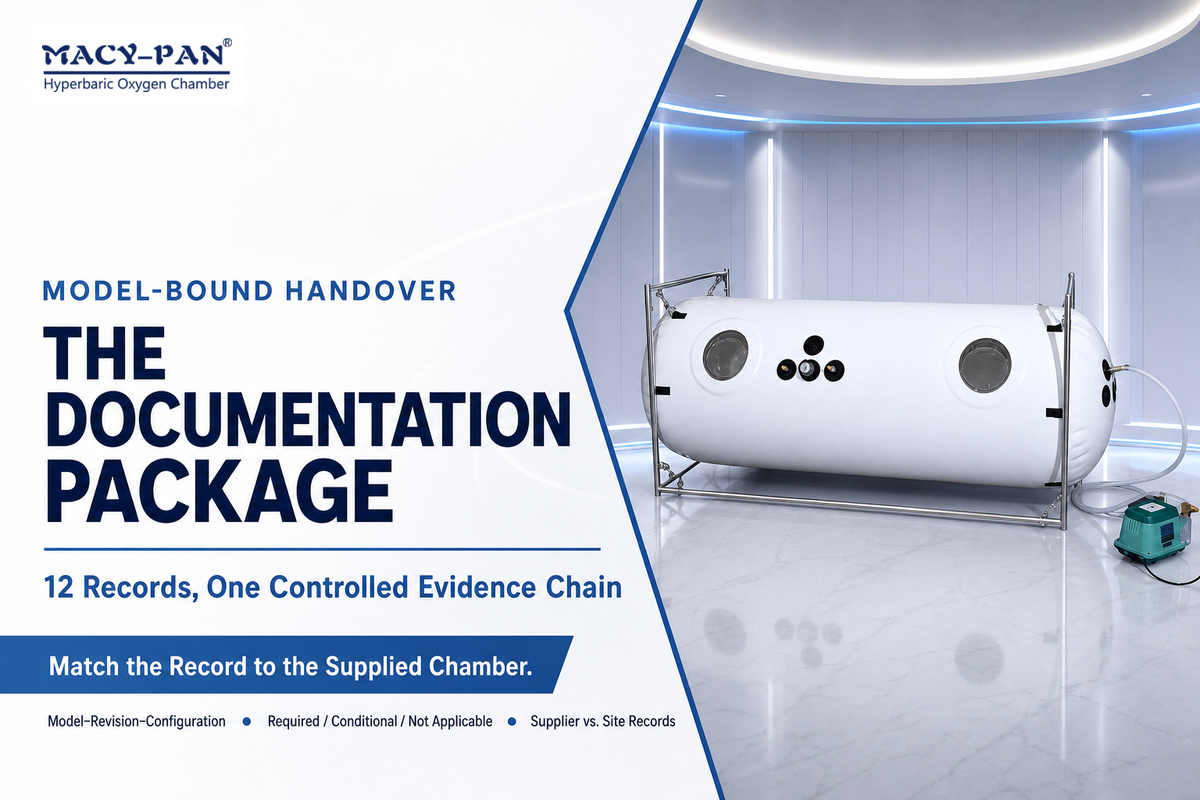
A hyperbaric chamber model documentation package is a controlled set of equipment records that a buyer can bind to the chamber model, document revision, supplied configuration, and, where available, serial number. This record package is not a patient chart or a reimbursement record package or other package intended to substitute for physical examination of the equipment prior to shipping (inspection). The purpose of this evidence package is to assist a buyer in identifying the types of records (operating, technical, regulatory, and transfer) that may apply to the equipment being supplied.
Answer first: request an indexed, model-bound package; test each record against the ordered configuration; then keep supplier records separate from facility, clinical, competent-person, and post-construction evidence. The supplier’s records must not be intermixed with the facility’s, the clinic’s, or records created by a competent person.
- Valid-looking files can be authentic but still apply to the wrong model, revision, or option set.
- Below, the 12-record grid is a buyer framework for supplier deliverables, not a universal legal checklist.
- Equipment records and physical inspection are often requested to be submitted at the same time; however, this is not always the case.
- Ownership and review timing should follow risk, contract terms, destination rules, and change triggers rather than one fixed cadence.
What Is a Hyperbaric Chamber Model Documentation Package?
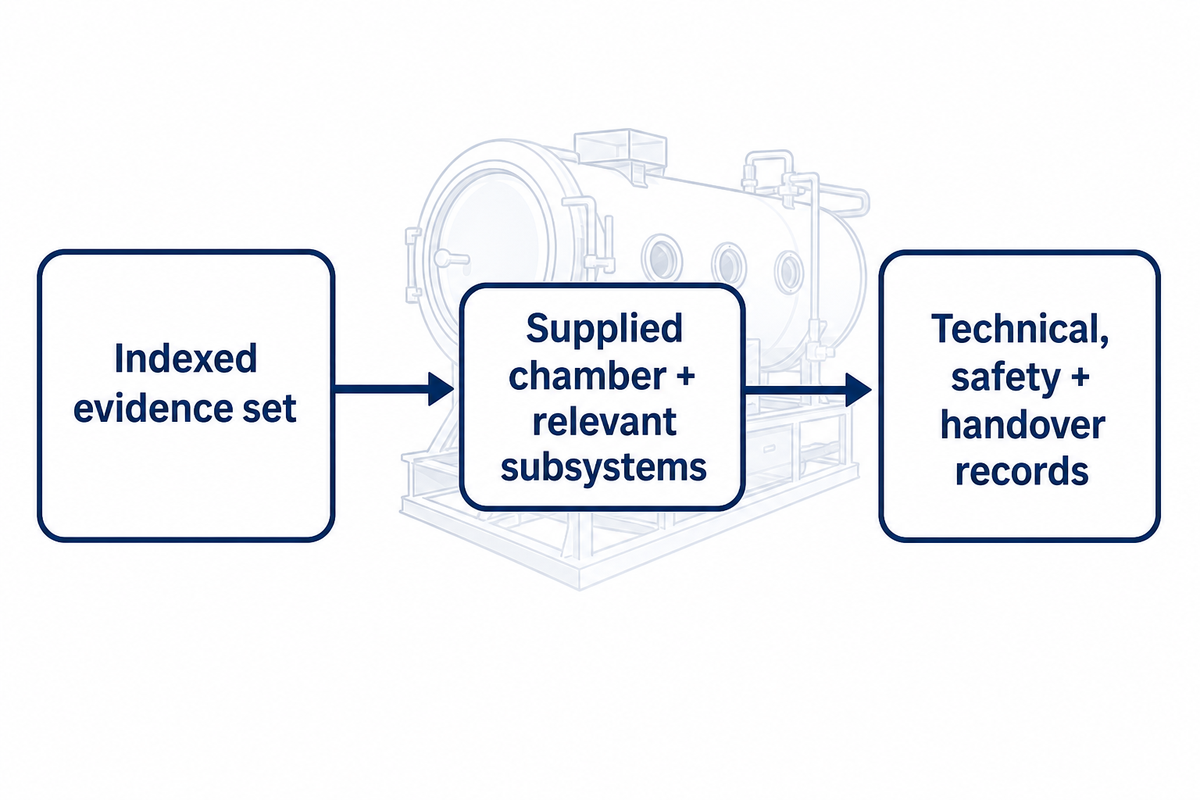
A hyperbaric chamber model documentation package is an indexed evidence set that connects the supplied chamber and its relevant subsystems to usable technical, safety, and handover records. The model package provides a description of evidence, model and/or serial number of the evidence, revision level of the evidence, and conditions under which the evidence applies. The model package permits the procurement and facilities groups to review the supplier evidence, and differentiates the supplier evidence from the clinical evidence.
FDA safety guidance tells facilities to review and follow the manufacturer’s instructions for use for each hyperbaric oxygen therapy device. That device-specific framing matters because a generic marketing folder cannot show whether the operating instructions, maintenance schedule, grounding information, or accessory references match the chamber delivered to the site.
| Sales or generic file | Controlled package record | Buyer review question |
|---|---|---|
| Family brochure | Model-specific data sheet with revision and option reference | Does it describe the ordered chamber? |
| Certificate image | Scope, issuer, validity, covered entity, and product connection | What does the certificate actually establish? |
| Generic manual | Applicable operating or service manual with revision control | Can the intended user perform the stated task safely? |
| Installation sketch | Controlled drawing and utility/interface schedule | Can the site plan the supplied configuration? |
Marketing the device does not permit clinical use. The purpose of the index is to allow the supplier evidence to be reviewed. Clinical evidence, reimbursement evidence, staffing authority, treatment protocols, and maintenance evidence are to be retained in separate records.
Clinical boundary: a medical record for wound care or another medical treatment may identify the patient’s condition, the physician responsible, direct supervision, treatment options, saturation measurements, and the response to hyperbaric treatment. Clinical records from a hyperbaric team are different from supplier equipment handover records. Likewise, HBO, hyperbaric oxygen treatment, and hyperbaric therapy describe a clinical service; this article does not tell a hyperbaric team how to select or deliver therapy.
Facility boundary: hyperbaric facilities and other medical facilities separately control chamber operation, fire safety, staff members, technician authorization, and site procedures for the hyperbaric environment. For this buyer framework, documentation requirements for in-chamber conditions include the stated controls for oxygen flow, the chamber atmosphere, materials and items inside the chamber, static electricity, system checks, supervision, risks associated with increased pressure, and the monitored pressure inside the chamber. Exact limits and records vary by chamber, facility, configuration, and jurisdiction.
Equipment boundary: records for hyperbaric systems should identify whether an oxygen concentrator, compressor, analyzer, or other subsystem is supplied; which hyperbaric compatible materials are specified; which quality control evidence applies; and what warranty coverage is contracted. New chambers, hardshell chambers, and other pressure chambers can carry different interfaces, rated pressure in ATA, atmosphere-control details, and safety and performance evidence. These fields are procurement best practices, not universal operating values.
Prior to purchasing systems or subsystems, consult the hyperbaric chamber RFQ Checklist. During the acquisition process, a checklist serves to capture the requisite elements of a request for proposal (RFP). The RFP defines the requirements of the system being procured.
Apply the 3-Way Model, Revision, Configuration Test, Then Screen Changes
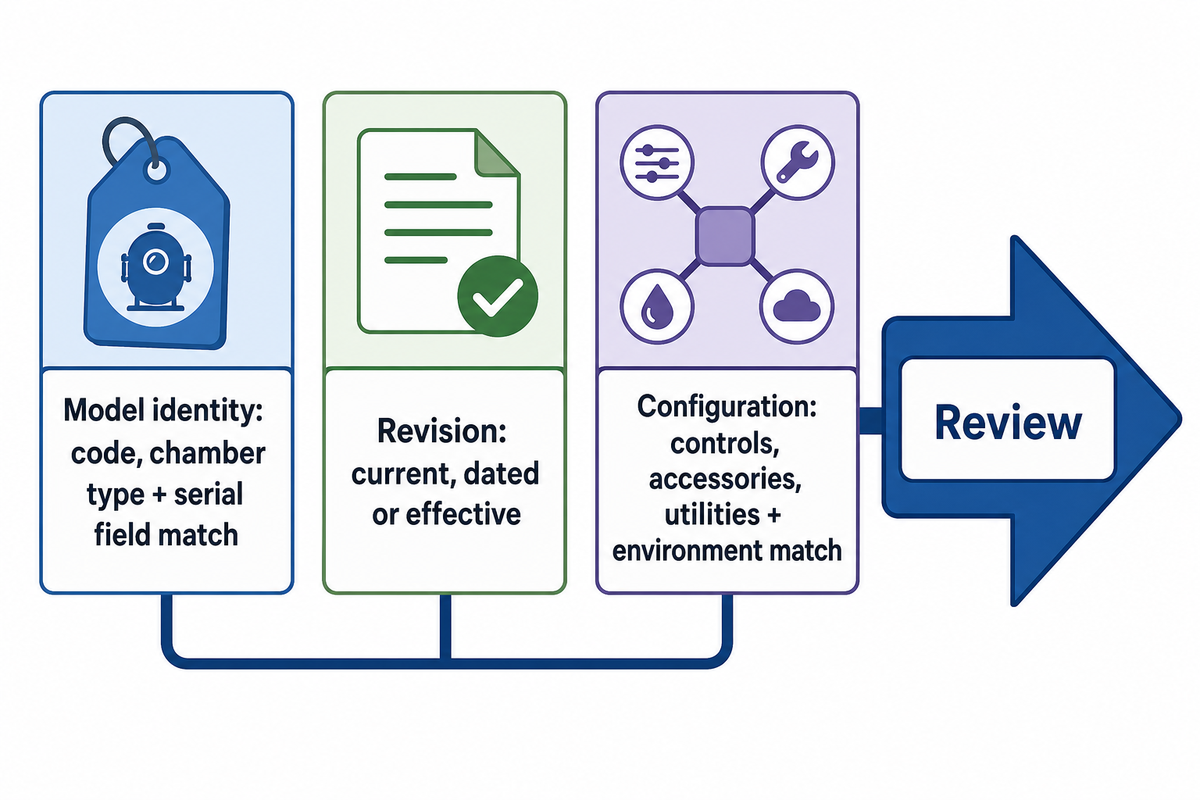
This 3-Way Model, Revision, Configuration Test checks whether a record is applicable before anyone relies on its technical content: the model identity, document revision, and supplied configuration must align. Passing all three fields moves the file to content review; a documented absent trigger can be marked Not Applicable; any other mismatch should remain Clarify or Hold until the responsible evidence owner resolves it.
| Test field | Pass evidence | Clarify or Hold signal |
|---|---|---|
| Model identity | Model code, chamber type, and serial field match the order or handover record | Family name matches but model suffix, chamber type, or serial field differs |
| Revision | Current controlled revision is identified with date or effective status | Undated PDF, superseded drawing, or inconsistent revision index |
| Configuration | Listed controls, accessories, utilities, and intended environment match supply scope | Optional subsystem, software, oxygen arrangement, or accessory differs |
Run a separate modification-status screen after the three matching checks. FDA explains that changes to design, components, intended use, use environment, or other device characteristics can require a manufacturer to assess whether a new 510(k) is needed. The test above therefore checks record applicability; it does not prove that a modified device remains within an earlier authorization or evidence boundary.
- Identify the as-supplied model and serial reference.
- Verify the revision and effective status of the documents with the controlled list.
- Verify the quoted text, option lists, accessory lists, and use environment against record limits.
- Verify if there has been any change to the device, including a service action, to determine if the documented state of the device has been altered.
- Pass, Not Applicable, Clarify, or Hold are options.
In response to a request to provide a record, the oft-heard objection is “the title is correct, so the manual is correct.” A title or certification alone cannot settle an option, revision, accessory, or later-change mismatch. Controlled identifiers carry more weight than a folder name.
The 12-Record Document-to-Serial Grid
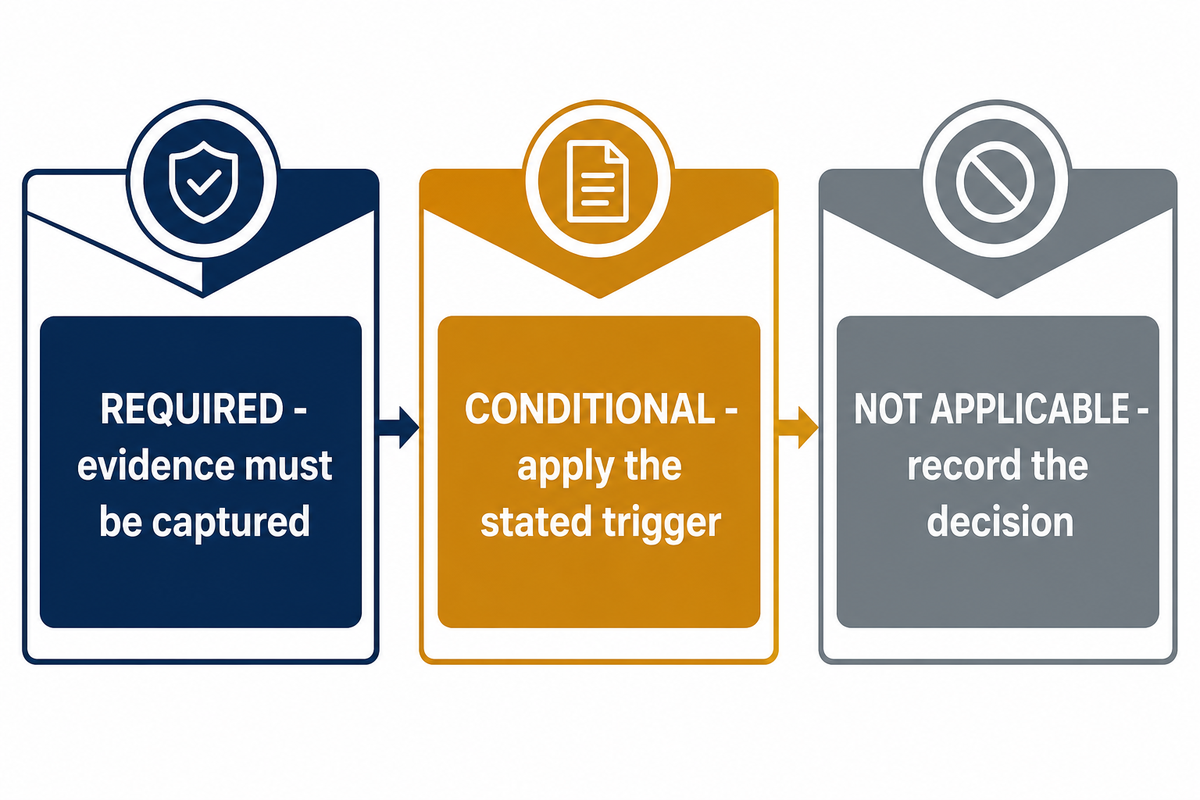
The 12-Record Document-to-Serial Grid is a buyer’s framework to capture evidence supplied by the seller for the chamber in question. For each record in the grid, it is at the buyer’s discretion to decide if the evidence should be captured as Required, Conditional or Not Applicable. If evidence is determined to be Not Applicable, the buyer should record the decision and keep any supporting correspondence outside the supplier package.
| Record group | Typical binding field | Applicability trigger | Disposition and limitation |
|---|---|---|---|
| 1. Package index | Order, model, revision | Every supplier package | Required by buyer rule; does not prove content accuracy |
| 2. Technical specification | Model, configuration, revision | Quoted chamber | Required; not an as-built verification by itself |
| 3. General arrangement and interfaces | Drawing revision, option list | Installation or facility planning | Conditional; site must confirm local interfaces |
| 4. Installation instructions | Model and intended environment | Installation is in supply scope | Conditional; not a site acceptance record |
| 5. Operator instructions | Model, controls, revision | Equipment will be operated | Required when supplied for use; clinical authority remains separate |
| 6. Service and maintenance manual | Model, serial range, revision | Service responsibility is defined | Conditional; no universal interval may be inferred |
| 7. Emergency and safety information | Model, chamber type, configuration | Applicable device operation | Required by buyer rule; does not replace facility procedures |
| 8. Accessory and subsystem records | Accessory model, compatibility, serial if available | Accessory or oxygen subsystem supplied | Conditional; one main-chamber record is insufficient |
| 9. Pressure-boundary records | Vessel identifier, nameplate, applicable code | Pressure vessel scope applies | Conditional; does not prove electrical or facility compliance |
| 10. Quality and regulatory evidence | Legal entity, product scope, destination | Contract or market requires it | Conditional; certificate scope must be read |
| 11. Training material and handover record | Supplied model, audience, date | Training or commissioning is contracted | Conditional; competence authorization stays with the site |
| 12. Change and supersession register | Record ID, revision, modification status | Any controlled update or discrepancy | Required by buyer control method; does not replace physical verification |
UHMS accreditation material separates document review from maintenance, construction, fabrication, electrical systems, gas handling, and operations. Its structure supports a multi-record approach and serial-linked evidence, but it should not be recast as a universal purchase-order annex.
Actor-specific records need their own locations: a manufacturer may control controlled design and supply files; an importer or distributor may retain market-role records; a buyer or facility may control local procedures and training links; a competent person may generate examination evidence; and a service provider may issue maintenance records. None of those roles should be compressed into the supplier’s delivery folder; use the hyperbaric chamber factory audit checklist to review supplier processes separately.
Common failure mode: copying the grid into a contract without the “Conditional” and “Not Applicable” columns creates false certainty. Better contracts ask for the disposition, the trigger, and the owner of every omitted or substituted record.
Technical Specifications, Drawings, and Installation Interfaces
Drawings and interface diagrams in the sales package should allow the customer to review the ordered chamber in the context of the site’s physical and utility constraints. The useful set identifies the model and configuration, and states the applicable interfaces for that configuration. Sales brochures can introduce a family; they cannot reliably close an interface question for an ordered unit.
| Interface topic | Document to request | Why the controlled version matters |
|---|---|---|
| Footprint, access, and installation position | General arrangement drawing | Doorways, room layout, and service access are site-specific checks |
| Power and controls | Utility schedule and electrical interface record | Control and supply requirements can differ with options |
| Oxygen delivery and ventilation | Configuration-specific subsystem record | Accessory and facility boundaries must be visible |
| Grounding and safety systems | Installation instruction and applicable safety evidence | FDA identifies grounding and safety checks as operating controls |
| Rated pressure and vessel details | Applicable technical and pressure-boundary record | Values must not be transferred between chamber families |
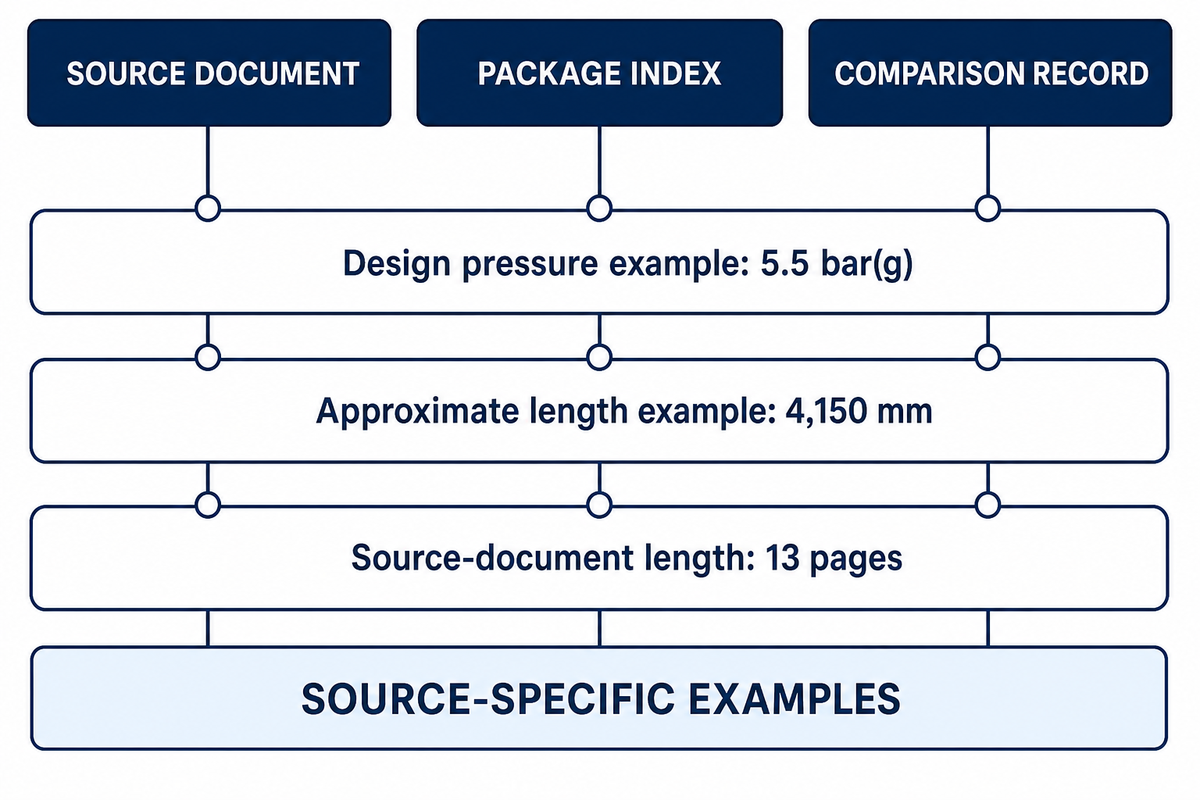
One reviewed chamber specification used the source notation “5.5 barg,” represented below as 5.5 bar(g), and listed an approximate 4,150 mm length, seven viewports, a revision index, and an equipment list. Those numbers illustrate why buyers must retain units, model, drawing, and revision together; they aren’t purchase specifications for another hyperbaric chamber.
Source-to-Index-to-Comparison Numeric Control
The table shows how a buyer can express a verified numeric value in three successive records without generalizing a given example to a specification. The repetition of the three values in the columns is intentional. Each record describes and interprets the example it references.
| Source-bound field | Source value | Package-index value | Comparison-record value | Applicability boundary |
|---|---|---|---|---|
| Example chamber design pressure | 5.5 bar(g) | 5.5 bar(g) | 5.5 bar(g) | Only the reviewed DRASS specification; source notation was 5.5 barg |
| Example chamber approximate length | 4,150 mm | 4,150 mm | 4,150 mm | Only the same reviewed DRASS document |
| Example source-document length | 13 pages | 13 pages | 13 pages | Only the reviewed 13-page DRASS specification; page count is a file-integrity check, not a chamber specification |
| Acrylic-window time trigger | 10 years | 10 years | 10 years | Perry advisory example; verify the named component and model |
| Committee scope discussion | 2 psi | 2 psi | 2 psi | NFPA ballot record; not a universal buyer acceptance limit |
| Directional trend observation window | 12 months | 12 months | 12 months | DataForSEO series available to this project |
| Earlier trend averaging window | 3 months | 3 months | 3 months | Directional comparison, not year-over-year growth |
| Later trend averaging window | 3 months | 3 months | 3 months | Directional comparison, not hyperbaric demand |
Examples of 5.5 bar(g) pressure and 4,150 mm dimension come from the reviewed model specification; the 10 years component trigger comes from Perry’s product advisory; the 2 psi scope value comes from NFPA committee material; and the three time windows come from the project’s documented trend analysis. Real purchase files should copy values from their own controlled sources, preserve whether pressure is gauge or absolute, and flag any changed digit, unit, or applicability field. For example, 5.5 bar(g) must not become 5.5 bar absolute, and 4,150 mm must not be rounded without a controlled basis.
WHO technical-specification guidance treats a specification as part of the information needed to describe the equipment to be procured and managed. Each facility should still validate its own room, utility, access, ventilation, and local approval conditions rather than infer them from a generic data sheet.
Use the site’s model specification comparator to compare controlled fields, then keep the final installation acceptance decision with the applicable site and project reviewers.
Operating, Maintenance, Cleaning, and Emergency Manuals
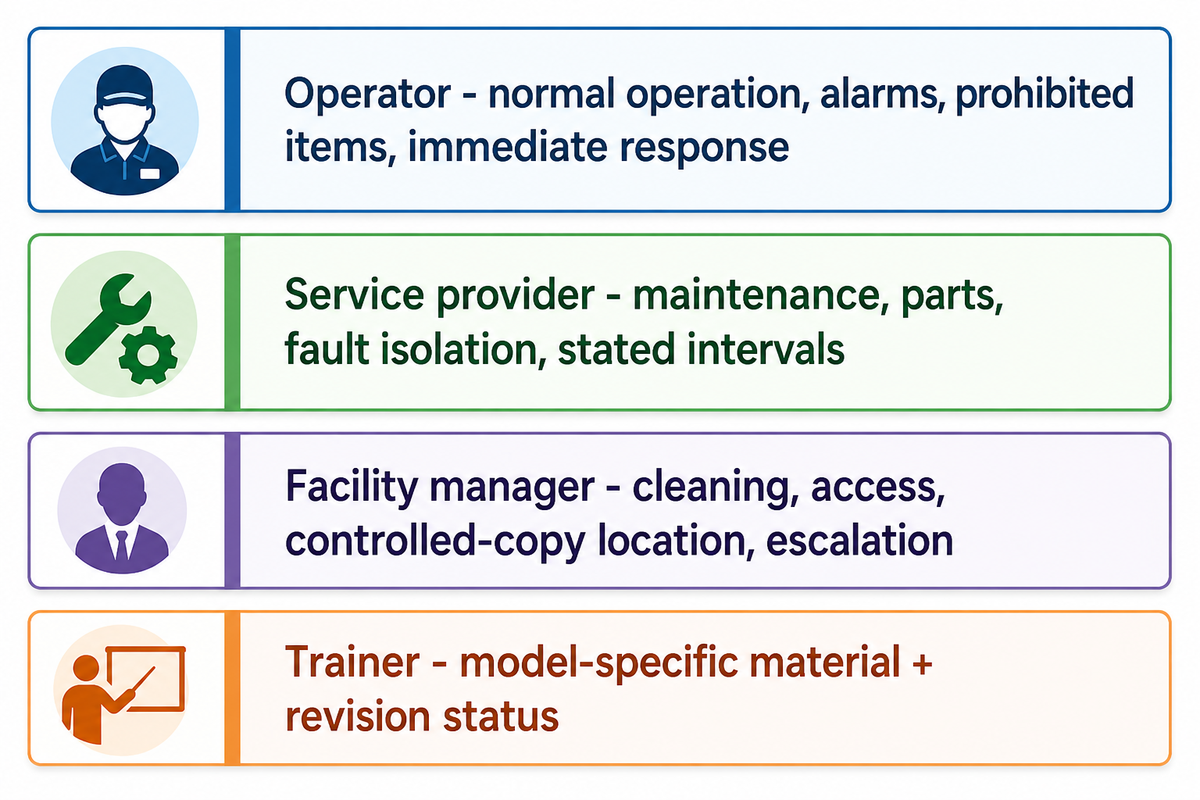
Manuals should tell users which personnel perform which tasks and to which chamber or accessory. Manual sets should define the intended audience, provide revisions and languages, show task intervals, include warnings and troubleshooting, show cleaning directives and emergency procedures. One operator booklet rarely answers every service or facility-control question.
| User or owner | Needed manual content | Boundary |
|---|---|---|
| Operator | Normal operation, alarms, prohibited items, immediate response | Does not establish who may legally supervise therapy services |
| Service provider | Maintenance tasks, parts references, fault isolation, stated intervals | Does not substitute for competent-person or local inspection records |
| Facility manager | Cleaning, access, controlled-copy location, escalation path | Does not replace clinical policies or staffing records |
| Trainer | Model-specific training material and revision status | Does not by itself demonstrate individual competence |
“Manufacturer’s instruction for use (IFU) for hbot device(s) must be reviewed and strictly adhered to.”
What are the maintenance and cleaning procedures for hyperbaric chambers?
Maintenance and cleaning procedures should come from current, applicable manufacturer instructions and connect to the site’s controlled procedure. FDA directs facilities to follow manufacturer guidance for safety checks, staff training, supervision, and prohibited-item controls. The record should identify the manual revision, task owner, accessory, and stated interval.
Perry Baromedical’s published advisory gives a component-specific example of a 10-year or 10,000-cycle acrylic-window trigger. Buyers should attribute that interval to the named component and model, then check whether it applies to the supplied chamber; it isn’t a universal schedule for other equipment.
Manual usability also has a practical boundary. Inaccessible files, unclear revisions, or procedures written for another accessory can delay a task even though the PDF exists. That is a document-control problem, not evidence that the chamber itself passed a physical inspection.
Which Quality and Regulatory Records Belong in the Package?
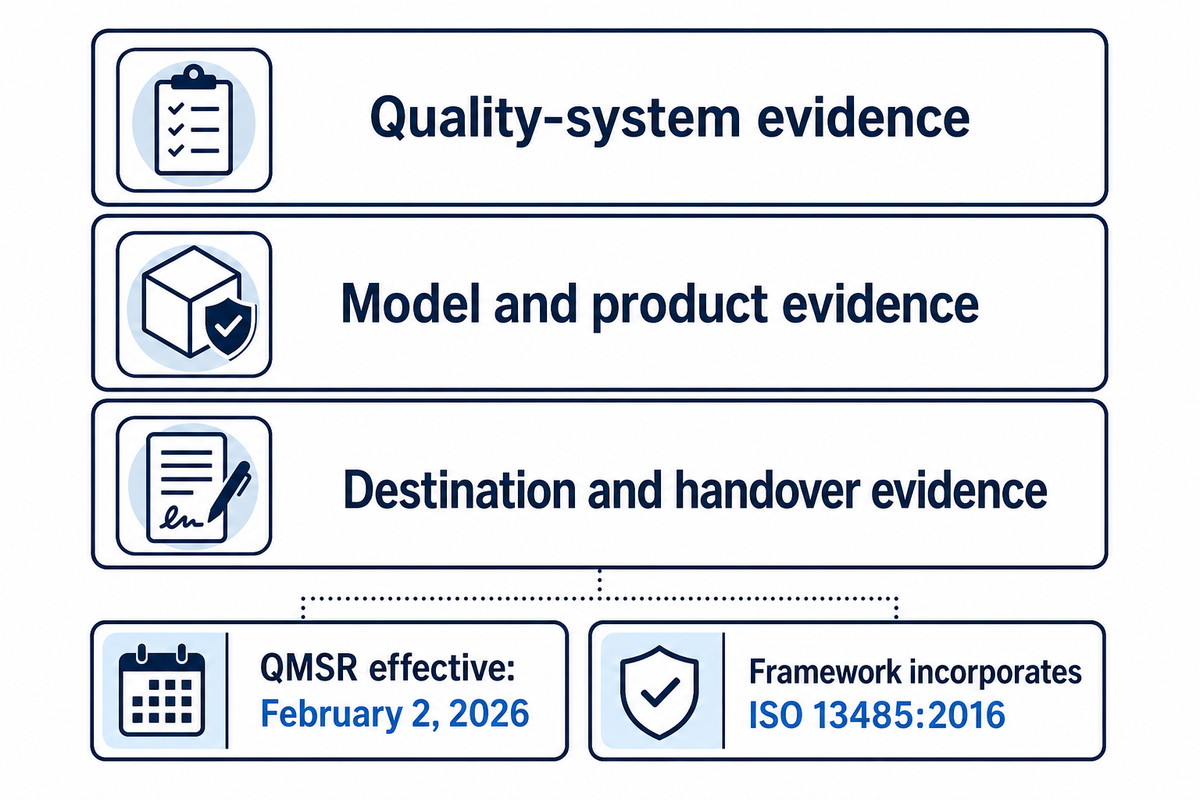
Quality and regulatory records belong in different evidence layers: a quality-system certificate addresses an organization and certified scope; model-level records address the supplied device and its labeling or authorization context; destination evidence addresses the market and facility conditions where the chamber will be used. Buyers should review all three layers without allowing any one document to replace the others.
| Evidence layer | Useful review fields | Does not replace |
|---|---|---|
| Quality-system evidence | Issuer, legal entity, site, validity, certified activity and scope | Model-specific technical files, labeling, or destination authorization |
| Model and product evidence | Model, intended use, identifier, revision, applicable standards | Facility approval, local installation review, or staff authorization |
| Destination and handover evidence | Jurisdiction, importer/distributor role, contract, local requirements | Manufacturer design control or a pressure-boundary test record |
FDA states that its Quality Management System Regulation became effective on February 2, 2026, and incorporates ISO 13485:2016 into the quality-system framework, while retaining FDA-specific requirements. That explains why an ISO 13485 certificate can be useful evidence about an audited quality system but cannot, alone, establish that a quoted model is authorized or documented for every destination.
What are the safety certifications and compliance standards for hyperbaric chambers?
Safety certifications and standards should be grouped by purpose: quality-system evidence, device classification or market authorization, pressure-boundary evidence, electrical and facility controls, and model-specific instructions. For the United States, FDA’s hyperbaric chamber classification record identifies Class II, product code CBF, 21 CFR 868.5470, and a 510(k) submission type; the record also lists consensus standards, including NFPA 99:2024 and ASME PVHO-1:2023. Those entries are not a worldwide approval statement, and their applicability must be checked for the destination and project date.
Search and discovery labels such as technical diagram, FDA hyperbaric chamber, NFPA 99 hyperbaric chamber, and hyperbaric oxygen therapy FDA-approved are not proof of model, site, or destination compliance.
A certificate can be valid and recent; however, it doesn’t mean that it aligns with the referenced standard or shows suitability for the location of the production site or the market. For facility-planning context, see the clinic hyperbaric chamber solutions page; it does not replace local approval or the model-bound package. For certificate-type and scope questions, use the hyperbaric certification decoder, then verify the cited issuer and scope against the actual supply contract.
Pressure-Vessel and Oxygen-System Documentation for Hyperbaric Chambers
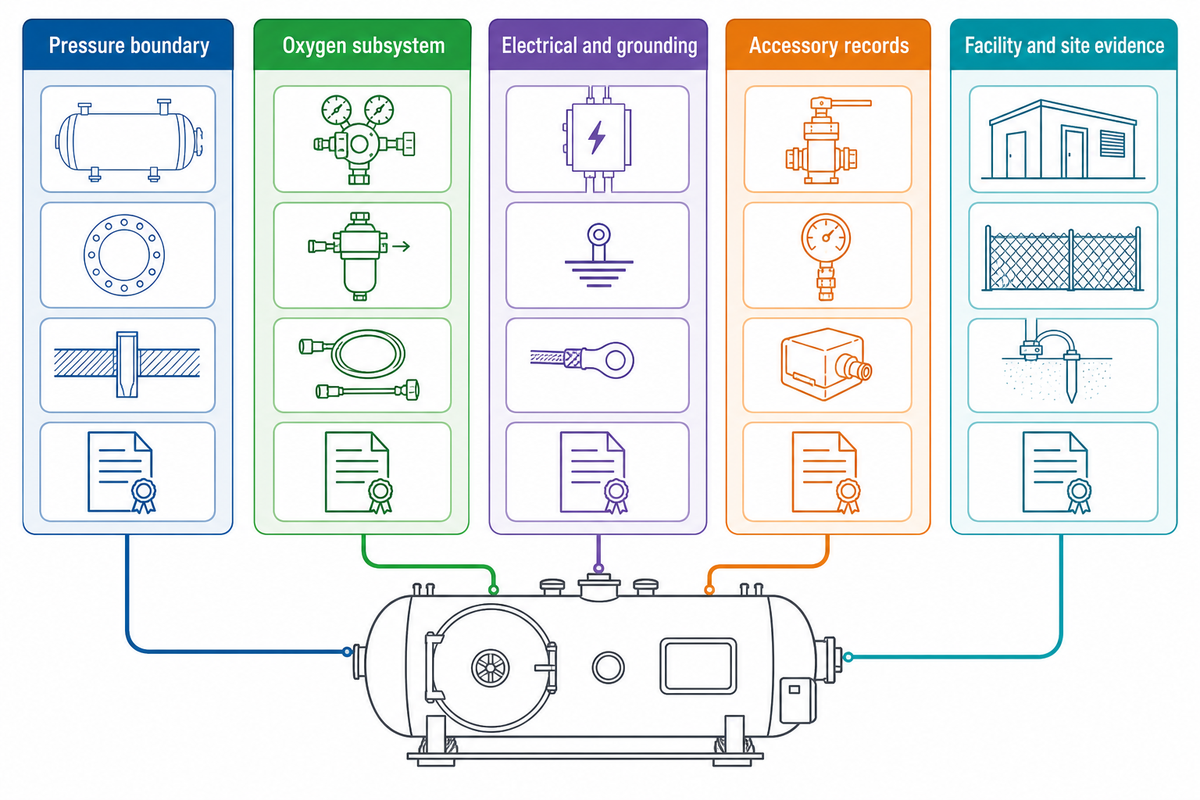
There are distinct records for a hyperbaric chamber relating to pressure vessels, oxygen systems, the electrical system, and various other systems and facilities. In that scope, a pressure-boundary record can address a vessel’s design, construction, inspection, testing, marking, or nameplate information; it does not automatically establish oxygen-component compatibility, grounding, control-system status, accessory applicability, or facility compliance.
| Evidence family | Question answered | What it cannot prove alone |
|---|---|---|
| Pressure boundary | Which vessel record, identifier, test, or code scope applies? | Oxygen delivery or complete facility safety |
| Oxygen subsystem | Which supplied components and compatibility records apply? | Pressure-vessel construction or electrical grounding |
| Electrical and grounding | Which installation and control requirements apply? | Accessory model compatibility or local authority acceptance |
| Accessory records | Which option, serial range, or manual applies to the accessory? | Whole-system certification |
| Facility and site evidence | Which local procedures, examinations, or approvals are recorded? | Manufacturer design history or supplier package completeness |
ASME describes PVHO-1:2023 as covering safety requirements for pressure vessels for human occupancy, including design, fabrication, inspection, testing, marking, stamping, and related piping certification. FDA’s classification record separately lists PVHO-1:2023 and NFPA 99:2024 among recognized standards. Buyers should verify the applicable edition and jurisdiction rather than copying a standards logo from a brochure.
NFPA committee material also records reasoning that the PVHO-1 scope begins above a 2 psi differential while discussing Chapter 14 coverage. That’s evidence about the committee record and cited scope question, not permission to infer a destination rule from a marketing label such as “mild” or “soft.”
For post-construction use, ASME’s PVHO-2 guidance addresses operation, maintenance, and acrylic-window serviceability. In the United Kingdom, HSE explains that qualifying pressure systems require a written scheme of examination and competent-person examinations. Those site-generated records can’t be proven by a supplier handover file.
While keeping the certificate, the question should be asked concerning records pertaining to the other oxygen system components and accessories, and site evidence. One document rarely answers all six questions.
Close Documentation Gaps Without Repeating Pre-Shipment Inspection
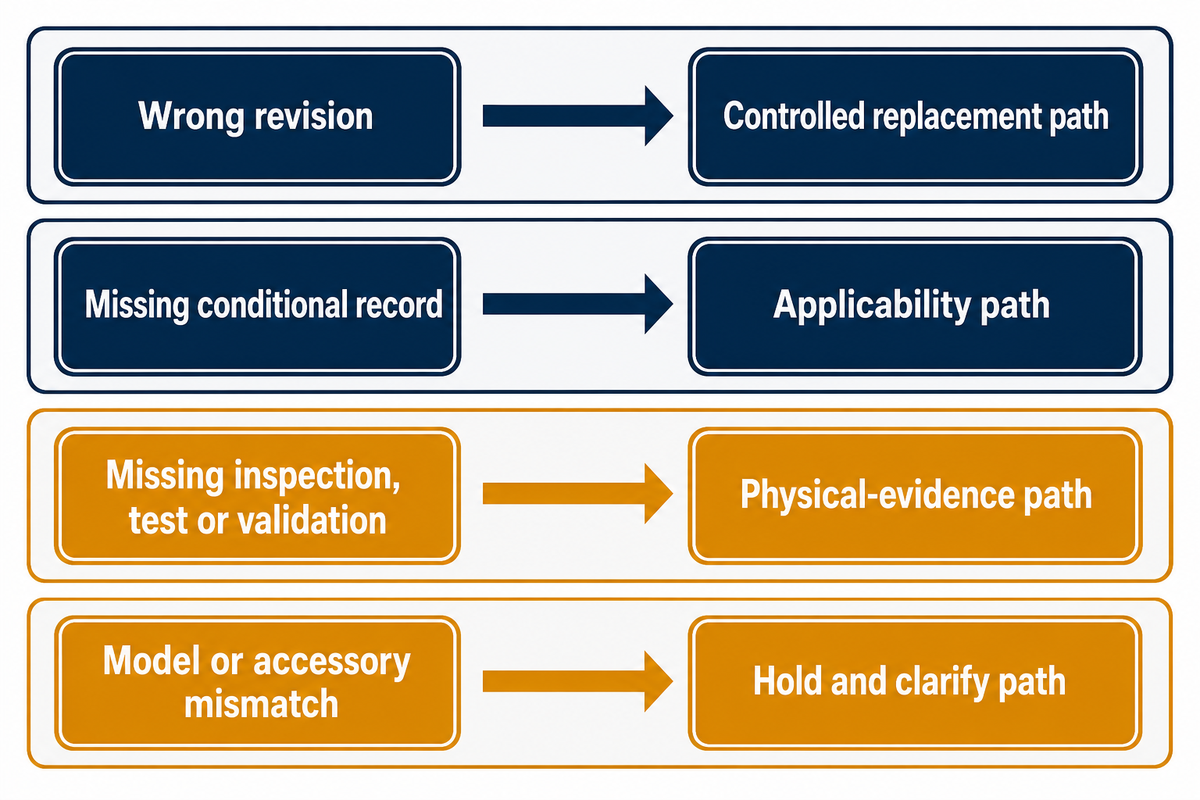
Discrepancies of this nature should be resolved by two means. Document-only discrepancies can close when a controlled replacement, applicability decision, and approval record are complete. Missing physical inspection, test, or validation records cannot close through email alone; they close only after the applicable activity is performed and recorded. This scope boundary prevents document acceptance from duplicating pre-shipment inspection while preserving evidence that an inspection really occurred.
| Gap type | Closeout path | Minimum record |
|---|---|---|
| Wrong revision, but no physical issue alleged | Controlled replacement path | Supersession link, matching fields, reviewer approval |
| Missing conditional record | Applicability path | Trigger assessment, Not Applicable rationale, owner approval |
| Missing inspection, test, or validation evidence | Physical-evidence path | Performed activity, dated result, responsible actor, record link |
| Model or accessory mismatch | Hold and clarify path | Corrected record or documented scope decision |
Use a stoplight register with the gap, hold rule, owner, due date, replacement or activity link, and acceptance authority. FDA warning-letter evidence illustrates why a missing visual-inspection or risk-control record cannot simply be treated as an administrative omission: absent evidence can leave no assurance that the control occurred.
The buyer framework consists of five steps: identifying the evidence gap, naming the evidence owner, choosing the path (document or physical), assessing completion, and making a decision to accept or retain the hold. The framework does not assess the integrity of the chamber. For shipping, packing, and logistics, use the information found in the International Shipping Guide, and for inspection scope, use the factory or pre-shipment processes.
When Manual Usability Becomes an Acceptance Bottleneck
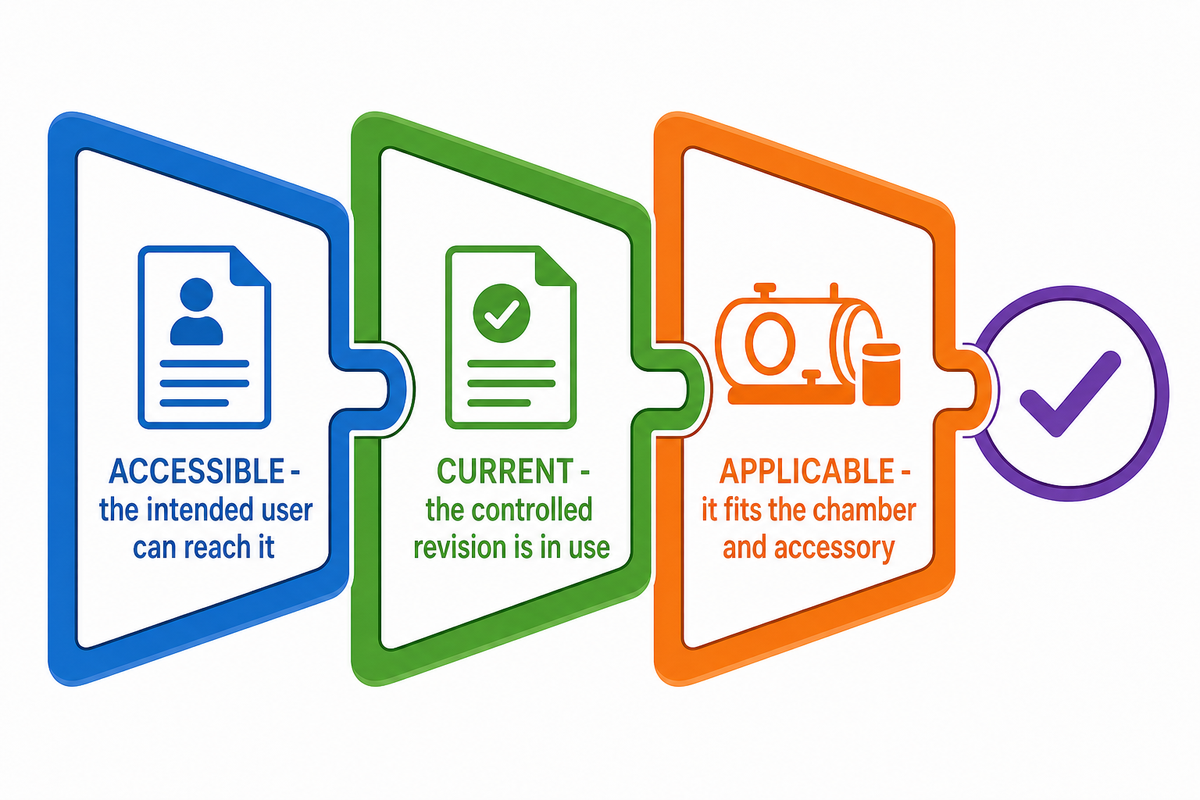
Manual usability becomes an acceptance bottleneck only when a specific installation, training, maintenance, or operating task lacks an accessible, current, applicable instruction. Physically, a chamber can be ready while a site cannot close a task because the manual is superseded, unbound to the configuration, unavailable in the needed language, or missing the relevant accessory procedure. That is a conditional buyer risk, not evidence that manuals are the market-wide primary bottleneck.
Electronic delivery can reduce administrative burden. During June 2025, the European Commission announced that broader electronic instructions for use can further digitalise healthcare systems and reduce administrative pressure, so “digital” should not be treated as synonymous with “uncontrolled” or “unusable.”
DataForSEO data available to this project covered 12 months and showed the term technical manuals rising from an earlier 3 months average of 783.33 to a later 3 months average of 1,360, a 1.736× directional ratio. This is background only: it is not a same-month annual growth rate, a measure of hyperbaric demand, or proof that manuals delay acceptance.
For the purpose of the 2026 project, include the format and revision details of the manuals in the acceptance criteria. Here, the buyer objection is not “are manuals important?” It is “which exact task is blocked, and what record shows that the current instruction now fits this chamber?”
Control the Package After Handover
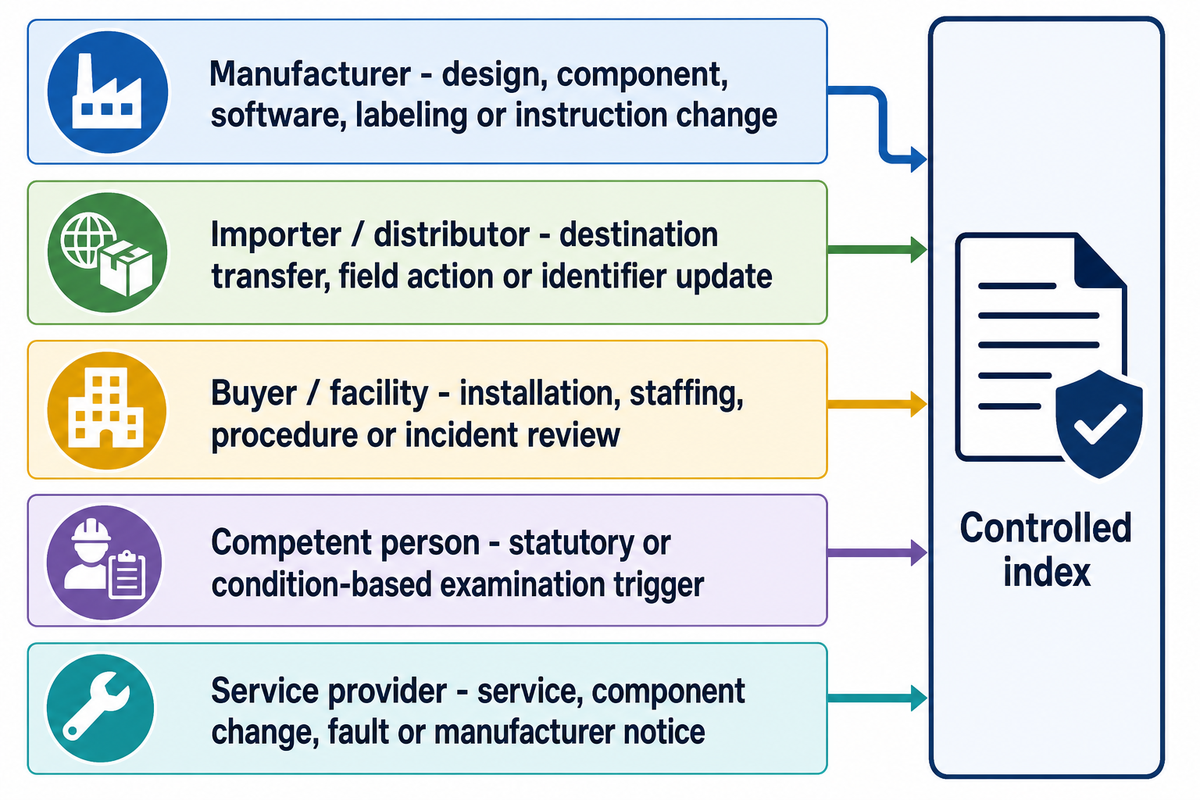
After handover, control the package through risk-based ownership rather than a universal job title or review calendar. A buyer should preserve links among the chamber, accessories, controlled revisions, modification status, training acknowledgments, applicable identifiers, site examinations, and superseded files. Each record should be retained by the entity that controls it.
| Actor | Typical controlled records | Risk-based trigger to review |
|---|---|---|
| Manufacturer | Model files, supplied configuration, controlled manuals, change notices | Design, component, software, labeling, or instruction change |
| Importer or distributor | Role-specific market and traceability records where applicable | Destination transfer, field action, or identifier update |
| Buyer or facility | Receipt index, local procedures, access control, training links | Installation, staffing change, local procedure update, or incident review |
| Competent person | Examination scheme and examination records where applicable | Statutory or condition-based examination trigger |
| Service provider | Maintenance, repair, replacement, and test records | Service event, component change, fault, or manufacturer notice |
For EU traceability context, the European Commission states that the UDI/Devices module became mandatory on 28 May 2026. That’s an EU milestone, not a worldwide requirement, and a UDI or other identifier doesn’t replace model, revision, configuration, or local site records.
UK MHRA device-in-practice checklists provide a practical reminder that users need current information, training, maintenance arrangements, and records appropriate to the device and setting. The article’s ownership table is still a procurement control method, not a statutory form or universal cadence.
Facilities that keep only procurement emails lose the link between a revised manual and the people using it. Store a controlled index, make superseded copies visibly obsolete, and assign review when a documented risk trigger occurs. Do not claim lifecycle completeness merely because one department owns a shared folder.
Frequently Asked Questions
What documentation is required for hyperbaric oxygen therapy services?
A model package commonly begins with an index, technical specifications, applicable drawings, installation instructions, operating and maintenance manuals, safety and emergency information, accessory records, training material, and quality or regulatory evidence relevant to the destination. That is a buyer-side structure, not a universal legal list. Facility licensing, staffing authority, treatment records, and clinical protocols are separate from equipment handover records and depend on local rules and the service offered.
What are the staffing requirements for operating hyperbaric chambers?
Staffing is not proven by a chamber certificate. A site should identify the governing facility and professional requirements, then retain role descriptions, training completion, authorization, emergency assignments, and any required competency evidence. Supplier records can provide equipment training material, but they cannot decide who may legally supervise hyperbaric oxygen therapy services in every jurisdiction. FDA’s safety guidance includes staff training and patient supervision among operating controls, while local rules determine the required roles.
What equipment records are needed for monoplace and multiplace hyperbaric chambers?
A record set should cover the chamber and every supplied subsystem that affects installation or safe operation, including controls, communications, compressors, oxygen equipment, analyzers, valves, masks or hoods where supplied, grounding provisions, and safety systems. The list of affected subsystems varies for different chamber models and configurations. Bind the relevant records for each model, option, and revision, as opposed to providing an exemplar record for each family.
Does an ISO 13485 certificate replace model-specific technical records?
No. ISO 13485 is a quality-management-system standard. A certificate can verify an audited organization, site, and scope, but it does not replace the technical specification, drawings, instructions, risk and labeling records, market authorization, or configuration evidence. FDA’s QMSR incorporates ISO 13485:2016 while retaining FDA-specific controls. Check the issuing body, validity, named legal entity, covered activities, product scope, and destination evidence. A certificate can be authentic yet have no demonstrated connection to the quoted model or manufacturing site.
Is one pressure-vessel certificate enough for the full chamber system?
No. A pressure-boundary record answers a different question from oxygen-component compatibility, electrical and grounding evidence, accessory manuals, controls, alarms, and facility operating requirements. Review each evidence family separately against its own stated scope, applicable model, supplied configuration, and destination before acceptance.
Can you install a hyperbaric chamber at home?
Records alone cannot answer that question. Model, local rules, utilities, access, ventilation, grounding, supervision, and intended use all matter. Start with the model-specific installation set and obtain the required local review; the home hyperbaric chamber guide addresses the broader decision.
References & Sources
- FDA: Follow Instructions for Safe Use of Hyperbaric Oxygen Therapy Devices
- FDA: Quality Management System Regulation
- FDA: Hyperbaric Chamber product classification record
- Undersea and Hyperbaric Medical Society: Clinical Hyperbaric Facility Accreditation Manual
- World Health Organization: Technical specifications for medical devices
- ASME: PVHO-1 safety standard for pressure vessels for human occupancy
- ASME: PVHO-2 post-construction requirements
- UK Health and Safety Executive: Pressure Systems Safety Regulations
- European Commission: electronic instructions for use update
- European Commission: UDI and device registration
- UK MHRA: Devices in practice checklists
Scope note: This article is a procurement and document-control framework for equipment records. It doesn’t provide clinical advice, legal advice, a universal regulatory checklist, or a physical inspection result. Confirm contract requirements, manufacturer instructions, destination rules, and site-specific conditions with the responsible parties.