Get in Touch with MACY-PAN Company

How to Choose a Hyperbaric Chamber for a Wellness Center

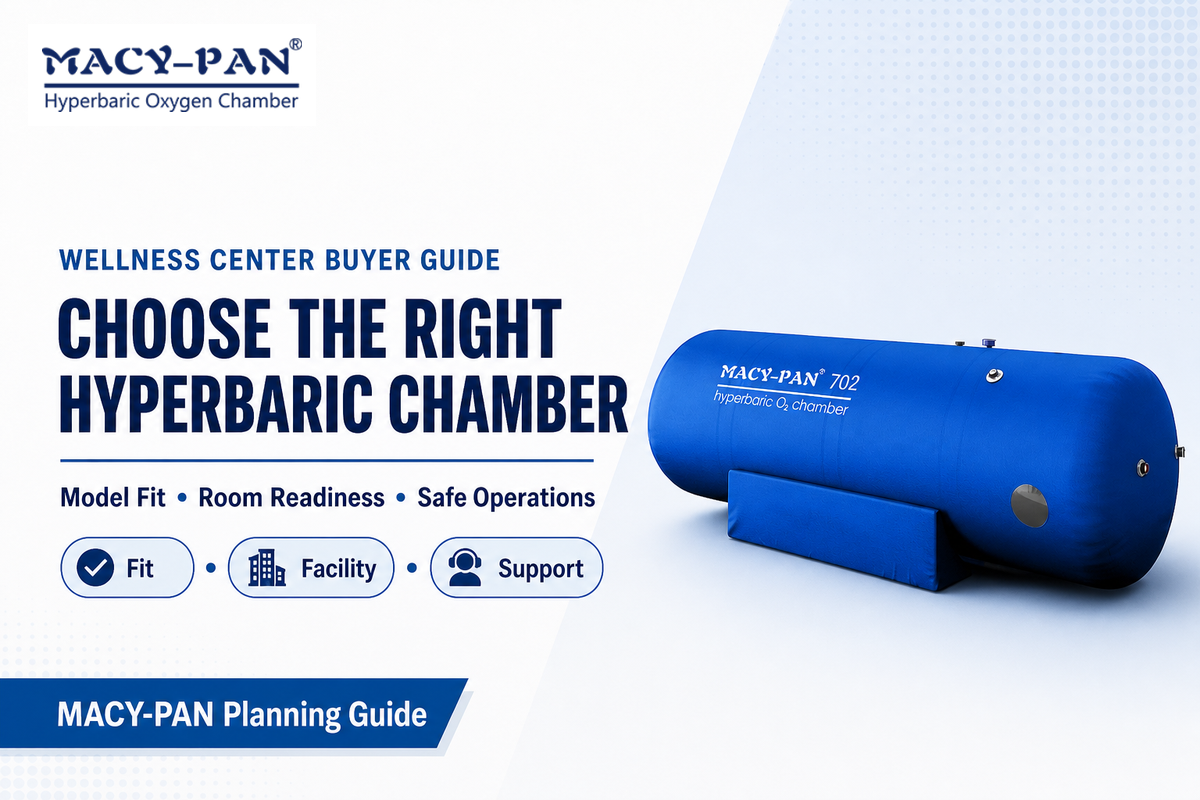
Wellness Center Buyer Guide
Hyperbaric chamber for wellness center refers to the equipment decision framed in this guide: the chosen chamber should match the planned service to the exact model’s documented intended use, room fit, facility responsibilities, staffing, client access, capacity, maintenance, and service evidence before price is compared.
Quick answer
There is no universally best chamber category. A good starting point is to do a two-way fit check. You define what the center plans to provide and confirm that the intended use of the exact model corresponds to the plan. Only then do a check for room, people, operating controls, throughput, service network, and total ownership.
This order prevents a common procurement error. Treating “wellness,” “mild,” “soft-shell,” or “hard-shell,” or a number as a complete specification leads to a host of problems. Those terms (if used at all) should be at the end of the consideration process to structure a shortlist, not determine a client’s need, define an indication or oxygen-delivery method, facility approval, accessibility, clinical equivalence, or business outcome.
This is a due diligence guide for owners, operations leads, facility planners, finance team members and procurement personnel. A current 90-day GSC review showed an operator pattern across business costs, advertising boundaries, pressure comparison, and commercial chamber selection; this GSC Operator Friction Signal reports decision themes, not private query counts. It doesn’t select a treatment for an individual and doesn’t take the place of medical, legal, fire safety, accessibility, insurance, engineering or other professional advice.
1. Match the Planned Service to the Exact Model’s Intended Use
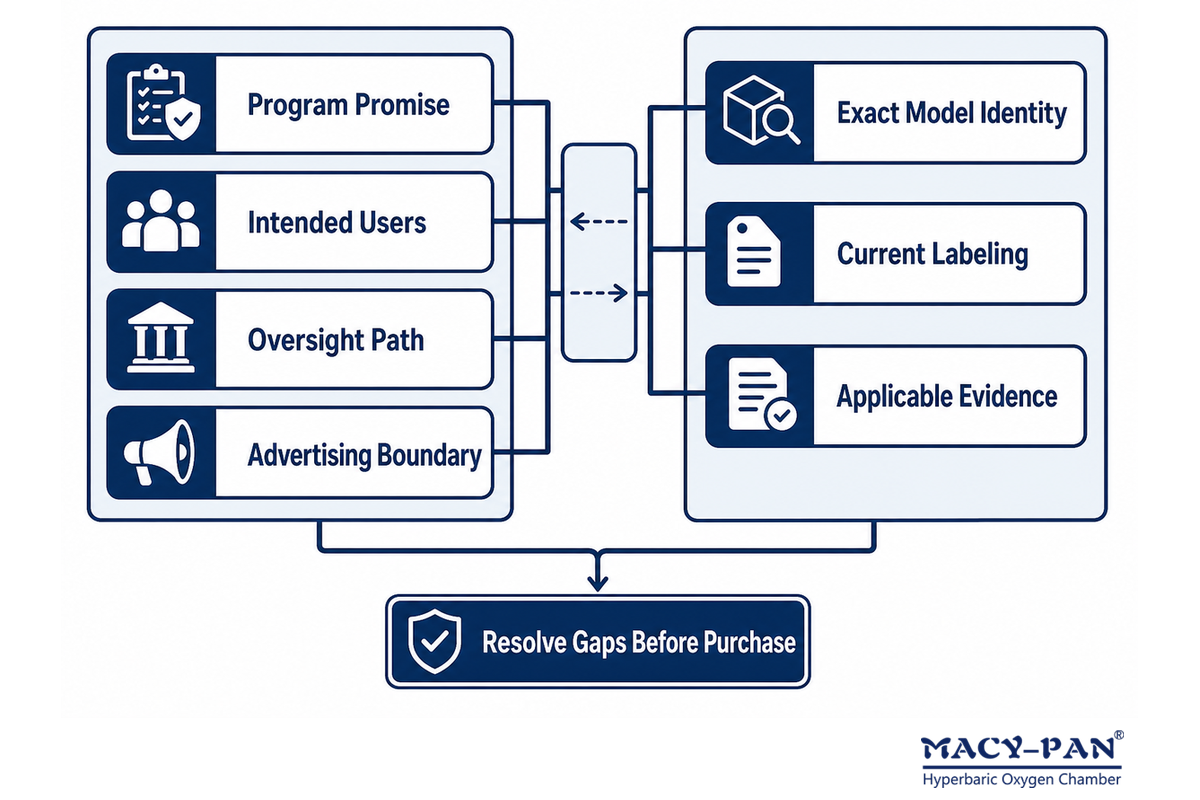
Describe the proposed wellness-center service in a single sentence, including its users, intended outcomes, oversight, medical-referral path, and advertising language. Place the current intended-use statement for the model being considered next to your description. Review the two descriptions as a procurement method in this guide. The ordering of the descriptions is not mandated by the FDA.
This is not a paperwork formality. One public FDA 510(k) record for a portable mild chamber family limits the indicated use to acute mountain sickness under a physician’s direction. That record does not describe every portable chamber, and it says nothing about MACY-PAN models. Its lesson is narrower and more important: category and pressure cannot substitute for the exact model’s regulatory record and labeling.
| Question | Center’s answer | Exact-model evidence | Gap owner |
|---|---|---|---|
| What service is being offered? | To be completed | Intended-use / labeling file | Program owner |
| What outcome is promoted? | To be completed | Population- and protocol-matched evidence | Claims reviewer |
| Who directs or supervises it? | To be completed | Label, local rules, written policy | Operations |
Do the same for benefit claims. Published evidence in healthy adults reports mixed, protocol-dependent findings for exercise performance and recovery. Don’t stretch that evidence into a general promise for every population, chamber, pressure, or wellness outcome. If the proposed marketing statement has no appropriately matched evidence, change the claim before buying hardware around it.
2. Compare Chamber Families With the Wellness Chamber Fit Sheet
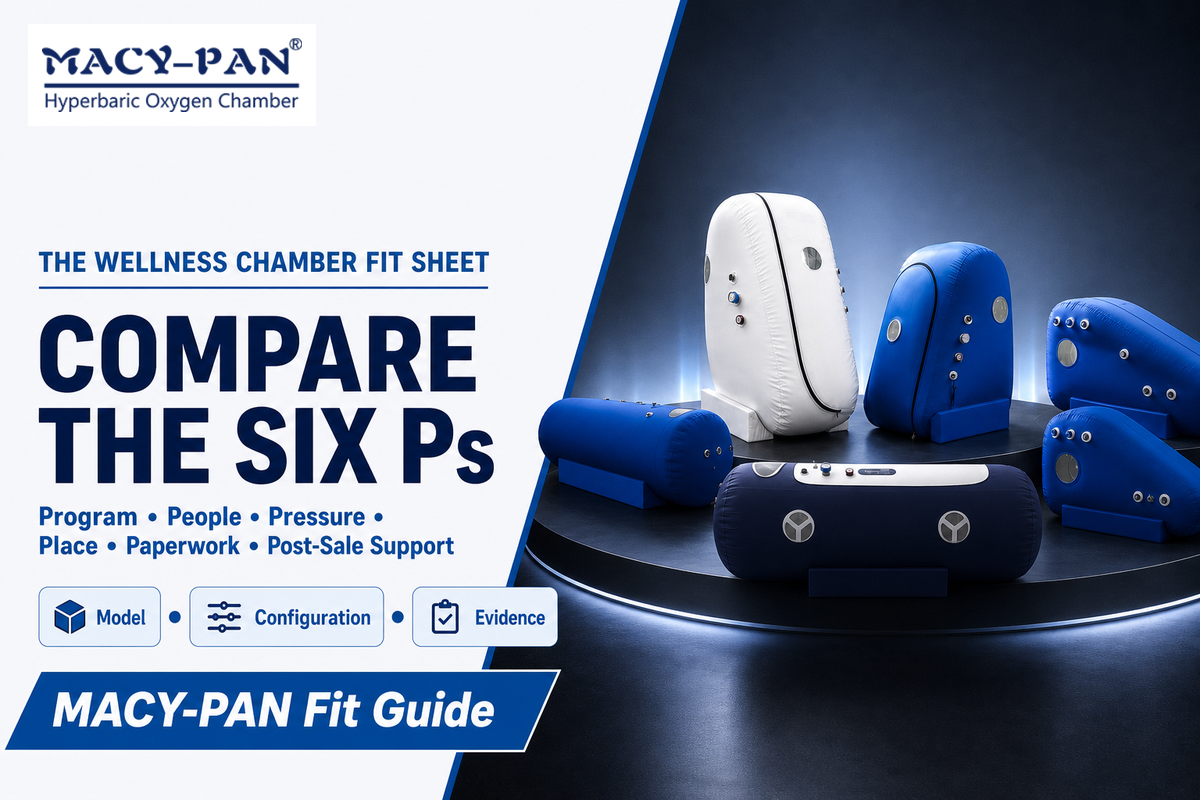
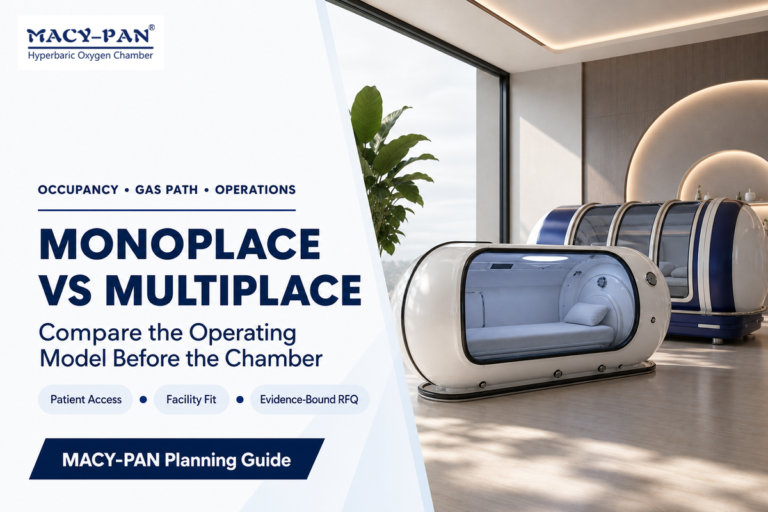
The soft-shell and mild chamber range, hard medical chamber range, monoplace, and multiplace are useful orientation labels, not a final ranking. Each identifies potentially relevant questions about occupancy, portability, entry, pressure and oxygen arrangement, and installation, but the answers belong to the specific chamber model and configuration.
The Wellness Chamber Fit Sheet: six Ps
- Program: intended service, promoted outcome, referral path, and claim boundary.
- People: user, occupancy, operator roles, mobility, communication.
- Pressure and Oxygen: operating range, gas source, delivery method, instruction.
- Place: entry, footprint, utilities, ventilation, service, planning.
- Paperwork: identity, intended use, manuals, test, install, review.
- Post-sale support: training, maintenance, parts, response path, document retention, and change control.
Use the same six categories for each finalist. “Easy installation,” for example, is useful only if the supplier provides the current installation manual, the center confirms the room and utility assumptions, and the local reviewer agrees with the layout.
The fit sheet prevents category-level claims from “leaking” into procurement. Don’t classify a model as safer, more effective, more accessible, or more profitable without evidence applicable to the model, use, location and comparison being made.
3. Validate the Room Before You Validate the Quote
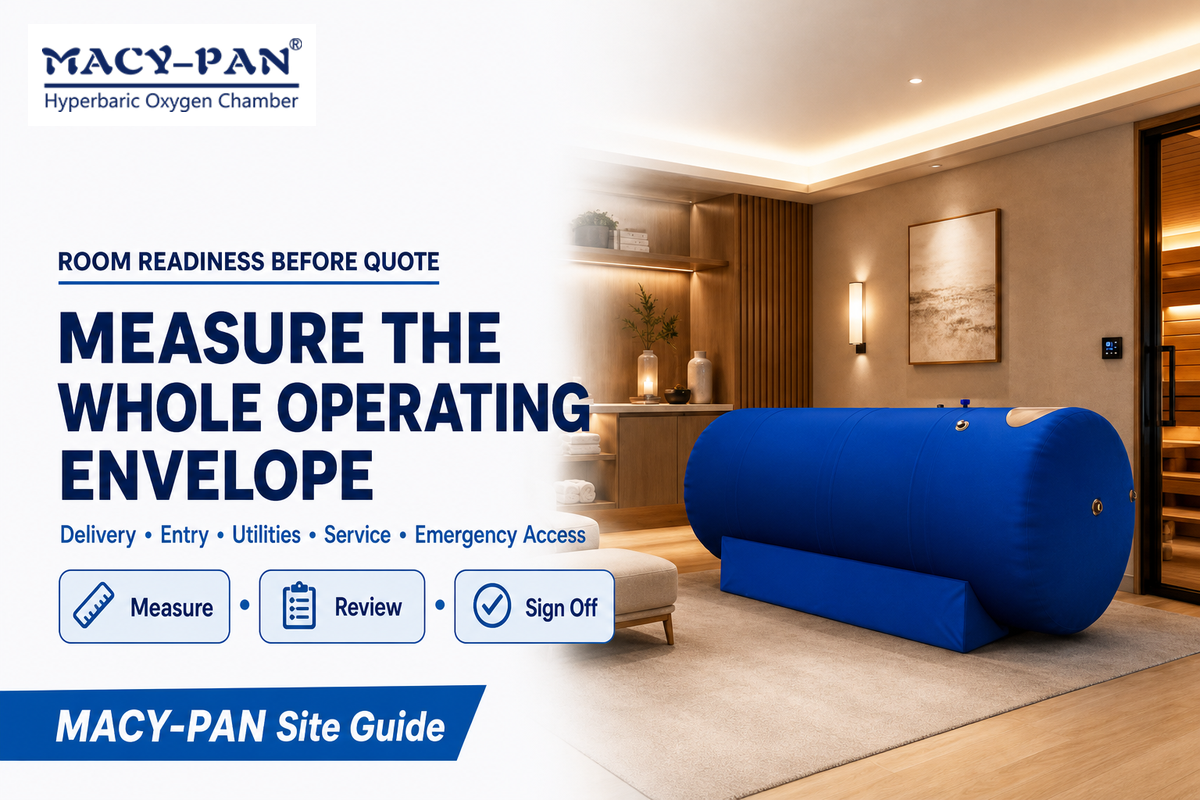
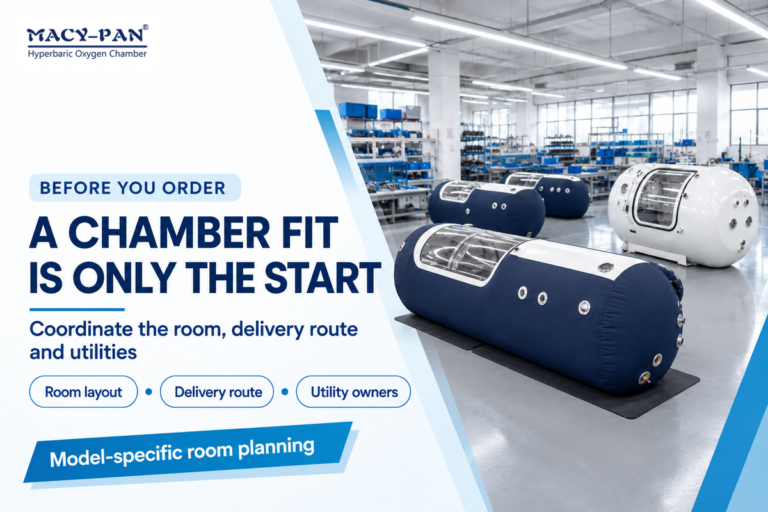
In a room-readiness review, chamber dimensions are only one concern among many others. A facility must also address the delivery and entry path, operating envelope, door and zipper movements, user transfers, operator positioning, service access, electrical and oxygen arrangements, environmental concerns, communications, emergency access, and any structural issues.
| Room input | Measured value | Model requirement | Who signs off? |
|---|---|---|---|
| Delivery path and narrowest opening | To be completed | To be completed | Facility lead |
| Usable room footprint and service zone | To be completed | To be completed | Supplier / engineer |
| Electrical, oxygen, ventilation, heat, and noise | To be completed | To be completed | Qualified trades / authority |
| Emergency route and response access | To be completed | To be completed | Safety lead / local reviewer |
Do not fill the model-requirement column from a generic article. Use the manual and drawings for the quoted revision. Ask the supplier which assumptions change with the oxygen configuration or accessories, and record the review that applies. Then identify the authority, insurer, accessibility adviser, fire-safety professional, or engineer whose review applies locally. An FDA recognized-standard record can inform federal device work without proving which edition a local jurisdiction has adopted.
4. Build the Six-Layer Safe Launch Stack
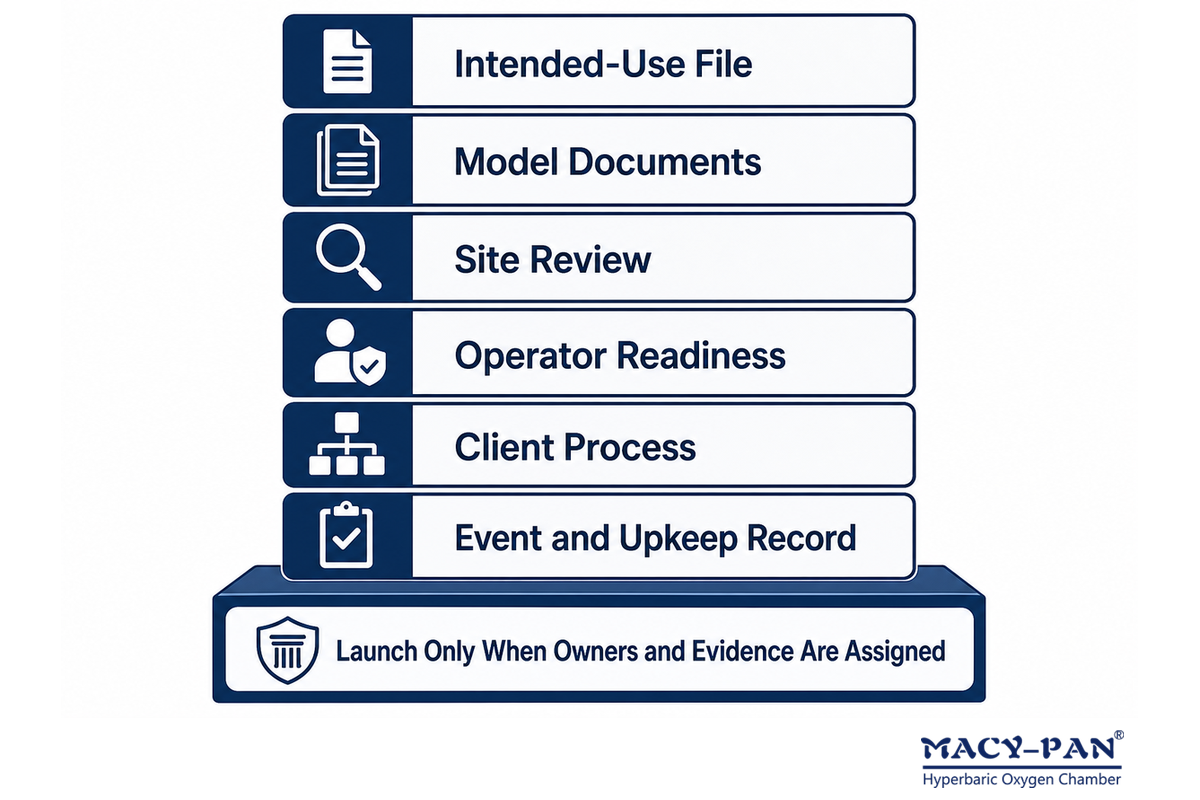
In August 2025, the FDA issued a safe-use communication after reports of serious injuries, deaths, and fires involving HBOT devices. Its practical message is model-specific: follow the manufacturer’s instructions, address fire prevention and grounding, train staff, monitor operation, control compatible items and clothing, and keep cleaning, maintenance, and safety checks current.
“Follow manufacturer’s instructions to avoid potentially prohibited items during use of the HBOT device.”
1. Intended-use file
Exact model, revision, labeling, promoted service, and claims decision.
Exact model, revision, labeling, promoted service, and claims decision.
2. Model documents
Installation, operation, compatible items, cleaning, inspection, and maintenance.
Installation, operation, compatible items, cleaning, inspection, and maintenance.
3. Site review
Room, utilities, oxygen configuration, local authority, insurer, and emergency route.
Room, utilities, oxygen configuration, local authority, insurer, and emergency route.
4. Operator readiness
Training records, start/stop checks, monitoring, drills, and escalation roles.
Training records, start/stop checks, monitoring, drills, and escalation roles.
5. Client process
Qualified screening path, preparation rules, communication, and stop criteria.
Qualified screening path, preparation rules, communication, and stop criteria.
6. Event and upkeep record
Incidents, complaints, inspections, maintenance, parts, and document changes.
Incidents, complaints, inspections, maintenance, parts, and document changes.
Certifications should be kept separate. A quality-management certificate, conformity mark, company registration, device listing or authorization, patent, installation approval, and evidence of efficacy answer different questions. Place each in a separate row, and provide the issuing body, scope, model number, revision level, country of issue, and the validity or as of date.
US operators should also ask qualified counsel whether the facility qualifies as a “device user facility” under the applicable definition and which requirements under 21 CFR Part 803 apply. The rule applies to certain outpatient facilities and doesn’t apply to physician offices; the word “wellness” in and of itself won’t determine classification.
5. Plan Staffing, Screening, and Escalation Before Opening Bookings
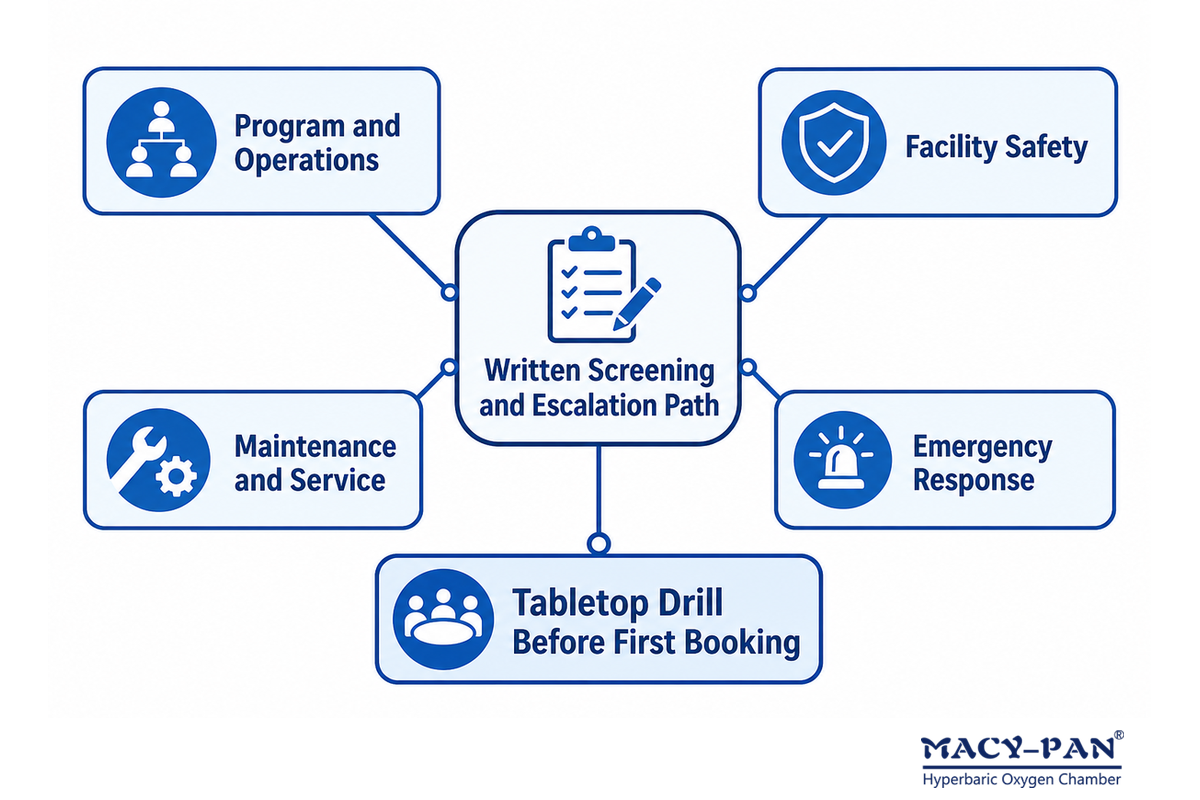
Scheduling doesn’t become operational capacity until skilled personnel can run it. Assign named owners for the program, chamber operation, facility safety, maintenance and service, medical referral or oversight appropriate to the program, and emergency response. One individual may hold more than one role; however, the responsibilities should still be discernible.
Don’t turn your blog into a contraindication checklist. Assessing risk, screening, and determining escalation steps requires qualified policies appropriate to the proposed use. At minimum, the center needs a written path for pre-session questions, pressure-equalization support, stop requests, unexpected symptoms, emergency contact, incident documentation, and referral.
Run a tabletop drill before the first paid booking
Practice and document operational response to a client who’s unable to equalize pressure, a communication failure, a power interruption, unexpected stop, a prohibited item, unavailable service contact, and other emergencies. Record the responders, what action was taken, which instruction controlled it, where the incident is documented, and who decides whether operations resume.
Training isn’t complete because a staff member watched a demonstration. Indicate what was trained, by whom, the model and revision, tasks covered, competency check, date covered, what triggers refreshers, and what restrictions apply. Repeat the training when there are changes to the model, oxygen arrangement, room, software, core staff, or regular turnover.
6. Calculate Capacity Without Manufacturing an ROI Promise
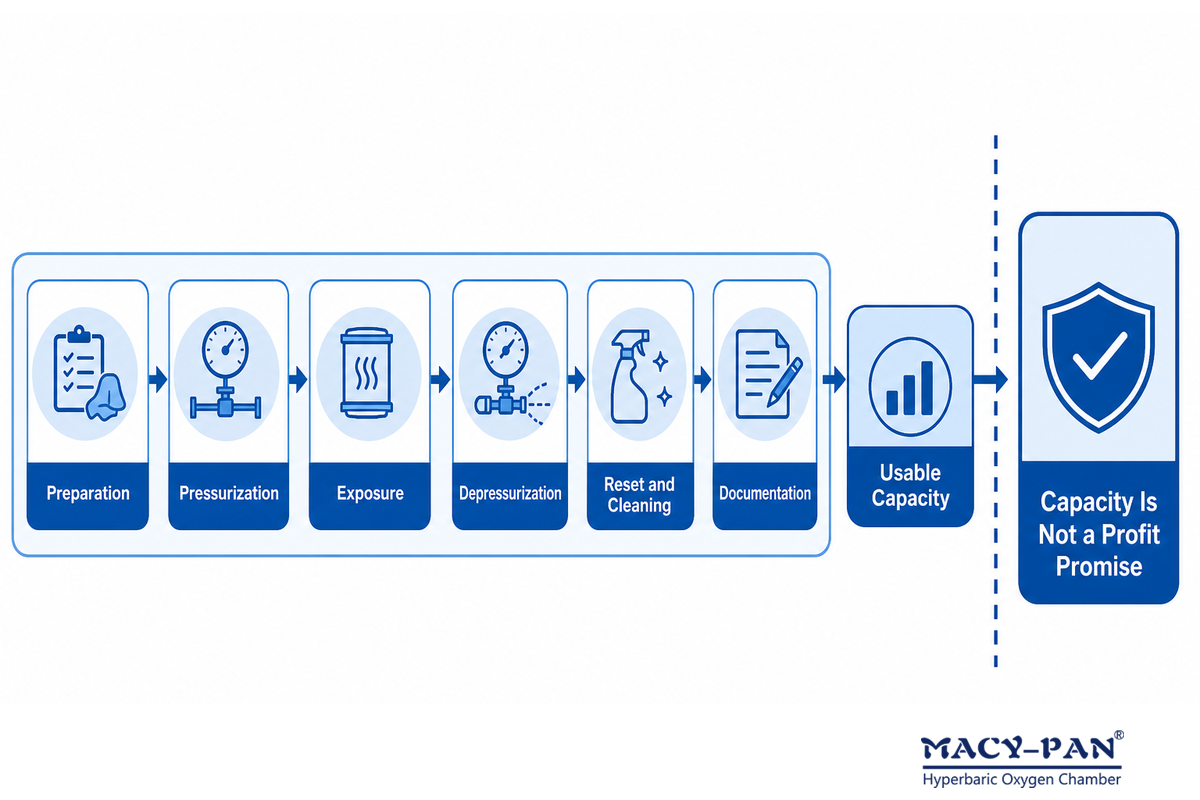
The fastest way to overstate capacity is to divide staffed hours by the advertised session time. This approach ignores many factors including the time it takes to pressurize and depressurize a room; prep time; clean and inspect the room; document procedures; do a staff handoff; adhere to model operating limits; contend with client lateness; stopped sessions; do planned maintenance; or deal with unscheduled down time.
The Throughput Reality Check
Bookable cycles per day = staffed operating minutes ÷ (preparation + pressurization + exposure + depressurization + reset/cleaning + documentation)
Usable capacity = bookable cycles × documented occupancy × availability factor
Planning rule: every input is from the exact model, written procedure, staffing plan or an explicitly labeled center assumption. Don’t convert this worksheet to a utilization or profit promise.
Use three schedules. The documented maximum schedule is the physical ceiling, not the forecast. The operational base schedule is adjusted for realistic turnover and staffing. The disruption case schedule is adjusted for planned or unexpected absence of staff, failed checks, service delays, and maintenance. The range is given to finance; the assumptions are owned by operations.
Map the hidden bottleneck
| Stage | Limiting input | Evidence | Owner |
|---|---|---|---|
| Inquiry to eligible booking | Program boundary and referral path | Written intake workflow | Program lead |
| Booking to completed cycle | Staff, turnover, model limits | Manual and timed pilot | Operations |
| Completed cycle to reliable month | Maintenance, parts, service response | Service terms and event log | Owner / finance |
7. Review Access, Communication, and Comfort as Separate Questions
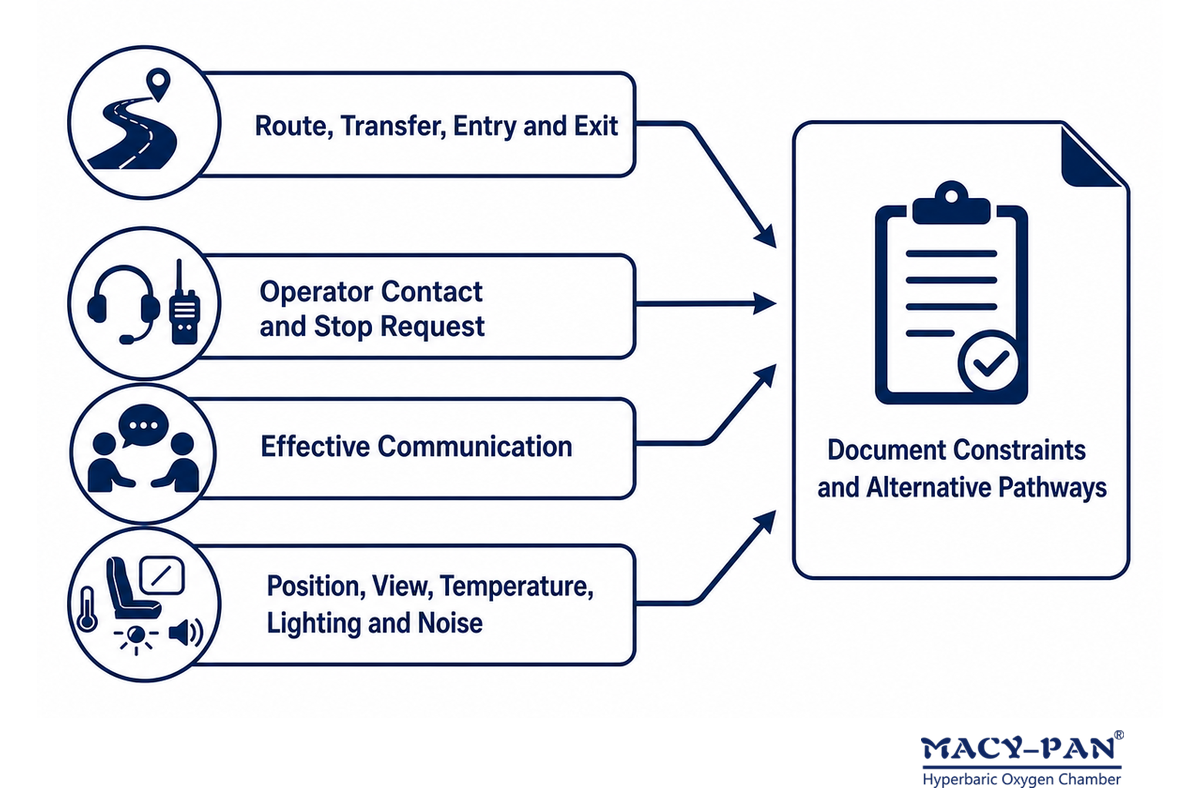
Take note of all procedures from arrival to departure. For a MACY-PAN quotation or any competing model, treat an unresolved access or communication gap as a launch risk, and assign the facility review to a qualified local adviser before accepting bookings. Consider the approach route, means of transfer or entry, door or zipper operations, position, view, temperature, lighting, noise, conversations between operator and client, stops requested, departure, and cleaning turnaround. Record observations instead of relying on adjectives to describe the environment.
In the United States, Title III regulations list health spas and professional health-care offices among public accommodations. Facility obligations aren’t the same as a product claim. A “+wheelchair” capacity label, wide-looking entry, or patent doesn’t by itself prove that the room, route, transfer process, chamber, or communication method is compliant for a particular use.
- Assess the facility against the relevant design standards for the route and the maneuvering areas.
- Test communication during normal operation and a stop request.
- How does the center offer effective communication for different users and interaction types?
- Ascertain the standard, optional, and configuration-dependent comfort and access features.
- Document constraints and alternative service pathways, rather than guaranteeing universal suitability.
Comfort doesn’t equate to an efficacy claim. A calm room, clear preparation, a visible operator, and dependable communication can improve the service process. They don’t prove a medical outcome or eliminate individual tolerance differences.
8. Compare Service, Maintenance, and Total Cost of Ownership
Purchase price is the easiest figure to obtain and often the least complete. GSA’s life-cycle perspective identifies costs across initial purchase, installation, operation and maintenance, training, removal, and disposal. Use those categories as a structure, then replace generic labels with model- and site-specific inputs.
| Cost / risk category | Supplier evidence | Center input | Missing-data treatment |
|---|---|---|---|
| Purchase, shipping, customs, delivery | Written quotation and Incoterm | To be completed | Contingency / exclude |
| Site work and commissioning | Responsibility matrix | To be completed | Local quote required |
| Training, utilities, oxygen, consumables | Exact-model inputs | To be completed | Pilot measurement |
| Scheduled service, inspections, parts | Current schedule and parts list | To be completed | Supplier confirmation |
| Downtime and service delay | Coverage and response terms | To be completed | Scenario range |
| Removal, resale, or disposal | Supplier / local requirements | To be completed | Unresolved risk |
| Insurance, permits, and professional review | Required submissions and responsibilities | To be completed | Local confirmation required |
| Recordkeeping, communications, and software | Supported workflow and update terms | To be completed | Pilot and document |
Establish a time horizon and owner for each value. Obtain the preventive-maintenance schedule, inspection intervals, authorized service rules, spare parts list, consumables, warranty exclusions, remote support process, service geography, escalation contacts, and document retention plan. If a value is unknown, don’t substitute it with an industry average that doesn’t exist.
9. Audit the Supplier and Partnership Model
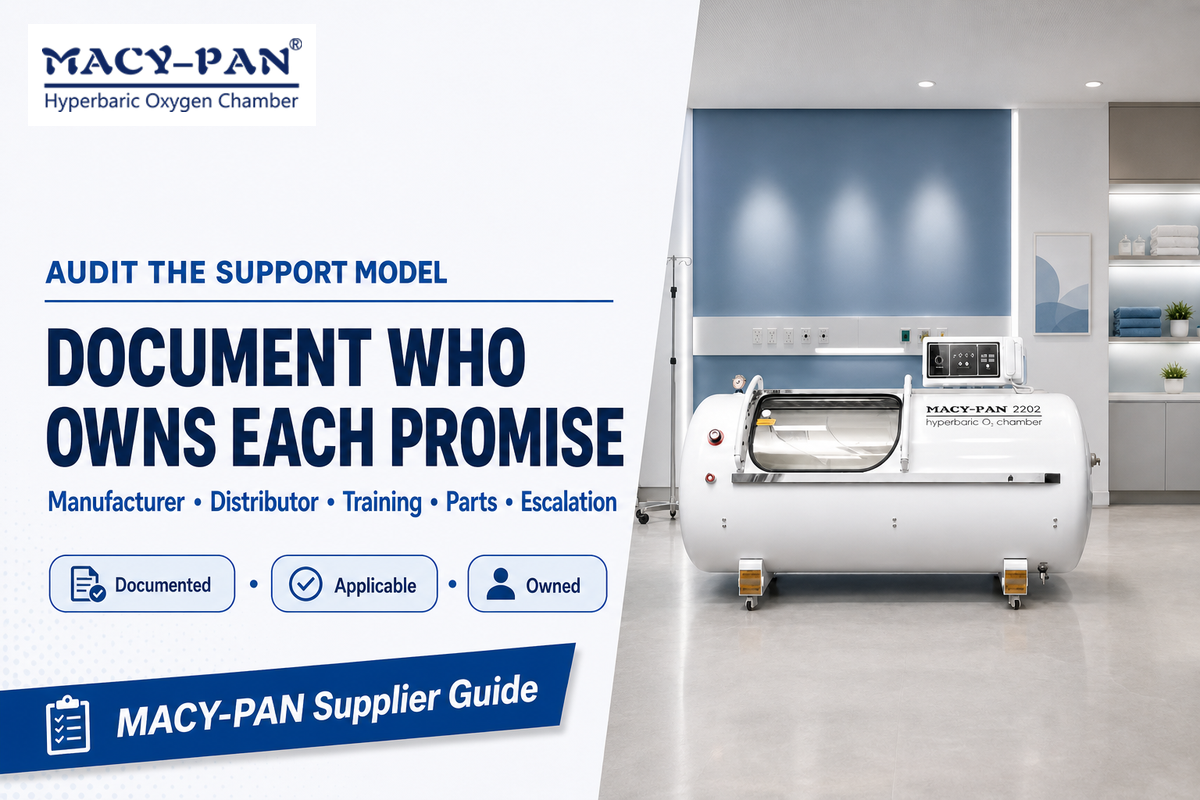
Confirm the legal manufacturer, model and revision, serial number and traceability, intended-use file, current manuals, factory or pre-shipment acceptance, installation, training, service, parts, and support structure.
For each promise, ask three questions: Is it documented? Does it apply to this model and market? Who owns it after delivery? A factory statement about global support may be useful. However, the center needs the named channel, hours, language, escalation path, location of the parts, and response terms for the country.
When a distributor relationship adds value
A distributor may help coordinate local installation, training, parts and first-line support. This should be demonstrated with responsibilities and evidence. The value shouldn’t be inferred by the word distributor. To understand the commercial handoff separately from this buyer’s guide, review MACY-PAN’s distributor support structure.
Keep price, lead time, configuration, and partnership requests on commercial pages. This article is to assist with comparable conversations and not to replace them.
10. Use a 30-Day Pre-Purchase Decision Sequence
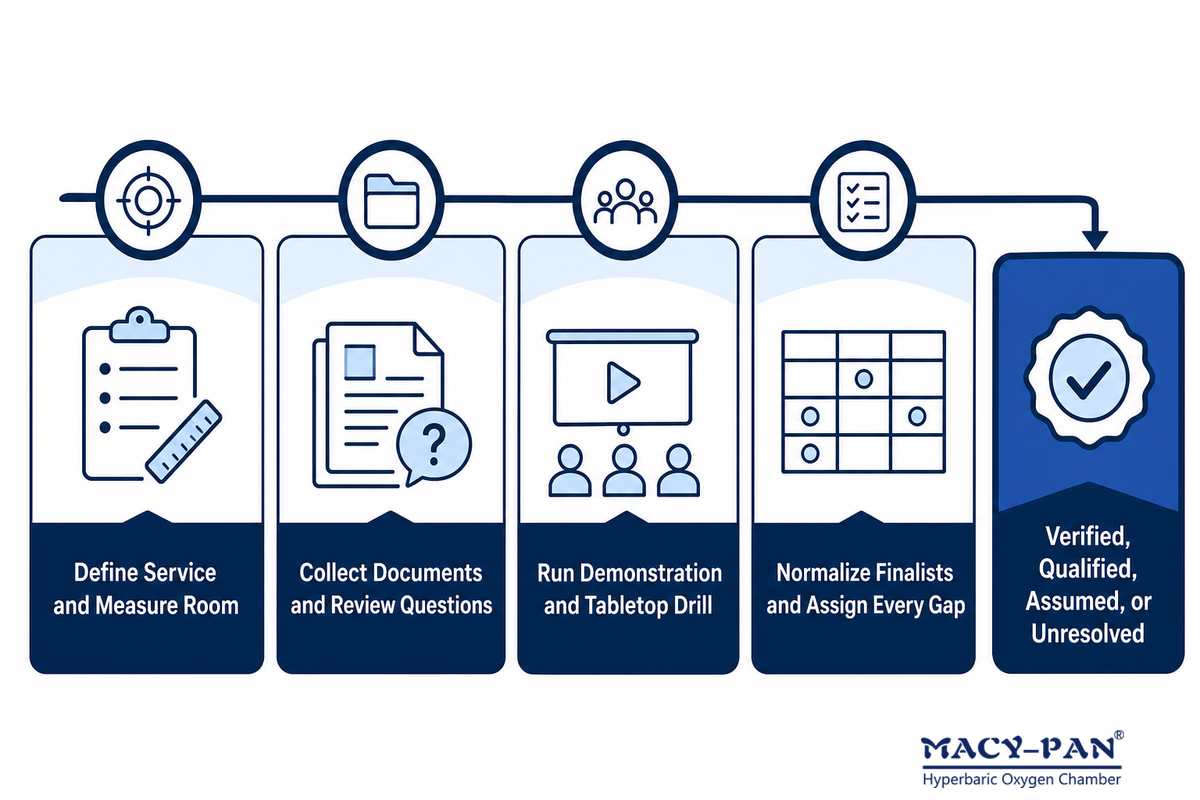
A thirty-day period isn’t a guarantee of approval or delivery. It’s a practical way for a center to collect comparable inputs before committing to a model instead of building around assumptions.
Days 1–7
Define the service and promoted outcome. Check exact-model intended use. Measure the room and delivery route.
Define the service and promoted outcome. Check exact-model intended use. Measure the room and delivery route.
Days 8–14
Collect manuals, regulatory and conformity files, installation responsibilities, training scope, service terms, and local-review questions.
Collect manuals, regulatory and conformity files, installation responsibilities, training scope, service terms, and local-review questions.
Days 15–21
Run a demonstration and tabletop drill. Build staffing, screening, incident, maintenance, capacity, and communication workflows.
Run a demonstration and tabletop drill. Build staffing, screening, incident, maintenance, capacity, and communication workflows.
Days 22–30
Normalize finalists with the Fit Sheet and TCO worksheet. Assign every gap. Request a model-specific quote only after the comparison is stable.
Normalize finalists with the Fit Sheet and TCO worksheet. Assign every gap. Request a model-specific quote only after the comparison is stable.
The final decision record should show what’s verified, qualified, assumed, or left unresolved. An unresolved item isn’t an automatic rejection. It’s a risk with an owner and a deadline. The center can elect to close the gap, change the program, choose a different configuration, or pause the purchase.
Prepare a model-fit discussion
Send the intended use, country, room dimensions, occupancy target, preferred pressure range, and the documents your advisers need. A supplier response supports due diligence. It isn’t regulatory, medical or facility approval.
Frequently Asked Questions
What type of hyperbaric chamber is best for a wellness center?
There’s no universally best family. Begin with the service the center intends to provide. Cross-check it against the exact model’s documented intended use. Compare the oxygen and pressure arrangement, occupancy, room needs, staff roles, training, maintenance, parts, and local support. Use soft or hard shell and monoplace or multiplace only as shortlist labels; they don’t prove fit for the program, site, claims, or jurisdiction.
Is a wellness-center chamber the same as clinical HBOT?
Not automatically. Clinical HBOT connects a defined indication with specific oxygen and pressure conditions, qualified supervision, a device, a protocol, and facility controls. A wellness label or pressure number doesn’t prove equivalence, so the center shouldn’t borrow clinical language without matching evidence. Keep it model-specific.
What documents should a wellness center request before buying?
Request exact-model intended-use and identification records; current manuals; applicable test and conformity documents; cleaning instructions; maintenance schedule; training plan; warranty and service terms; incident guidance; parts list; and a responsibility matrix. Record the issuer, model, revision, market, date, and expiry. Ask local reviewers whether the specified configuration requires additional assessments. Treat the packet as adequate only when it covers those requirements.
How much room does a hyperbaric chamber need?
Room need is model-specific. Check chamber dimensions, delivery path, transfer and maneuvering space, operator and service access, utilities, oxygen configuration, communications, and emergency routes. Confirm the layout from the quoted model’s current manual and a site-specific review before final approval.
How many sessions per day can a wellness center schedule?
Capacity will be based on the documented operating pattern for the exact model, as well as preparation, pressurization, exposure, depressurization, cleaning, inspection, documentation, staffing, occupancy and downtime. Make a physical ceiling, operational base case, and disruption case and publish a range as opposed to a single number. Time a representative workflow to include in a revenue model and replace best guesses with actual operating data post-launch. Record assumptions separately so changes in staffing, downtime, or turnover remain visible to owners.
Sources and Verification Notes (References & Sources)
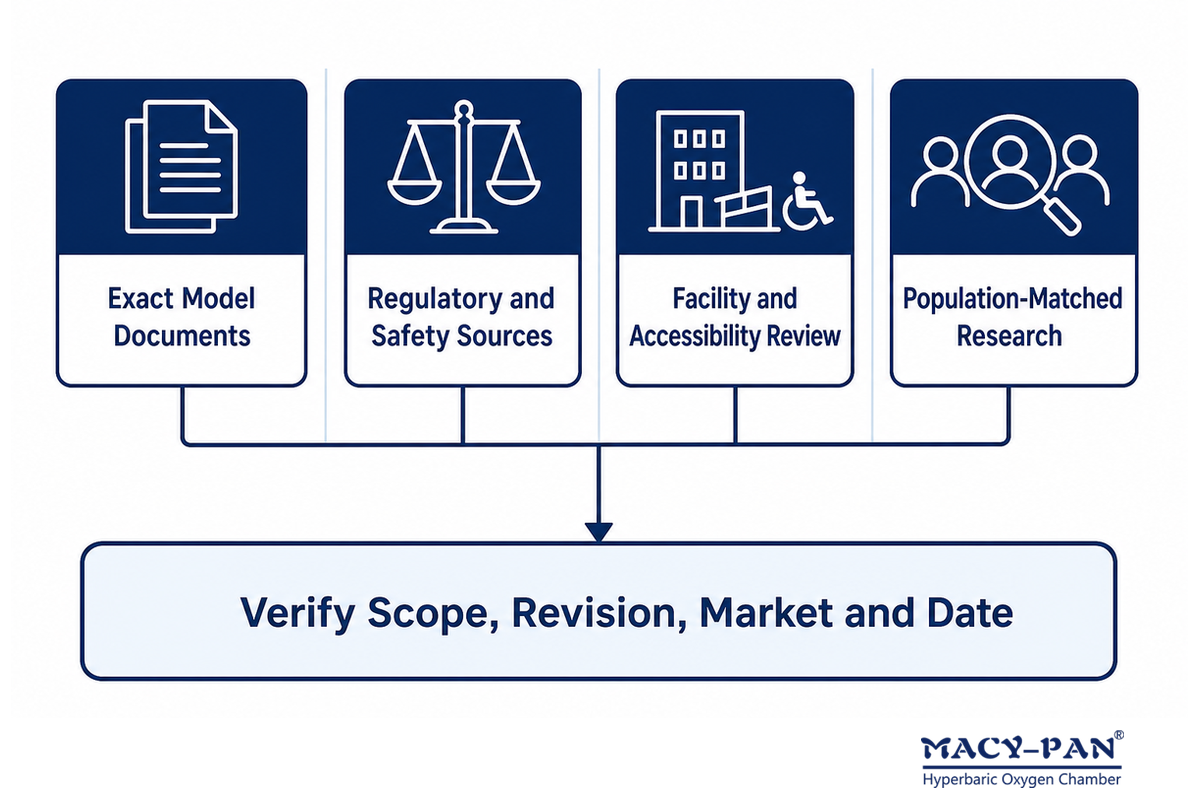
- FDA: Follow Instructions for Safe Use of HBOT Devices (August 25, 2025).
- 21 CFR 868.5470: Hyperbaric chamber.
- FDA 510(k) K072757, used only as an exact-model intended-use example.
- FDA Recognized Consensus Standards record for NFPA 99:2024.
- UHMS: Standards and Codes.
- 21 CFR 803.3: Definitions and 21 CFR 803.30: User-facility reporting.
- DOJ: ADA Title III Regulations, 2010 ADA Standards, and Effective Communication guidance.
- Systematic review of HBOT and exercise performance/recovery in healthy adults.
- GSA: Life cycle perspective.
Source scope matters: When scoping this document, government, regulatory, professional and peer-reviewed sources will be utilized to support legal, evidence and safety constraints. First-party manufacturer pages will be referenced to support commercial and company information only. Exact-model manuals and qualified local review will be required for a real install.
Factory Selection Support
Need a hyperbaric chamber matched to your room, pressure target, and compliance documents?
MACY-PAN helps clinics, wellness centers, distributors, and home buyers compare soft-shell, hard-shell sitting, and professional-grade lying chambers before quotation. Send your intended use, available space, country, and preferred ATA range, and our team will recommend a practical model path.
2007HBOT manufacturing since
126+countries shipped to
1.3-2.0ATA chamber range