Get in Touch with MACY-PAN Company

Hyperbaric Chamber OEM Sample Approval: Lock Branding, Configuration and Documents

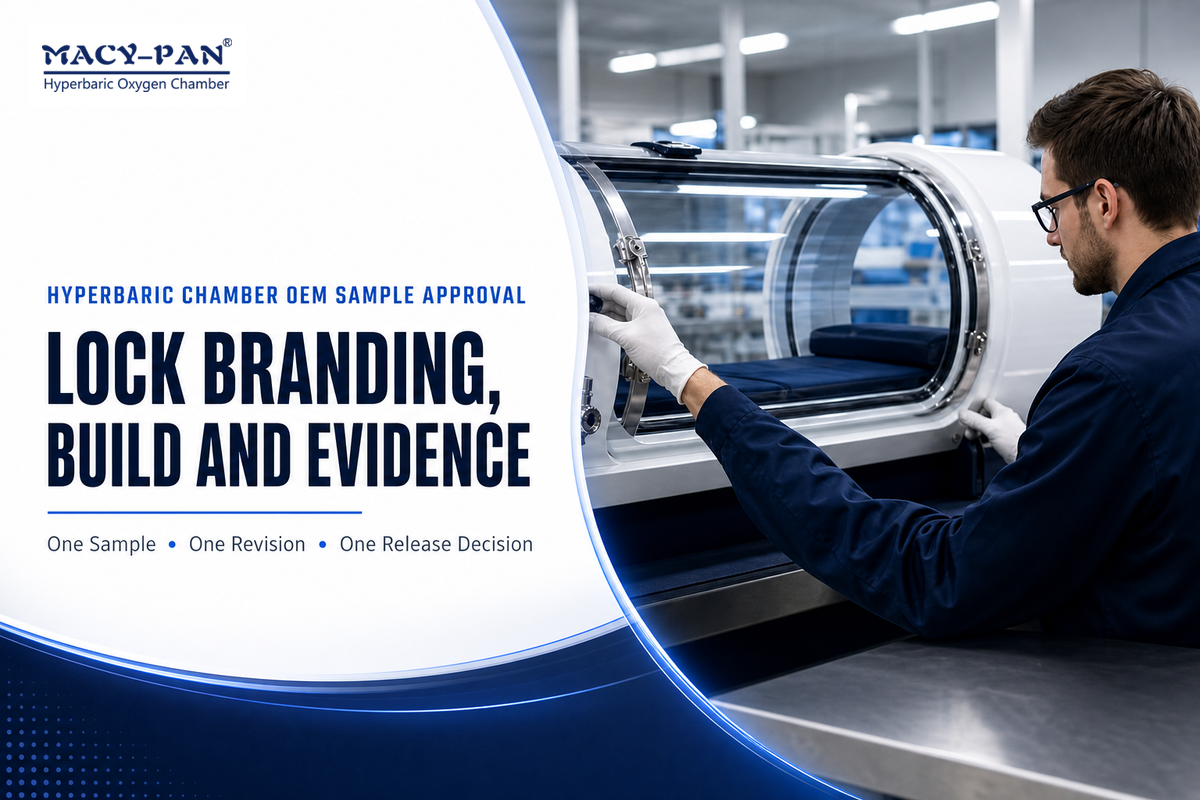
A hyperbaric chamber OEM sample approval should identify one physical sample, freeze the reviewed branding and configuration baselines, connect the evidence to that same unit, close or control every deviation, and state exactly what the signoff releases next. Cosmetic acceptance doesn’t imply the product is safe, performs to requirements, conforms to regulations, has factory acceptance testing, or is ready for shipment. If the record can’t reference the exact sample, revision, evidence, and release, it isn’t ready for sign off.
This hyperbaric chamber OEM sample approval guide is for private label buyers, distributors, product and quality managers, and technical reviewers who have a hyperbaric oxygen chamber OEM sample or pre-production unit. If the requirements haven’t been defined, start with the OEM project brief. This guide is for understanding if the sample can be a controlled reference for the next stage. This guide doesn’t address hyperbaric oxygen treatment, hyperbaric oxygen therapy, or any other medical conditions or advice.
What Sample Approval Does (and Does Not) Authorize
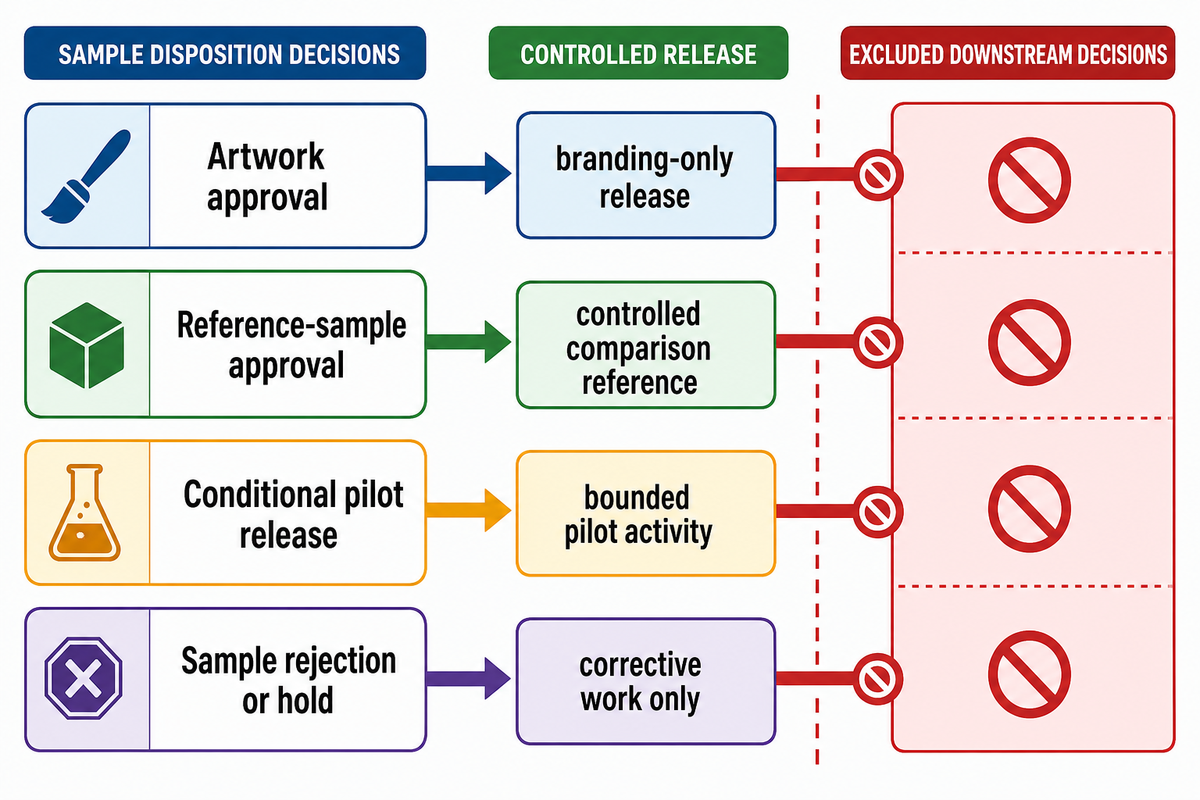
Approving a sample allows for the next activity named in the controlled decision. It may release artwork for printing, establish the identified unit as a visual reference, authorize a limited pilot, or release a defined production step. A release for any of these doesn’t mean that the next activity, i.e. shipment, is allowed.
| Decision recorded | What it may release | What it does not prove | Next controlled record |
|---|---|---|---|
| Artwork approval | Use of the named logo, color reference, placement, and artwork revision | Correct hardware, safe materials, label compliance, or finished-unit performance | Approved artwork master and production proof |
| Reference-sample approval | Use of the identified unit as a comparison reference within the stated scope | That every production unit conforms, or that destination requirements are satisfied | Production control and inspection plan |
| Conditional pilot release | Only the pilot activity and quantity stated in the decision | Mass-production, FAT, packing, or shipment release | Condition-closure evidence and pilot review |
| Sample rejection or hold | Corrective work and resubmission only | Permission to proceed around the open issue | Revised sample or replacement evidence |
Also indicate if the unit will be included in the contract as a reference sample. That may have legal implications based on the governing terms of the contract and the applicable law. For example, Washington State law says that a sample made part of the basis of the bargain can create an express conformity warranty. This is a state-specific example and shouldn’t be generalized. It’s advisable to have legal counsel clarify the effect for the contract and the relevant markets.
How to Approve an OEM Chamber Sample in Four Decisions
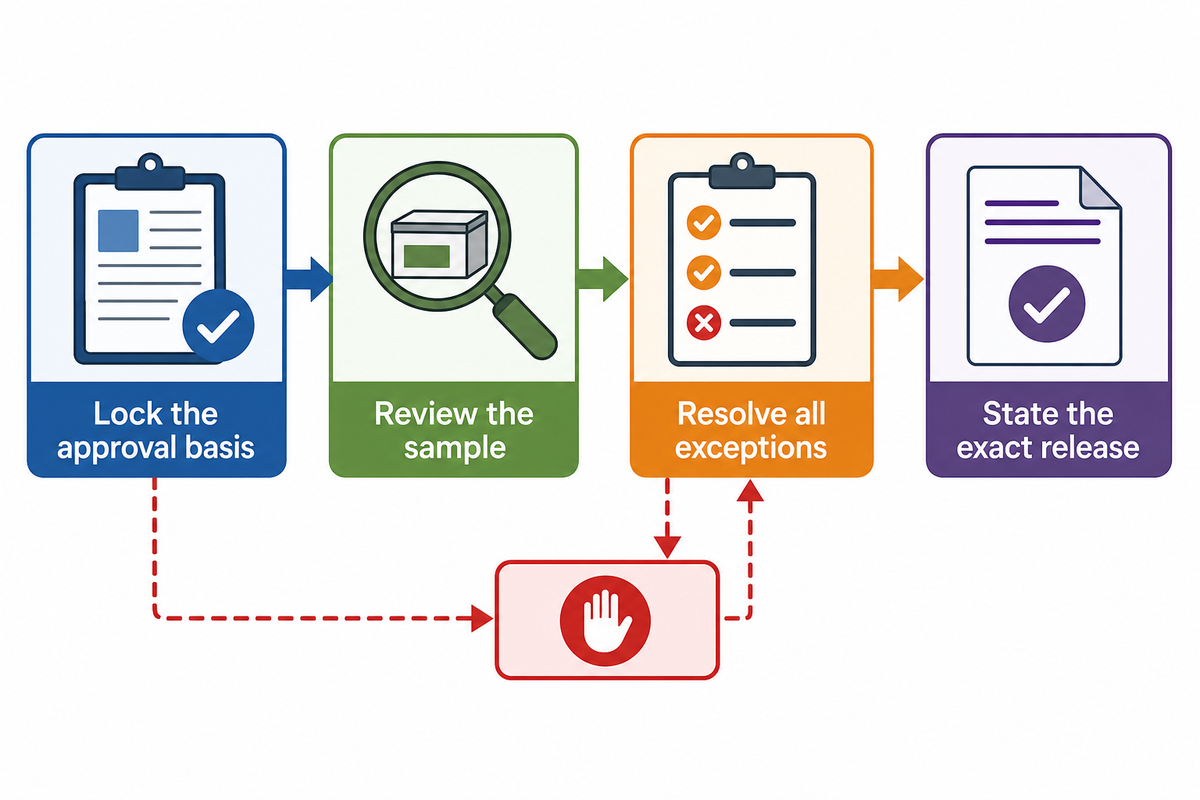
- First, lock the approval basis. List the quotation, specification, drawings, artwork files, option schedule, destination, intended next stage, and their revisions. If there are differences in the attachments reviewed, stop and establish a common basis for comparison.
- Review the sample and record the model, part or serial number, configuration, any photos, and IDs for software/firmware. Compare the identity of the sample against the Brand, Build, and Evidence records.
- Resolve all exceptions. Record each mismatch as a deviation with the requirement, observed condition, risk or impact review, owner, due date, proposed correction, and closure evidence. Document the proposed correction, and provide closure evidence. Don’t hide open items in meeting notes or chat.
- State the exact release. Indicate your choice of Approve, Approve with Conditions, or Reject/Hold. State the allowed next activity, exclusions, quantity/batch if applicable, documents released, and reasons for cancelling the release.
A photographed logo that matches the approved artwork PDF can close a branding row. However, if the test report contains a different model or serial number, evidence is still locked. The buyer can approve the artwork and still not release the sample configuration for production. For regulated-device quality-system planning, ISO 13485:2016 is one reference point; apply it only where its scope and destination requirements fit.
Sample Approval Signoff Form: The Fields to Lock
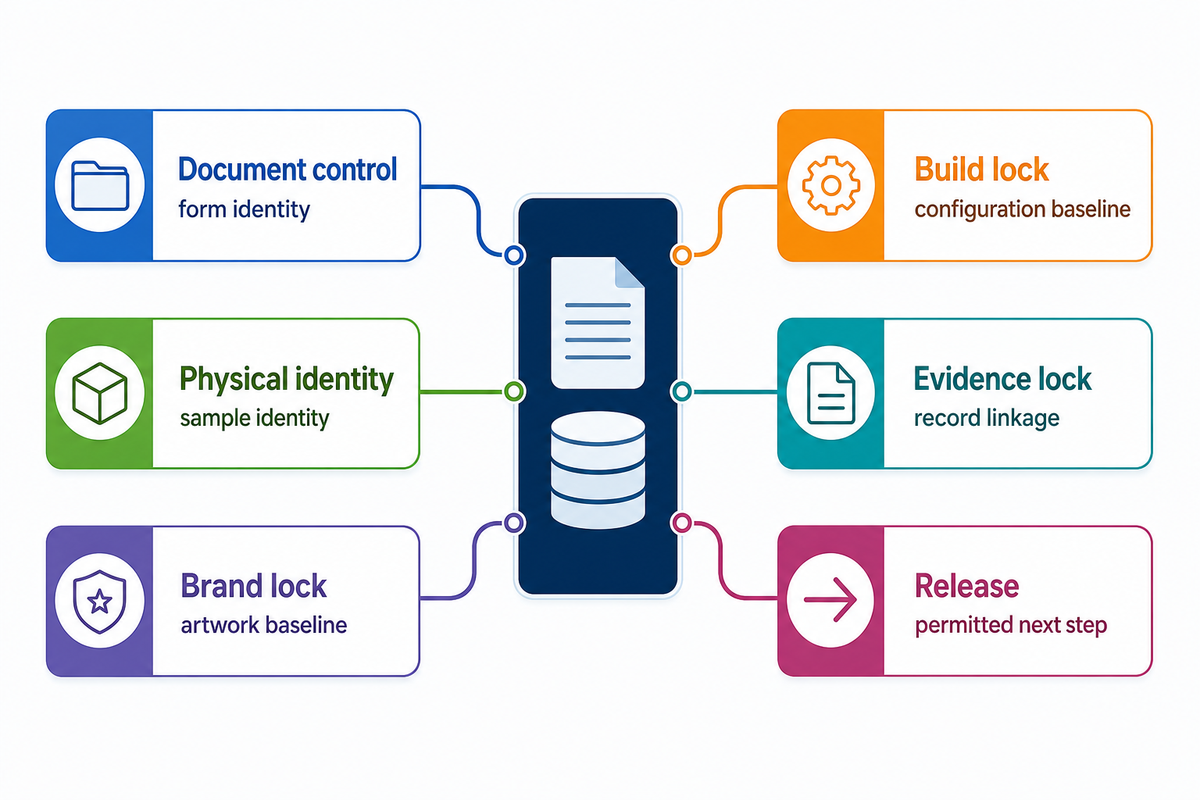
A sample approval sign-off form is a controlled decision record, not a certificate. In the purchase process, this form connects the review and the next authorized activity. Use the structure below and add roles to fit your situation. For U.S.-market quality-system context, use the FDA’s Quality Management System Regulation; this signoff form is a purchasing aid, not a substitute for applicable quality-system records.
| Block | Required field | What to enter |
|---|---|---|
| Document control | Form ID, revision, issue date | Unique controlled identifiers, not “final-final” filenames |
| Parties | Buyer, supplier, project, destination | Legal or controlled project names and target market |
| Physical identity | Model, sample/serial ID, photos | Identifiers visible on the reviewed unit and photo references |
| Approval basis | Quotation, specification, drawing, BOM or option schedule | Document numbers and revisions |
| Brand lock | Logo, artwork, color, label, language, packaging | Master-file IDs, revisions, color system, placement references |
| Build lock | Selected configuration and installed options | Model/configuration revision, accessories, interfaces, applicable software identifier |
| Evidence lock | Inspection, test, and supporting records | Record ID, revision, sample link, result, reviewer |
| Exceptions | Deviation register | Requirement, finding, impact, owner, due date, closure record |
| Decision | Approve / Approve with Conditions / Reject-Hold | One selected state plus its rationale |
| Release | Permitted next step | Artwork proof, pilot, named production stage, or no release |
| Exclusions | Decisions not made | For example: FAT, shipment, installation, market authorization |
| Conditions | Open nonblocking items | Owner, deadline, proof required, and activity that remains blocked |
| Role check | Buyer activity and applicability owner | Distributor, relabeler, importer, specification developer, or other activity to be confirmed for the destination |
| Contract status | Reference-sample effect | Whether and how the sample is incorporated into the governing purchase documents |
| Change control | Notification and reapproval triggers | Changes that require impact review, replacement evidence, or a new sample |
| Custody | Retention location and duplicate/reference method | Who holds the sample, seal/photo record, condition, and access |
| Approval | Names, functions, signatures, dates | Brand, technical/quality, regulatory/applicability, and commercial signers as needed |
The form can end with a release sentence such as the following: “This decision releases [named activity] for [identified configuration/quantity] only. All other production, FAT, shipment, installation and destination acceptance decisions are subject to their own records.”
Cosmetic Signoff Is Not Safety or Regulatory Approval
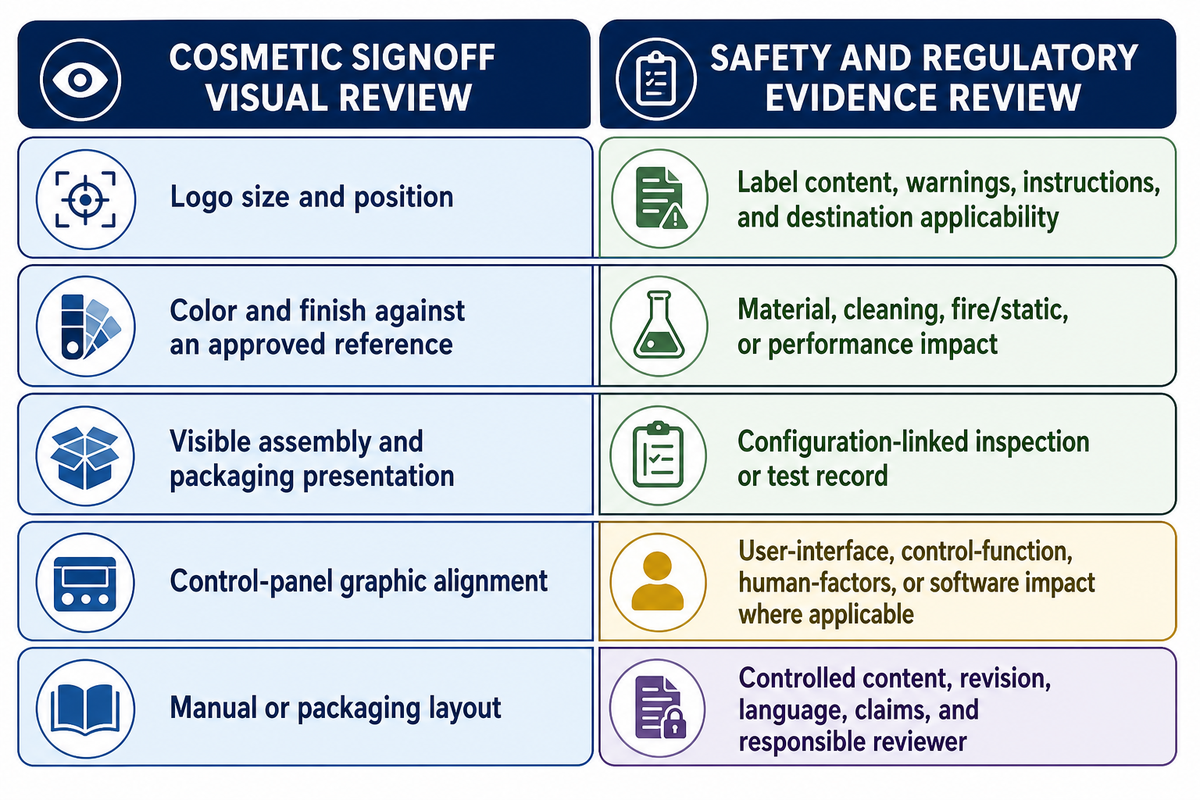
Maintain two lanes. With a sample, a buyer can assess many things such as shape and color of a logo, placement, surface finish, workmanship, and graphics on packaging or a provided artwork proof. Safety, performance and regulated requirements need to be assessed based on objective evidence and qualified assessment tied to the chamber and destination in question.
| Visual or commercial review | Objective evidence or qualified review |
|---|---|
| Logo size and position | Label content, warnings, instructions, and destination applicability |
| Color and finish against an approved reference | Material, cleaning, fire/static, or performance impact where the change can affect them |
| Visible assembly and packaging presentation | Configuration-linked inspection or test record |
| Control-panel graphic alignment | User-interface, control-function, human-factors, or software impact where applicable |
| Manual or packaging layout | Controlled content, revision, language, claims, and responsible reviewer |
The FDA’s August 2025 HBOT safety letter emphasizes device-specific instructions, grounding, cleaning, maintenance, training, and safety checks. Its practical lesson for sample approval is limited but important: appearance cannot stand in for those controls.
“Cosmetic” changes should describe how an item was assessed, rather than how it was pre-judged for engineering risk. A change in coating, material, label, instruction, control layout, or user interface may require technical and regulatory impact review. The FDA’s U.S. device-modification overview, for example, lists design, user-interface human factors, and material changes among modifications that may require further assessment for an in-scope legally marketed device. It states that not every change in logo or color requires a new submission.
Likewise, the buyer’s sample signature is not evidence that a private-label change was evaluated by the FDA or another destination authority. The responsible applicability reviewer and the exact authorization/assessment evidence should be documented separately.
“The chamber is FDA-registered” should not be interpreted as approval of the sample. FDA establishment registration and device listing concern defined activities and records; they do not replace configuration-specific evidence or the applicable premarket and labeling review.
Use the Brand–Build–Evidence Lock Before You Sign
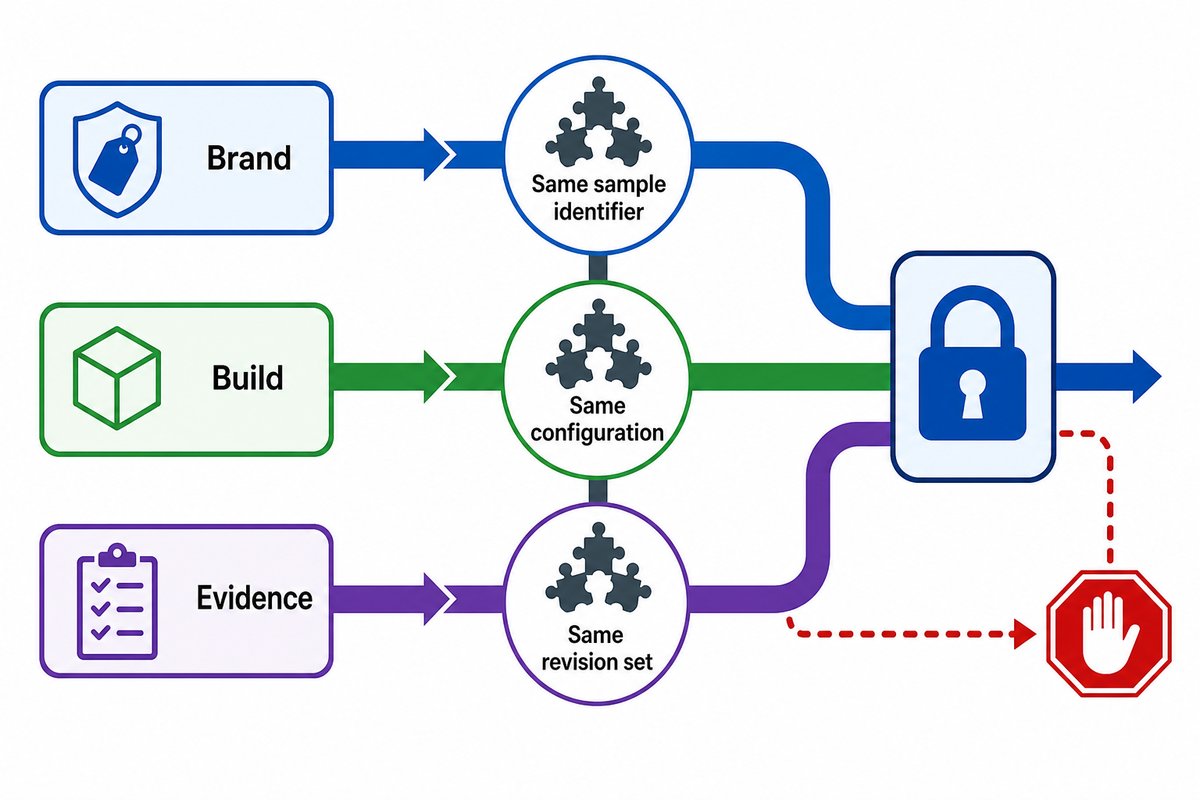
The Brand–Build–Evidence Lock is a cross-reference check that prevents three individually plausible records from describing different things. Before signing, confirm that the approved artwork, physical build, and supporting evidence all point to the same sample identifier, configuration, destination, and revision set.
- Brand covers the logo master, artwork revision, color reference, label, interface text, manual language, and packaging master.
- Build covers the model, physical sample or serial ID, configuration revision, options, accessories, interfaces, and applicable software or firmware identifier.
- Evidence covers inspection or test record IDs, document revisions, the sample identity each record covers, reviewer, result, and unresolved applicability.
One green block cannot compensate for another red block. The artwork may be correct, but the option installed may differ from the quotation. A test can pass while referring to a different serial number. A certificate may be authentic but not cover the model, facility, edition, or destination in review.
The MACY-PAN OEM and wholesale program identifies logo, color, exterior finish, layout, entry style, and interior as customization discussion fields. Consider these as exemplars, not pledges. Confirm feasibility, evidence, quantity, timing, and destination applicability in the written quotation and controlled specification for the selected model.
Add a responsibility check. In the U.S., current FDA establishment definitions distinguish among a domestic distributor, relabeler, initial importer, specification developer, contract manufacturer, and manufacturer. Other markets may define establishments differently. The term OEM does not mean a regulated party owns the obligation; document the activity and identify a qualified applicability reviewer.
Approve, Approve with Conditions, or Reject
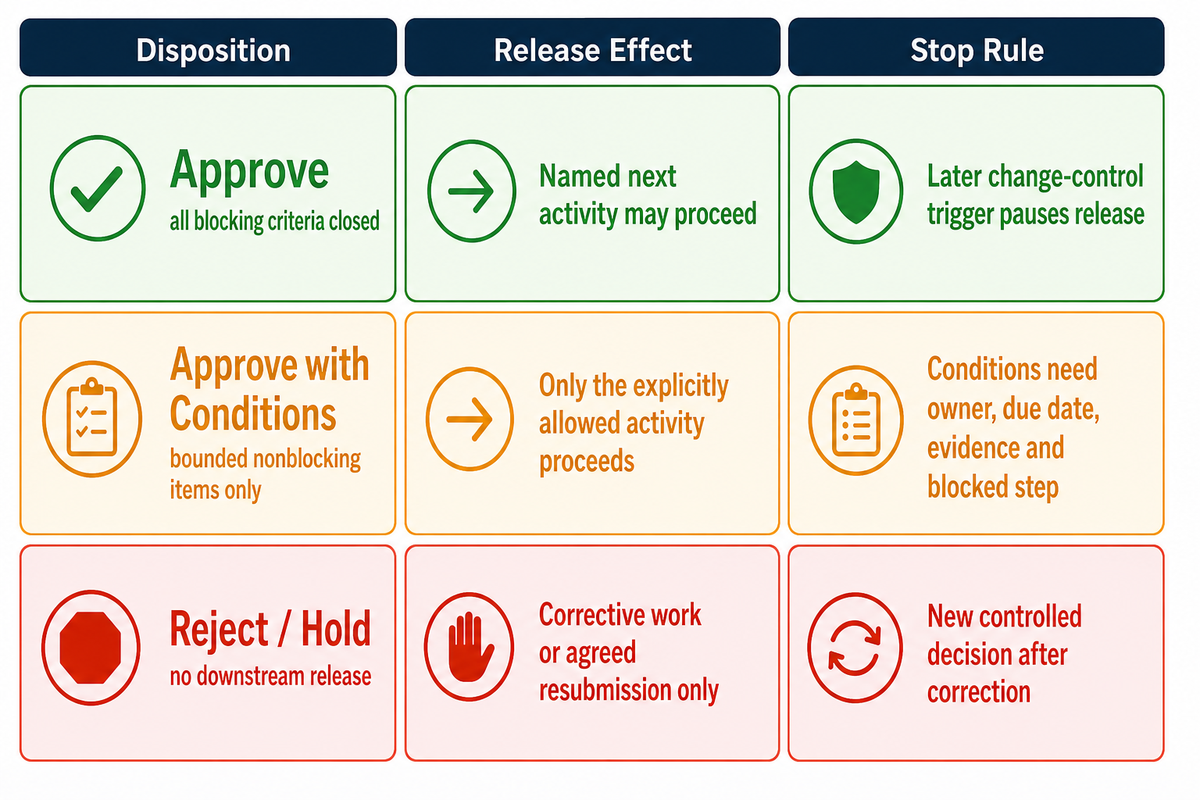
| Status | Use it when | Release effect | Stop rule |
|---|---|---|---|
| Approve | All blocking criteria close and the three locks agree | The exact next activity named on the form may proceed | Any later trigger listed in change control cancels or pauses the release |
| Approve with Conditions | Only bounded, non-safety, non-performance, non-applicability items remain | Only the explicitly allowed activity proceeds | Every condition needs an owner, due date, closure evidence, and blocked downstream step |
| Reject / Hold | Identity is unclear, an acceptance criterion fails, or safety/performance/applicability evidence is missing or mismatched | No production release beyond corrective work or agreed resubmission | A new controlled decision is required after correction |
A carton-artwork alignment correction might be conditionally accepted with proof before printing, provided it does not affect product labeling or configuration. Artwork misalignment corrections may be acceptable, but a test report with an incorrect serial number is different. Evidence can’t be assigned to the reviewed sample, so production release is still on hold.
Redlines are suggestions and don’t constitute the approved specification. Clean, controlled revisions are required and should be linked to condition-closure records. Evidence gathered during a discussion or marked-up screenshots are useful during a discussion. However, they shouldn’t be used to approve the specification. The FDA’s HBOT safety letter is a useful reminder that device-specific instructions, maintenance, training, and safety checks remain separate from a commercial sample decision.
Evidence the Supplier Should Return with the Sample
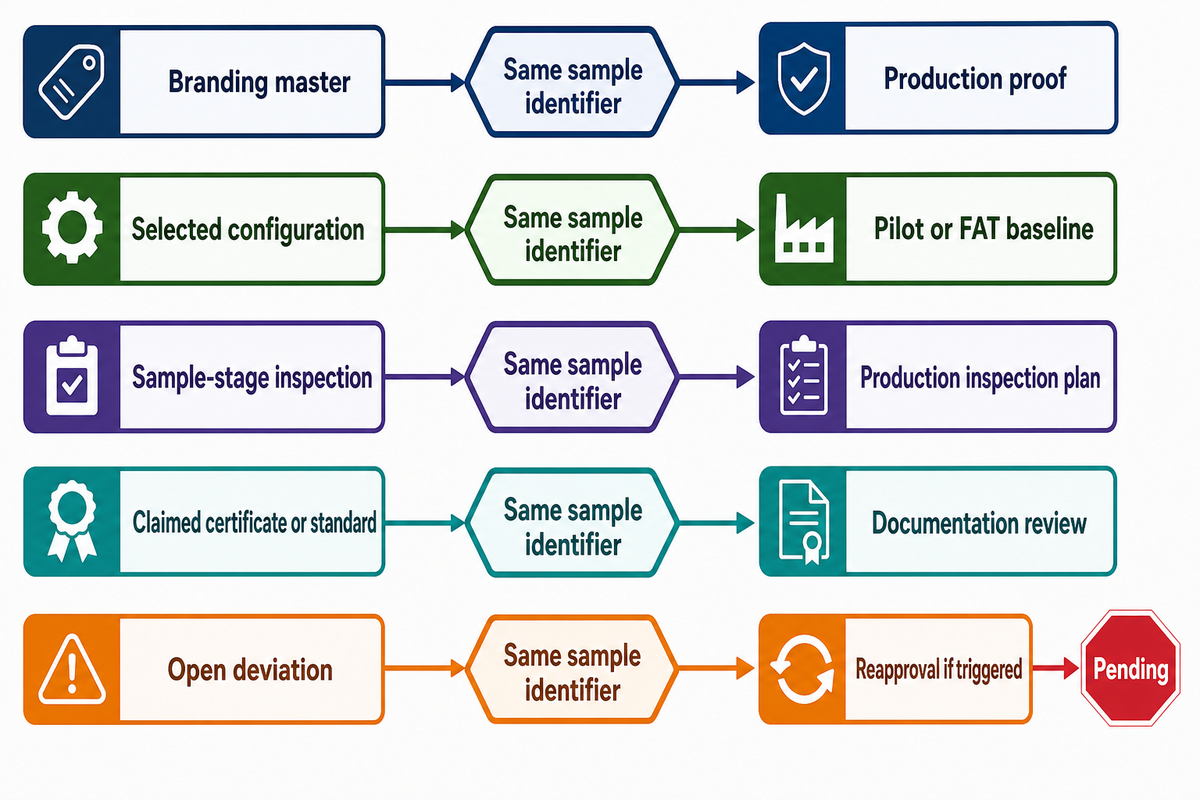
Request the least information required to identify the sample, compare it with the controlled requirement, show the results of the review, and disclose any gaps. Don’t make this phase a repetition of the complete model documentation package or the later factory acceptance Test. Route later-stage information forward instead.
| Requirement | Supplier record | Sample link | Result or gap | Later-stage handoff |
|---|---|---|---|---|
| Branding master | Artwork/label file ID and revision | Photos or proof tied to sample ID | Match, deviation, owner | Production proof |
| Selected configuration | Controlled specification, drawing, or option schedule | Model and serial/sample ID | Installed/missing/different, including a specified oxygen meter or other accessory | Pilot or FAT baseline |
| Sample-stage inspection | Inspection record with criteria and result | Same sample identifier | Accept, exception, retest | Production inspection plan |
| Claimed certificate or standard | Document number, issuer, scope, edition, validity | Model/site/configuration applicability | Confirmed, limited, open | Documentation review |
| Open deviation | Corrective record and replacement evidence | Affected sample and revision | Open/closed/rejected | Reapproval if triggered |
Brochures, generic certificates, and test reports shouldn’t be used to satisfy a claim of what was reviewed unless they’re tied to a sample. Record them as insufficient or pending until the supplier ties them to a sample.
The same approach is used to evaluate an unsupported broad statement that hyperbaric chambers are individually tested. The sample file should contain the actual record, acceptance basis, result, and revision, to identify the unit which was reviewed.
Changes That Trigger Sample Reapproval
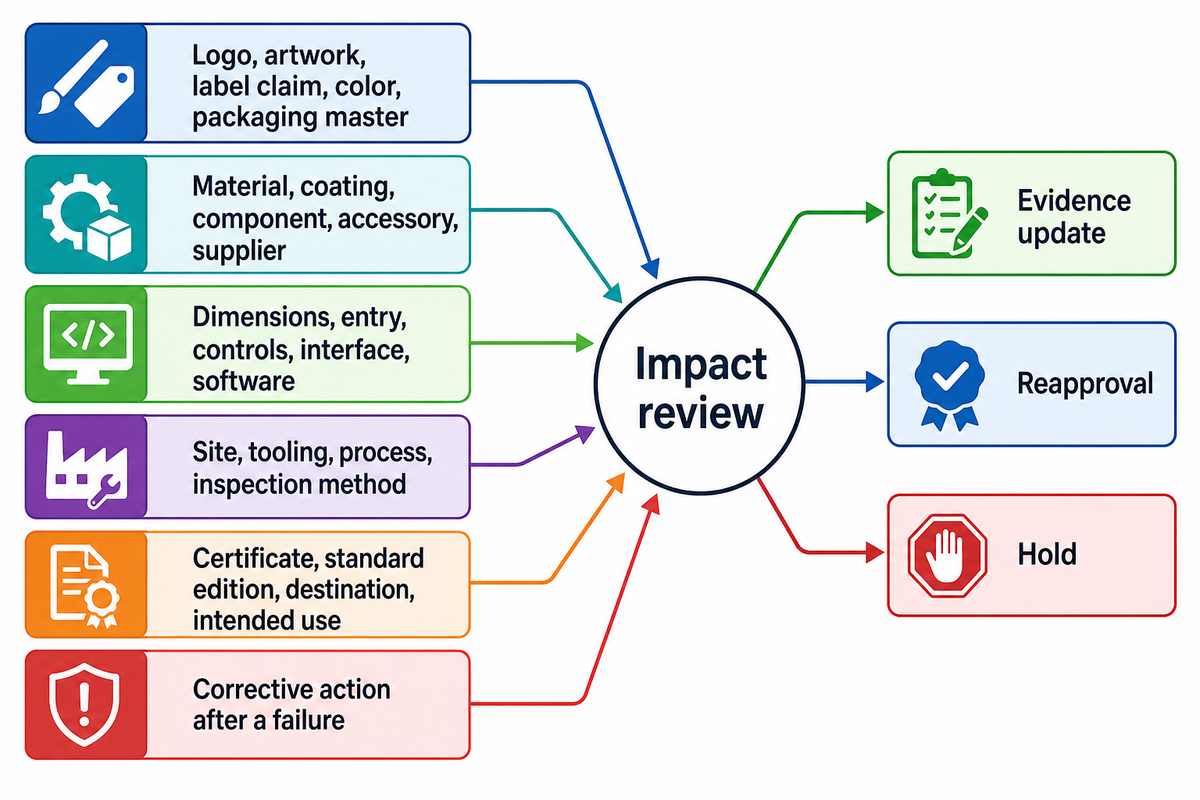
The supplier must notify the buyer of any intended changes. Notification initiates an impact assessment; it doesn’t mean a new physical sample is required for each change. Reapproval or re sampling will be assessed based on which lock changed, risk level, and whether objective evidence shows equivalence. The FDA’s U.S. device-modification overview likewise treats design, material, labeling, and other changes as an assessment question rather than an automatic one-size-fits-all conclusion.
| Change | Lock affected | Minimum buyer action | Possible reapproval evidence |
|---|---|---|---|
| Logo, artwork, label claim, color, packaging master | Brand; sometimes Evidence | Review controlled revision and check labeling or material impact | New proof, photos, label review, or revised sample |
| Material, coating, component, accessory, supplier | Build and Evidence | Technical, risk, and applicability assessment | Updated specification, test evidence, sample, or qualified equivalence decision |
| Dimensions, entry, controls, interface, software | Build and Evidence | Review functional and user-impact change | Revised drawing, verification record, interface review, or sample |
| Site, tooling, process, inspection method | Build and Evidence | Assess whether the approved output can still be reproduced | Process validation/verification or first-production evidence as applicable |
| Certificate, standard edition, destination, intended use | Evidence | Re-check applicability with a qualified owner | Updated scope record, opinion, or authorization evidence |
| Corrective action after a failure | Any affected lock | Invalidate the prior release where necessary and verify the correction | Revised sample, retest, inspection, and new disposition |
Don’t classify a change as “cosmetic only” just because it’s a visible change. If a change affects a surface material, cleaning instruction, warning, control layout, user interface, grounding or static condition, or another safety-relevant feature, route it to qualified review before deciding whether the original approval still stands.
Handoff After Signoff: Pilot, FAT, Pre-Shipment, or Reapproval
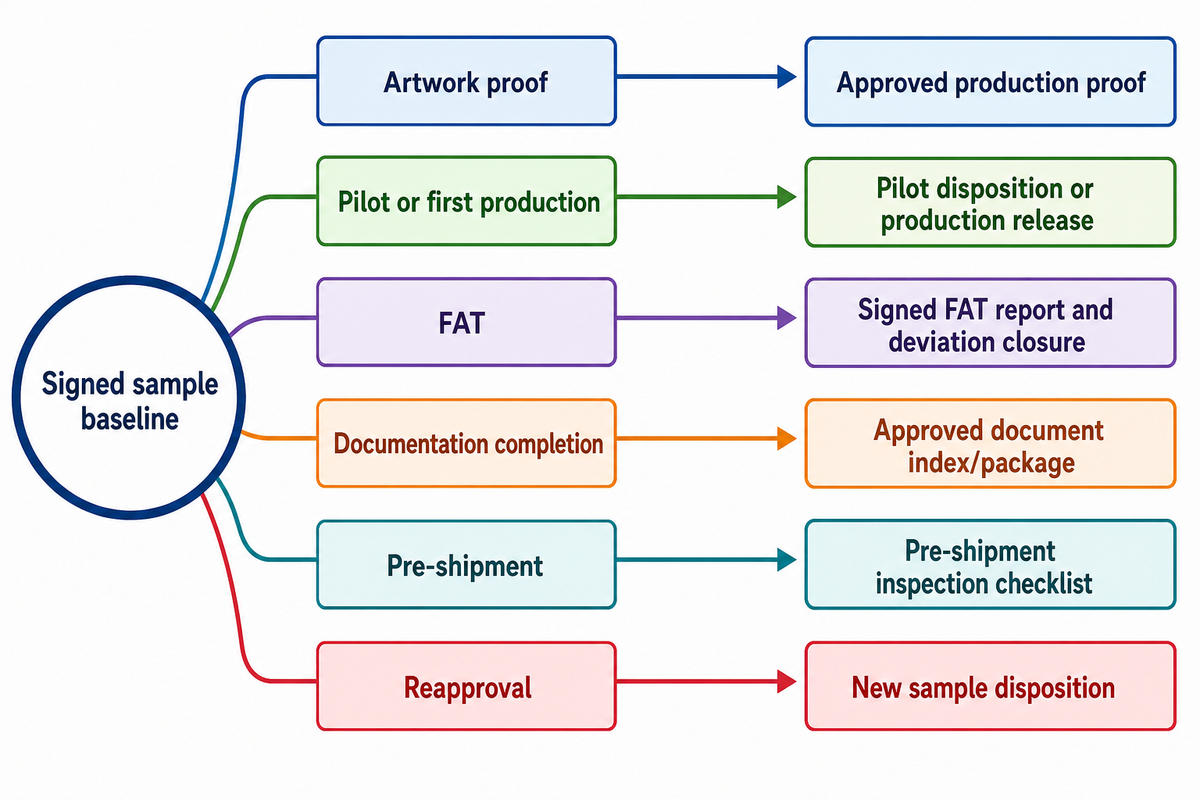
The signed sample record should travel forward as a controlled input, not be treated as the last quality decision. Its release sentence tells the next team what may proceed, which baseline applies, what remains open, and which later record must make the next acceptance decision. The release sentence should also describe any conditions that remain unresolved, who owns them, and what will result in reapproval.
| Next stage | Signed input | What may proceed | Next acceptance record |
|---|---|---|---|
| Artwork proof | Brand master and conditions | Named printing/proof activity | Approved production proof |
| Pilot or first production | Three locks and release quantity | Only the stated pilot scope | Pilot disposition or production release |
| FAT | Approved build baseline and open items | Tests in the controlled FAT plan | Signed FAT report and deviation closure |
| Documentation completion | Evidence index and gaps | Compilation and qualified review | Approved document index/package |
| Pre-shipment | Released configuration and packing basis | Final unit and packing inspection | Pre-shipment inspection checklist |
| Reapproval | Prior approval, change notice, impact assessment | Only corrective or assessment work until released | New sample disposition |
This separation prevents two opposite errors: repeating the same visual review at every stage and assuming the sample signature has already released production or shipment.
Frequently Asked Questions
How should an OEM buyer approve a hyperbaric chamber sample?
Freeze the controlled approval basis, identify the physical sample, compare the Brand–Build–Evidence records, dispose every deviation, and sign one decision with a precise release scope. The record should state what may proceed, what remains blocked, who owns each condition, and which later changes trigger reapproval. Do not use cosmetic acceptance as a substitute for safety, performance, regulatory, FAT, or shipment evidence.
What should a sample approval signoff form include?
Trace all aspects of document control. Include buyer, supplier, project, and destination. Include model and sample/serial identity. Include quotations, specifications, drawings, and artwork revisions. Include branding and configuration baselines. Include evidence index, deviations, decision status. Include conditions, owners, dates and closure. Include release scope and exclusions, reapproval triggers, retention/custody, regulatory-role owner, and reference sample contract status. Include discipline sign-off. Every aspect should be traced to the reviewed sample.
Does cosmetic sample approval also approve safety or regulatory compliance?
No. It only confirms the presence of the visual or commercial attributes named in the record. Safety, performance and regulatory applicability require objective evidence and a qualified review for the selected configuration and destination. The reviewer should always assess for potential engineering impact.
Can a sample be approved with conditions?
Yes, but only for bounded non-blocking items. Each condition must have an owner, due date, closure evidence, and an explanation of which downstream activity remains blocked. Evidence of safety, performance, regulations, and applicability must be addressed in Hold, not in a cosmetic waiver.
Should the buyer keep the physical approved sample?
Keep it if it’s useful as a production or inspection reference, and sign and date it. Protect it from color or finish fading. The supplier and any inspection party should know which controlled version is the authoritative one. For practicality, if a chamber project requires an OEM controlled reference to be retained for a lengthy period, consider retaining other evidence of control, such as sealed reference parts or color standards.
Which changes require sample reapproval?
Require notification and impact review for changes to branding or labels, materials or components, suppliers or manufacturing sites, tooling or processes, dimensions or interfaces, software, accessories, packaging, corrective actions, standards, certificates, or destination assumptions. Corrective-action, standard, and certificate changes affect evidence and may require sample reapproval after impact review.
To review a specific branded configuration, please send a controlled brief, sample identity, target market and open item list to MACY-PAN. The team can let you know which branding and configuration requests can be documented next.
Request an OEM sample review Contact MACY-PAN
References & Sources
- U.S. FDA: Follow Instructions for Safe Use of Hyperbaric Oxygen Therapy Devices
- U.S. FDA: Quality Management System Regulation (QMSR)
- Electronic Code of Federal Regulations: 21 CFR Part 820
- U.S. FDA: Who Must Register, List and Pay the Fee
- U.S. FDA: Is a New 510(k) Required for a Modification?
- ASME: PVHO-1 Safety Standard for Pressure Vessels for Human Occupancy
- ISO: ISO 13485:2016 Medical Device Quality Management Systems
- Washington State Legislature: RCW 62A.2-313 (example of a jurisdiction-specific contract)
This buyer-workflow article isn’t medical or legal advice, and doesn’t determine the regulatory status of a product or party. As actual configuration, activities, contracts and destinations differ, confirm requirements with qualified professionals in applicable fields.
Factory Selection Support
Need a hyperbaric chamber matched to your room, pressure target, and compliance documents?
MACY-PAN helps clinics, wellness centers, distributors, and home buyers compare soft-shell, hard-shell sitting, and professional-grade lying chambers before quotation. Send your intended use, available space, country, and preferred ATA range, and our team will recommend a practical model path.
2007HBOT manufacturing since
126+countries shipped to
1.3-2.0ATA chamber range